

What Investigators Really Look at in Workers’ Comp Cases
Workers' compensation claims used to be investigated mostly through paperwork. Medical records. Supervisor statements. A site inspection was conducted if the case was serious enough. Sometimes, a private investigator with a camera.
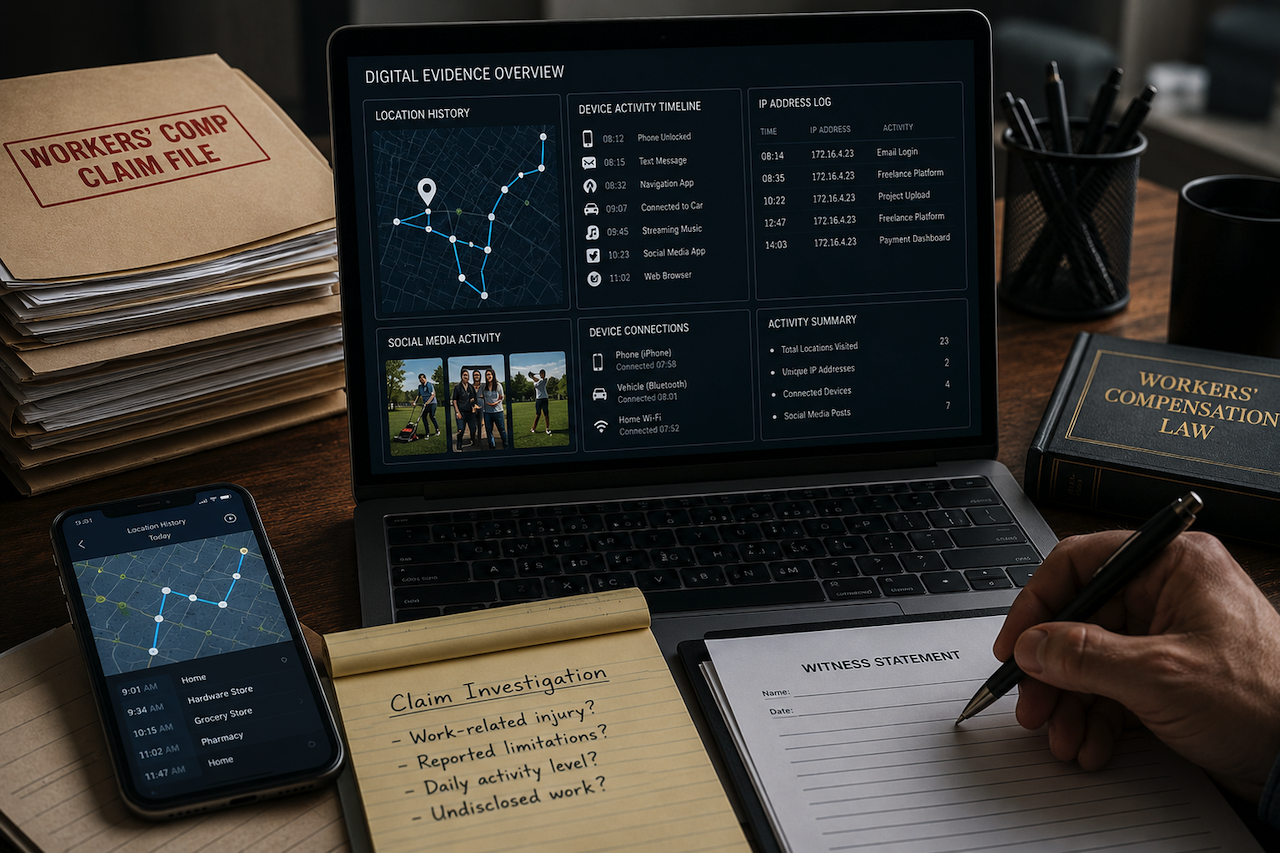
That model has been augmented over the last decade by a much richer digital layer. The paperwork still exists. So does the surveillance. What is new is everything underneath, the location records, the IP logs, the device data, and the social media trails that now sit in the background of nearly every contested claim.
This is a short look at that digital layer, what investigators actually examine, and what claimants and counsel should understand about it.
The Question Behind the Investigation
Most contested workers' comp investigations are trying to answer one of three questions.
- Was the injury actually work-related, or did it occur elsewhere and get reattributed?
- Is the worker as impaired as the claim suggests, or is the activity level inconsistent with the reported limitations?
- Is the worker collecting benefits while also engaged in undisclosed paid work?
The digital evidence that investigators pull is mostly oriented toward one of these three. The data categories that come in depend on which question is in play.
Location Records
The most common data category in a serious investigation is location records.
Phone-based GPS data, when available, shows where the worker has been moving in the days and weeks after the injury. A claimed inability to leave the house reads differently when the location record shows regular trips across town.
Vehicle telematics, for workers whose cars have connected services, provide a parallel record. Carriers can sometimes access this data through subpoena or through cooperative agreements with manufacturers.
Cell tower records, available through a subpoena to the carrier, show the approximate location even when the worker has turned off phone-level location services. The accuracy is lower. The coverage is harder to opt out of.
IP and Account Activity
A separate evidentiary layer comes from IP addresses and account-level activity.
A worker claiming to be unable to work due to injury who logs into a freelance platform from a consistent IP address has produced a record that investigators carefully review. The IP itself does not prove that work was paid. The pattern, combined with other evidence, often does.
Streaming services, gaming platforms, and social networks all log IP-based sessions. None of these is necessarily inculpatory on its own. They can become part of the picture when the claim is inconsistent with the digital activity.
Social Media
The social media review has become standard practice in contested claims. Investigators look for posts, photographs, check-ins, and tags that suggest activity inconsistent with the reported injury.
This is the area of digital investigation that most workers are vaguely aware of, and where the most damage is done to legitimate claims. A photograph from a family event, taken on a good day, may show the worker smiling and standing without apparent difficulty. The photograph proves very little about the worker's average functional level. It can be presented as if it does.
What the Data Often Cannot Show
It is worth saying clearly what this evidence cannot do.
Location data cannot show pain. A worker who drove to the grocery store may have spent the rest of the day in bed. Activity data cannot show the activity's cost. A short walk may be possible only with significant pain or significant medication.
The pattern most often misread by aggressive investigators is the worker who has good days and bad days. The data captures the good days more visibly than the bad ones. The bad days are usually invisible; the worker stays home, does nothing, and generates no records. The asymmetry can make the evidence look one-sided even when the underlying reality is not.
How This Affects Honest Claimants
The shift toward digital investigation has changed the experience of filing a claim, even for workers whose claims are entirely legitimate.
Honest claimants now have to think about how their ordinary digital activity will look in retrospect if their claim becomes contested. A social media post showing a good moment can be used out of context. A phone location record showing a trip across town can be presented as inconsistent with reported limitations.
There is no way to insulate a legitimate claim from this kind of scrutiny completely. There are practical steps that can reduce the risk of misinterpretation, most of which come down to careful documentation of the actual functional limitations and consistent communication with treating providers about what the worker can and cannot do.
Where Representation Makes a Difference
The cases where digital evidence becomes seriously contested are those where the gap between what the data appears to show and what the data can actually establish is argued in detail.
For example, a workers compensation lawyer handling a contested claim may need to closely evaluate what digital records actually establish and where their limitations begin. What exactly does the GPS record show, and what does it not show? Were the IP-based sessions actually associated with paid work, or with something else entirely? Does the social media evidence reflect the worker's average condition, or only a selectively captured moment? These are the kinds of questions that can substantially affect how a claim is interpreted.
The employer and carrier sides face the same complexity. Aggressive readings of digital evidence sometimes hold up. Often they do not. The cases that get to that point are the ones where the underlying evidence is interpreted with rigor on both sides.
What Has Not Changed
The digital layer is new. The underlying questions are not.
Workers still get hurt at work. Employers and carriers still have legitimate reasons to investigate claims and to push back on claims that do not hold together. Workers still need representation that takes the facts seriously and treats the evidence with care.
What has changed is the texture of the evidence, denser, more granular, more easily misread. The cases that resolve well still tend to be the ones where someone on each side does the careful interpretive work. The technology has not replaced that. It has raised the stakes of doing it well.
Conclusion
Digital evidence now plays a significant role in many contested workers' compensation claims. Location records, IP activity, social media posts, and device data can all become part of how investigators, employers, insurers, and legal professionals evaluate a claim. While these records can provide useful context, they also carry limitations and can sometimes be interpreted without fully reflecting a worker's actual condition.
As digital activity becomes increasingly tied to everyday life, workers' compensation investigations will likely continue relying on larger volumes of electronic evidence. Understanding how these records are collected, interpreted, and challenged is becoming an important part of navigating modern claims for all parties involved.
Disclaimer
This article is provided for informational and educational purposes only and should not be considered legal, medical, or professional advice. The discussion of digital evidence, workers’ compensation investigations, IP activity, and related technologies is intended to provide general background information rather than guidance for any specific claim or legal matter. Readers should consult qualified professionals regarding their individual circumstances.
Any third-party services, legal resources, or external websites referenced in this article are provided as examples only and do not constitute endorsements by IPLocation.net. IPLocation.net is not liable for any losses, damages, claims, or outcomes resulting from the use of information, external links, or third-party services mentioned in this content.
Featured Image generated by ChatGPT.
Related Articles
June 18, 2026
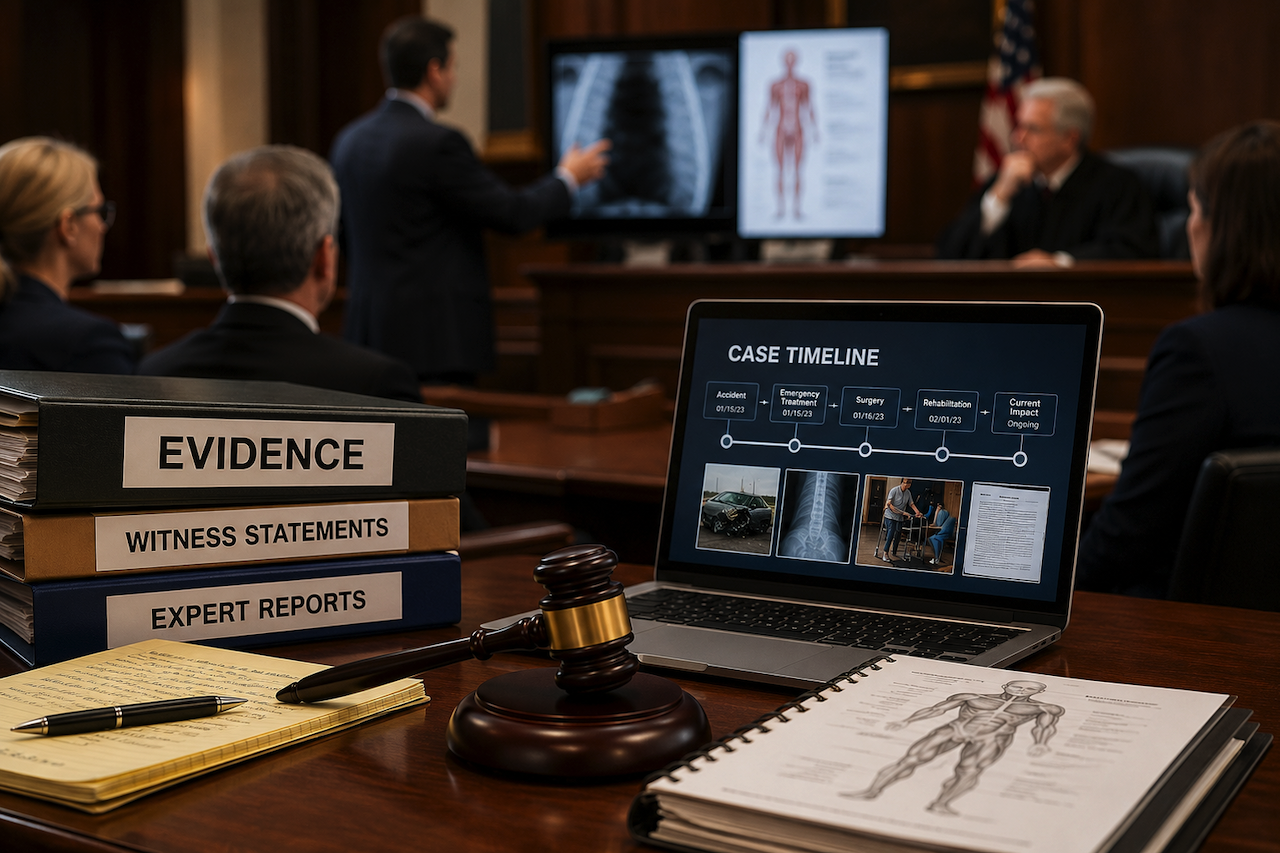
Courtroom Strategies Attorneys Choose For Complex Injury Cases
A serious injury case can change lives and leave people facing difficult legal challenges afterward. When disputes reach court, preparation, persuasive arguments, and credible evid...
Read More
April 6, 2026
How Technology Is Transforming the Way Injury Cases Are Handled
In many situations, an injury case effectively begins before anyone files anything. Data is already being generated—sometimes seconds after an incident:
Read More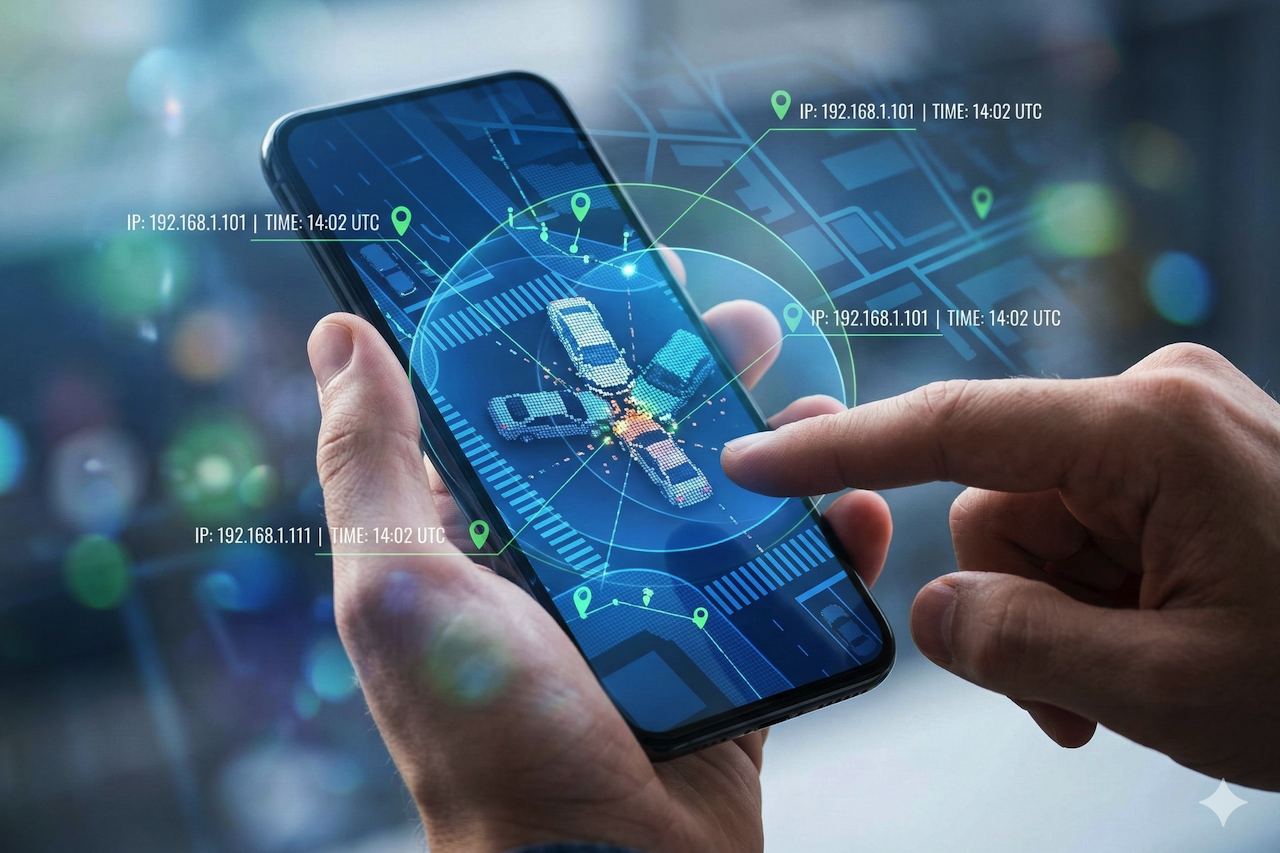
March 5, 2026
When IP Geolocation Data Becomes Key Evidence in Personal Injury Claims
Imagine a common argument after a car crash. One driver says the other sped through a yellow light. The other insists they were past the intersection when the accident happened, an...
Read More
Comments
Comments are available to signed-in users and are moderated to keep the discussion useful and respectful. Spam, automated submissions, and low-value promotional comments are removed. Outbound links may be approved when they are relevant and genuinely helpful to readers, but they are displayed as plain text rather than clickable hyperlinks.
No comments have been published yet.
Please sign in to submit a comment.