

Digital Marketing, Real Estate, Web Development
Top 10 Firms Every Builder Should Know
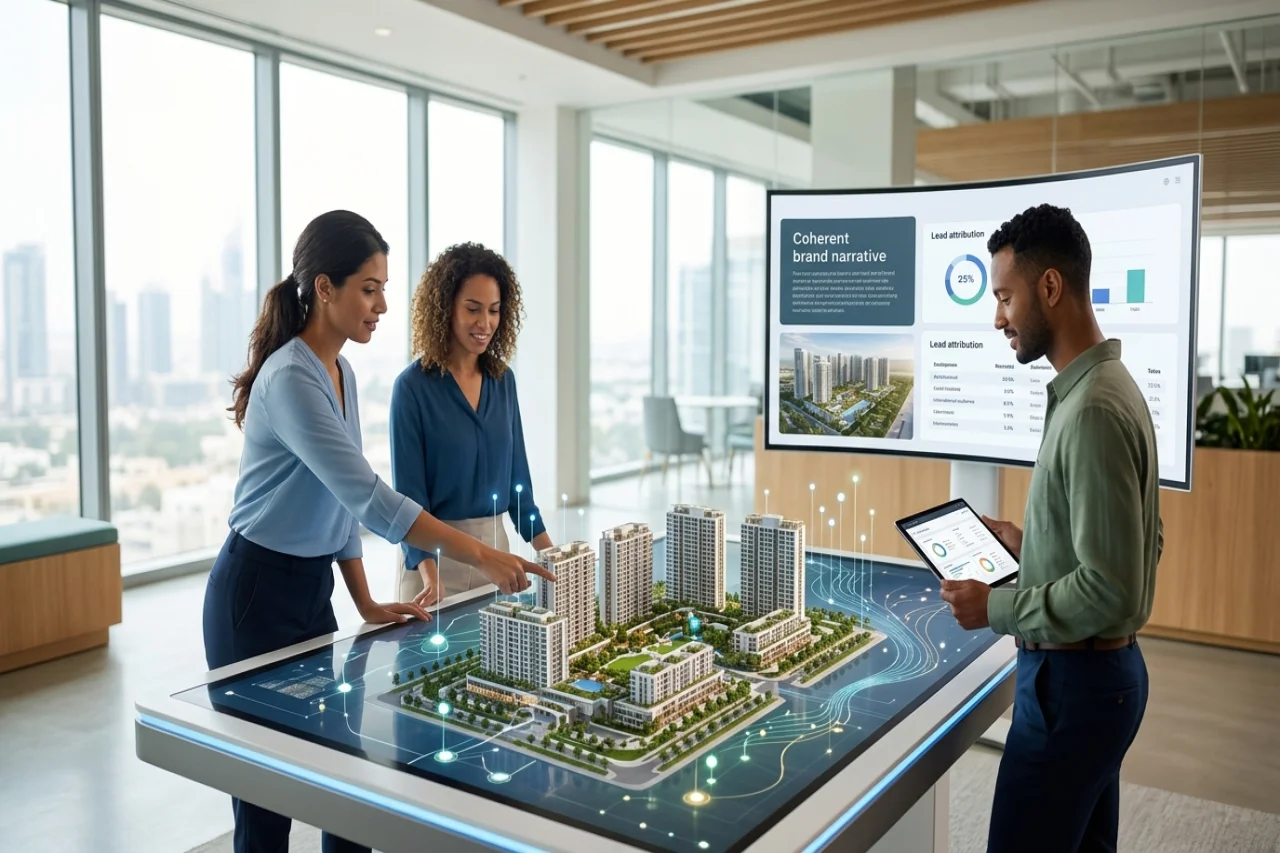
Marketing a large development is a long-cycle process, not a standard advertising assignment. Buyers may be evaluating an unbuilt product, lenders may be watching pre-sale momentum, and the brand must remain coherent through construction and phased releases. Real estate development marketing can therefore involve positioning, architectural visualization, digital acquisition, sales tools, and lead management working together around those realities.
Capgemini reported that global high-net-worth individual wealth reached $98.3 trillion by the end of 2025, while the HNWI population grew to 25.3 million. Those figures do not predict demand for one development, but they illustrate the scale of the potential audience for projects targeting affluent and international buyers. Across the industry, different firms demonstrate how branding, visualization, technology, and sales processes can contribute to development marketing.
Key Elements of Real Estate Development Marketing
A luxury tower may rely heavily on high-end CGI and international visibility, while a regional development may place greater emphasis on its website, local lead generation, and CRM integration. The marketing approach generally depends on the project, its audience, location, sales cycle, and stage of development.
Common elements of property development marketing include:
- Architectural CGI, 3D rendering, animation, and immersive experiences that help communicate unbuilt projects.
- Lead generation across search, social, paid media, content, and relevant international channels.
- Brand strategy, messaging, collateral, websites, and physical or digital sales environments.
- CRM integration, lead attribution, reporting, and clear marketing-to-sales handoffs.
These capabilities illustrate how real estate marketing can extend beyond advertising. The following firms provide examples of different approaches being used across the industry.
1. Omegarender
Omegarender now operates as the production heart of OMEGA, a wider real estate development marketing company focused on visual communication and related digital experiences. Its current work extends beyond CGI into project intelligence, property branding, websites, apartment selectors, interactive masterplans, virtual showrooms, and launch content. The company says it has collaborated across more than 40 countries and completed over 4,000 projects.
OMEGA illustrates how architectural visualization can become part of a broader development marketing system. Instead of limiting CGI to individual promotional images, visual concepts can carry across advertisements, websites, presentations, interactive tools, and other parts of the buyer experience. This reflects a wider industry shift toward connecting visualization with digital sales tools and project positioning.
2. Knightsbridge Park
Knightsbridge Park is a luxury real estate marketing specialist combining strategy, branding, media, digital advertising, web development, content, analytics, and technology-led experiences. Its public portfolio includes Central Park Tower, Four Seasons Residences, Rosewood Residences, and One Steuart Lane. Founder Jared Seeger states that he has led the marketing of more than $25 billion in global real estate.
The firm's work demonstrates an approach in which luxury creative positioning and media execution operate together. For internationally marketed developments, this can involve maintaining a consistent identity while using digital advertising, content, analytics, and other channels to reach audiences across multiple markets.
3. Conway+Partners
Conway+Partners positions itself as a real estate branding agency and works across branding, creative, and digital experiences. Its work can include naming, positioning, visual language, sales collateral, websites, and the translation of architectural ideas into a buyer-facing story.
This approach highlights the role of differentiation in property development marketing. Before traffic generation or sales activity begins, a development needs a recognizable identity and a clear explanation of what distinguishes it. Brand work can then provide a foundation for sales-gallery execution, digital campaigns, websites, and other marketing activities.
4. Fifth Estate
Fifth Estate is a strategic creative studio focused on property branding, placemaking, and destination storytelling. Its portfolio includes The Opus by Zaha Hadid, One Palm, SLS Dubai, Uptown Dubai, and other residential and mixed-use destinations. The studio emphasizes narrative, identity, campaigns, image-making, and how a place is perceived by buyers, investors, media, and stakeholders.
Its work illustrates how architecture, location, hospitality, and cultural context can become part of a project's broader value proposition. In this model, real estate marketing is concerned not only with launch materials but also with establishing how a development or destination is perceived over time.
5. Cotton & Company
Cotton & Company has focused on real estate sales and marketing for more than four decades and says it has supported more than 1,700 properties. Its capabilities span brand development, digital strategy, websites, search performance, content, lead generation, and market intelligence.
This breadth demonstrates the ongoing nature of marketing for master-planned communities, condominiums, resorts, and other developments with longer sales cycles. Strategy, creative, digital systems, lead generation, and ongoing optimization may continue well beyond the initial launch, particularly as inventory, pricing, and buyer priorities change.
6. Proven Partners
Proven Partners works exclusively with luxury resort and residential developments and combines development advisory with branding, marketing, lead generation, and sales support. Its services include feasibility analysis, concept and brand development, digital marketing, social media, and demand generation. The company also says its principals have developed, launched, and sold more than $1.3 billion in luxury real estate.
This model shows how marketing decisions can be connected to feasibility, positioning, and the broader development business plan. Rather than beginning only when a project is ready to advertise, marketing considerations can influence how a development is positioned before launch and continue through buyer acquisition and sell-through.
7. The Seventh Art
The Seventh Art specializes in branding and marketing for luxury real estate, hospitality, and destination projects. Its services include brand strategy, naming, identity, digital design, film, content, and immersive sales-gallery experiences. The firm has worked on projects such as Monogram New York and branded-residence assignments including Rosewood Residences.
Its work demonstrates the importance of strategic storytelling, art direction, and buyer experience in luxury development marketing. Film, print, digital interfaces, and physical sales environments can all communicate the same project identity, helping create continuity between how buyers first encounter a development and how they experience it during the sales process.
8. 1000WATT
1000WATT is a real estate-focused brand and strategy agency rather than a conventional full-service development marketing operator. Its capabilities include brand strategy and identity, campaigns, web strategy and design, strategic communications, market analysis, go-to-market planning, and industry advisory. It has worked with companies such as The Real Brokerage and operates within the broader real estate sector.
Its approach illustrates the role of positioning, messaging, identity, and strategic clarity within real estate marketing. These elements can help define how a development or developer brand communicates its differences before those ideas are carried into campaigns, websites, sales materials, and other channels.
9. Property Studios
Property Studios is a property marketing specialist serving estate agencies, builders, and developers. Its developer offering includes photorealistic CGI, drone photography and film, interactive plot locators, brochures, 3D tours, virtual staging, floor plans, branded microsites, and related digital tools.
This range of services demonstrates how practical sales assets and property technology can support the buyer journey. Analytics-enabled microsites, interactive media, virtual staging, and plot locators can help prospective buyers explore a development before completion while giving sales teams additional ways to communicate availability and project details.
10. Adream
adream is a Poland-based full-service agency with a dedicated marketing offering for real estate developers. It says it has worked in this area since 2011 and builds systems covering strategy, investment branding, property websites, apartment search tools, advertising, analytics, and CRM integrations.
The agency treats CRM as a foundation connecting lead sources, property availability, pricing data, and sales workflows. Its services also include Google Ads, Meta campaigns, lead generation, visual identity, and conversion-focused UX. This integrated approach illustrates how marketing technology can reduce the operational gap between campaign activity and the sales office.
Conclusion
Real estate development marketing can take many forms depending on the project and buyer journey. Omegarender and OMEGA demonstrate the expanding role of CGI and visual launch systems. Knightsbridge Park shows how luxury creative can connect with media and analytics. Conway+Partners, Fifth Estate, The Seventh Art, and 1000WATT illustrate different approaches to branding, positioning, and storytelling. Cotton & Company and Proven Partners demonstrate broader real estate marketing systems, while Property Studios and adream show how technology and sales-enablement tools can support development marketing.
Together, these examples show that modern property marketing extends across branding, visualization, digital acquisition, technology, CRM systems, and sales processes. How those elements work together depends on the development's audience, geography, sales cycle, and commercial objectives.
Comments
Comments are available to signed-in users and are moderated to keep the discussion useful and respectful. Spam, automated submissions, and low-value promotional comments are removed. Outbound links may be approved when they are relevant and genuinely helpful to readers, but they are displayed as plain text rather than clickable hyperlinks.
No comments have been published yet.
Please sign in to submit a comment.