

The Role of GPS and Navigation Technology in Group Travel
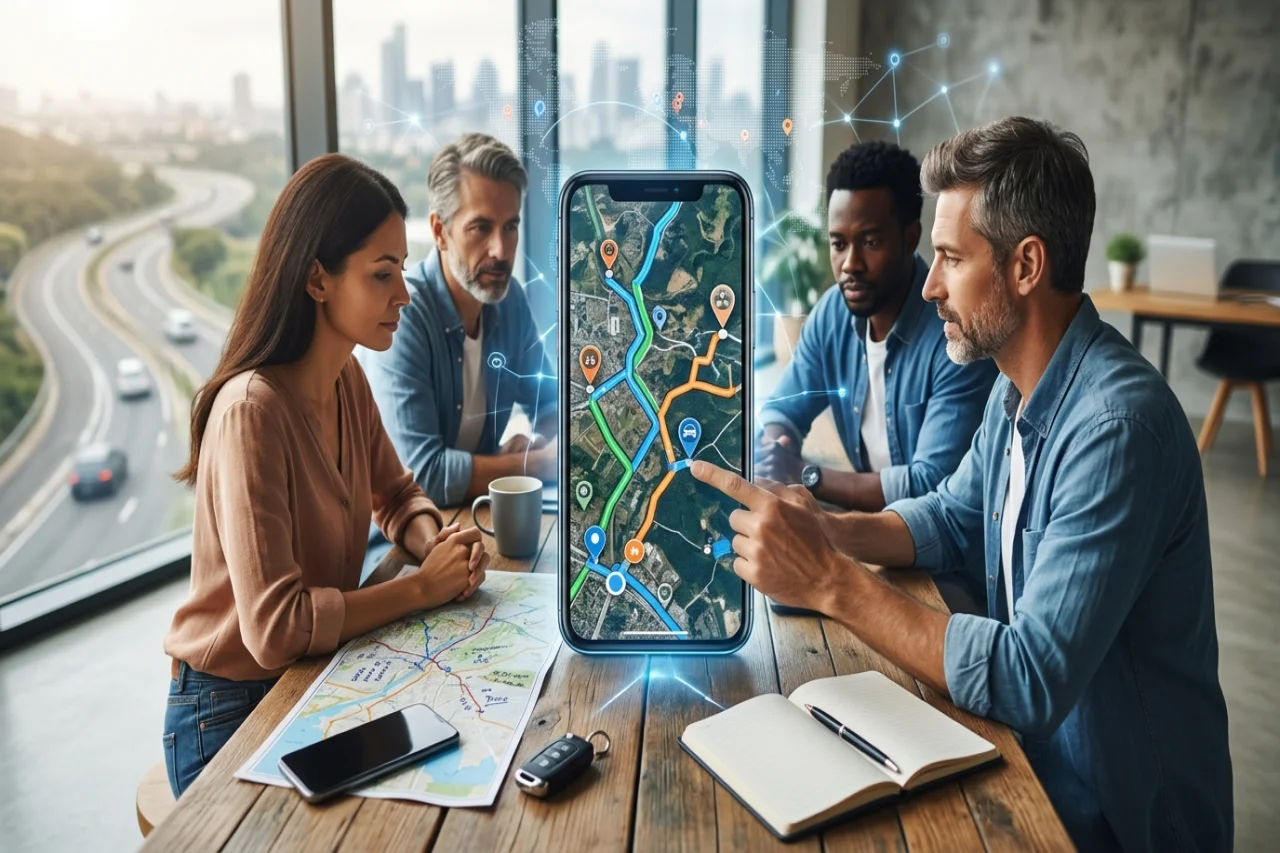
Traveling in groups is certainly a good way to visit a new place, participate in different activities, go on vacation, or even conduct business. On the other hand, organizing a trip for multiple individuals through unfamiliar roads and places can also be difficult, as there are different starting points, traffic changes, unfamiliar routes, and the risk that someone in the group will get lost.
Technology has revolutionized the way groups organize and manage their trips. Navigation devices and GPS help travelers plan their trips and track their routes and arrival times.
What Is GPS Navigation Technology?
GPS operates through satellites that calculate the exact coordinates of any device equipped with GPS. Today’s smartphones, cars, tablets, and navigation devices can obtain GPS data to pinpoint a traveler's location.
Navigation apps enhance this technology through such features as:
- Turn-by-turn instructions
- Live traffic data
- Arrival time estimates
- Alternative routes
- Sharing locations
- Points of interest nearby
- Travel notifications
- Maps for offline use in some apps
All of these features make trip-planning and traveling easier for a group.
How GPS Helps With Group Travel Planning
Group travel should start even before hitting the road. There is GPS-based navigation software that helps travelers choose good routes, determine journey time, and identify possible stops.
For instance, a group planning a journey to watch a sports match, attend a meeting, or go to a wedding will need to make some plans in advance using navigation technology. Travelers will be able to find fuel stations, restaurants, parking facilities, hotels, and other places to stop along the way.
It is especially important to plan routes in advance if there are many stops during the trip. It will not be necessary to have only written instructions or oral instructions.
Keeping Multiple Vehicles on the Same Route
Large groups do not necessarily have to fit in a single vehicle. Family reunions, company outings, school excursions, and even tours often involve multiple vehicles.
Using GPS will help ensure that drivers take the same route even if they get separated from other vehicles. Instead of making sure that they do not lose sight of each other, the drivers can use GPS to navigate to their destinations.
This reduces the risk of something going wrong, since drivers need not follow each other on an unfamiliar road.
Real-Time Traffic and Route Adjustments
The traffic situation can be unpredictable. Factors such as construction, accidents, road closures, bad weather, and traffic jams can make a simple trip difficult.
Using modern navigation apps, we can see the current traffic status and take alternative routes based on changes. It helps us plan better for the time of departure and route in case of travel as a group.
In case several cars are on the same route, the one leading can give directions for the other to follow if need arises.
Location Sharing and Coordination
The location sharing option can offer an additional means of coordination. Based on the application and its privacy settings, travelers can use location sharing to exchange their locations with the rest of the group.
This feature can be helpful when:
- One traveler arrives at the destination prior to other members of the group.
- Some of the vehicles become separated from each other.
- Travellers have to meet at a predetermined spot.
- Members of the group travel separately within a large destination.
- It is necessary to coordinate the time of departure.
Location sharing should always be agreed upon by all travelers involved.
GPS and Charter Bus Travel
Navigation technology can also support group travel involving charter buses. Because larger vehicles may be subject to road restrictions, designated parking areas, pickup zones, and other routing considerations, trip planning may require more than standard point-to-point directions.
Transportation providers may use GPS, digital mapping, and fleet-management systems to plan suitable routes, coordinate pickup and drop-off locations, monitor vehicle locations, and account for changing traffic conditions. During the planning stage, factors such as route requirements, vehicle capacity, scheduling, pricing, and availability may also influence transportation arrangements.
Passengers can also use digital maps to follow the planned itinerary, identify stops, and locate meeting points. For trips involving airports, conferences, concerts, sporting events, or tourist destinations, navigation technology can provide useful location and route information throughout the journey.
Easier Meeting Point Location
One of the easiest and most useful applications of GPS technology is the location of meeting points.
Rather than relying on vague locations like "meet near the entrance," organizers can provide a precise location on the map. It would prove very useful in large airports, shopping centers, parks, stadiums, transport terminals, and tourist destinations.
It could be very useful to have a clearly defined meeting point, especially when members meet at different times.
Offline Map Location Could Be Useful
Mobile connectivity may not always be reliable in some areas. People might lack cellular network coverage in the countryside, mountainous areas, tunnels, and other countries.
Some navigation tools give people the option of downloading maps to use them offline. The availability of an offline map is very important, especially when one has limited internet access.
People should ensure they have downloaded the required area data and have maps for offline use, and that their devices have enough battery power.
GPS Is Helpful, But It Is Not Infallible
Despite the capabilities of GPS and navigation systems, such applications cannot be viewed as perfect information providers.
In some cases, digital maps may provide out-of-date data, and the suggested directions might not take into consideration temporary restrictions, private roads, size limitations of your vehicle, etc. GPS signals can also become unreliable under certain conditions.
It is essential for a driver to be aware of road signs and local traffic rules rather than blindly following navigation suggestions. In case of group travel, safety should be the top priority number one.
Combining Technology With Good Group Communication
The GPS system will function optimally when it is used to enhance and complement communication between travelers.
The team may determine the following before departure:
- Destination location
- Rest stops
- Emergency stopover points
- Time of departure and arrival
- Communication mode
- Alternative routes
- Contact details
If all of these pieces of information are known, then even in the case of a dead battery, lack of communication, or lack of navigation technology, the team still has a plan.
The Future of Navigation for Group Travel
Technological developments continue to make changes in navigation as well. Connected vehicles, artificial intelligence, cloud map technology, and fleet management systems have resulted in advanced travel tools. These developments are also influencing areas such as agentic AI shopping.
Future navigation tools will be characterized by more advanced traffic predictions, personalized routes, more coordinated vehicle management, and more integration with public transportation and other travel services.
When it comes to traveling in groups, the common aim is to make it easier for people to see where they want to go and how to get there under changing conditions.
Conclusion
The GPS and navigation systems have become effective tools for traveling in groups in modern times. They allow travelers to organize their trip by planning routes, adjusting to traffic, finding meeting points, coordinating vehicles, and getting information during the trip.
On the other hand, technology needs to be used along with good planning and coordination when traveling in groups. This will make travelers' trips simpler.
Comments
Comments are available to signed-in users and are moderated to keep the discussion useful and respectful. Spam, automated submissions, and low-value promotional comments are removed. Outbound links may be approved when they are relevant and genuinely helpful to readers, but they are displayed as plain text rather than clickable hyperlinks.
No comments have been published yet.
Please sign in to submit a comment.