

Search Engine Optimization, Digital Marketing, Business
The Real Cost of SEO: What Small Businesses Pay Beyond the Invoice
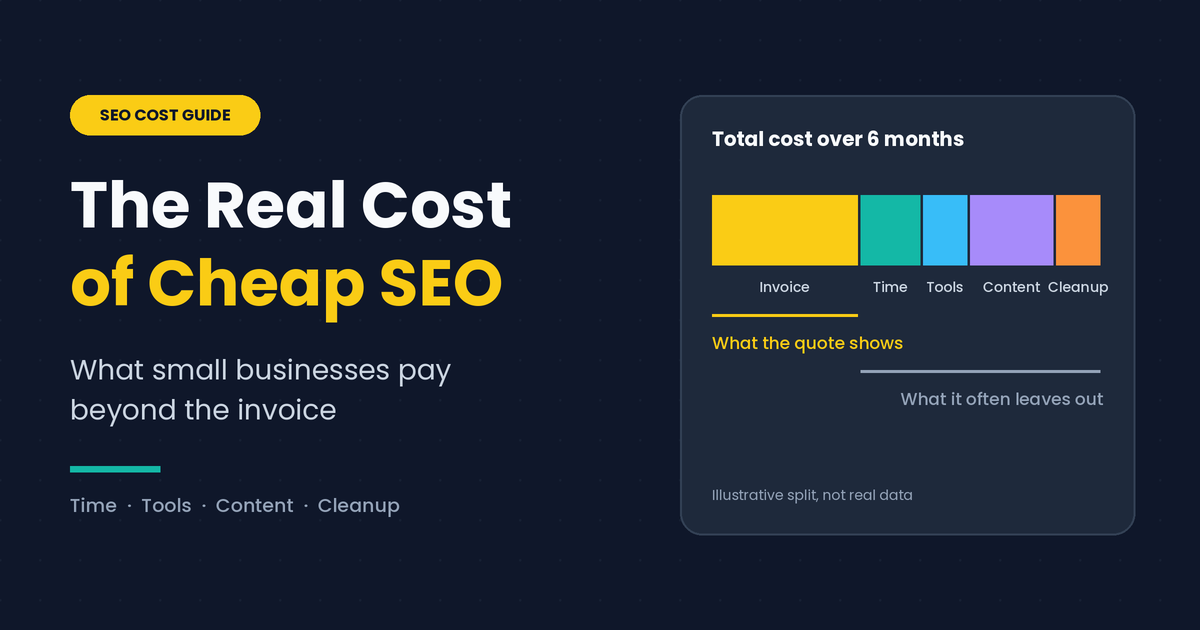
The monthly fee is the number everyone compares when they shop for SEO, and it is also the number that tells you the least. Two offers at the same price can end up costing a business very different amounts once time, tools, content, and error correction are factored in. A low price is not a problem on its own, because a tightly scoped SEO strategy can deliver real value on a small budget, and working with an experienced SEO expert can help businesses make the most of their available resources.
This guide looks at where the hidden costs sit, how to check an offer line by line, and how to match spending to the stage a business has reached.
Where the hidden costs sit
SEO spending rarely stops at the invoice. Four costs tend to appear later and are easier to handle when planned in advance.
- Your own time. Someone has to approve changes, answer questions, and supply facts about the business. A provider who requires hours of input every week costs more than the fee suggests, particularly for an owner already stretched.
- Tools and subscriptions. Some providers bundle rank-tracking and site-audit software into the price. Others pass those costs on or expect the client to hold the accounts. Ask before signing.
- Content. Rankings need pages that deserve them. If the package covers strategy but not writing, the content budget is a separate line, and it is often the largest one.
- Cleanup. A previous provider's bulk links, copied pages, or broken redirects can take months to repair. That work is rarely free, and it delays the progress a new campaign was supposed to deliver.
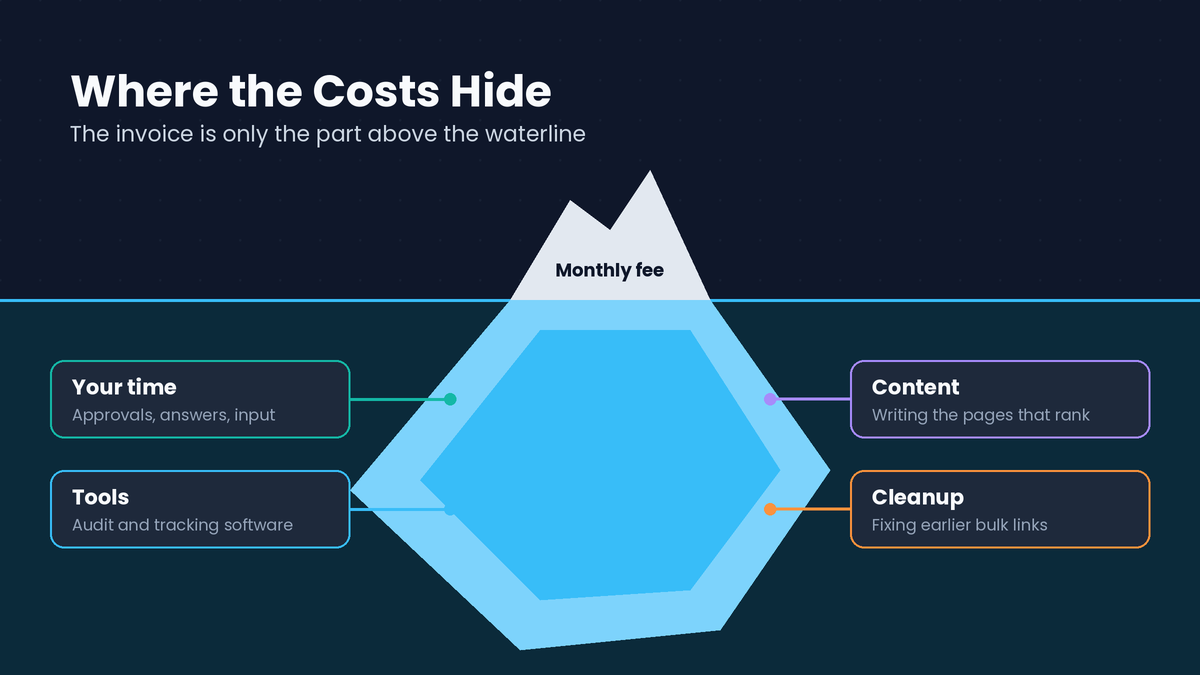
None of these make low-priced SEO a bad choice. They mean the real comparison is the total cost over six months, not the sticker price of month one.
The link risk nobody prices in
Links are where cheap offers most often go wrong. Search engines judge a link by the page it sits on, and thousands of links from pages with no readers, no topic, and no history look like manufactured votes. A site built on those links may rise briefly and then drop when the pattern is noticed.
Sometimes the harm does not come from the provider at all. A rival can flood a competing site with spam links, hoping to trigger a penalty or a ranking drop. That is known as a negative SEO attack, and small sites with thin link profiles are the easiest targets because the junk makes up a bigger share of everything pointing at them.
Three habits keep the risk low:
- Ask where every new link will be placed and approve the list before work starts.
- Export the backlink report once a month and keep it, so any spike can be dated.
- Treat a sudden jump in strange links, together with a ranking drop, as a reason to investigate at once.
How to check an offer line by line
A written scope is the quickest way to compare two prices fairly. Each line below should be answered in writing before any money changes hands.
| Line item | What it should include | Warning sign if missing |
|---|---|---|
| Audit | A list of technical problems with the pages affected | A generic report with no page names |
| Keyword plan | Target terms matched to specific pages | One list of keywords for the whole site |
| On-page work | Titles, headings, and internal links edited by hand | "Optimization" with no examples |
| Link building | Number of links, type of sites, and approval step | Only a total, with no site names |
| Reporting | Rankings, clicks, and leads in plain language | Screenshots of tool dashboards |
| Terms | Monthly notice and what happens to the work if you leave | A long lock-in period |
An offer that answers all six lines clearly is usually a fair one, whatever its price.
Matching spend to the stage of the business
A new site and an established one need different work, so the same budget should be split differently.
| Stage | Main focus | Where the money should go | What to skip for now |
|---|---|---|---|
| New site, under 6 months | Getting indexed and understood | Technical setup, a short keyword plan, core pages | Large link campaigns |
| Local business with steady customers | Map results and reviews | Listings, review collection, location pages | Broad national keywords |
| Established site with flat traffic | Finding what is stuck | Content refresh, internal links, a few strong links | New sections nobody asked for |
The pattern is the same at every stage. Fix what stops Google from understanding the site first, then add proof from outside, and only then expand.
Measuring whether it pays off
Rankings are a means, not the goal. The number that decides whether the spend was worth it is the cost of each lead from organic search:
monthly SEO spend / leads from organic search = cost per lead
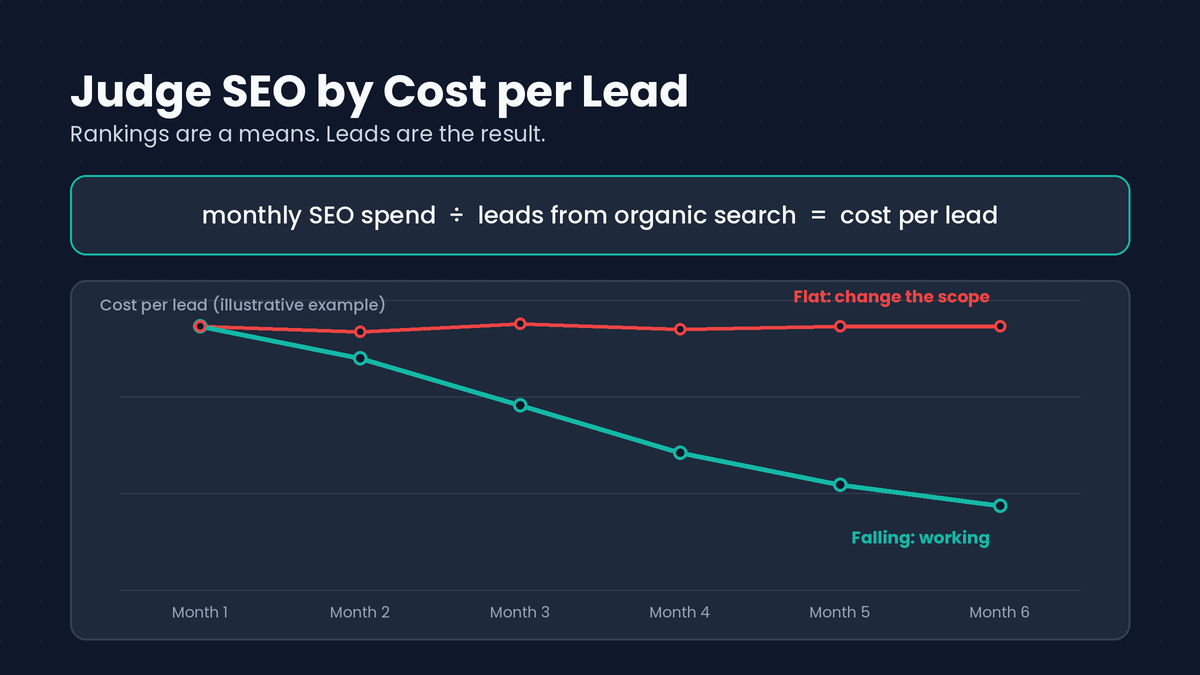
If the figure falls over three to six months, the campaign is working, even when the headline keywords have not reached the first page. If it stays flat while spending continues, the scope needs to change.
Mistakes that raise the real price
- Choosing the lowest quote without reading the scope
- Paying for links before the site's technical problems are fixed
- Changing provider every few months, which resets the progress
- Judging results after four weeks, when most work needs longer to show
- Letting the provider hold the only login to the analytics account
Key points
The price on the invoice is only one part of the cost of SEO. Count time, tools, content, and cleanup; ask for a written scope; approve every link source; and track the cost of each lead. A low-priced campaign that follows these rules can match a far more expensive one.
FAQ
Frequently asked questions
01Is a low-cost SEO a false economy?
Not when the scope is focused, and the work is done by hand. It becomes a false economy when the low price comes from automated links and templated reports.
02How much does bad SEO cost to fix?
There is no fixed figure. Cleanup usually takes several months of work before new growth can start.
03How long should I wait before judging results?
Three to six months is a fair window for most small sites.
04Can I control the cost by doing some tasks myself?
Yes. Writing about topics you know well and collecting reviews are good in-house tasks.
Comments
Comments are available to signed-in users and are moderated to keep the discussion useful and respectful. Spam, automated submissions, and low-value promotional comments are removed. Outbound links may be approved when they are relevant and genuinely helpful to readers, but they are displayed as plain text rather than clickable hyperlinks.
No comments have been published yet.
Please sign in to submit a comment.