

Cybersecurity, Crypto & Blockchain, Finance
The Crypto Swap Quote Isn't the Price: What Actually Determines What You Receive
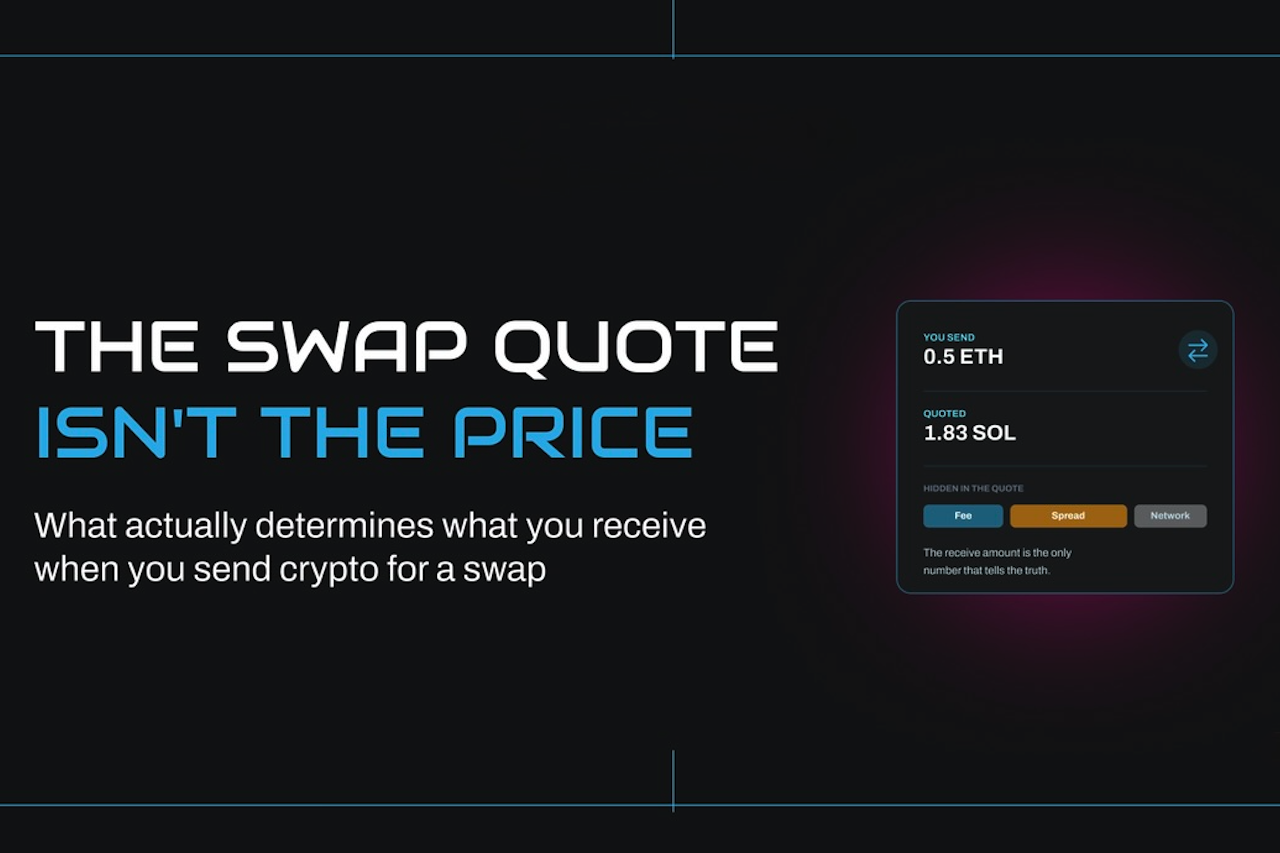
You open a swap page, enter an amount, and get a number: send 0.5 ETH, receive 1.83 SOL. Twenty minutes later, the amount that lands in your wallet is different — sometimes by a little, occasionally by a lot. Nothing was stolen. Nothing broke. The quote was simply never a fixed promise; it was an estimate built from several moving parts, and most of them aren't visible on the screen where you see the number.
Understanding those parts doesn't just satisfy curiosity; it changes which provider you'd pick and which rate type you'd choose.
Three cost layers hiding inside every quote
A swap quote is rarely a single price. It's usually built from three layers stacked on top of each other, and platforms disclose each layer to varying degrees of honesty.
- Service fee: The amount a provider charges for facilitating the swap. Some platforms display this separately, while others incorporate it into the quoted exchange rate.
- Spread: The difference between the broader market price and the exchange rate offered for the transaction. This means two platforms advertising similar headline fees may still provide different final amounts for the same swap.
- Network fee: The blockchain transaction fee associated with transferring the cryptocurrency. Network fees can vary depending on the blockchain and current network conditions, so users should check whether this cost is already included in the quote or calculated separately.
None of these three layers is dishonest on its own. The problem is that a single quote from a single provider shows you its own mix of the three, with no way to tell how much of the "good rate" is real and how much is a widespread doing the work.
Fixed vs. floating: what each protects you from
Most providers let you choose between a fixed and a floating rate, and the choice matters more than it looks.
A fixed rate locks in the exchange rate for a short window, usually 10–15 minutes, so market movement during that window doesn't change what you receive. In exchange, fixed rates typically carry a wider built-in spread, because the provider is absorbing the risk of the market moving against it before your transaction settles.
A floating rate tracks the market in real time. It can work in your favor if the price moves in your direction while your transaction is confirming, and against you if it doesn't. On networks with slow confirmation times, even a few minutes of price movement can turn a favorable quote into a smaller-than-expected payout; this is the slippage that catches many first-time swappers off guard.
Neither option is universally better. A fixed rate suits a nervous or volatile market; a floating rate suits a stable one and a fast network. The mistake is not knowing which one you picked.
Why a low headline fee isn't the same as cheapest
A provider advertising the lowest fee isn't necessarily the cheapest one to actually use — a wider spread can absorb more of your funds than a disclosed, higher fee would, even though the marketing headline reads better. The only number that tells the truth is the amount that actually lands in your wallet, not the number on the marketing banner.
The practical way to check this is to compare the received amount, not the advertised fee, across a few providers for the same pair, the same amount, at the same moment. That's a fairer test than trusting any single quote, and it's the reason side-by-side comparison across multiple crypto exchange providers has become a standard step for anyone moving a meaningful amount, rather than a nice-to-have.
The risk no rate shows: KYC after you've already sent funds
The cost layers above affect how much you receive. A separate risk affects whether the transaction completes at all: identity verification requested after you've already sent crypto.
Many instant-swap providers do not require KYC for every small crypto-to-crypto transaction. Verification requirements can instead depend on factors such as the provider's policies, transaction characteristics, and risk-based compliance checks. For example, Changelly exchange is one platform that may apply verification requirements based on its compliance procedures. Because these requirements can vary by provider and transaction, users should review the applicable KYC policies before initiating a swap.
Look Beyond the Headline Rate
A crypto swap quote is only useful when the costs and conditions behind it are understood. Service fees, spreads, network fees, and the choice between fixed and floating rates can all affect the final amount received. Verification requirements can also vary between providers and transactions. Comparing the expected received amount, reviewing the rate type, and checking a provider's current fees and KYC policies can provide a clearer picture before initiating a swap.
Disclaimer
This article is for general informational and educational purposes only and does not constitute financial, investment, legal, or tax advice. Cryptocurrency transactions involve risk, and rates, fees, policies, and regulatory requirements may change. IPLocation.net does not endorse or guarantee any platform or service mentioned in this article and is not liable for any losses, damages, delays, transaction outcomes, or other consequences arising from the use of third-party cryptocurrency services. Readers should conduct their own research and verify all relevant information directly with the applicable provider before making a transaction.
Comments
Comments are available to signed-in users and are moderated to keep the discussion useful and respectful. Spam, automated submissions, and low-value promotional comments are removed. Outbound links may be approved when they are relevant and genuinely helpful to readers, but they are displayed as plain text rather than clickable hyperlinks.
No comments have been published yet.
Please sign in to submit a comment.