

Static vs. Rotating Proxies: Which Is Better for Your Use Case?
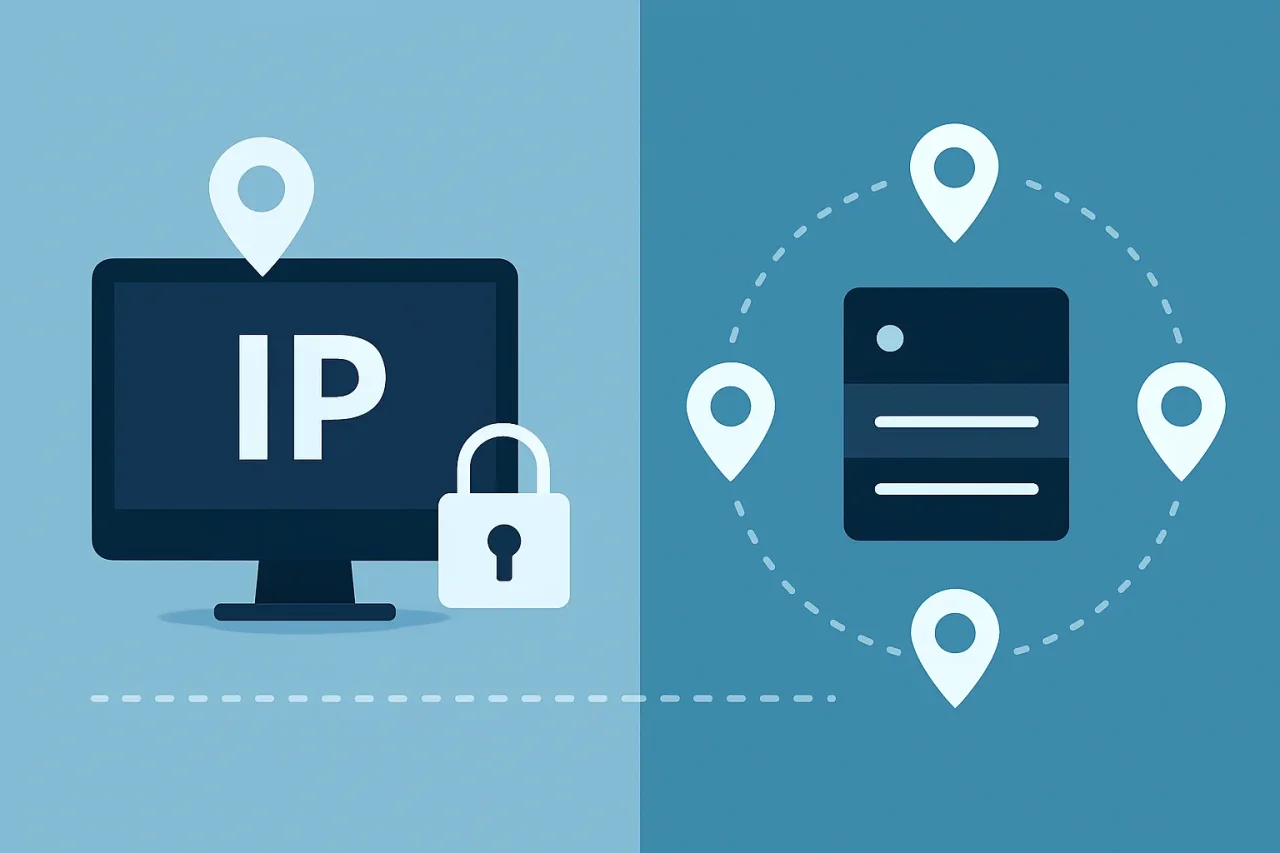
Static or rotating proxies? It depends on what your workflow needs: a single, consistent IP address or access to multiple IP addresses. Static proxies keep the same IP across requests, so they're a great fit for ongoing sessions and repeat connections. For example, ISP proxies are a popular static option for tasks requiring connection stability.
Rotating proxies automatically switch IP addresses, which is ideal for workloads that need greater IP diversity. Knowing the differences makes it easier to choose the proxy that fits your needs.
What Are Static and Rotating Proxies?
What Are Static Proxies?
Static proxies send your internet traffic through one fixed IP address. It stays the same until you replace or reassign it. That makes static proxies a great fit for long-running sessions, repeated logins, and workflows that require a stable connection.
Static ISP proxies and datacenter proxies are two popular options. Both provide consistent IP addresses, but they're built differently and assign IPs differently.
What Are Rotating Proxies?
Rotating proxies automatically switch between IP addresses from a provider's pool. They can rotate with every request, at set intervals, or whenever a new session starts.
Rotating residential proxies are a popular option. They use IP addresses tied to real residential internet connections, making them a great fit for tasks that require access to multiple IPs.
Some providers also offer sticky sessions. These keep the same IP address for a short time before rotating it, so your connection stays stable without needing a permanent IP.
Static vs. Rotating Proxies: Understanding the Differences
Static and rotating describe how an IP address behaves during use. A static proxy keeps the same IP address for the whole session. A rotating proxy automatically switches IP addresses, boosting anonymity and giving you access to more locations.
These terms describe how a proxy operates, not where its IP comes from. Residential, ISP, and data center proxies determine the IP's origin, so any of them can be static or rotating.
| Feature | Static Proxies | Rotating Proxies |
|---|---|---|
| IP address | Remains consistent | Changes automatically |
| Session stability | Ideal for long sessions | Depends on rotation settings |
| Connection speed | Often predictable | Varies by proxy network |
| IP diversity | Limited to assigned IPs | Access to a changing IP pool |
| Pricing | Commonly per IP | Often bandwidth-based |
| Best suited for | Consistency and continuity | Distributed requests and location diversity |
Note that performance, reliability, and pricing can vary significantly depending on the specific provider and the infrastructure they use.
When Should You Use Static Proxies?
Managing Accounts and Login Sessions
Static proxies are ideal for accounts that need consistent connections. Logging in from the same IP address helps you avoid unexpected security checks caused by sudden location changes. A stable IP also keeps your sessions authenticated across repeat visits, so you can pick up right where you left off.
eCommerce and Checkout Workflows
Online shopping takes several steps, from adding items to your cart to completing payment. Static proxies keep your IP address consistent, so you're less likely to encounter session interruptions or additional verification requests.
Switching IP addresses mid-transaction can trigger security checks, which may slow down your checkout. Stick with one connection until your purchase is complete.
Ongoing Monitoring and Automation
Static proxies are also well-suited for recurring monitoring and automated tasks that require predictable connections.
Businesses can use them to monitor websites from a single, consistent location, making it easy to compare results over time. They're also ideal for systems that use IP allowlisting, where specific addresses must be approved before accessing resources.
When Are Rotating Proxies the Better Choice?
Large-Scale Web Scraping
Rotating proxies are ideal for large-scale web scraping. They spread requests across multiple IP addresses, so you don't rely on a single IP when collecting data you're authorized to access.
Keep in mind that rotating IPs doesn't replace good etiquette. Always respect website rate limits and keep your request frequency reasonable.
Geographic Research and Testing
Rotating proxy pools let you access websites through IP addresses in different locations. That makes it easy to check localized search results, compare regional pricing, and test how your site performs across markets.
With access to multiple regions, your research goes further than it ever could with a single static IP.
Short-Lived, Independent Requests
Rotating proxies are a great fit for independent requests that don't need persistent sessions or authentication.
Multi-step workflows are different. Frequent IP changes can get in the way. If your address switches mid-session, you may face extra security checks or interrupted processes.
Final Verdict: Static or Rotating Proxies?
Neither proxy type is universally better. Static proxies offer stability and predictable connections, while rotating proxies provide flexibility and IP diversity. Before choosing a proxy service, consider your workflow, session requirements, and how frequently you need to change IP addresses.
Comments
Comments are available to signed-in users and are moderated to keep the discussion useful and respectful. Spam, automated submissions, and low-value promotional comments are removed. Outbound links may be approved when they are relevant and genuinely helpful to readers, but they are displayed as plain text rather than clickable hyperlinks.
No comments have been published yet.
Please sign in to submit a comment.