

Ecommerce, Social Media Marketing, Online Tools
Social Snowball Alternatives for Growing E-Commerce Brands
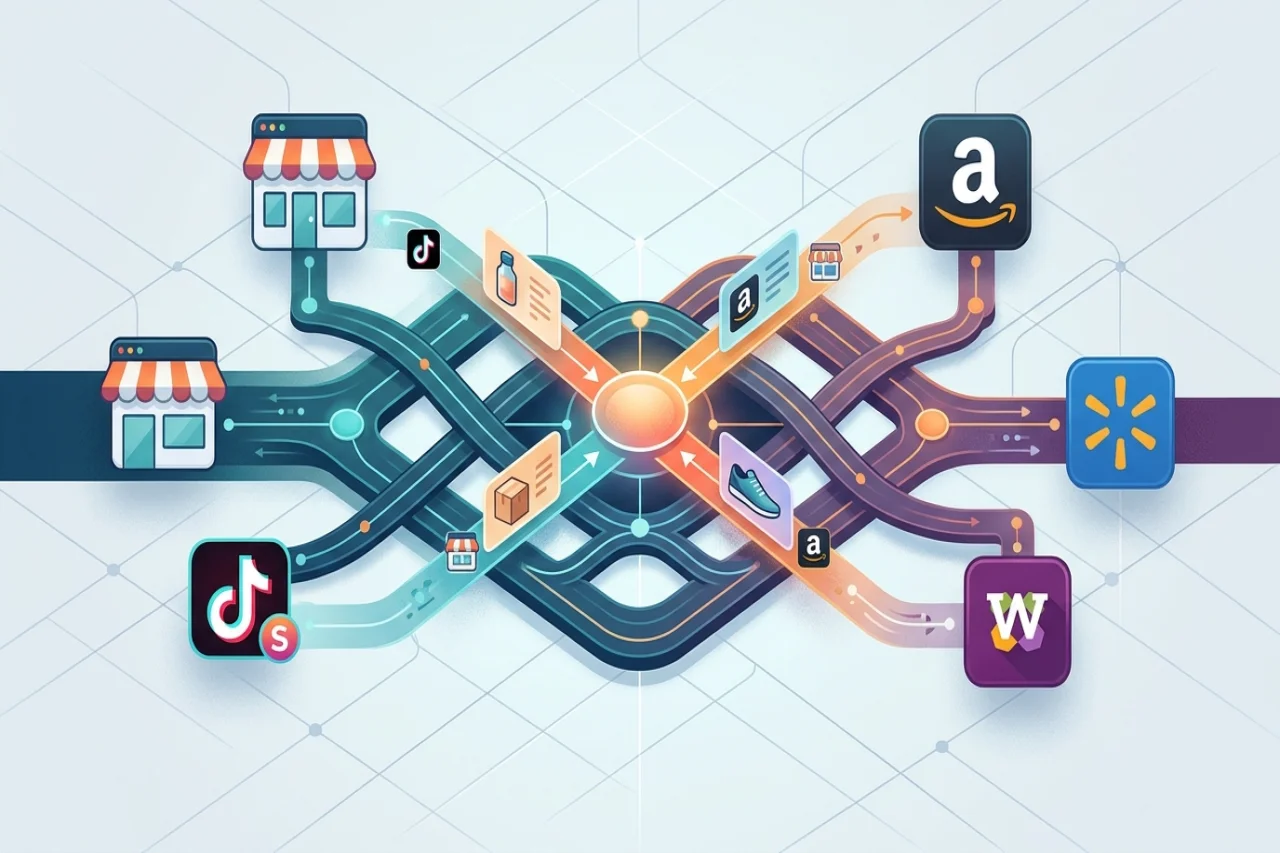
I set up my first Social Snowball program for a small supplement store a few years ago, and for a long time I didn't have to think about it. Customers checked out, got an invite, grabbed their link, and started sharing. It mostly ran itself, which is "something" when it comes to affiliate software.
Soon after, the store started selling on Amazon, and a few of our best creators stopped selling (or at least, I thought so). Their traffic was the same, but their Shopify sales dropped. It took me quite a while to figure out what happened. Their followers were still buying, just on Amazon, where Social Snowball can't track.
Since then, I’ve set up or moved programs on most of the tools below, and each one is good at something different. A couple of them address the Amazon problem, some are just better Shopify tools, and one is less of a tool and more of a network. Here’s what each one does well and who I’d point it toward.
Social Snowball vs. The Alternatives
| Tool | Sales it tracks | Best for | Main limitation |
|---|---|---|---|
| Social Snowball | Shopify, TikTok Shop | Turning customers into affiliates | No Amazon or Walmart tracking |
| Levanta | Amazon, Shopify, Walmart, Wayfair & TikTok Shop | One creator program across every channel | Shopify app is newer than its Amazon side |
| Superfiliate | Shopify, TikTok Shop | Creator storefronts and partnership ads | No Amazon or Walmart tracking |
| Refersion | Your online store | Detailed commission rules | Built for affiliates more than creators |
| impact.com | Your online store | Large programs with a dedicated owner | Steep learning curve |
| Awin | Your online store | Reaching coupon, cashback, and content publishers | Built for publishers more than creators |
| UpPromote | Shopify | A Social Snowball setup with more options | Shopify only |
When Social Snowball is Still the Right Tool
Plenty of people should not switch from Social Snowball. Shopify only, affiliates who are mostly happy customers, TikTok Shop on the side - all of them are basically covered. Moving platforms means new links, new codes, and re-inviting everyone. That’s a lot of work to end up where you started.
Social Snowball is meant to turn your customers into affiliates. Shoppers are invited to join your program right after they make a purchase, so your affiliate list grows with your order count.
It also does a few other things well:
- Safelinks protect your discount codes from leaking onto coupon sites.
- Reward levels and gamification give affiliates a reason to keep sharing.
- Payouts can go out as cash, gift cards, or store credit.
- The TikTok Shop integration shows Shopify and TikTok Shop sales on the same creator profile.
You might, however, start looking elsewhere after you begin selling on Amazon or Walmart, want to work with creators and publishers who have never bought from you, or need more control over how commissions work.
Social Snowball Alternatives At a Glance
- Levanta: one creator and affiliate program for Amazon, Shopify, Wayfair, TikTok Shop and Walmart.
- Superfiliate: a shoppable storefront for every creator, connected to your Shopify catalog.
- Refersion: commission rules by product, SKU and customer type, with first-party tracking.
- impact.com: separate products for affiliates, creators and customer referrals.
- Awin: an affiliate network with publishers already on it, in many countries.
- UpPromote: a Shopify affiliate app with thousands of App Store reviews.
1. Levanta
Levanta runs one creator and affiliate program through Amazon, Shopify, Wayfair, TikTok Shop, and Walmart. It started as an affiliate platform for Amazon sellers, added Shopify in March 2026, and acquired Perch+ (an affiliate network built for Amazon sellers) in April 2026. In August 2026, it raised a $22M Series B and reported more than 90,000 vetted creators and publishers on the platform.
The main reason to pick it is that it makes every sale count, wherever it happens. A creator gets one program and one set of links, and you see what they sold on Amazon, Shopify, Wayfair, TikTok Shop, and Walmart in one place.
On the Amazon side, it connects to the things that make Amazon affiliate programs hard to run yourself:
- Amazon’s Attribution API. Sales come through a direct connection to your seller account, so you can see results by creator and by ASIN (Amazon’s ID for each product).
- Brand Referral Bonus. Amazon pays back around 10% of sales from outside traffic. Levanta helps you collect it, which offsets part of what you pay creators.
- Creator Connections. Amazon’s own creator program runs from the same dashboard, so you don’t manage two programs.
- International Amazon stores. You can run programs outside the US marketplace too.
The newest addition is an MCP server (a connector for AI assistants). You connect your Levanta account to Claude or ChatGPT and ask questions in plain English, such as which creators drove the most sales last month or which products have the best return rate. It’s read-only, so it can get and summarize your data but can’t change commissions or message creators.
You don’t need an Amazon store for any of this to be useful. A Shopify-only store gets the same seeding, Paid Placements, social discovery and payouts, and it’s already set up for the day you add Amazon or Walmart.
It also has a free Slack community that’s open to anyone, customer or not. It’s a good place to ask how other sellers handle Amazon attribution before you commit to any tool.
Levanta has worked with Amazon from the start, but its Shopify app launched in March 2026, so it’s proven itself most on Amazon.
2. Superfiliate
Superfiliate is a Shopify-native creator platform that gives every creator a personalized, shoppable storefront connected to your Shopify catalog. When a product goes out of stock or changes, the creator’s page updates on its own.
I think the storefronts are one of its best features. A creator’s link goes to a page with their picks from your store, instead of your homepage, so their followers land on the products the creator talked about. According to Superfiliate themselves, Graza achieved a 7x return on ad spend within 72 hours using these pages, and the pages continued to convert for over a year.
The other features focus on creator content:
- Launch Meta Partnership Ads (ads that run from a creator’s account) without leaving the platform.
- Native TikTok Shop support, with creator discovery and analytics.
- Instagram DM automations for finding and recruiting creators.
- A content library that collects posts creators tag you in.
- Payouts by ACH, Venmo, PayPal, or store credit, with 1099s handled automatically.
Superfiliate tracks Shopify sales. If your creators send people to Amazon or Walmart, those sales won’t show up, which is the same limit Social Snowball has.
3. Refersion
Refersion is an affiliate platform for stores that want detailed control over how commissions are calculated. You can set rates by product or SKU, pay different rates for new and returning customers, and set separate rates for subscriptions. For example, you could pay a higher rate on a customer’s first order, a lower one on reorders, and a different rate when someone signs up for a subscription.
Tracking is first-party, through your own domain, without third-party cookies. Payouts go out monthly based on approved conversions, and Refersion can generate 1099 forms. It also connects to Klaviyo, Yotpo, and more than 2,000 apps through Zapier, so you can feed your affiliate activity straight into your email flows and review requests.
You can also list your offer in the Refersion Marketplace, where affiliates can find you and apply. It works with Shopify, BigCommerce, and WooCommerce.
But, like most tools on this list, Refersion tracks your store, not Amazon or Walmart. After all, its features are built around affiliate tracking and payouts more than creator campaigns.
4. impact.com
impact.com is a partnership platform split into three products: Performance for affiliates, Creator for influencers, and Advocate for customer referrals.
Advocate is the closest match to what Social Snowball does. On Shopify, it adds a widget after checkout that invites customers to your referral program and syncs referral discount codes with your Shopify store.
The platform has added a lot this year. At its iPX event in June 2026, impact.com announced:
- A Recruitment Agent (in closed beta) that finds, vets, and onboards new partners, with your approval.
- Creator storefronts, now generally available, where creators curate a shop of your products.
- A way to turn creator posts into paid Instagram campaigns from inside the platform.
Earlier in the year, impact.com also announced an alliance with Rakuten Advertising’s publisher network and managed services. Fraud detection uses machine learning and flags suspicious conversions automatically.
All of that comes with a learning curve. impact.com is best used by someone on your team who does partnerships as their main job. It can be a lot of software to learn for a single marketer who handles your affiliate program and another ten things on their own.
5. Awin
Awin is an affiliate network, which means you get access not just to the software but to publishers as well. Its network includes coupon, cashback, comparison, and content sites in many countries, which helps if you want reach beyond your own customers and creators.
After absorbing ShareASale, Awin finished moving all of its active customers over in August 2025, bringing about 9,500 advertisers and 250,000 active publishers into one platform. The old ShareASale platform shut down in October 2025.
For smaller stores, Awin Access is a self-service version you can set up yourself. The Shopify plugin includes automatic validation, which approves or declines commissions based on whether the order was kept or refunded. That’s the feature I’d care about most here, because checking every sale by hand is the most tedious part of running a program with many publishers.
Awin is built around publishers more than individual creators, and it tracks sales on your own store instead of Amazon or Walmart. I’d use it for publisher volume and keep creators on a separate tool.
6. UpPromote
UpPromote is a Shopify affiliate app with thousands of reviews on the Shopify App Store, and of everything on this list, it works the most like Social Snowball. You manage it from your Shopify admin, and it covers both affiliates and customer referrals.
Its main features:
- Multiple affiliate programs with different rules.
- Multi-level commissions, where affiliates earn on sales from people they recruit.
- A customer referral program.
- Store credit payouts.
- In-app chat with your affiliates.
- A marketplace for finding creators.
Store credit payouts could be interesting to you if most of your affiliates are customers because the credit brings them back to your store to buy again.
I'd recommend UpPromote if you like how Social Snowball works but want more program options.
Watch Out Before Switching
Before I switch away from any tool, I usually go through five questions.
- Where do my sales happen? I get the last 90 days by channel, and if a meaningful share of sales comes from Amazon or Walmart, I know I need a tool that tracks those channels too.
- Who are my affiliates? Customers, creators, and coupon or cashback sites need different things. I make a rough list of who drives my sales today and pick a tool built around that group.
- How do I pay them? I check whether I need store credit, flat-fee deals, per-click payments, or anything else, and I confirm the new tool supports all of it before signing up.
- Who runs the program? If it’s me part-time, I want something I can set up in an afternoon. A full-time partnerships manager can handle a bigger platform with more settings.
- How does my data change? I check that I can export affiliates and commission history, see results by product, and connect the data to my other tools.
Making the Switch
If I had to choose one, I’d go with Levanta for stores that are growing past Shopify. The more places you sell, the more your creators’ sales scatter, and Levanta is the only tool on this list that keeps all of that in one report. That’s what would have saved me months of confusion both in programs that worked and ones that didn’t.
That said, Social Snowball is still a great tool. If you sell on Shopify, most of your affiliates are customers, and TikTok Shop is your second channel. It does the job well, and switching would be more trouble than it’s worth.
In the end, the best tool is the one that tracks sales where you sell. Shoppers don’t stick to one store anymore, so your affiliate program shouldn’t either.
Comments
Comments are available to signed-in users and are moderated to keep the discussion useful and respectful. Spam, automated submissions, and low-value promotional comments are removed. Outbound links may be approved when they are relevant and genuinely helpful to readers, but they are displayed as plain text rather than clickable hyperlinks.
No comments have been published yet.
Please sign in to submit a comment.