

Navigating Digital Marketing in 2026: Key Trends Driving Innovation, Growth, and Human Connection
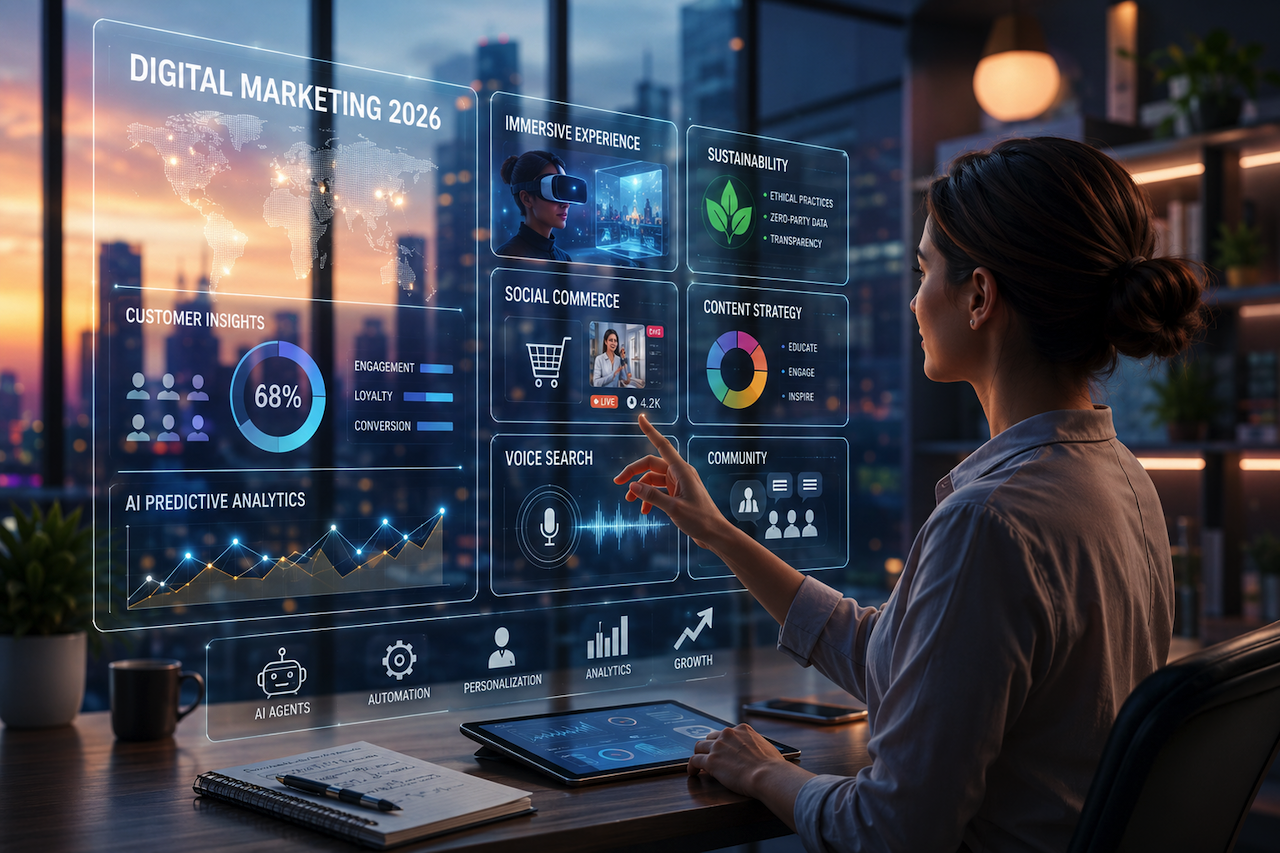
The digital marketing landscape in 2026 looks nothing like it did even two years ago. What once revolved around clicks, impressions, and basic targeting has evolved into a sophisticated ecosystem powered by predictive intelligence, immersive experiences, and a renewed emphasis on trust. Brands that thrive blend cutting-edge technology with deep human insight. As algorithms grow smarter and consumer expectations skyrocket, success depends on agility, ethics, and a willingness to put people first. Marketers today are not just promoters—they are experience architects, data stewards, and community builders.
Right at the heart of this evolution is the recognition that technology alone is not enough. In an AI-saturated environment, the ability to communicate with authenticity and emotional intelligence has become increasingly important. Personality development stands out as an essential investment for marketing professionals and business leaders alike. By focusing on self-awareness, storytelling skills, and confident presence, individuals can create personal brands that cut through the noise and build lasting connections with audiences who crave real voices over polished automation.
The Shift Toward Immersive and Experiential Marketing
One of the most exciting developments in 2026 is the mainstream adoption of immersive technologies. Augmented reality (AR) and virtual reality (VR) are no longer experimental; they are core channels for customer engagement. Shoppers can virtually try on clothing, test furniture in their living rooms, or attend branded events in the metaverse without leaving their homes. Spatial computing allows brands to create interactive 3D environments that feel personal and memorable.
This trend extends beyond retail. Service-based businesses use VR for virtual tours, while B2B companies host immersive product demonstrations that increase engagement rates by up to 300% compared to traditional webinars. Short-form video remains powerful, but it is now complemented by longer, story-driven immersive content that lets consumers actively participate rather than passively consume. The result is higher emotional investment and stronger brand recall.
At the same time, social commerce has matured into a seamless, shoppable experience across every major platform. Live shopping events, AI-powered recommendation engines, and one-click checkout have turned social feeds into virtual storefronts. Brands that master this blend of entertainment and commerce often improve conversion rates while reducing customer acquisition costs.
AI Agents, Predictive Analytics, and Hyper-Efficient Campaigns
Artificial intelligence continues to reshape every stage of the marketing funnel. Autonomous AI agents now handle everything from audience segmentation to real-time bidding adjustments and creative variation testing. These agents learn continuously, predict campaign performance before launch, and even suggest entirely new tactics based on emerging consumer behavior patterns.
Predictive analytics has moved beyond simple forecasting. In 2026, companies increasingly rely on data-driven decision-making and strategic business plans to align marketing investments with long-term operational goals. This allows for proactive campaign adjustments rather than reactive fixes. However, the most successful teams treat AI as a collaborator rather than a replacement. Human creativity still defines the big ideas; machines execute them at scale with precision.
Voice search and conversational interfaces have also reached new levels of sophistication. With smart assistants embedded in everything from cars to kitchen appliances, brands optimize for natural language queries and context-aware responses. This demands content that answers questions directly, provides value instantly, and maintains a conversational tone that feels helpful rather than salesy.
Sustainability, Ethics, and Zero-Party Data Strategies
Consumers in 2026 are more values-driven than ever. They actively seek brands that demonstrate environmental responsibility, social impact, and ethical data practices. Sustainable marketing is no longer a niche—it is a baseline expectation. Campaigns highlight carbon-neutral operations, ethical supply chains, and community initiatives with transparent reporting that builds credibility.
Data privacy regulations have tightened further, making third-party cookies and invasive tracking nearly obsolete. The winning strategy revolves around zero-party data—information that customers willingly share in exchange for personalized value, exclusive content, or enhanced experiences. Brands that build trust through clear consent mechanisms and reciprocal benefits enjoy deeper loyalty and richer insights.
This ethical approach extends to content creation. Audiences have grown tired of generic AI-generated material and reward originality, transparency, and purpose. User-generated content, co-created campaigns, and influencer partnerships rooted in genuine alignment perform exceptionally well because they feel authentic in a world full of automation.
Content Strategy in the Age of Attention Scarcity
Attention spans remain fragmented, yet demand for meaningful content has never been higher. Long-form, value-packed resources that educate, entertain, or inspire continue to build authority and trust. At the same time, micro-content—bite-sized insights delivered through Reels, TikTok-style videos, or newsletter snippets—drives immediate engagement and funnels users toward deeper experiences.
Omnichannel consistency is critical. A customer might discover a brand on social media, research it through search, engage via email, and complete a purchase through an app. Every touchpoint must feel cohesive while adapting to the platform's context. Personalization engines ensure that messaging feels relevant without crossing into creepy territory.
Community building has emerged as a powerful retention tool. Private groups, Discord servers, and branded online forums allow brands to foster ongoing dialogue, gather feedback, and turn customers into advocates. These spaces often generate the highest-quality organic content and provide early signals for product innovation.
Strategic Implementation: Building for Long-Term Success
Turning these trends into tangible results requires more than tactical execution—it demands thoughtful planning and expert guidance. This is where robust business plans play an important role. They help organizations map out technology investments, define success metrics, and create flexible roadmaps that can adapt as new tools and platforms emerge. A well-constructed plan ensures that marketing efforts align with broader business objectives rather than operating in isolation.
Forward-thinking companies go further by incorporating scenario planning, risk assessment, and scalable frameworks tailored to the realities of 2026. These frameworks integrate AI capabilities with human-centered design principles, helping organizations pursue growth while remaining adaptable to changing market conditions.
Complementing this is expert marketing strategy support. Seasoned consultants provide an outside perspective that helps leadership teams refine their positioning, optimize resource allocation, and navigate competitive pressures with confidence. The combination of strong internal planning and external strategic input creates organizations that are resilient, innovative, and consistently ahead of the curve.
Preparing Your Team and Organization for What’s Next
The marketers who will lead in 2026 are those who continuously develop themselves while staying curious about technology. Investing in skills such as emotional intelligence, ethical decision-making, and cross-functional collaboration is just as important as mastering the latest platforms or tools.
Leadership must also foster a culture of experimentation. Pilot programs, small-scale tests, and rapid iteration cycles allow teams to learn what resonates with their specific audience without committing massive budgets upfront. Measurement frameworks now emphasize lifetime value, brand sentiment, and customer advocacy alongside traditional ROI metrics.
Conclusion
In the end, digital marketing in 2026 is about balance. It is about harnessing powerful AI and immersive technologies while never losing sight of the human relationships at the core of every successful brand. Those who prioritize authenticity, strategic foresight, and genuine value creation will not only capture market share, but also build loyal communities that endure through whatever comes next.
The landscape continues to evolve rapidly, and organizations that adapt thoughtfully may be better positioned for long-term growth. Brands that embrace these trends with intention and creativity will likely be better prepared to navigate the evolving digital environment.
Featured Image generated by ChatGPT.
Related Articles
March 2, 2026
Top Digital Marketing Trends to Watch in 2026
Digital marketing is shifting at a pace that can feel dizzying. What worked last year might already feel outdated, and audiences today are no longer satisfied with passive cont...
Read More
December 15, 2024
Navigating Global Markets with Multilingual PPC and Expert Digital Marketing Guidance
With the world being more connected than ever, businesses can reach clients beyond their own city or even their country. From small startups to established brands, your audience ca...
Read More
June 3, 2024
The Ultimate Guide to Leveraging Super Apps, Live Chat, and Digital Marketing for Business Growth
Businesses must stay ahead of the curve by leveraging cutting-edge technologies and marketing strategies. This guide will explore three crucial components that can drive significan...
Read More
Comments
Comments are available to signed-in users and are moderated to keep the discussion useful and respectful. Spam, automated submissions, and low-value promotional comments are removed. Outbound links may be approved when they are relevant and genuinely helpful to readers, but they are displayed as plain text rather than clickable hyperlinks.
No comments have been published yet.
Please sign in to submit a comment.