

IP Address, Privacy, Geolocation
IP Geolocation and Online Privacy: What Internet Users Should Know
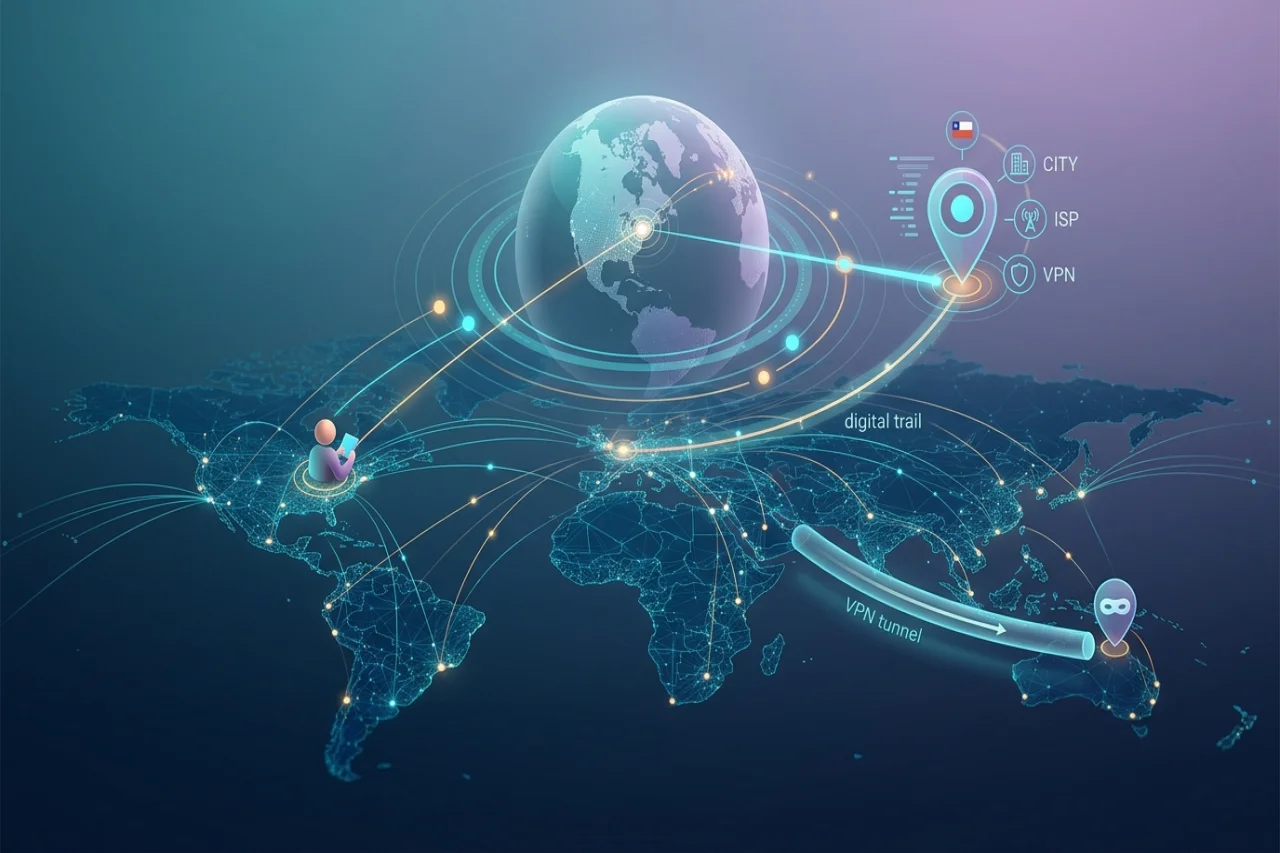
Being online gives the sense of anonymity. However, any digital device connected to the internet leaves a digital trail of data that can reveal not only the user and their network, but also the user's whereabouts. IP address is one of the most crucial pieces of such data. Normally, it does not reveal a person's home address alone; however, it does reveal to websites, online services, advertisers, and security systems the location and network information about the user.
This is exactly what makes IP geolocation one of the key elements here. A service would analyze an IP address by comparing it with geographic and network databases and provide estimates of the country, region, city, internet service provider, and other information related to a connection.
Legitimate purposes include the use of such data for localization, fraud prevention, analytics, and content delivery. At the same time, a user may also find that a privacy concern is whether their IP address reveals quite a bit of their private information.
In other words, learning that relationship between IP addresses, geolocation, tracking, and privacy can help internet users to make informed decisions regarding their online safety. It will also make the functions and limitations of privacy tools such as VPNs more tangible.
What Is IP Geolocation?
IP geolocation is the technique through which the geographic location of someone can be estimated based on their IP address. Usually, after a device connects to the internet, a public IP address is assigned by an internet service provider or another network operator.
Geolocation databases compile and analyze such data of IP ranges where the addresses are most likely to be utilized. An IP lookup can provide data on a country, region, city, postal area, ISP, organization, or network type.
A wide disparity in results is not unusual, and it is important to note that country-level data is usually more accurate than exact city-level data. Besides, it can't always be taken for granted that the physical location where the person is will correspond to the IP address.
That's a key point because many of us imagine the function an IP address performs in a similar way to how a GPS coordinate works. On the contrary, IP geolocation is just about using the data you get from a network and not really measuring someone's physical position accurately.
What Can an IP Address Reveal About You?
An IP address can reveal more than many users realize, including an approximate location, ISP, organization, and connection type. However, this generally refers to a public IP address. Devices on a local network also use private IP addresses, which serve a different purpose and are not directly visible to websites on the public internet.
Apart from giving a physical idea of the place, an IP address also reveals who the internet service provider is and the network you have used in your connection. While a website may use this information solely to make locally oriented content available, a security system could use login locations to detect suspicious activity.
However, it is generally true that even without having other factors taken into account, an IP address only tells someone their general area of residence or the name of the person concerned. That means you shouldn't be overly paranoid about how much information can be leaked from an IP address.
If, however, IP address data is combined with cookies, account details, browser properties, or other online activities, the privacy implication gets bigger.
How Websites Use Geolocation Data
One shouldn't necessarily assume that the use of geolocation is always a violation of privacy. In fact, several websites exploit that geographical data to give you more tailored services, such as regional news, local weather reports, shipping options, and personalized content. A business organization may even resort to analyzing geographic information to pinpoint its customers' locations.
Security personnel make use of IP geolocation by finding odd-out logins at one location, e.g., if login from one country is the norm, then a bunch of logins from other countries in a short interval may trigger a requirement for verification of the user. Content delivery systems might also rely on location data to decide which services or materials should be made available.
Still, the privacy-related concerns do not just rest with the use of geolocation. The user must also evaluate how this information is saved, distributed, combined with other data, and how long it is stored.
IP Geolocation Is Not the Same as GPS Tracking
There is one misunderstanding often shared among people that an IP address is GPS equivalent and, therefore, shows the exact home address of the person. The fact is that GPS uses satellite signals to pinpoint an exact location, while IP address geolocation maps Internet infrastructure and address ranges.
To give a more specific example, an IP address could be pointing to the ISP regional headquarters instead of the user's actual machine at home. As a result, the estimated city might not match the real location of a user. Therefore, although the IP geolocation is only an approximate idea, it can still be helpful for the user and other network aspects that the user may be located in.
Why Your IP Address Matters for Online Privacy
An IP address may appear to be just a string of numbers. However, it is quite useful when combined with other data.
Imagine going from one website to another under the same Internet connection. Each site sees a public IP address as their common point in the world, but some other technologies are likely identifying the browser using cookies, account logins, advertising identifiers, or fingerprinting, etc.
By gathering all the bits and pieces together, they can be the main source of the user’s Internet behavior profiling. An IP address is merely a part of that digital footprint.
So for users with a concern for privacy, it should be taken as more than simply covering up an IP address. They can consider aspects such as browser settings, cookies, account permissions, computer security, application permissions, and the sharing of information online as privacy issues that significantly influence one's life in cyberspace.
IP visibility can also be considered alongside browser fingerprinting and online tracking, since these methods can combine network information with other identifying signals.
How a VPN Works with IP Geolocation
VPNs allow users to change their online identities as a privacy tool by changing a public IP address seen by a website.
Usually, the user would be communicating with an Internet service directly using their regular IP provided to them by their internet provider. But with a VPN installed, the connection gets a new IP address assigned by the VPN server as its first point. The website will be mostly unaware of anything other than the public of that VPN server IP.
This is the way it may be used for the sake of privacy to hide the user from their own IP address so that none of the websites they visit is able to access their original internet address. It could be an additional benefit of a VPN service to be aware of why, occasionally after a VPN connection, online services change a user's displayed location to a different country where the user isn't located at all.
A VPN Does Not Make You Completely Anonymous
Even though it is an IP privacy enhancement tool, a VPN will definitely still expose the user to other techniques such as those that identify users by means of account logins, cookies, browser fingerprints, or device identification features.
For example. Using a VPN to log in to your website can still be linked to account activity. The main message, though, is that a VPN by itself is not a tool for complete anonymity.
Also, the technique of browser fingerprinting can be used by websites to identify previously logged devices with their settings. So, a VPN must be one of the privacy methods, not the whole lot. Geolocation by IP addresses and their location can, of course, still play a role, even if the user is using a VPN for their IP.
How to Choose the VPN That Protects Privacy
Not all VPN services should be treated as identical. Because a VPN provider handles the connection between a user's device and the internet, selecting a service requires some research.
Users should pay attention to the provider's logging policies, security features, encryption practices, infrastructure, privacy controls, and overall reputation. Independent testing and transparent privacy documentation can also help users understand how a service operates.
Resources such as Cybernews' VPN guide provide information about trusted VPN providers, including differences in privacy practices, security features, performance, server infrastructure, and connection protocols.
The important point is to understand what a VPN is actually protecting. It can hide a user's normal public IP address from websites and encrypt the connection between the device and the VPN server, but it cannot automatically prevent every tracking technique.
DNS Leakage and Other Privacy Points of Consideration
A VPN might make an internet connection look as if it is going from under someone else’s IP, but people who are into privacy must ask themselves if other aspects of network information are exposed too?
DNS, for example, plays a significant role in helping domain names be translated to IP addresses. Depending on the settings, both the VPN app and the OS may leave information about browsed web pages visible in DNS packets.
Most of these tools now come with features designed to stop DNS leaks or the exposure of network details in any other way. It is up to users to know what protections their VPN provider offers and to make sure the VPN works properly.
Checking for changes to a public IP address alone may not provide a complete picture of VPN privacy, as VPN leaks can involve other types of network or browser data.
In a way, it points out one of the major principles related to privacy; a security tool should be based on its functionalities under real-life circumstances rather than only on one of its announced features.
Location May Be Revealed Through Other Means Apart from IP Address
The IP address is one among several sources of location clues only.
Banks of location information for websites and apps can come with more technologies, like GPS, Wi-Fi positioning, Bluetooth signals, cellular data usage, or account information.
Images and videos may have location details attached to them, while social media checks the surroundings a user is in by identifying landmarks, etc.
If there are changes to the IP of visible locations from a VPN, there are still different location clues that can help identify where a user actually is.
This also means that privacy is not just about keeping an IP confidential but that other signals, as well, must be covered. A combination of factors that include app permissions, browser settings, account privacy options, and what a person has published online are some examples of how privacy could also be affected without one's knowledge.
Businesses, Too, Should Be Aware of IP Privacy Issues
Not only are individuals the ones to consider when it comes to IP privacy, but also businesses. It is common practice for companies to collect visiting clients’ IP addresses in ways such as analytics, security, fraud prevention, personalization, etc.
Website owners can use IP data to get to know different website-traffic trends and the location of their audiences from all over the world. Security experts can refer to IP databases to detect anomalies or identify unusual activity.
Simultaneously, it is the responsibility of companies to handle such data properly. Data privacy policy statements ought to clearly explain what users can expect regarding how their data is handled. It is a good idea for organizations not to collect or store data unless they have a valid necessity and there’s a legitimate purpose for doing so.
The challenge for businesses is to strike a careful balance. This can be done, on the one hand, by using IP information for useful purposes and, on the other hand, by protecting users' privacy responsibly. The importance of privacy management will increase as businesses are likely to get their hands on even more data.
IP Geolocation Tools Have Their Limits
Privacy tools are quite helpful, but they too are not infallible. A user's IP address can easily be blocked from appearing by websites using a VPN, but browser fingerprints, cookies, personal information, and any shared information between online services would not be erased.
A better combination for an effective privacy solution is made of privacy-conscious behaviors (like limiting the number of accounts one shares, being very picky with one’s privacy settings, etc.), strong security settings, good-quality security tools, and so on. This understanding of limitations enables users to develop a better overall privacy strategy.
A Look towards the Future ofIP Geolocation & Privacy
The significance of IP geolocation for online businesses is going to remain undiminished as security systems and companies rely heavily on the location information that it provides for the purpose of legitimizing their various endeavors.
To begin with, the development of AI, network intelligence, browser fingerprinting, and the use of data, for instance, can result in online platforms making a determination based on more signals when they need to know a user’s location, where the latter was found, or even identifying the person as being one who has been engaging in some abnormal behavior.
Education about privacy has to get a higher priority since, nowadays, people need to be very concerned about what level of information can still get revealed from their digital connections or devices that they are connected to.
In the case of your internet connection through IP, it might look like nothing more than just a sequence of digits. However, it could actually contain quite a few hints about a network and its location.
Taking Control of Your Online Privacy
IP geolocation, as such, cannot be said to be anything morally wrong or right since, to mention one thing, it will be able to enhance one’s online services, will serve to provide a safe environment for one’s data, and also help businesses get to know their audience. Privacy issues arise when the data collection process and its merging are conducted in ways that are unfamiliar to people.
VPNs can mask the Internet IP and encrypt the Internet traffic, but they are not really making the user completely invisible (anonymous). Users will benefit from restricting data sharing, securing accounts, reviewing permission requests, and using privacy tools, among other measures. Knowing about IP geolocation is a very essential first step towards being able to manage their digital footprint.
Comments
Comments are available to signed-in users and are moderated to keep the discussion useful and respectful. Spam, automated submissions, and low-value promotional comments are removed. Outbound links may be approved when they are relevant and genuinely helpful to readers, but they are displayed as plain text rather than clickable hyperlinks.
No comments have been published yet.
Please sign in to submit a comment.