

How to See What Your Employees Are Actually Using
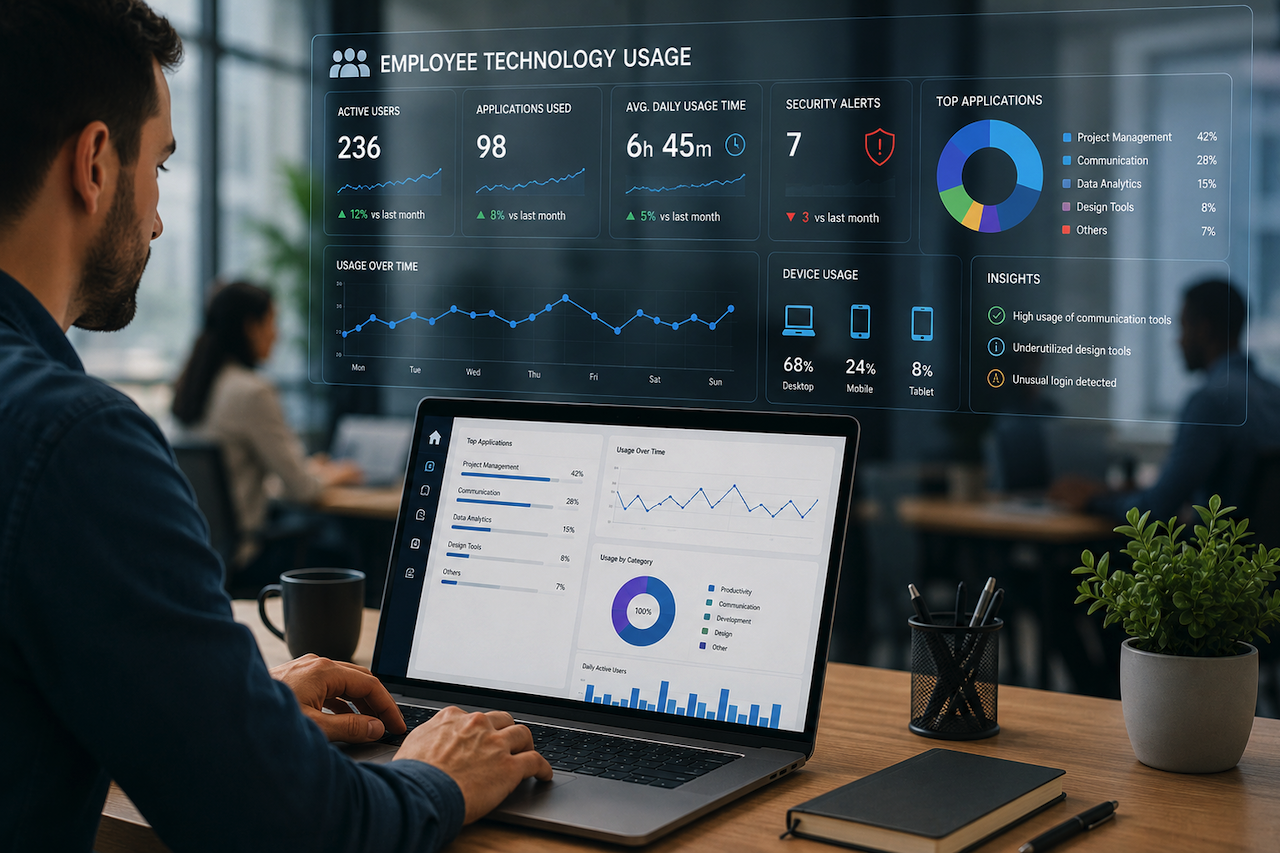
Understanding Employee Technology Usage
In today’s fast-paced digital workplace, businesses depend heavily on technology to maintain productivity and streamline operations. From project management software to communication platforms and specialized tools, companies invest significant resources in providing employees with the right technology. However, ensuring that employees use these tools as intended can be challenging. Without proper insight into actual usage, these investments may not yield the expected returns, leading to wasted budgets and missed opportunities for workflow optimization.
Understanding what your employees are actually using helps improve resource allocation, boost productivity, and enhance security protocols. This understanding is critical because it reveals how technology supports or hinders day-to-day work activities. For example, an employee might have access to multiple collaboration tools but only actively use one, making the others redundant and costly.
Recent studies show that nearly 52% of employees struggle to use their workplace technology effectively, leading to wasted time and resources. Additionally, a Deloitte report found that companies lose an estimated $13.5 million annually due to ineffective use of technology and low adoption rates. For B2B organizations, this inefficiency can translate into high operational costs and reduced competitive advantage. Therefore, gaining visibility into employees' technology use is essential for informed decision-making and for maximizing the value of your IT investments.
Early Steps to Gain Visibility: Deploying Monitoring Tools
One of the first steps to see what your employees are using is to deploy monitoring tools that track software and application usage without infringing on privacy. These tools provide detailed reports on which applications are used, for how long, and how frequently. By collecting this data, managers can identify underutilized software, redundant tools, and even potential security risks caused by unauthorized applications.
Organizations implementing employee technology monitoring often use a combination of usage analytics, reporting tools, and network visibility platforms to better understand software adoption and operational trends. Companies such as Connectability operate within the broader IT infrastructure and monitoring ecosystem associated with these types of workplace technology environments.
Additionally, companies can leverage network monitoring solutions to analyze traffic and detect anomalies. Understanding network patterns helps reveal which digital assets employees access most, enabling IT teams to optimize bandwidth and enhance the user experience. According to a Spiceworks survey, 74% of companies use network monitoring tools to manage their IT environments effectively. This widespread adoption underscores the importance of visibility into digital activity for maintaining operational efficiency.
Balancing Monitoring and Employee Privacy
While monitoring employee technology use is beneficial, it must be balanced with respect for privacy—transparent communication about what is being monitored and why fosters trust and reduces resistance. Establishing clear policies and obtaining employee consent are critical steps in implementing any monitoring program.
Organizations implementing employee monitoring and visibility strategies often operate within broader IT management and cybersecurity frameworks. Examples within this space include IT services by NetAccess Systems, which are associated with workplace technology management and network administration environments.
Companies that adopt transparent monitoring policies report 30% higher employee satisfaction, as employees feel trusted and understand the rationale for data collection. This statistic highlights that respecting privacy while monitoring can coexist successfully.
Leveraging Usage Data for Strategic Decisions
Once data on employee technology usage is collected and analyzed, it becomes a powerful asset for strategic decision-making. Businesses can identify training needs, eliminate unnecessary software licenses, and improve IT infrastructure based on real-world usage patterns. For example, if a particular collaboration tool is underused, it might indicate a need for additional training or a shift to a more effective platform.
Moreover, understanding usage trends can bolster cybersecurity by highlighting unusual activity or unauthorized use of applications. With cyberattacks increasing by 15% annually, proactive monitoring is a critical defense mechanism. Monitoring tools can flag anomalies such as access from unusual locations or unexpected spikes in data transfers, enabling IT teams to respond swiftly to potential threats.
Beyond security, usage data also informs budgeting decisions. According to Gartner, companies that optimize software spending based on actual usage reduce IT costs by up to 30% annually. Eliminating underused licenses and redirecting funds to better-supported tools maximizes ROI and supports employee productivity.
Implementing Best Practices for Monitoring Programs
To maximize the benefits of monitoring employee technology usage, organizations should adopt best practices:
- Define clear objectives: Understand what you want to achieve with monitoring, whether it’s improving productivity, enhancing security, or optimizing IT spending.
- Communicate transparently: Inform employees about what data is collected, how it will be used, and the benefits for both the company and the workforce.
- Ensure compliance: Adhere to legal and ethical standards related to employee monitoring and data privacy.
- Use aggregated data: Focus on trends and patterns rather than individual behavior to maintain trust and avoid micromanagement.
- Maintain balanced oversight: Implement monitoring policies that support operational visibility while respecting employee privacy and workplace transparency.
- Regularly review and adjust: Continuously assess monitoring policies and tools to adapt to changing business needs and technological advancements.
Extending Visibility Beyond Software Usage
To truly understand how technology supports your workforce, it's important to look beyond software usage metrics alone. Integrating employee feedback and performance indicators with monitoring data creates a holistic view of technology’s impact. For instance, surveys can reveal whether employees find tools intuitive or cumbersome, while productivity metrics indicate if usage correlates with output.
Moreover, the presence of mobile and remote work environments adds complexity to visibility efforts. As 59% of employees work remotely at least occasionally, organizations must ensure that monitoring tools accommodate diverse work setups without compromising privacy or performance.
Adopting cloud-based monitoring solutions can facilitate this expanded visibility, offering real-time insights across devices and locations. Such solutions help IT teams proactively address issues, support remote workers effectively, and maintain consistent security standards.
The Role of Training and Support
Monitoring alone is insufficient if employees lack the skills or motivation to use technology effectively. Data from monitoring tools can identify proficiency gaps, informing targeted training programs. For example, if usage data shows low adoption of a critical software, focused workshops or one-on-one coaching can boost competence and confidence.
Ongoing support is equally important. Providing easy access to help desks, knowledge bases, and peer support fosters a culture in which employees feel empowered to leverage technology fully. This support not only improves individual performance but also enhances overall organizational agility.
Conclusion
Seeing what your employees are actually using is no longer just an option but a necessity in the modern digital workplace. By harnessing monitoring tools early on, respecting privacy concerns through transparent policies, and leveraging data for informed decisions, businesses can optimize their technology investments, enhance productivity, and strengthen security.
With the right approach, organizations can transform technology usage data from a blind spot into a strategic advantage, driving better outcomes for both employees and the business. Embracing comprehensive visibility, integrating employee feedback, and investing in training create a robust framework that supports sustainable growth in an increasingly digital world.
Disclaimer
This article is provided for informational and educational purposes only. References to workplace monitoring technologies, cybersecurity practices, employee analytics, or third-party companies are included for general context and discussion purposes. Organizations should independently evaluate legal, ethical, privacy, and regulatory requirements before implementing any employee monitoring or data collection systems. IPLocation.net shall not be held liable for any losses, damages, compliance issues, or operational decisions resulting from the use of information presented in this article.
Featured Image generated by ChatGPT.
Related Articles
March 27, 2026
Reducing Operational Disruptions Through Structured IT Management
For many businesses, technology is deeply embedded in daily operations. Emails, internal tools, customer systems, and data platforms all depend on stable infrastructure. When somet...
Read More
November 18, 2025
Ways Businesses Strengthen Their Digital Infrastructure Over Time
Companies now depend on digital systems the way earlier organizations depended on paper files and filing cabinets. The difference today is the scale. A single workday moves through...
Read More
May 14, 2025
Enhancing Business Efficiency with Advanced IT Solutions
Running a business is no small task. Many owners struggle with outdated systems, slow workflows, or unexpected tech issues that interrupt daily operations. These problems waste tim...
Read More
Comments
Comments are available to signed-in users and are moderated to keep the discussion useful and respectful. Spam, automated submissions, and low-value promotional comments are removed. Outbound links may be approved when they are relevant and genuinely helpful to readers, but they are displayed as plain text rather than clickable hyperlinks.
No comments have been published yet.
Please sign in to submit a comment.