

Internet of Things, Cloud Services, Technology
How Technology Is Redefining What Counts as a Service
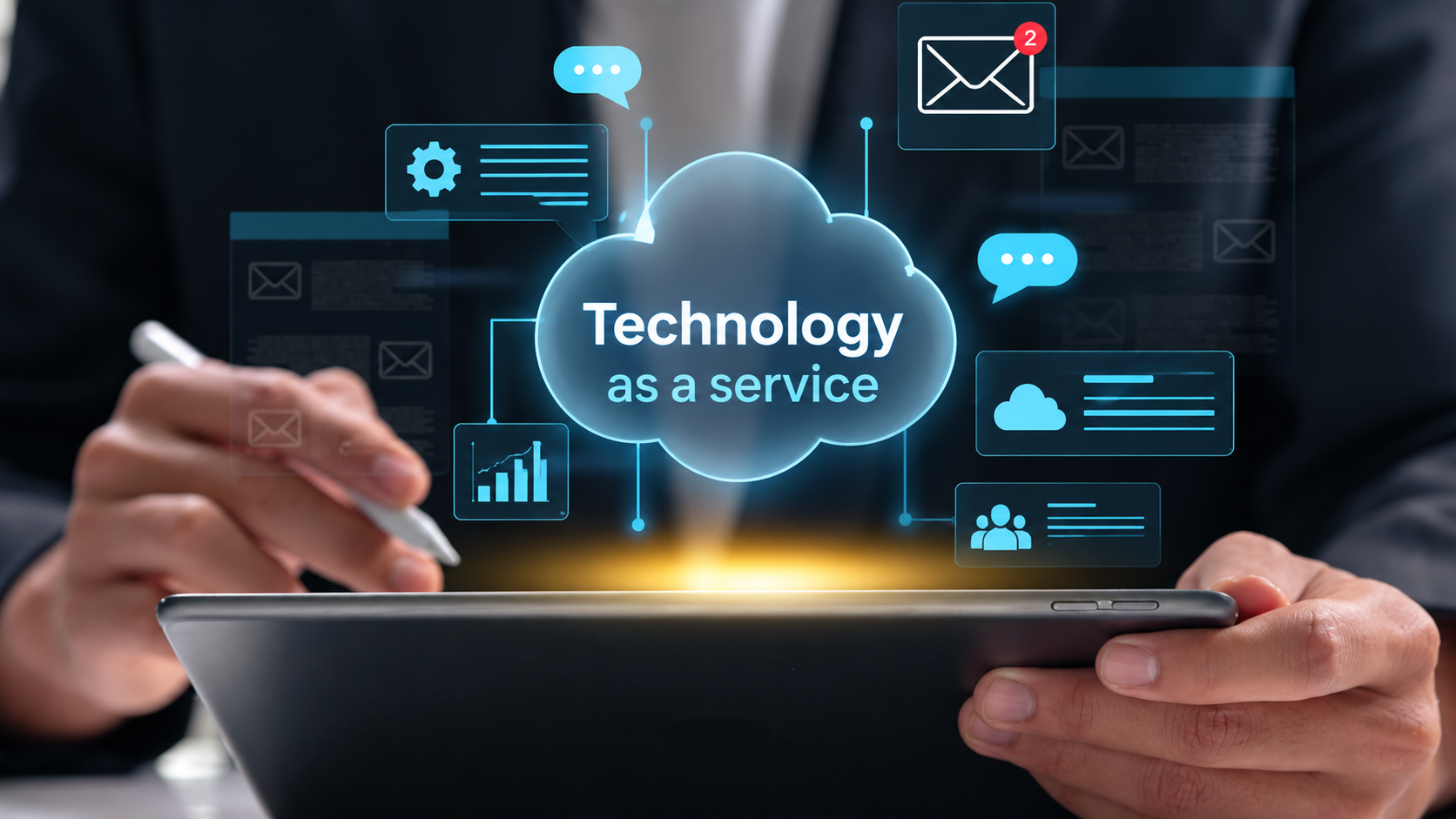
A car can gain features after it leaves the dealership. A camera may lose key functions if its cloud plan expires. A smart device can become more or less useful depending on software updates and continued online support. These are not edge cases. They show why the old line between products and services is becoming increasingly difficult to defend.
Technology companies increasingly sell physical objects, software, infrastructure, data, and ongoing decision-making as one package. The result is a new kind of commercial relationship: customers may own the device in front of them while continuing to depend on a provider for much of the value behind it.
The Old Definition Is Breaking
For decades, the distinction was relatively easy to understand. A product was something a customer bought and possessed. A service was work performed or access provided over time. The model worked well for a television, a desktop application, a repair shop, or an accounting firm because the boundaries were visible.
Digital systems weaken those boundaries. A smart thermostat is a physical product, but remote control, energy reports, automation, security patches, and integration with other devices may rely on software operated by its manufacturer. A design application may be installed locally but depend on cloud storage, asset libraries, account authentication, and remote AI models. A vehicle may remain usable without an internet connection while navigation data, diagnostics, entertainment, driver-assistance improvements, and some optional capabilities arrive through a continuing digital relationship.
| Traditional model | Technology-enabled model |
|---|---|
| Value is largely fixed when the product is sold | Value can increase, decrease, or change after purchase |
| The buyer mainly depends on the item itself | The buyer may depend on servers, APIs, software, and support |
| Ownership often ends the commercial relationship | Ownership can begin a long operational relationship |
| A defect is usually tied to a physical item or fixed software version | A problem may depend on configuration, updates, data, or third parties |
The important change is not simply that more products are “connected.” It is that a growing share of their useful capability is delivered continuously. Once that happens, the customer is no longer buying only an object. They are buying the provider’s ability to keep a system working.
The Rise of the Living Product
A conventional product changes slowly after it is manufactured. A connected product can change overnight. Software updates can alter battery management, navigation behavior, security rules, interface design, compatibility, or performance. Cloud configuration can enable a feature without touching the hardware. A manufacturer can fix a vulnerability remotely, but it can also discontinue a function that customers assumed was part of the original purchase.
This creates what can be thought of as a “living product": an item whose capabilities are partly determined after the sale.
Modern cars are an obvious example. The vehicle itself remains physical, but the experience around it increasingly includes maps, mobile access, remote diagnostics, software-defined controls, subscription features, and over-the-air updates. The same pattern appears in home security equipment, industrial machinery, medical devices, printers, fitness hardware, and professional cameras.
The economics have changed as well. Instead of earning revenue only when hardware is sold, companies can charge for storage, advanced analytics, software packages, maintenance, premium connectivity, or AI features. The provider therefore has an incentive to treat the product as the beginning of a service relationship rather than the end of a transaction.
That model can create real benefits. Security flaws can be patched without a recall. Features can improve. Faults can be detected earlier. But it also means a customer may depend on decisions made years after the original purchase, including decisions about pricing, compatibility, data retention, and continued support.
A Better Test for Modern Services
Calling everything a “service” is not useful either. A better approach is to assess the degree of ongoing dependence between the customer and the provider.
Four questions reveal much more than the product label.
- Does the customer remain dependent on the provider after purchase? A connected lock that requires the manufacturer’s servers for remote access has a stronger service component than a conventional lock. The physical object may belong to the customer, but an important capability still belongs to an operating system outside the customer’s control.
- Can the provider materially change what the customer receives? If updates can add, remove, restrict, or alter functionality, the experience is being delivered continuously rather than frozen at the point of sale. This is especially important for software-defined products and AI systems whose behavior may change with model updates.
- Does the core function rely on external infrastructure? Products that depend on cloud computing, identity services, payment networks, mapping APIs, or remote databases are effectively part of a wider service stack. A failure far away from the customer can make the local product unusable.
- Does the provider retain operational responsibility? If the company must monitor security, maintain uptime, update models, manage data, or respond to newly discovered risks, it is performing ongoing work even when customers think they bought a finished product.
These questions expose why ownership is becoming a poor proxy for independence. A person can legally own a device while having little control over the infrastructure that determines what it can do.
AI Pushes the Model Further
AI changes the discussion because it moves technology from executing fixed instructions toward producing judgments, recommendations, and actions.
Traditional software generally follows logic that developers explicitly define. Modern AI systems can summarize documents, rank applicants, recommend products, generate code, detect suspicious transactions, plan routes, classify images, draft customer replies, or decide which information to retrieve. The provider is no longer supplying only a tool. It is increasingly supplying an ongoing computational process.
The scale of that shift is already visible. Stanford’s 2026 AI Index reports that 88% of surveyed organizations used AI in at least one business function in 2025, while generative AI was used in at least one function at 70% of organizations. Agent deployment remained in the single digits across nearly all functions, which is an important distinction: AI is widespread, but fully agentic operation is still much less mature.
This matters for the meaning of “service” because AI systems rarely stay fixed. Providers can change the underlying model, system instructions, retrieval sources, safety controls, tool permissions, context limits, or routing logic without the customer installing a conventional new version.
Two users can therefore subscribe to what appears to be the same service but receive materially different behavior at different times. That makes versioning, documentation, auditability, and change management much more important than they were for static software.
The economic model reinforces the shift. Many AI products meter usage through subscriptions, tokens, API calls, compute time, or premium model access. Customers are paying less for possession of software and more for repeated access to continuously operated intelligence.
The Digital Record Behind the Service
As software becomes part of healthcare, transportation, finance, and other high-stakes services, it also becomes part of the factual record those services leave behind. Electronic health systems can show when information was entered or reviewed, connected devices can preserve readings and alerts, and automated tools may record which recommendations were presented to a professional at a particular moment. Reconstructing an outcome can therefore require more than examining human decisions alone; the software version, device state, timestamps, system configuration, and data available at the time may all help explain what actually happened.
Healthcare illustrates this shift particularly clearly. In disputes involving technology-assisted care, electronic records, device-generated information, alert histories, and other digital evidence may be reviewed by clinicians, technical specialists, insurers, or a medical malpractice lawyer alongside conventional medical documentation. The broader technology issue is that once software becomes part of delivering a professional service, its records can also become part of the evidence used to reconstruct how that service was performed.
Services Are Becoming Invisible
One of the strangest features of modern digital services is that users often cannot see how many providers are involved. A single application can depend on a cloud host, identity provider, payment processor, content delivery network, analytics platform, database service, mapping provider, communications API, fraud detection system, and external AI model. The customer sees one interface, but the service itself may be assembled from a chain of other services.
This is not a minor architectural detail. It changes reliability and accountability.
If an authentication provider fails, users may be locked out of dozens of unrelated products. If a major cloud region experiences an outage, services owned by different companies can fail simultaneously. If an AI API changes its behavior, downstream applications can produce different results even though their own developers did not modify the interface.
The size of the cloud market shows how central this invisible layer has become. Gartner forecast worldwide public-cloud end-user spending of $723.4 billion for 2025, up from $595.7 billion in 2024. It projected $299.1 billion of that spending in cloud application services alone.
This means many businesses that appear to sell standalone digital products are actually operating orchestration layers. Their job is to keep several external systems working together reliably enough that the customer experiences them as one service.
Access Is Replacing Ownership
Subscription fatigue is often discussed as a pricing problem, but the bigger change is structural. Technology makes it possible to sell access to capability rather than permanent possession of it.
Cloud gaming offers access to computing and a game library without requiring the customer to own the hardware running every title. Creative AI platforms sell generations or compute credits rather than a permanent copy of the model. Enterprise software increasingly charges per seat, workload, transaction, or API call. Connected equipment can bundle maintenance, analytics, monitoring, and performance guarantees into a single recurring contract.
These models let providers maintain and improve technology centrally, which can lower deployment friction and keep customers on current versions. They also transfer control. A perpetual software license often remains usable after the vendor stops selling it. A cloud service can disappear when the provider shuts it down, changes the terms, or ends support.
The key distinction is therefore not subscription versus one-time payment. Some subscriptions provide locally usable products, while others still rely heavily on cloud infrastructure.
A better question is: What happens to the customer’s capability if the provider stops operating tomorrow? If most of the useful function disappears, the customer effectively bought access to a service even if a physical product was included.
The New Accountability Problem
Continuous services solve one problem and create another: they make the past harder to reproduce. Imagine that an AI assistant incorrectly classified a document six months ago. Since then, the model has been replaced, its system instructions have changed, retrieval logic has been updated, and the customer’s data environment has evolved. Re-entering the same prompt today may produce a different result.
The same difficulty appears in connected hardware. A device may receive firmware updates, a cloud platform may change configuration, and an external API may alter the data supplied to the system. By the time a failure is investigated, the exact environment that produced it may no longer exist.
For providers, this creates a need for stronger operational records. Useful records may include model or software version, configuration state, timestamps, data sources, tool calls, update history, permissions, and whether a decision was made locally or remotely.
There is a tradeoff. Logging everything can create privacy and security risks, particularly when systems handle personal or confidential information. Logging too little can make serious failures almost impossible to reconstruct.
The practical answer is not unlimited surveillance. It is deliberate observability: preserving enough technical metadata to explain system behavior without retaining unnecessary user content.
This requirement will become more important as software moves from passive tools to active participants in decisions. If a company continuously operates a capability, it also needs a credible way to explain how that capability behaved at a specific point in time.
Customers Increasingly Buy Outcomes
The product-service shift is also changing what customers expect to pay for. Many users do not care which database, model, server, or workflow performs a task. They care that the result appears: a payment is processed, a document is summarized, a threat is detected, a machine remains operational, or a delivery reaches the right place.
That creates room for outcome-based services. Instead of licensing a tool and asking the customer to operate it, a provider can increasingly take responsibility for completing part of the job.
AI accelerates this because it reduces the amount of manual operation required between software and outcome. A conventional customer support platform provides employees with tools to manage tickets. An AI service may interpret a request, retrieve account information, draft or send a response, and escalate only unusual cases. The value proposition shifts from “software for doing support” toward “support work performed through software.”
This does not eliminate human services. It changes their composition. Human expertise can become the escalation, verification, supervision, or exception-handling layer around automated systems.
The result is a spectrum rather than a clean division: software product, managed software, AI-assisted service, automated service, and human-led professional service can all perform parts of the same workflow.
What Companies Must Design For
Once a product contains a continuing service layer, product design has to extend beyond features and interface quality. Companies need to think about the full operational life of the capability.
Several questions become especially important:
- Continuity has to be designed, not assumed: Teams need a plan for cloud outages, API changes, model replacements, supplier failures, and discontinued integrations. A product that depends on five external services inherits risks from all five.
- Customers need meaningful portability: If a service stores valuable data, configurations, generated assets, or history, users should understand what they can export and in what format. Lock-in becomes much more consequential when leaving a provider also means losing accumulated work.
- The architecture should make dependence visible where it matters: Users do not need a diagram of every backend service, but they should know when a critical feature requires cloud access, a subscription, third-party processing, or an external AI provider.
- End-of-life planning should begin before launch: Connected hardware can remain in homes, vehicles, offices, or industrial environments long after a company loses interest in supporting it. Teams need to decide what happens if servers close, certificates expire, an app is removed, or a subscription product is discontinued.
These are no longer secondary support issues. They determine whether a technology can remain useful, trustworthy, and maintainable over its real lifespan.
Service Is Becoming a Layer
Technology is not turning every product into a service. It is making service a layer that can sit inside products, software, infrastructure, and even professional work.
A physical device can be owned while its most valuable capabilities remain dependent on a provider. Software can look like a product while relying on a stack of cloud services. AI can turn an application from a fixed tool into a continuously operated source of recommendations and actions.
That is why the old product-versus-service distinction is losing explanatory power. The more useful question is how much of the customer’s value still depends on the provider after the initial transaction. If updates, infrastructure, data, security, AI models, monitoring, or remote operations remain essential, the relationship has not really ended at the sale. The service is still being delivered, even when it is hidden inside something the customer believes they own.
Comments
Comments are available to signed-in users and are moderated to keep the discussion useful and respectful. Spam, automated submissions, and low-value promotional comments are removed. Outbound links may be approved when they are relevant and genuinely helpful to readers, but they are displayed as plain text rather than clickable hyperlinks.
No comments have been published yet.
Please sign in to submit a comment.