

How SMEs Can Reduce Operational Costs Without Sacrificing Customer Experience
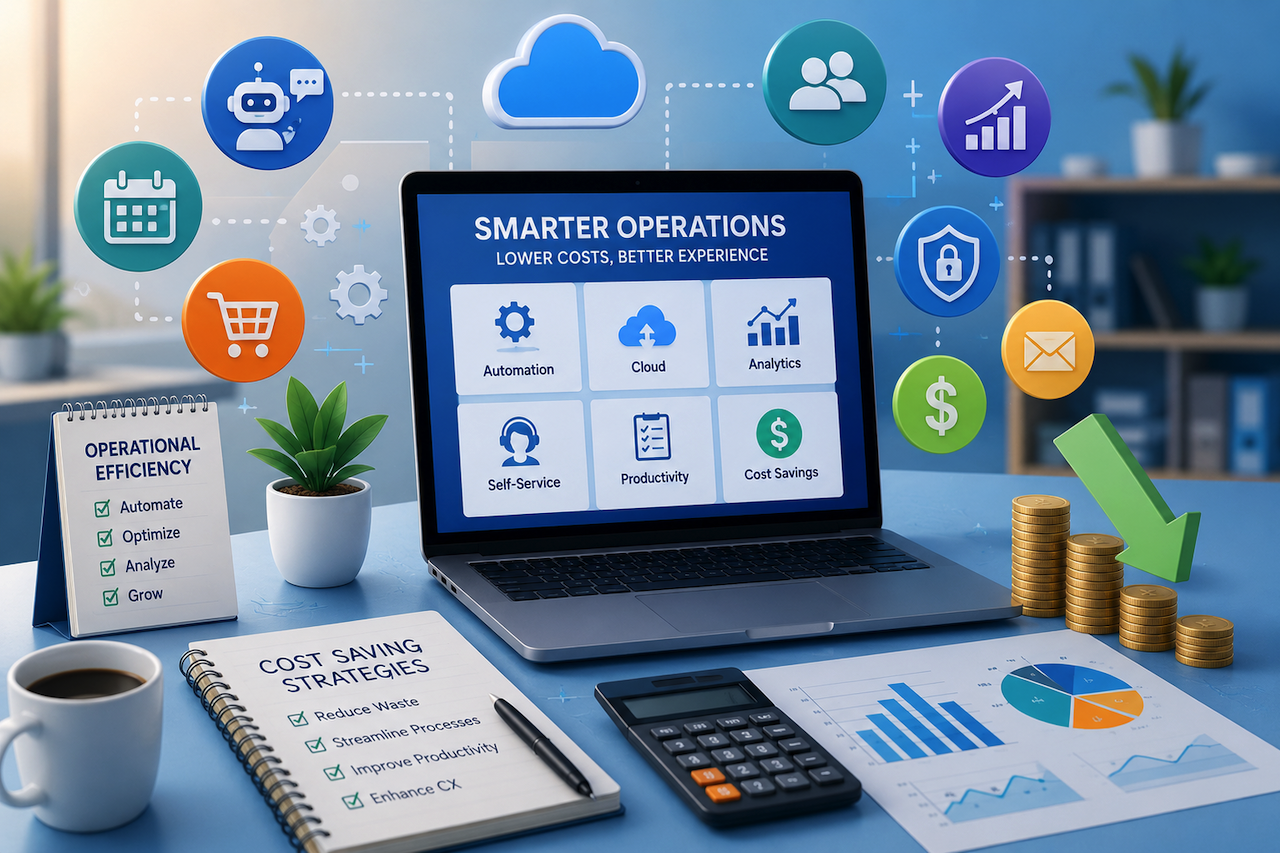
In 2026, running a small and medium-sized enterprise (SME) is becoming increasingly challenging. Rising operational costs, talent shortages, growing competition, and evolving customer expectations are forcing businesses to find more efficient ways to operate without sacrificing service quality.
Successful SMEs are increasingly reducing operational costs by investing in automation, digital tools, and more streamlined customer experiences. The goal is to improve efficiency while maintaining strong customer relationships.
The Importance of Operational Efficiency for SMEs
Profitability is inevitably affected by labor costs. Small inefficiencies can also limit the upside potential of SMEs with tight budgets. A growing number of virtual customer needs include accessibility, quick response, ease of use, and personal assistance. It ends up with an exact match:
When prices drop too much, customer satisfaction decreases. If you concentrate on customer experience, cost can also get out of hand.
Automation, digital transformation, and smarter resource management are how modern companies address this problem.
1. Automate Repetitive Business Processes
Automating repetitive strategies is one of the most effective ways to reduce operational costs. Manual methods require large teams, take longer, and increase human error. SMEs can automate:
- Customer support questions
- Making an appointment
- Inventory update
- Arrival of bills
- Staff attendance monitoring
- Order management
Automation increases productivity and will free workers to focus on essential responsibilities that require human interaction.
Companies can build centralized digital systems to improve usability and automate multiple business functions within a single platform. This can reduce operational errors, simplify workflows, and improve overall team productivity.
2. Invest in a Digital Self-Service Solution
Customers now desire self-service capabilities to time transactions and offer to access data immediately. SMBs can reduce support costs by providing:
- AI-powered chatbots
- Self-service portals
- FAQ section
- Order tracking systems
- Online booking tool
This technology enhances customer support and relieves stress on customer support agents.
SMEs can also build scalable digital solutions without maintaining a large in-house development team. Evaluating development costs can help businesses plan budgets more effectively while supporting long-term growth.
Retail, healthcare, restaurants, logistics, and education are among the sectors that can benefit most from mobile apps.
3. Use Cloud-Based Infrastructure
Traditional IT infrastructure requires significant upfront investment, ongoing renewal costs, and specialized hardware management. For small and medium-sized businesses, cloud-based complete solutions are significantly cheaper. Among the benefits of cloud computing:
- Reduced hardware cost
- Low maintenance costs
- Improved data security
- Remote accessibility
- Simpler scalability
Additionally, cloud-based systems support better team collaboration, especially in remote or hybrid work environments.
Cloud-native applications have become increasingly popular because they can improve overall system performance while reducing downtime and operational complexity.
4. Increase Worker Productivity Using Smart Tools
Constantly hiring and growing the workforce is not a good idea. Small and medium-sized businesses need to pay more attention to using state-of-the-art location work tools for increased productivity. Clever answers include:
- Task handling platforms
- Internal communication tools
- CRM software
- Workflow automation systems
- AI-powered reporting tools
Employees can focus more on user interactions and business growth once they’ve spent time on administrative or repetitive responsibilities.
Teamwork and operational efficiency can be significantly improved with a well-designed internal enterprise platform built using web tools and development capabilities.
5. Improve Customer Service Channels
While maintaining large support teams can be costly, customer service is important. SMEs can happily maximize the help rather than finish it themselves:
- Using omnichannel support systems
- Implementing AI-powered chat assistants
- Prioritizing support tickets efficiently
- Proactively communicating with customers
Digital support systems can help businesses respond to customer issues more efficiently while reducing wait times and improving overall support experiences.
Businesses can improve communication with customers without significantly increasing labor costs by integrating live chat, push notifications, and automated support features directly into mobile applications.
6. Use Data Analytics to Reduce Operational Waste
Many SMEs pay more due to the loss of visibility of project success. Data analytics helps businesses determine:
- Inefficient processes
- Products with poor performance
- Trends in customer behavior
- Overstock issues
- Unnecessary expenses
SMEs can also manage resources more effectively and make smarter decisions by comparing business statistics themselves.
Analytics dashboards that provide real-time business insights can help companies monitor performance, identify inefficiencies, and reduce unnecessary operational expenses.
7. Outsource Non-Core Tasks
SMES don't need to monitor all factors of their business in-house. Fees can be reduced significantly by outsourcing certain responsibilities while maintaining the quality of care. Often outsourced duties include:
- IT support
- Payroll management
- Content creation
- Digital marketing
- App maintenance
- Customer support services
Businesses can accumulate certified employees through outsourcing without having to pay for full-time employees.
SMEs can also build scalable digital solutions without maintaining a large in-house development team, helping reduce operational costs while supporting long-term business growth.
8. Prioritize Customer Retention Over Continuous Acquisition
The accumulation of new customers over current customer retention is often a great additional high value. By increasing consumer loyalty, SMEs can reduce marketing and acquisition costs by:
- Personalized communication
- Loyalty programs
- Fast customer support
- Mobile engagement
- Regular communication
Businesses that invest in user-friendly virtual reviews often experience increased repeat business and retention rates.
Mobile applications with loyalty features, personalized experiences, and customer portals can help businesses improve long-term customer relationships while reducing overall customer acquisition costs.
The Role of Technology in Cost Optimization
Technology is no longer optional for SMEs. It has been developed as one of the adequate technologies to cut costs without sacrificing invasive security preferences. The solutions include:
- AI automation
- Cloud computing
- Mobile applications
- Digital management systems
- Data analytics systems
These technologies help companies operate more efficiently, improve productivity, and modernize SME operations without requiring major infrastructure investments.
Wrapping It Up
Reducing operational costs does not necessarily mean sacrificing customer experience. With the right combination of automation, cloud technology, analytics, and digital tools, businesses can improve efficiency while continuing to deliver strong customer experiences.
SMBs that invest in scalable digital systems and streamlined workflows are often better positioned for long-term growth, improved productivity, and stronger customer retention.
Thoughtful use of web applications, mobile platforms, and data-driven decision-making can help businesses create more sustainable operations while adapting to evolving customer expectations.
Featured Image generated by ChatGPT.
Related Articles

July 1, 2026
How Hotels Can Reduce Operating Costs Through Smarter Energy Procurement
Many hoteliers assume utility bills are fixed, but smarter energy procurement—proactive buying, contract structuring, load profiling, and group purchasing—can stabilize budgets and...
Read More
April 9, 2026
How Commercial Music Licensing Enhances Customer Experience
Music has always played a significant role in shaping human emotions and connecting people. Businesses increasingly recognize the influence of background music on their customers....
Read More
March 26, 2026
How AI Automation Reduces Operational Costs Without Cutting Headcount?
Cutting operational costs without cutting headcount or quality is one of the hardest problems in business. The obvious levers - renegotiating vendor contracts, reducing headcount,...
Read More
Comments
Comments are available to signed-in users and are moderated to keep the discussion useful and respectful. Spam, automated submissions, and low-value promotional comments are removed. Outbound links may be approved when they are relevant and genuinely helpful to readers, but they are displayed as plain text rather than clickable hyperlinks.
No comments have been published yet.
Please sign in to submit a comment.