

Technology, Healthcare, Science
How Smart Laboratories Are Changing the Future of Medicine
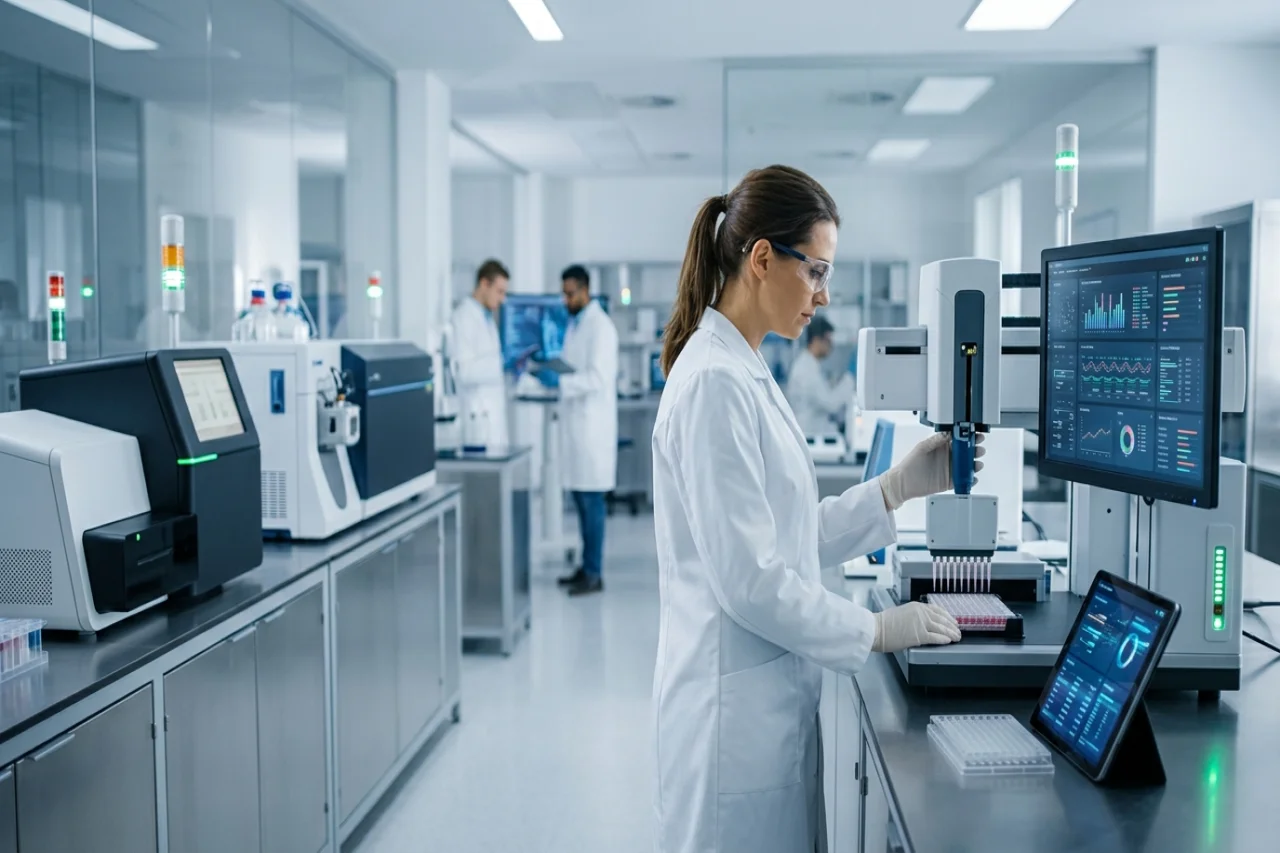
Smart laboratories are changing the way modern medical research is performed. Instead of relying on isolated instruments and manual workflows, laboratories are increasingly connecting automation, digital systems, analytical equipment, and artificial intelligence into a more integrated research environment. This shift allows scientists to handle more samples, organize larger datasets, and improve the consistency of experimental procedures.
The impact is particularly important in areas such as genetic engineering, modern medicine development, and analytical research. These fields depend on accurate measurements, reliable sample handling, and the ability to compare information from different types of experiments. A smart laboratory creates the infrastructure needed to bring those processes together.
The result is not simply a faster laboratory. It is a research environment where information can move more efficiently from one stage of an experiment to the next, helping scientists make better use of the data they generate.
What Is a Smart Laboratory?
A smart laboratory is defined by connectivity rather than by one specific piece of equipment. In a traditional research setting, different instruments may operate independently. A researcher might manually prepare a sample, analyze it with a single instrument, export the results, and then enter the data into a separate system for further analysis.
Connected systems reduce these disconnected steps.
Samples can be given digital identifiers, instruments can record results automatically, and laboratory software can link each measurement to the original sample and method. Researchers can then review the full experimental history without having to rebuild the record from separate files.
This improves traceability and reduces manual data entry. It also helps laboratories maintain more consistent workflows because researchers can follow standardized procedures and monitor each stage of the experiment more closely.
The main advantage is integration. This approach connects physical experiments with digital information, making research easier to manage.
Automation Is a Core Part of Smart Laboratories
Automation plays a major role in the development of smart research environments. Many laboratory tasks involve repetitive procedures such as pipetting, sample preparation, labeling, instrument loading, or moving plates between different stages of an experiment.
Automated systems can perform many of these tasks using predefined settings. This can reduce variation between samples and allow laboratories to process larger batches without increasing manual workload at the same rate.
For example, an automated liquid-handling system can prepare hundreds of samples using the same programmed volumes and timing. An autosampler can introduce those samples into an analytical instrument while software records the results.
Researchers still control the experiment, but they spend less time on repetitive mechanical tasks. This allows them to focus more attention on experimental design, troubleshooting, and interpretation.
Smart Laboratories Support Modern Medicine Development
Developing new medicines is a complex process that requires information from several scientific disciplines. Researchers may begin by identifying a biological target, then investigate that target through laboratory testing and analysis.
This process can involve chemistry, molecular biology, pharmacology, toxicology, and analytical testing. Each stage produces different types of data.
An integrated research environment can help connect these results.
Instead of keeping biological responses and analytical measurements in separate systems, researchers can store them within a shared digital environment. This makes it easier to compare results across different stages of the research program.
If an experiment shows a particular biological response, scientists can quickly review its analytical characteristics, preparation conditions, and previous experimental history. This improves the efficiency of follow-up research and helps reduce unnecessary repetition.
Genetic Engineering Benefits From Connected Research Systems
Genetic engineering produces large amounts of complex information. Researchers may work with DNA sequences, gene-expression data, engineered cells, molecular assays, and biological imaging.
Each experiment can involve many samples and several different stages of preparation and analysis.
Connected laboratory systems help keep these processes organized.
Digital sample tracking can follow genetic material throughout the experiment. Automated liquid handling can improve consistency during molecular procedures. Data-management software can connect genetic results with biological observations.
This is particularly valuable when researchers are comparing multiple genetic variants or engineered cell lines.
If sample information is recorded consistently from the beginning, scientists can more easily compare results and identify relationships between genetic changes and biological responses.
Analytical Instruments Still Provide the Measurements
Although connected research environments rely heavily on software and automation, accurate analytical instruments remain essential. Digital systems can organize information, but they cannot replace reliable measurement.
Researchers still need methods that can identify substances, determine concentrations, and verify the composition of samples.
Chromatography, mass spectrometry, spectroscopy, microscopy, and elemental analysis all continue to play important roles.
In elemental analysis, laboratories may need to measure metals or trace elements in biological, pharmaceutical, environmental, or research samples. Atomic absorption spectroscopy remains an established method for this purpose.
When evaluating an atomic absorption spectrometer (Kwaliteit AAS), laboratories may consider factors such as detection limits, sample types, elemental range, background correction, software integration, and sample throughput. The resulting analytical data can also be integrated directly into the wider research database.
This creates a more complete experimental record and allows elemental measurements to be compared with other scientific data.
Digital Sample Tracking Reduces Errors
Sample tracking is one of the most practical advantages of an integrated laboratory system.
As experiments become larger, researchers may need to manage hundreds or thousands of samples. A simple labeling mistake can affect the interpretation of an entire experiment if scientists can no longer determine which sample produced a particular result.
Digital identifiers can reduce this risk.
Barcodes or other tracking systems can connect each sample with its preparation history, experimental method, instrument data, and analytical results.
If the sample moves between different departments or instruments, the same identifier can remain attached to its record.
This creates better traceability and makes it easier to investigate unexpected results later.
For multidisciplinary research, this is especially important because samples may pass through several different scientific workflows before the project is complete.
Smart Data Management Improves Collaboration
Modern research often involves several scientific teams working on the same project.
A genetic engineering group may generate one set of data, while an analytical chemistry team produces another. Other research teams may need access to both.
Shared digital systems make this collaboration easier by giving research teams access to connected information.
Researchers can review results without relying on separate spreadsheets, handwritten notes, or disconnected software.
This helps ensure that teams are working with the same information.
It also allows scientists to compare different types of data more quickly.
For example, researchers may want to see whether a specific experimental condition produced a biological response only under certain genetic conditions. If both datasets are connected, this comparison becomes much easier.
Artificial Intelligence Adds Another Layer
Artificial intelligence is becoming increasingly useful in modern research because it can help scientists analyze the large datasets generated by connected systems.
Machine-learning tools can identify patterns, classify results, compare molecular structures, and highlight unusual measurements.
In genetic engineering, AI may help organize complex biological data.
In medicine development, it may assist with comparing molecular characteristics and experimental responses.
In analytical chemistry, AI-supported software may help detect trends in instrument performance or identify results that fall outside expected ranges.
The purpose is not to allow AI to make scientific conclusions independently.
Instead, it provides researchers with another tool for exploring complex datasets and identifying areas that deserve closer investigation.
Smart Laboratories Improve Quality Control
A connected laboratory can also make quality control more efficient.
Calibration data, control samples, environmental conditions, instrument performance, and maintenance history can all be recorded digitally.
Software can compare these records over time.
If an instrument begins behaving differently, researchers may be able to identify the change before it significantly affects experimental results.
For example, calibration performance may gradually shift. A single result may not appear unusual, but a digital system reviewing months of data could detect the trend.
This allows laboratories to investigate the problem earlier.
Smart quality-control systems therefore help laboratories maintain more stable research environments.
Sensors Create More Responsive Laboratories
Environmental conditions can influence research results.
Temperature, humidity, storage conditions, and equipment performance may all affect samples.
Smart sensors can monitor these conditions continuously.
If a refrigerator begins moving outside the required temperature range, the laboratory can receive an alert. If an incubator develops an unusual pattern, researchers can investigate immediately.
This is particularly important for sensitive biological materials and laboratory samples that require controlled storage.
Continuous monitoring also creates a digital record.
If an experiment produces an unexpected result, researchers can review whether the environmental conditions remained stable throughout the study.
This makes troubleshooting more effective.
Smart Laboratories and Integrated Research
Modern laboratory research can involve many stages of testing.
Scientists may investigate sample identity, composition, stability, biological activity, and interactions within experimental systems.
An integrated data system can connect these measurements.
Analytical results can be stored alongside biological data. Automated systems can standardize sample preparation. Digital records can track samples across multiple experiments.
ZuiverLab is one example of a research institute working across areas such as genetic engineering, medicine development, and analytical research. Its multidisciplinary focus illustrates why connected laboratory systems can be useful for organizing diverse experimental data.
This makes it easier to compare results.
If an experiment produces an interesting finding, researchers can quickly review its previous analytical and biological history.
This can improve decision-making and help scientists identify which areas should receive additional testing.
Reproducibility Becomes Easier to Manage
Reproducibility is one of the most important goals in scientific research.
If an experiment produces an interesting result, researchers need to determine whether the same outcome can be repeated.
Digital records and automated systems can help.
Automation reduces variation in repetitive tasks. Digital records preserve the original experimental conditions. Instruments can automatically store calibration and operating information.
When researchers repeat the experiment, they have a clearer record of how the original work was performed.
This does not guarantee identical results, but it improves the ability to investigate why two experiments may differ.
For medicine development and medical research, this is especially valuable because promising findings need to remain consistent across repeated testing.
Smart Laboratories Can Improve Research Efficiency
One of the main reasons laboratories adopt connected technology is to improve efficiency.
Researchers spend less time transferring data manually, searching for sample information, or repeating routine procedures.
Automation handles repetitive physical tasks.
Digital systems organize information.
AI helps researchers explore large datasets.
Sensors monitor laboratory conditions.
Together, these technologies reduce unnecessary administrative and mechanical work.
This allows scientists to spend more time on the parts of research that require judgment and creativity.
Efficiency should not be confused with rushing experiments.
The goal is to remove unnecessary steps while maintaining accuracy and scientific control.
Human Researchers Remain Essential
Advanced laboratory technology does not remove the need for experienced scientists.
Research requires decisions that software cannot make independently.
Scientists need to determine whether an experimental design is appropriate, whether a result is biologically meaningful, and whether unexpected data reflects a real effect or technical problem.
Researchers also understand the limitations of analytical methods and biological models.
A machine can identify a pattern, but a scientist must interpret that pattern in context.
The most effective smart laboratories therefore combine advanced technology with strong scientific expertise.
Technology supports the researcher rather than replacing them.
The Future of Smart Laboratory Technology
The next generation of smart laboratories will likely become even more connected.
Automated platforms may transfer samples directly between different analytical stages. Instruments may send results into centralized databases without manual intervention. AI systems may compare new measurements with previous research in real time.
Researchers could receive immediate alerts when unusual results appear.
Laboratory software may also help suggest which experiments should be repeated or which areas deserve additional attention.
These developments could make scientific workflows more responsive.
However, laboratories will also need to pay more attention to data integrity, software validation, cybersecurity, and system maintenance.
The smarter the laboratory becomes, the more important it is to ensure that the digital infrastructure remains reliable.
Conclusion
Connected research environments are changing the future of medicine by bringing together automation, analytical instruments, artificial intelligence, sensors, and digital data systems.
These technologies help researchers process more samples, improve traceability, reduce repetitive work, and compare complex datasets more efficiently.
For genetic engineering, modern medicine development, and analytical research, this integration is especially valuable because scientific projects often depend on information from several different disciplines.
The future laboratory will not simply contain more advanced machines.
It will be defined by how effectively those machines, researchers, and data systems work together.
When smart technology is combined with accurate analytical methods, reproducible experiments, and experienced scientists, laboratories can become more efficient without sacrificing research quality.
That combination is likely to play an increasingly important role in the future of medical discovery.
Comments
Comments are available to signed-in users and are moderated to keep the discussion useful and respectful. Spam, automated submissions, and low-value promotional comments are removed. Outbound links may be approved when they are relevant and genuinely helpful to readers, but they are displayed as plain text rather than clickable hyperlinks.
No comments have been published yet.
Please sign in to submit a comment.