

How Project Management Supports Remote and Hybrid Teams

Remote and hybrid models have moved from a temporary arrangement to an operational norm across IT, agencies, consulting, product development, and operations. They expanded the talent pool and reshaped the working day, but they also exposed a quieter problem that has little to do with communication itself. Distributed organizations now compete less on how often people talk and more on how effectively work is coordinated across time zones, tools, and reporting lines.
Why Remote Teams Struggle With Visibility
In a co-located team, a quick glance across the office reveals who is blocked, who is overloaded, and which initiative is slipping. In a distributed setup, that informal visibility disappears. Information becomes scattered across Slack threads, email chains, shared drives, and personal task lists, making the question “what is the current state of this project?” surprisingly difficult to answer with confidence.
The pattern repeats across industries. IT teams lose track of dependencies between squads. Organizations struggle to see which client account is consuming whose hours. Teams juggle parallel engagements without a shared delivery view. The issue is rarely a lack of effort; it is fragmented workflows and unclear ownership at scale. Remote work did not create these problems, it simply made them impossible to ignore.

Communication Tools Alone Are Not Enough
Slack, Teams, and Zoom solved the conversation. They did not solve coordination.
A chat platform keeps people connected, but it does not track milestones, surface dependencies, or warn when multiple projects are quietly competing for the same resources. Meetings create alignment in the moment and often lose it once participants disconnect. What distributed teams need sits one layer deeper: shared visibility into priorities, timelines, dependencies, workloads, and accountability.
These are operational problems, not communication problems. No volume of messages can replace a reliable view of who is doing what, by when, and against which priority.
Centralized Workflows Improve Alignment
This is where centralized project and workflow management practices change the dynamic. Bringing schedules, ownership, priorities, updates, and documentation into a shared operational environment reduces much of the friction that emerges in remote and hybrid work models. Platforms such as Flexi-Project.com are examples of tools designed to help organizations centralize project visibility and coordination across distributed teams.
The key benefit is not the software itself, but the shift away from fragmented updates toward a single, current view of work. When teams operate from shared information rather than disconnected conversations, asynchronous collaboration starts functioning as intended. Someone in another time zone can continue work without waiting for a meeting recap or clarification thread the next morning.
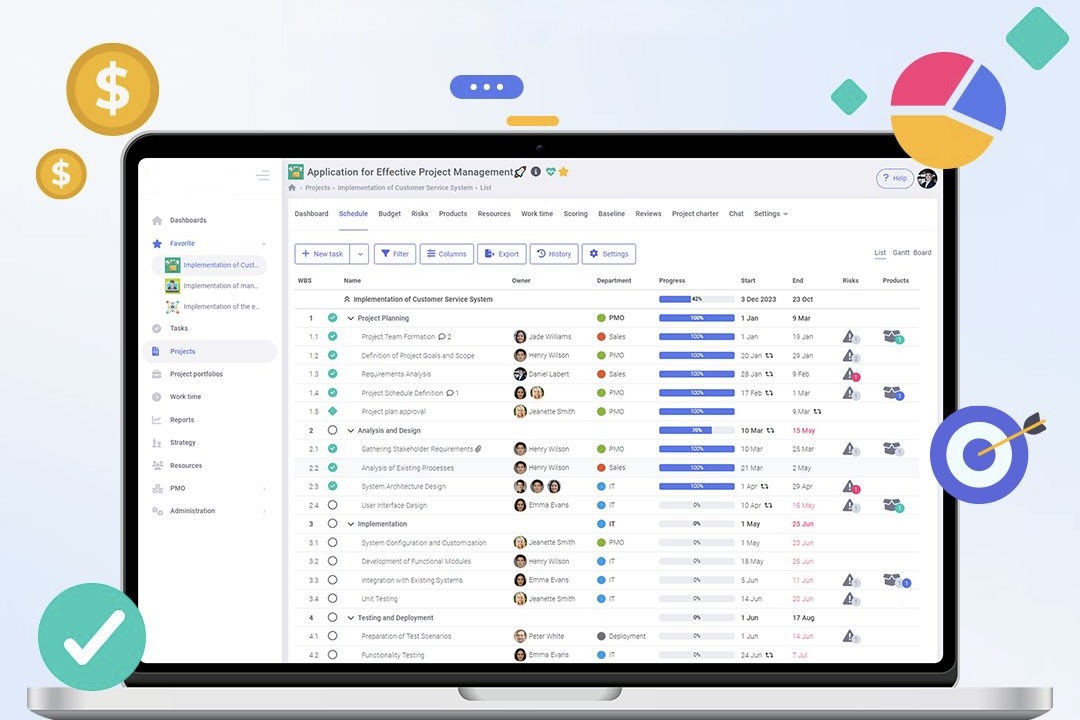
For distributed organizations, visibility becomes less dependent on who happens to be online at the same time.
Project Transparency Becomes Critical in Hybrid Work
Hybrid arrangements introduce a specific risk: information asymmetry.
The people physically present in the office often exchange context, make decisions, or resolve blockers in conversations that remote colleagues never see. Over time, this creates uneven visibility across the organization. Decisions become harder to trace, delays appear without obvious cause, and the same project status may be described differently depending on who is asked.
Shared operational visibility helps reduce that imbalance. When project state, ownership, timelines, and decisions are documented within a common system rather than stored in individual memory, the hybrid model no longer disadvantages whoever happens to be remote that week.
This also improves accountability and traceability, increasingly important for audits, compliance requirements, client reporting, and post-project reviews.
How PMO Structures Support Distributed Organizations
At a certain scale, informal coordination and individual project tracking methods are no longer enough. Many growing organizations are introducing more structured PMO practices to standardize reporting, resource planning, governance, and portfolio visibility across remote and hybrid teams. PMO software is often used as part of that operational framework, but the larger goal is consistency and visibility across the organization rather than the software itself.
The role of the PMO is not to manage every project directly, but to ensure the organization can collectively see, prioritize, and steer work across multiple teams and initiatives. For distributed companies, this governance layer becomes increasingly important. Cross-project visibility, standardized status reporting, shared planning structures, and clear escalation paths allow leadership to make informed decisions about projects they may rarely see in person.
Without that structure, executive visibility often depends more on which teams communicate most effectively than on the actual state of delivery.
Automation Reduces Coordination Overhead
The more distributed an organization becomes, the more expensive manual coordination starts to feel.
Status meetings frequently exist because visibility is incomplete. Weekly reporting cycles often compensate for disconnected systems that cannot provide reliable operational insight on their own. Each of these activities consumes management time that could otherwise be spent solving problems instead of gathering updates.
Automation helps reduce that overhead through centralized reporting, deadline tracking, notifications, workload visibility, and status synchronization. These systems do not replace human judgment, but they allow teams to spend less time asking “what is happening?” and more time discussing “what should we do next?”
That distinction becomes increasingly important as organizations scale across locations and time zones.

The Future of Teamwork Is Operationally Distributed
The debate over whether work will fully return to the office is largely settled in practice. Even organizations with stricter attendance expectations still operate across multiple offices, vendors, contractors, and external partners.
Distributed operations are now a normal part of how modern organizations function. The competitive question is no longer where people sit, but how effectively work is orchestrated across locations.
That shift places visibility, coordination, accountability, and operational clarity at the center of organizational resilience. Scalable collaboration depends less on the choice of communication platform and more on the operational structure underneath it, the systems and processes that determine whether the organization actually knows what it is delivering.
Conclusion
Remote and hybrid work did not invent the need for transparency, but they made it unavoidable. Communication platforms support conversation, while operational coordination depends on something deeper: shared visibility into priorities, ownership, timelines, and delivery.
For organizations operating across multiple locations, effective project coordination is no longer a productivity enhancement or management preference. It has become part of the operational foundation required to keep distributed work sustainable, aligned, and scalable.
Related Articles
December 9, 2025
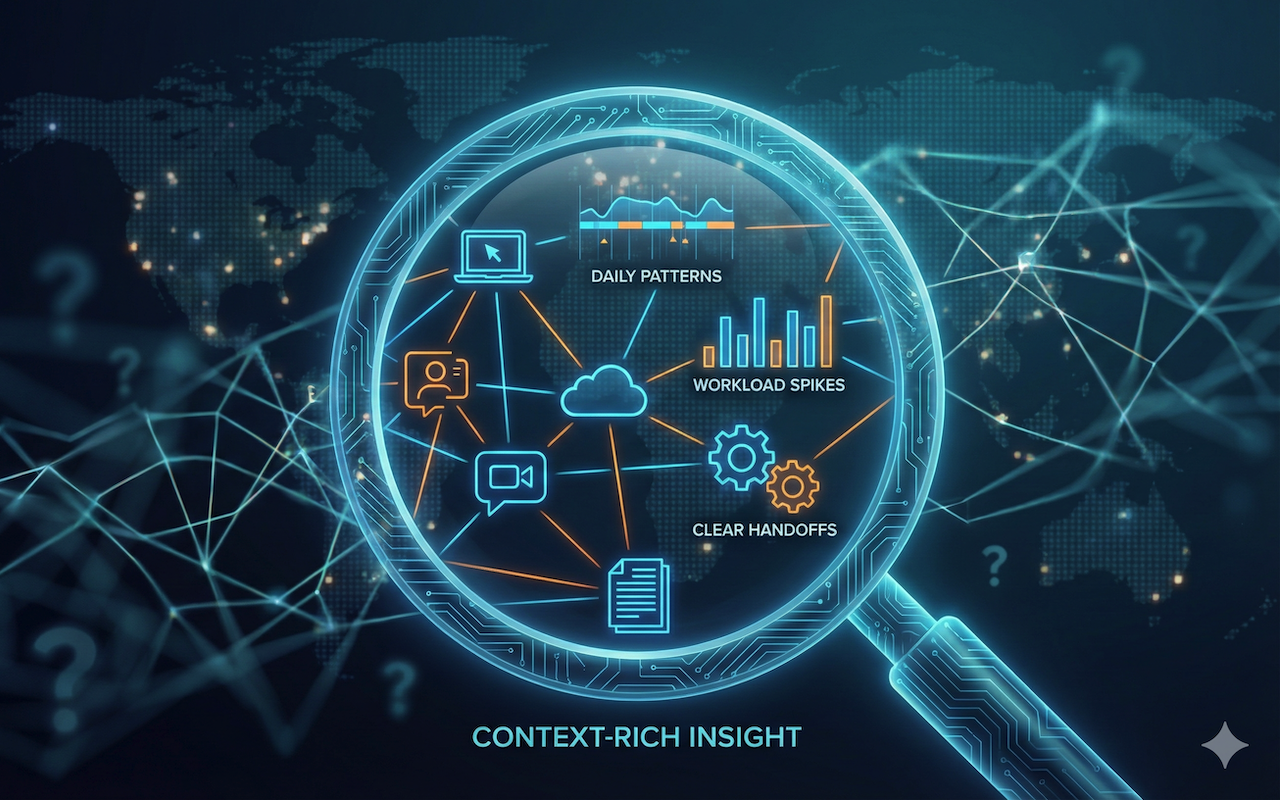
The Power of Context-Rich Insights in Managing Remote Teams
A task drifts for a day because no one knew who would make the next move. A teammate goes quiet for an afternoon, not because they’re checked out but because they’re juggling too m...
Read More
December 3, 2024
20 Best Task Management Software Tools to Elevate Your Workflows
In today’s fast-paced business environment, project managers are the unsung heroes ensuring that teams stay organized, deadlines are met, and goals are achieved. However, as projec...
Read More
July 16, 2024
The Benefits of Integrating Project Management Tools for Increased Productivity
Efficient project management is essential for increased productivity within organizations. The integration of project management tools plays a pivotal role in enhancing efficiency...
Read More
Comments
Comments are available to signed-in users and are moderated to keep the discussion useful and respectful. Spam, automated submissions, and low-value promotional comments are removed. Outbound links may be approved when they are relevant and genuinely helpful to readers, but they are displayed as plain text rather than clickable hyperlinks.
No comments have been published yet.
Please sign in to submit a comment.