

Technology, Supply Chain, Manufacturing
How Hardware Engineers Reduce CNC Prototyping Lead Time by 40% Using Digital Manufacturing Workflows
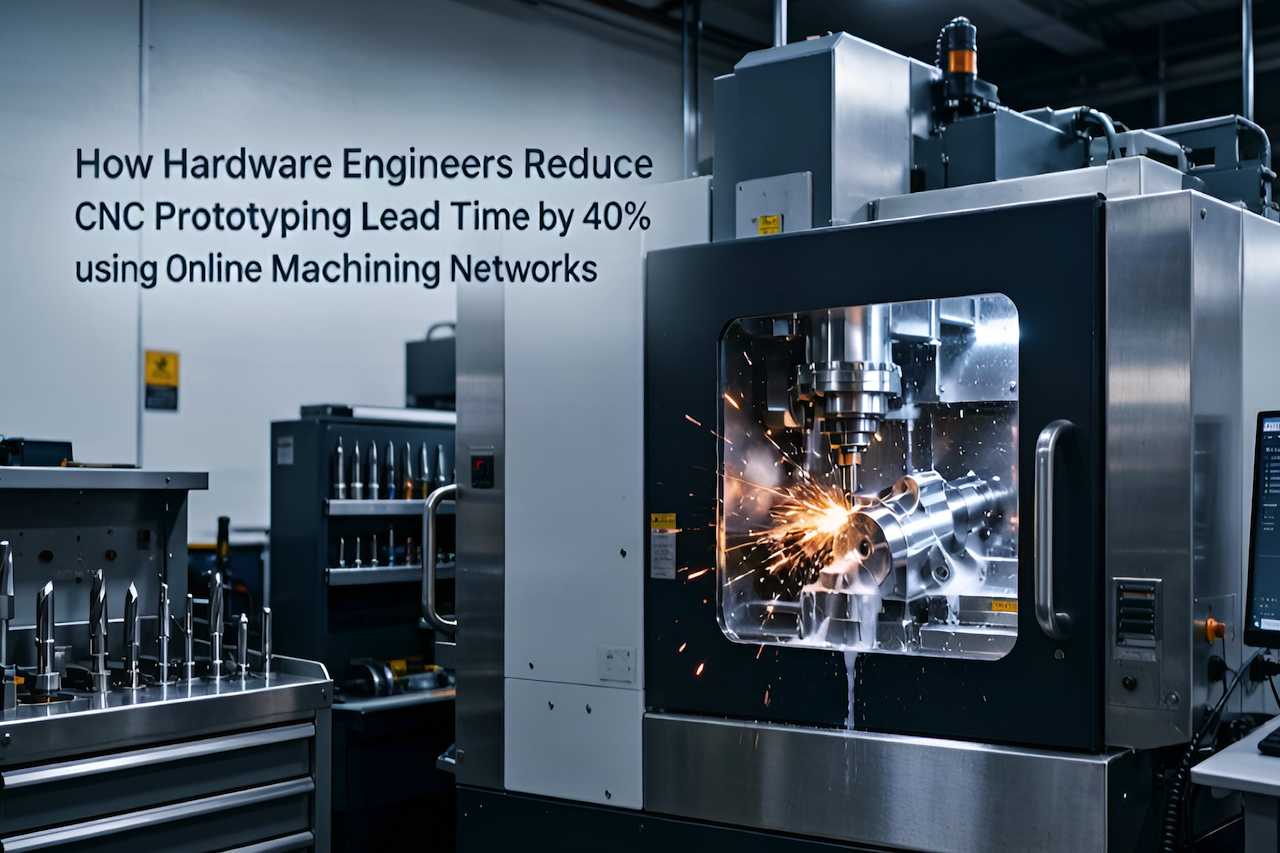
Developing precision components for modern hardware products often involves tight schedules, complex designs, and strict quality requirements. Traditional CNC machining workflows may rely on manual quotation processes, disconnected production planning, and limited design-for-manufacturing (DFM) feedback, increasing the risk of higher manufacturing costs, production delays, and design revisions.
Modern automated digital platforms and precision manufacturing workflows, validated for accuracy, enable real-time DFM analysis, instant quoting, and streamlined production planning. These capabilities help engineers optimize CNC machining projects, improve design decisions, and support consistent, high-quality manufacturing outcomes.
Why Are Traditional CNC Machining Workflows Slowing Hardware Iteration Timelines?
Traditional quotation workflows can take days, with manual reviews and limited design feedback creating unnecessary delays during repetitive development processes. Digital manufacturing workflows change this equation dramatically, as automated quoting and DFM analysis let engineers evaluate machining costs and manufacturability more quickly, helping shorten typical development cycles.
- The Hidden Cost of Manual Quoting Bottlenecks: Conventional workflows often involve days of phone calls, emails, and manual design reviews before engineers receive pricing or manufacturability feedback, slowing design iteration and production planning.
- How Digital Networks Reshape Response Efficiency: According to McKinsey & Company's Operations Insights, digitizing the supply chain can reduce procurement cycle times by 30–50% while making costs more predictable. Online CNC machining services are one example of how digital manufacturing workflows can streamline quoting, design review, production planning, and communication throughout the manufacturing process.
How Do Instant Quote Algorithms Calculate Machining Cost and Manufacturability?
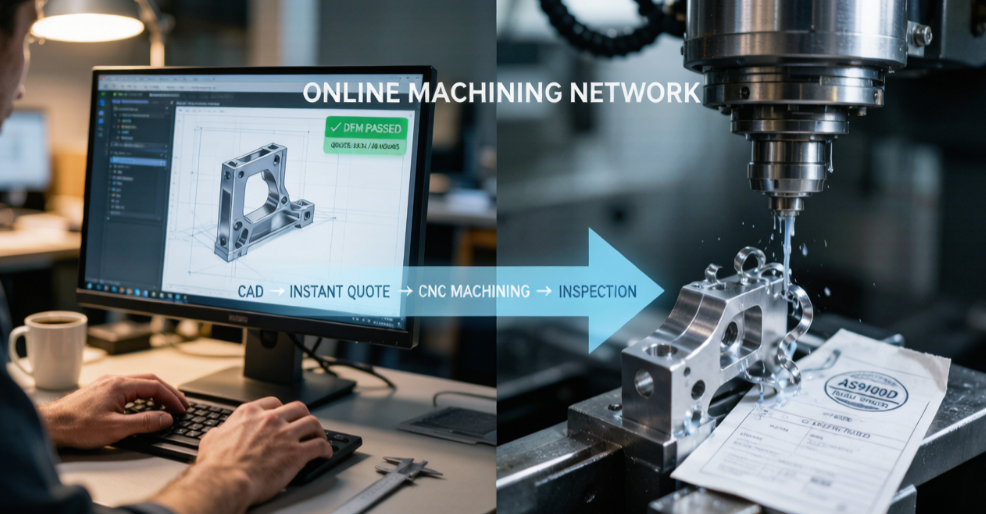
Modern instant quote algorithms use advanced geometric analysis to evaluate 3D CAD files against the actual constraints of the machining process. Instant quotations consider cutting toolpaths, material removal rates, tolerance requirements, and the effects of surface finish to provide cost estimates within seconds.
1. DFM Analysis via Geometric Parsing
Computational geometry algorithms mimic expert machinists and analyze uploaded 3D CAD files to understand part complexity and provide DFM analysis. The system automatically identifies complex features and allows engineers to adjust tolerances before production while generating an accurate CNC machining instant quote.
2. Multi-Variable Cost Modeling
Cost is determined using machine setup time, required tooling, material scrap rate, and the complexity of finishing processes. To simplify design analysis before production, designers often upload 3D CAD files to generate an immediate DFM report. This capability is a key component of precision online CNC machining workflows.
What Standards Define High-Quality Precision Manufacturing?
Precision manufacturing depends on established quality management standards and consistent inspection practices. International certifications provide widely recognized benchmarks for manufacturing quality and process control. ISO 9001 supports quality management and defect prevention, while AS9100D adds requirements for traceability, dimensional verification, and rigorous risk management in aerospace manufacturing.
1. Multicertification as the Compliance Baseline
Modern manufacturing facilities often use multi-certified production plants and standardized CMM inspection reports to support consistent quality for critical parts. These facilities may hold ISO 9001, ISO 14001, IATF 16949, and AS9100D certifications. Together, these certifications demonstrate that quality management systems meet recognized industry standards and support consistent low-volume production.
2. Interpretation of ISO Quality Management Standards
According to the official ISO Standards portal, "risk-based thinking" is required throughout production processes for AS9100D compliance. For manufacturing teams, this means maintaining raw material batch traceability, full dimensional verification, and documented quality control throughout production.
How Can Engineers Optimize CNC Part Designs to Avoid Expensive Production Delays?
There are four common design flaws that can significantly increase manufacturing costs: deep blind holes, excessively tight tolerances, non-standard internal radii, and the lack of reference datums. Best practices suggest that optimized designs can reduce manufacturing costs by 25–30% while helping shorten production time.
- Avoiding Expensive Design Flaws That Increase Manufacturing Costs: Engineers can reduce machining challenges by keeping the pocket depth-to-width ratio at 4:1 or less and ensuring that internal corner radii are no smaller than one-third of the cavity depth. These design practices improve manufacturability and help produce CNC parts more efficiently.
- Evaluating Digital CNC Machining Workflows: Engineers should assess how online CNC machining workflows incorporate design-for-manufacturing (DFM) analysis, material selection, tolerancing, and production planning to identify potential design issues before machining begins.
Which Manufacturing Metrics Improve Low-Volume CNC Production?
Evaluating manufacturing performance is important for achieving consistent quality in low-volume CNC production. Common metrics include on-time production, first-pass yield, quotation accuracy, process consistency, and production traceability.
1. Benchmarking Manufacturing Performance
Modern digital manufacturing systems often integrate ERP and MES software to improve production visibility and scheduling. Facilities using these systems typically achieve higher on-time production rates and more consistent manufacturing performance than facilities relying on manual workflows.
2. Creating a Scientific Evaluation Model
When planning low-volume CNC production, engineers should consider manufacturing capabilities such as quality control, process consistency, dimensional inspection, and logistics planning. Combining these factors with DFM analysis helps reduce production risk and improve delivery predictability.
Conclusion
State-of-the-art hardware R&D requires accurate manufacturing, efficient design iteration, and consistent quality standards to meet demanding development timelines. By combining DFM analysis, automated cost estimation, and digital manufacturing workflows, engineers can evaluate designs more quickly, improve manufacturability, control production costs, and support consistent quality throughout the CNC machining process.
FAQ
FAQs
01Q1: How do automated instant quote tools analyze CAD files to assess CNC machining feasibility?
Instant quoting tools rely on geometric parsing algorithms to analyze 3D CAD models based on machining constraints. The software evaluates material volume, fillet radii, deep cavities, and thin walls that may cause tool vibration. Based on these factors, it generates DFM analysis reports and cost estimates, allowing engineers to refine the design before production.
02Q2: What is the core difference between rapid prototyping and low-volume CNC production?
Rapid prototyping emphasizes speed and concept testing using individual parts. Low-volume CNC manufacturing typically produces between 10 and 10,000 parts with greater repeatability, quality documentation, and cost-per-part optimization, bridging the gap between prototyping and full-scale production.
03Q3: Why are ISO 9001 and AS9100D certifications important in CNC manufacturing?
ISO 9001 and AS9100D establish standardized quality management practices for manufacturing. ISO 9001 focuses on quality control and defect prevention, while AS9100D adds requirements for traceability, dimensional verification, and risk management in aerospace manufacturing.
04Q4: How can design engineers reduce CNC machining lead times?
Engineers can reduce lead times by using standard cutting tools, avoiding deep blind holes, relaxing non-critical tolerances, selecting common stock materials such as Aluminum 6061-T6 or Stainless Steel 304, and minimizing secondary finishing operations.
05Q5: How do digital manufacturing workflows improve CNC machining quality?
Digital manufacturing workflows combine DFM analysis, standardized inspection, process monitoring, and quality documentation to identify potential issues before production. These workflows improve consistency, reduce manufacturing errors, and support traceability throughout the CNC machining process.
Comments
Comments are available to signed-in users and are moderated to keep the discussion useful and respectful. Spam, automated submissions, and low-value promotional comments are removed. Outbound links may be approved when they are relevant and genuinely helpful to readers, but they are displayed as plain text rather than clickable hyperlinks.
No comments have been published yet.
Please sign in to submit a comment.