

How AI-Powered Tools Are Making 3D Content Creation More Accessible
Creating 3D content once required specialized software, powerful hardware, and significant technical expertise. Today, AI-powered 3D creation tools have lowered many of those barriers by allowing users to generate, edit, and optimize 3D models using text prompts, images, and automated workflows. These platforms are helping creators, marketers, educators, product designers, and hobbyists produce 3D assets more efficiently while working across different devices and locations.
Many modern tools offer similar capabilities, including text-to-3D generation, image-to-3D conversion, AI-assisted retopology, automated texturing, and rigging. Throughout this article, Tripo Studio will be used as an example of how these technologies work in practice.
Key Technologies Behind Modern AI-Powered 3D Creation
Most AI-assisted 3D creation platforms are built around a common set of technologies designed to simplify traditional modeling workflows. While implementations vary between platforms, the following capabilities are becoming increasingly common across the industry.
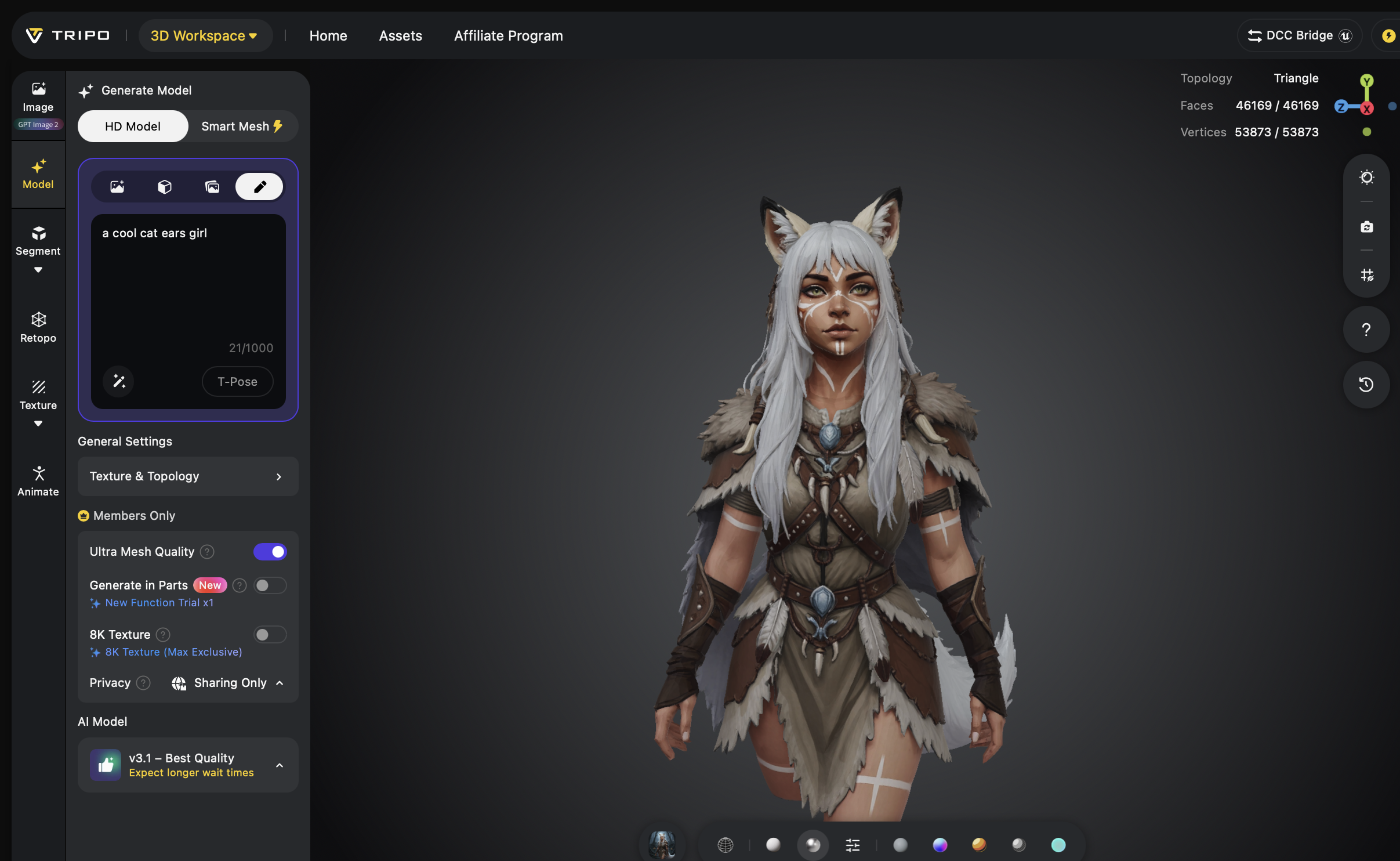
- Text to 3D Model: Text-to-3D technology allows users to generate three-dimensional models using natural language prompts. Rather than manually building objects from scratch, creators can describe what they want and let AI generate a starting model.
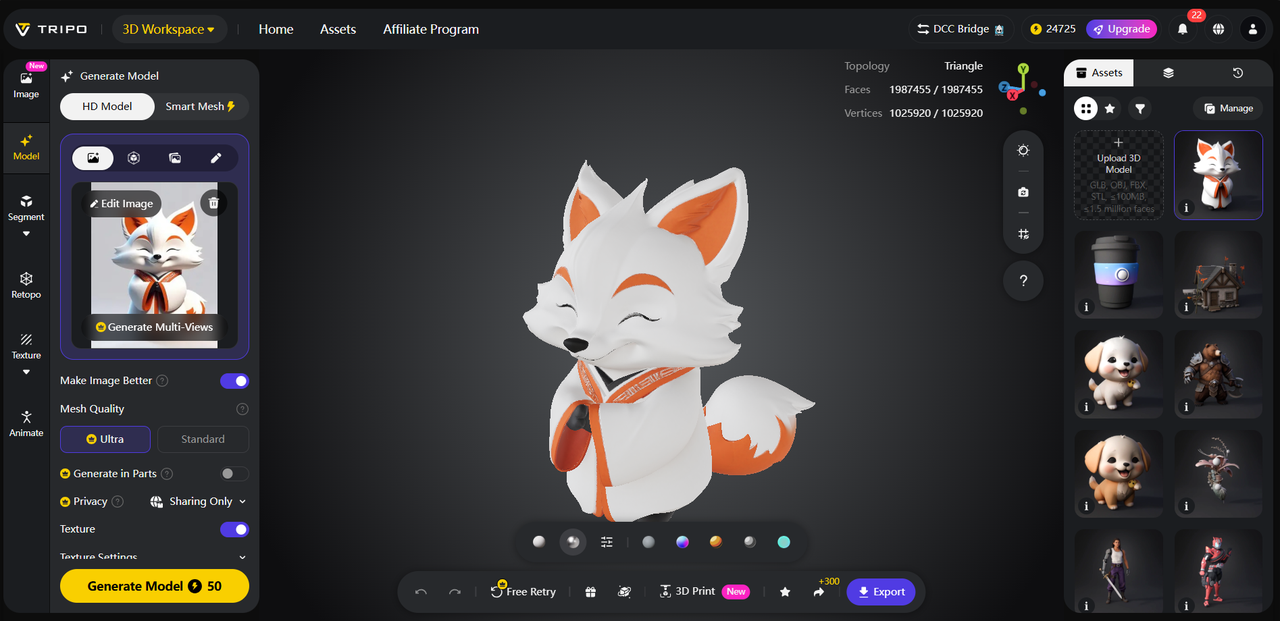
- Image to 3D Model: The linked Image to 3D Model workflow demonstrates how a single image can be transformed into a 3D object. Similar capabilities are becoming common among AI-powered modeling platforms and can be particularly useful for product visualization, character creation, and rapid prototyping.
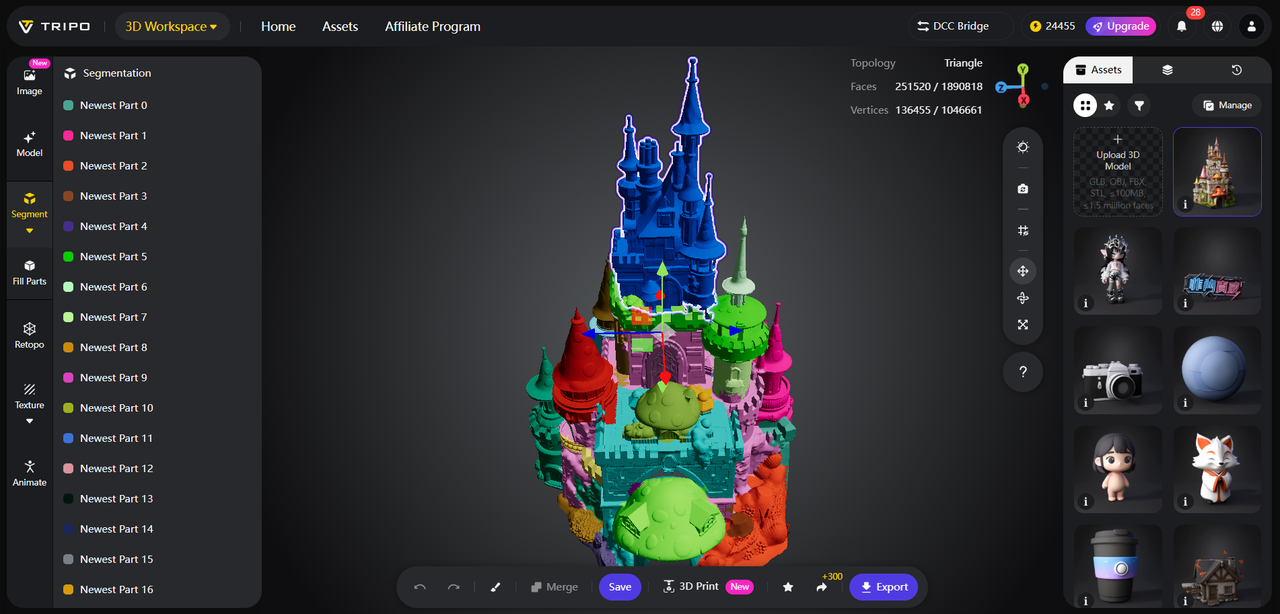
- AI Model Segmentation: Segmentation tools automatically separate complex models into individual components that can be edited independently. This can simplify collaboration, improve asset organization, and make iterative design changes easier. Cloud-based segmentation workflows, such as the linked Split 3D Model feature, demonstrate how AI can help creators isolate and modify specific parts of a model without rebuilding the entire asset.
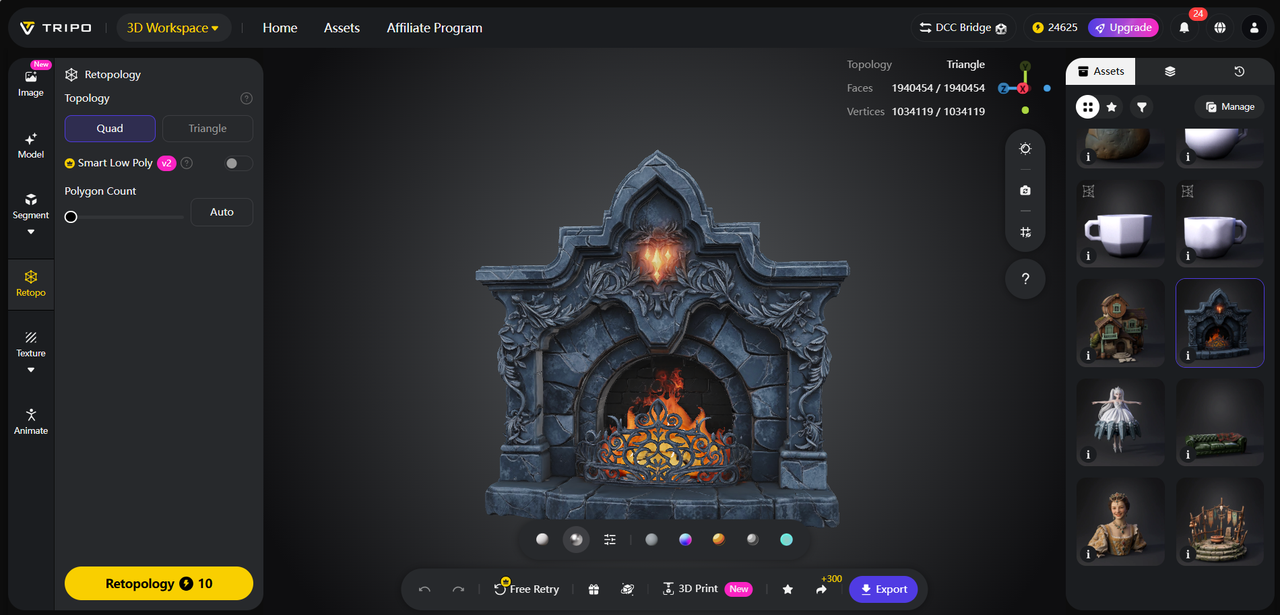
- AI Retopology: Retopology is the process of creating cleaner geometry that performs better in animation, rendering, game engines, and 3D printing applications. Traditionally, this has been one of the most time-consuming stages of 3D production. Modern AI-assisted retopology tools automate much of this process, helping creators prepare models for downstream workflows while reducing manual effort.
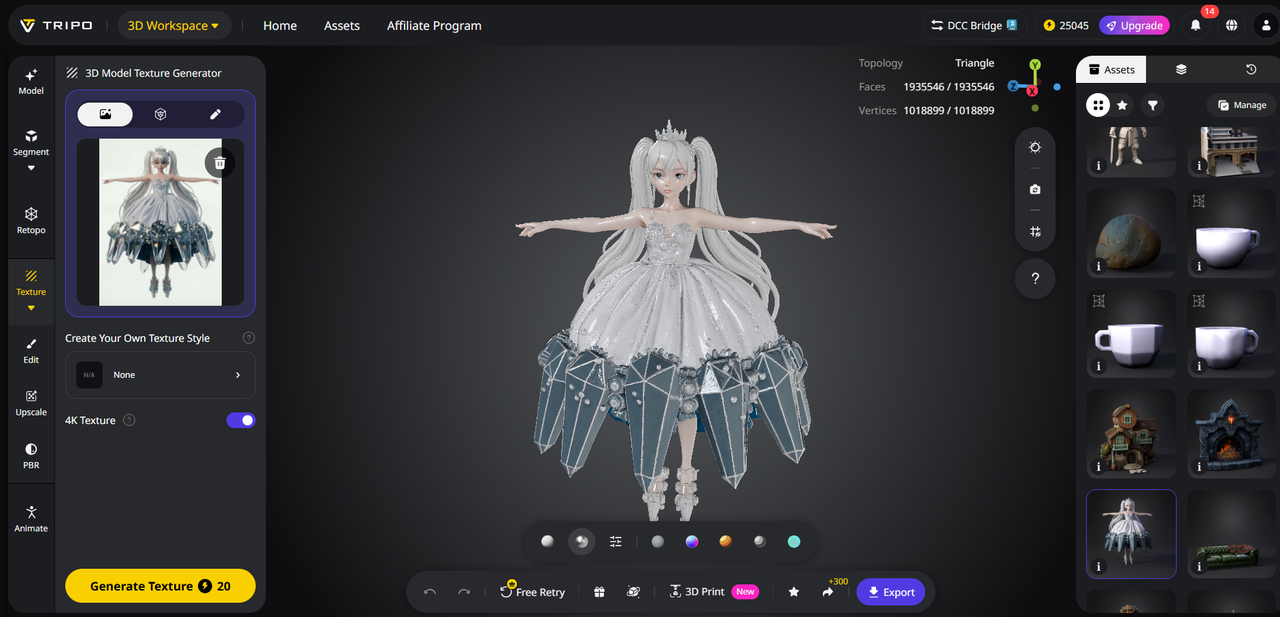
- AI Texturing: Texturing adds visual detail and realism to a model’s surface. AI-assisted texturing systems can generate materials, patterns, and surface characteristics automatically, reducing the amount of manual painting required. Solutions such as the linked AI Texture workflow illustrate how AI can accelerate texture generation while still allowing creators to customize the final appearance.
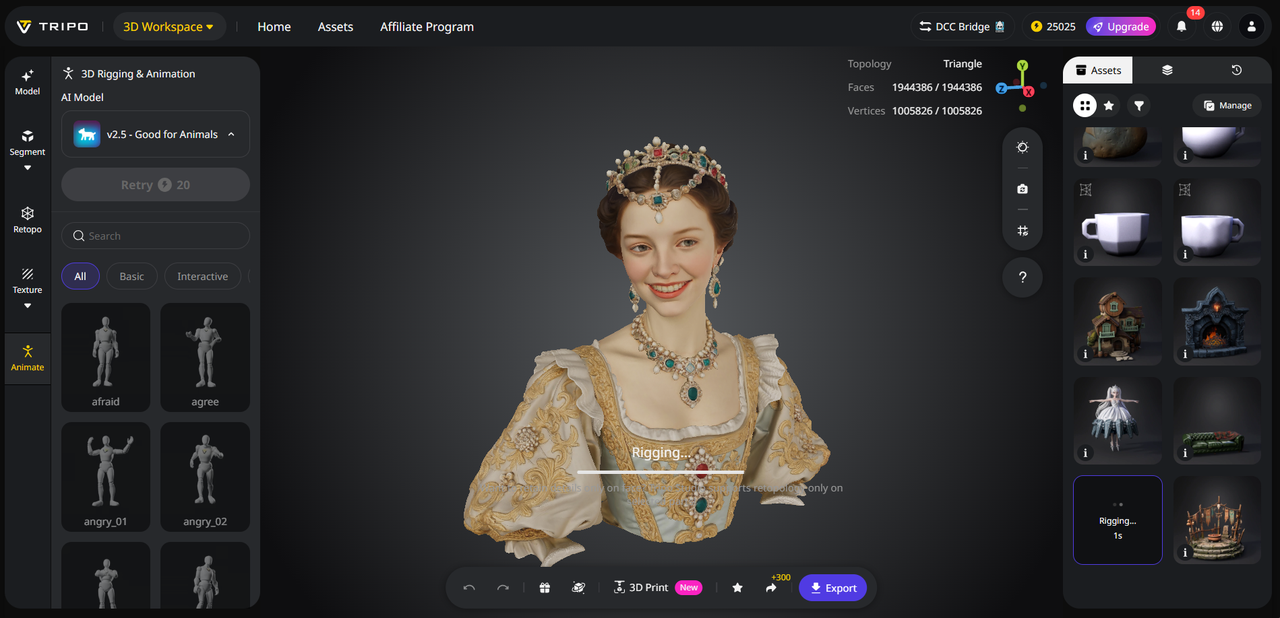
- AI Rigging: Rigging prepares a 3D model for animation by creating the internal skeletal structure needed for movement. Historically, rigging required specialized technical knowledge and significant manual work. AI-assisted rigging tools can automate much of this setup process, allowing creators to move from modeling to animation more quickly. Many modern platforms now include automated rigging workflows designed for beginners and experienced artists alike.
Common Applications of AI-Generated 3D Content
- Product visualization for ecommerce and marketing
- Rapid prototyping for designers and engineers
- Asset creation for games and virtual environments
- Educational and training simulations
- Social media and digital content production
- 3D printing projects and custom manufacturing
- Architectural and interior design visualization
What to Look for in a Modern 3D Creation Platform
When evaluating AI-powered 3D creation tools, creators should consider several factors:
- Cross-device accessibility
- Supported export formats
- AI-assisted modeling features
- Collaboration capabilities
- Rendering and texturing options
- Animation and rigging support
- Pricing and scalability
Tripo Studio is one example of a platform that combines several of these capabilities, but many competing solutions offer similar workflows depending on the user’s needs and technical requirements.
Example Workflow: Creating a 3D Model with AI
While individual interfaces vary, most AI-powered 3D platforms follow a similar process:
- Start with a text prompt or upload a reference image.
- Generate an initial 3D model using AI.
- Refine the model using editing or segmentation tools.
- Optimize geometry through retopology if needed.
- Apply textures and materials.
- Add rigging for animation projects.
- Export the model in the required format for rendering, game development, ecommerce, or 3D printing.
The screenshots throughout this article use Tripo Studio as an example, but similar workflows are available across a growing number of AI-powered 3D creation platforms.
Conclusion
AI is helping make 3D content creation more accessible than ever before. Tasks that once required extensive technical expertise can now be completed through automated workflows powered by machine learning. While different platforms offer different strengths, the core technologies—text-to-3D generation, image-to-3D conversion, segmentation, retopology, texturing, and rigging—are becoming foundational components of modern 3D creation.
As these tools continue to evolve, creators of all skill levels will have more opportunities to produce professional-quality 3D content for business, entertainment, education, and personal projects.
Related Articles
February 19, 2024
Best Tools to Extract Text from Photos in 2024
It is fair to assume that digital technology has prevailed everywhere. Coming back to the topic at hand, digital documents are now the favored alternative for practically every oth...
Read More
January 1, 2024
5 Best Tools for Image to Text Conversion You Need to Try
If you are a regular user of the internet, you might have noticed that information is often enclosed in images. This is because people prefer quick sources of information instead o...
Read More
September 14, 2023
Top 10 Remote Working Tools in 2023
What started as a necessity during the pandemic has turned into a new standard for employees. Remote work setting is helping employees across various industries. It’s a more produc...
Read More
Comments
Comments are available to signed-in users and are moderated to keep the discussion useful and respectful. Spam, automated submissions, and low-value promotional comments are removed. Outbound links may be approved when they are relevant and genuinely helpful to readers, but they are displayed as plain text rather than clickable hyperlinks.
No comments have been published yet.
Please sign in to submit a comment.