

IP Address, Network, Cybersecurity
Detecting Unusual Network Behavior Through Real-Time IP Intelligence
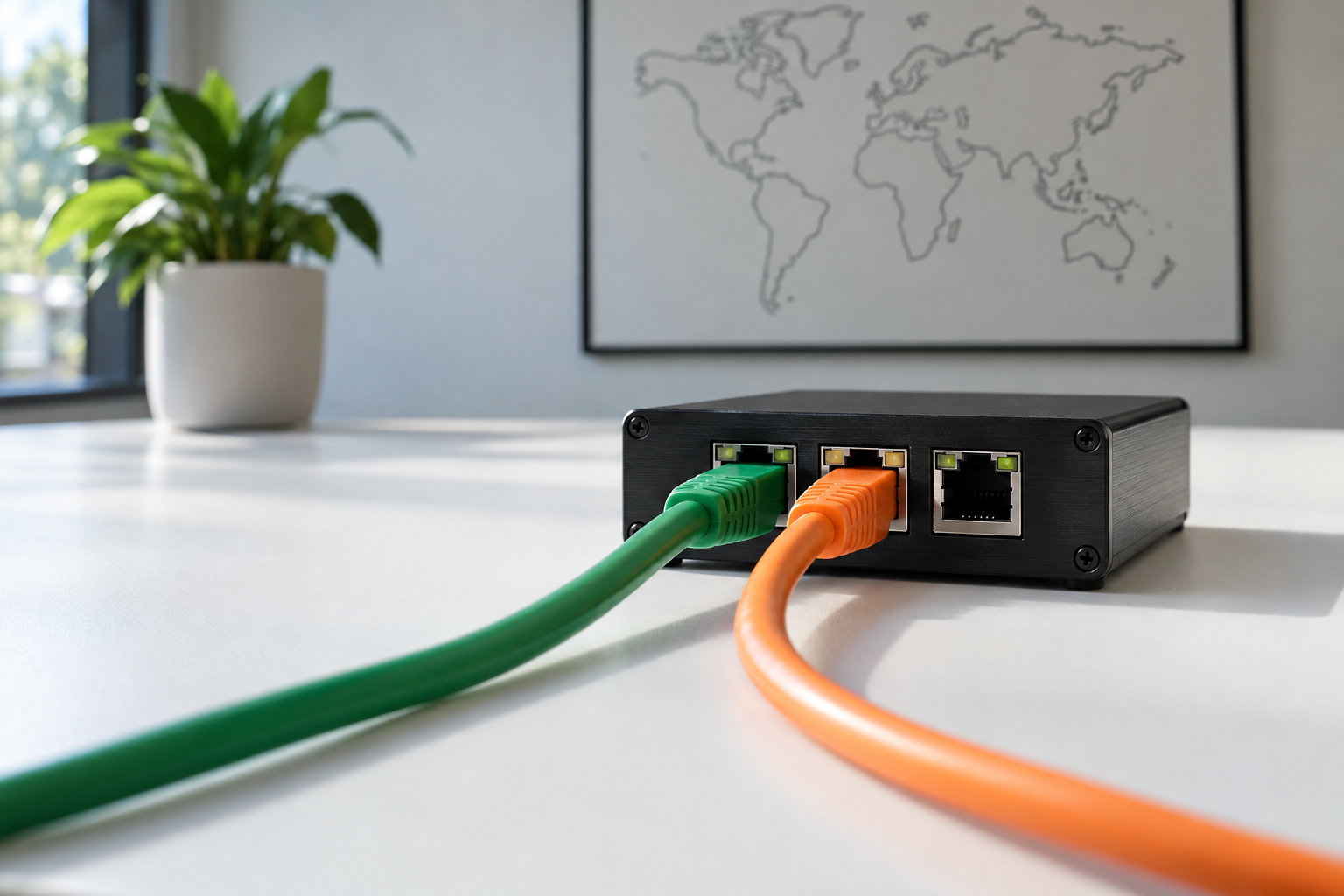
As network environments grow more complex and cyber threats become increasingly sophisticated, organizations are seeking tools that provide immediate insight into suspicious activity. Real-time IP intelligence allows you to assess the context behind each connection, identifying anomalies that basic log review often misses. Understanding the role of IP data and context-driven analysis is essential for recognizing and responding to threats before they escalate.
What real-time IP intelligence involves, and what it does not
Real-time IP intelligence refers to the process of using up-to-date information about IP addresses and their properties, including geolocation, network ownership (ASN), residential versus data center origin, and potential proxy or VPN association, to interpret network events. Unlike basic geolocation, which simply points to an approximate physical location, IP intelligence brings contextual signals into play: for instance, whether an address belongs to a well-known hosting provider or appears on blocklists for suspicious behavior. For example, a retail company might notice new logins from an IP block typically reserved for cloud service providers, not residential users, following a promotional campaign. Similarly, detecting a sudden shift in IP ownership within legitimate user accounts may indicate that access credentials have been compromised.
It is important to note that IP intelligence does not provide a user’s identity. IP signals offer clues about network origins, movement patterns, and the likelihood of certain risks, but cannot confirm who is behind a connection. In practice, these insights serve as an early warning system, informing follow-up steps and, when combined with other data, guiding security responses.
Why context matters for detecting anomalous behaviors
Unusual activity on a network is rarely obvious on its own. Traffic patterns naturally vary by region, network type, and time of day. What is normal for a financial service with global users may look suspicious for a local business. Without IP context, security tools may generate many false positives, such as flagging all foreign logins when remote teams are part of business operations.
Combining IP enrichment with baselining, understanding what kinds of connections are ordinary for your organization, lets you differentiate between harmless deviations and true security incidents. For example, a login from an unfamiliar country outside usual business hours, paired with a data center IP, could signal an account takeover attempt rather than legitimate travel. In another scenario, university IT staff can use IP intelligence to identify student accounts accessing coursework from unexpected regions or through proxy services during exam periods, which may indicate attempts to bypass access restrictions. Additionally, repeated API calls for inventory data originating from residential IPs in a country where the company has no customers could suggest a competitor is programmatically scraping price information.
Anomaly patterns revealed through IP insights
Several high-risk activity patterns are easier to detect when you use IP intelligence:
- Credential stuffing and account takeover: If accounts suddenly log in from countries or networks not previously associated with the user, especially when multiple logins occur from rapid-shifting IP ranges, this raises the likelihood of automated attacks.
- Bot and scraping activity: Automated bots frequently use IP addresses from cloud hosting providers while claiming to be from another region in claimed metadata. Mismatches between stated and actual network or location signals help expose these attempts. For example, a media streaming service may notice hundreds of account creation requests from IPs located in hosting facilities within a brief time frame. These requests differ from typical user behavior, supporting further investigation as potential automation.
- Suspicious admin access: Repeated logins to sensitive areas from IPs in data centers, or rapid changes in country and ASN, may point to compromised credentials or scripted attacks seeking privileged access. A financial organization might detect access to administrative interfaces from IP addresses associated with overseas VPN services during periods when no employees are scheduled to work remotely, highlighting a need for additional authentication measures.
Example scenarios from login protection to B2B access
Consider a case where a user’s account logs in from Paris at 9:00 AM, then from Singapore thirty minutes later. Since such “impossible travel” would not be physically feasible, especially when using IPs registered to well-known hosting companies, real-time intelligence provides grounds for investigation or blocking the session.
For APIs exposed to external partners, a pattern of voluminous requests from rotating subnets within the same data center ASN may indicate automated scraping rather than legitimate partner access. In B2B settings, access attempts to internal dashboards or SaaS tools from new regions or unexpected ISP types can reveal insider threats, compromised credentials, or misconfigured access policies. In monitoring these events, network TAP devices can contribute by gathering granular network data used for real-time IP analysis, supporting accurate identification of abnormal connection patterns.
Making detection actionable: real-time enrichment and correlation
Operationalizing real-time IP intelligence starts with an enrichment pipeline: network logs, firewall events, or authentication logs provide raw IPs. Enrichment services append geolocation, ASN, and risk signals. Events can then be risk-scored, triggering alerts or automated actions when certain thresholds are met, such as blocking traffic from IPs on blocklists or requiring step-up authentication for location anomalies.
Relying on a single data point is risky, so many organizations correlate IP insights across multiple sources: WAF, VPN, identity management, CDN, and DNS logs. This approach smooths out false positives and provides better situational awareness than siloed analysis. For login events, IP enrichment with baselining can help assess user authenticity.
Navigating limitations and ensuring privacy
While IP intelligence is valuable, it has limits. VPNs and mobile carriers can obscure true origins, and NAT or CGNAT may mask many users behind a single IP. Geolocation accuracy from an IP address lookup also varies, especially for IPv6 and fresh address blocks. As a result, organizations often use risk thresholds, confidence rankings, and follow-up user verification rather than relying solely on automatic blocks.
It is also essential to address privacy and governance. Only collect IP-derived signals necessary for security purposes, limit retention periods, and avoid using IP data for unrelated profiling. Responsible use of IP intelligence balances security benefits with respect for user privacy, positioning your organization to detect threats while maintaining trust.
Comments
Comments are available to signed-in users and are moderated to keep the discussion useful and respectful. Spam, automated submissions, and low-value promotional comments are removed. Outbound links may be approved when they are relevant and genuinely helpful to readers, but they are displayed as plain text rather than clickable hyperlinks.
No comments have been published yet.
Please sign in to submit a comment.