

Cybersecurity, Cloud Services, Software Development
Continuous Container Image Hardening: From Scan Results to Deployed Fixes
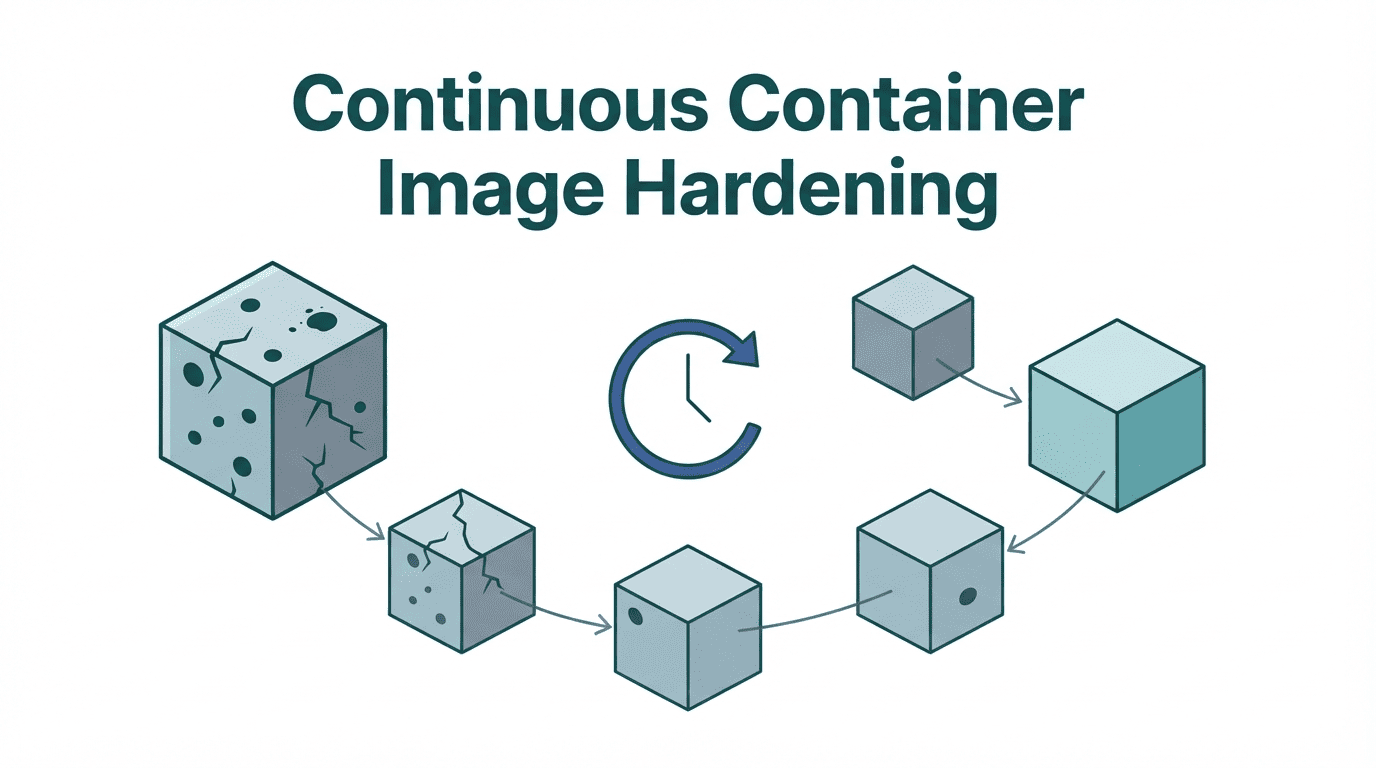
A container image can stay unchanged while knowledge about its components changes. A later advisory can reveal a problem that an earlier scan did not report. Teams therefore need a process that reviews existing images as well as new releases.
Continuous hardening connects that review to action. It combines maintained image sources, repeatable builds, testing, and deployment. A scan provides evidence for a decision. A rebuilt image provides a candidate fix. Production changes only when the repaired version reaches the running workload.
Start with a Reliable Inventory
List each service, its owner, and the image digest in use. Include workers, scheduled jobs, and recovery images. Record which repository builds each image. Identify the base image and application dependencies that the build uses.
Keep a software bill of materials, or SBOM, for each release. Store it with the image digest and build record. This helps engineers connect a new advisory to a specific component in a specific release.
Remove retired images from active deployment paths through your normal retention process. Keep required recovery versions clearly marked. An inventory is useful only when it separates current workloads from old artifacts.
Define the Events That Start Work
Set a regular review schedule for maintained images. Also start a review when a relevant advisory appears or a supplier releases a fix. Use the severity, exposure, and business role of the workload to set response deadlines.
A daily rebuild can be one part of this process. It cannot guarantee that a patch exists or that a new build resolves every finding. Check what changed before treating a successful build as remediation.
Give failed rebuilds an owner. Alert the team when an important image falls behind its review deadline. Keep a separate route for urgent issues that cannot wait for the next scheduled run.
Separate the review deadline from the deployment deadline. A team may confirm an issue quickly but need more time to test its fix. Record both dates so that delays remain visible. For a service awaiting a patch, document the temporary response and who approved it. Set a date to revisit that decision instead of leaving the exception open indefinitely.
Build from Controlled Inputs
Use reviewed base images and record their digests. Keep dependency versions and build settings with the source. Fetch approved updates through a process that creates a visible change record.
Build a new candidate when an input changes. Compare its component list with the previous release. Review added packages as well as removed ones. A dependency update can introduce new software that also needs assessment.
Keep credentials out of the final image. Limit build tools to the stages that need them. Confirm that the final image contains the files required for startup, normal requests, and recovery tasks.
Make Hardening a Tested Change
Apply a documented configuration baseline that fits the service. Check user permissions, exposed ports, and writable paths. Record exceptions with a reason and an owner. Avoid a baseline that prevents necessary application behavior.
Runtime observations can help identify unused components. Test coverage matters before removal. Exercise scheduled work, optional features, and failure handling. Keep uncertain components until there is enough evidence to make a safe decision.
One example of this approach is RapidFort's continuous vulnerability elimination, which combines curated images with runtime context and the removal of unused software. This illustrates how vulnerability reduction can be incorporated into existing release checks while considering the evidence and integration work required.
Keep Scan Results in Context
Scan the final candidate, including application layers. Save the tool version, advisory data date, and settings. Use consistent settings when comparing releases so that a reporting change does not look like a repair.
Review the affected component and its role before choosing an action. If you use Vulnerability Exploitability eXchange, or VEX, records, check their scope and supporting evidence. An applicability statement should identify the product version it covers.
Do not treat a low finding count as proof of complete security. Track unresolved issues with owners and deadlines. Keep application defects and configuration problems in the review even when package findings decrease.
Complete the Deployment Loop
Run functional and integration tests before approval. Include representative traffic and failure cases. Verify certificate handling, file access, and connections to other services. Compare resource use with the previous release under similar conditions.
Deploy gradually where the system supports it. Monitor failed requests, restarts, and other service health signals. Set stop conditions before rollout begins. Keep a tested rollback path to a known image.
Confirm the digest on running workloads after deployment. Track the time from an actionable advisory to a verified production change. Also track failed updates and overdue exceptions. These measures show where the process needs attention. Review them with service owners so hardening remains part of normal maintenance.
Final Thoughts
Continuous container hardening works best as an ongoing maintenance process rather than a one-time security task. Inventory, updated vulnerability information, controlled builds, testing, and deployment all need to stay connected so that newly discovered risks can lead to verified changes in running workloads.
The goal is not simply to produce images with fewer reported vulnerabilities. It is to maintain a repeatable process for identifying relevant issues, making appropriate changes, testing them safely, and confirming that those changes reach production.
Comments
Comments are available to signed-in users and are moderated to keep the discussion useful and respectful. Spam, automated submissions, and low-value promotional comments are removed. Outbound links may be approved when they are relevant and genuinely helpful to readers, but they are displayed as plain text rather than clickable hyperlinks.
No comments have been published yet.
Please sign in to submit a comment.