

Technology, Electronics, Manufacturing
7 Best Handheld Laser Welders for Metal Fabrication
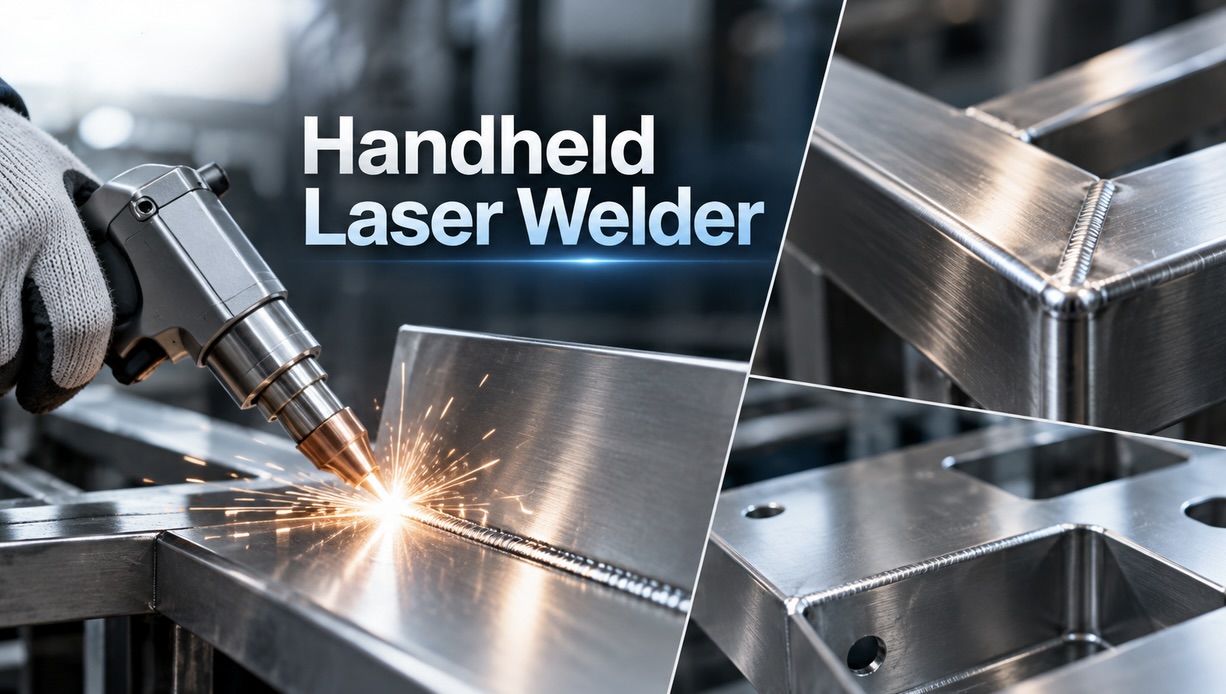
A good handheld laser welder should make everyday welding easier, not simply add more power to the workshop. For sheet-metal fabrication, I would look at joint fit-up, cooling, gun weight, wire feeding, and how often the machine needs to be moved. The seven systems below suit different types of fabrication work, with options ranging from compact air-cooled models to higher-power systems designed for demanding production environments.
7 Best Handheld Laser Welders Compared
| Manufacturer | Representative System | Laser Power | Main Strength | Best For |
|---|---|---|---|---|
| Dynalasers | S / M / D Series | 700–1800W | Compact air-cooled design | Mobile and mixed fabrication |
| IPG Photonics | LightWELD | 1000–2000W | Established fiber laser platform | Industrial metal fabrication |
| Miller | OptX | 2000W | Integrated welding ecosystem | Production workshops |
| JASIC | LS Series | 1500 / 2000W | Welding, cleaning, and cutting | General fabrication |
| SENFENG | HWM Series | 1500–3000W | Higher-power equipment options | Medium-duty metalworking |
| GWEIKE | LCW Series | 1500 / 2000W | Multi-process capability | General workshop applications |
| xTool | MetalFab | 800 / 1200W | Welding and optional CNC cutting | Small workshops and custom projects |
These handheld laser welding machines are not interchangeable. A larger water-cooled system may suit a fixed production area, while a lighter air-cooled model can be easier to position around a busy workshop. The right choice depends on the work being done most often, including material thickness, production volume, portability, and cooling requirements.
Compact Air-Cooled Handheld Laser Welders
Compact handheld fiber laser welding machines use forced-air cooling to manage operating temperatures. Without a conventional water-chiller circuit, this type of equipment occupies less space and eliminates coolant maintenance.
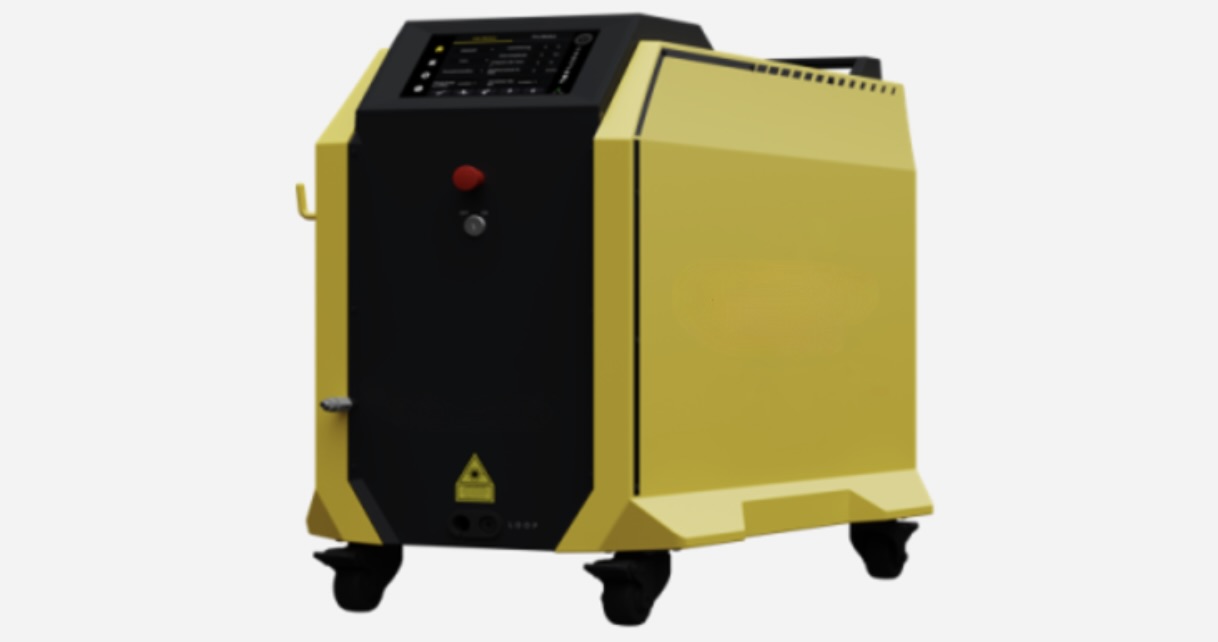
For example, Dynalaser's compact handheld fiber laser welding machines include S, M, and D Series models covering approximately 700W to 1800W. Under suitable welding conditions, the broader range can handle stainless steel up to 7 mm and aluminum up to 5.5 mm. Those are maximum reference capabilities for selected configurations, not guaranteed results for every material or joint.
Mid-Range Handheld Laser Welders for Everyday Fabrication
Mid-range handheld laser welders are commonly used in workshops that handle different fabrication jobs throughout the week. These systems balance laser power, portability, and operational flexibility.
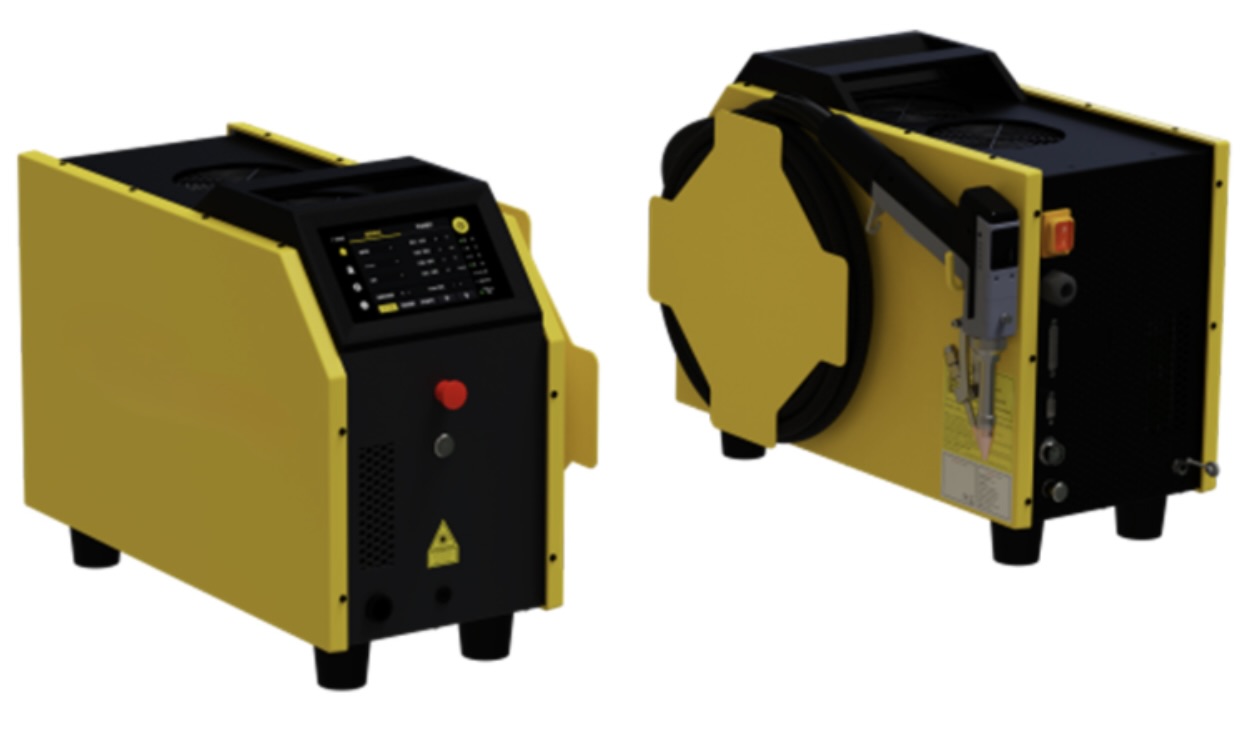
For example, the Dynalasers M Series comes in 800W, 1200W, and 1800W versions, weighing less than 37 kg, 42 kg, and 45 kg, respectively. The platform supports welding, cleaning, and light cutting, making it useful when parts need more than one operation.
Other manufacturers offer comparable power ranges with different cooling systems, welding modes, and equipment configurations. For regular stainless steel fabrication, I would start with the thickness and joint type that account for most production hours. There is little benefit in choosing 1800W if the shop mainly welds thin enclosures.
Higher-Output Handheld Laser Welders
Higher-output handheld laser welders are worth considering when heavier welding jobs appear regularly. These systems are designed for applications requiring greater penetration capabilities or sustained production output.
Equipment size and cooling requirements vary between manufacturers. Some higher-output systems use water cooling, while compact air-cooled configurations are also available.
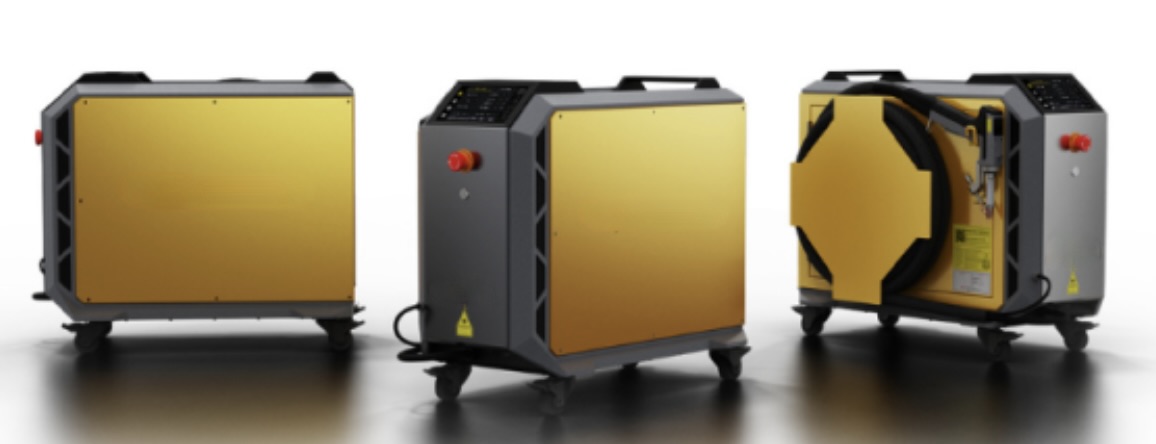
Higher-output handheld laser welders are available in various power configurations, including 1200W and 1800W models. Compared with larger conventional welding installations, compact systems can be easier to accommodate in workshops with limited floor space. Some industrial laser welding systems incorporate safety architectures designed to meet recognized standards, such as ISO 13849. Certification claims and safety features should be reviewed for the specific model and configuration being considered.
That matters because an industrial laser welding tool needs more than a good welding head. Beam control, safety interlocks, restricted access, fume extraction, and suitable protective equipment must all be considered before installation.
Portable Handheld Laser Welders for Lightweight Fabrication
Portable handheld laser welding machines take a lighter approach. Compact air-cooled models are designed for mobility and lighter fabrication work, particularly where equipment needs to move between workstations.
This type of portable handheld laser welding machine makes sense for sheet-metal repairs, signage, small frames, and jobs where equipment moves between workstations.
Some compact air-cooled handheld laser welders weigh less than approximately 22 kg, making them suitable for applications where portability is important. Depending on the model, these systems may support continuous, spot, and pulse welding modes, along with compatible wire-feeding equipment.
Other portable welding systems may offer different power outputs, welding modes, and equipment weights. For a thin sheet, portability and simple setup may be more valuable than a few hundred more watts of laser output.
What Matters Beyond Laser Power?
Specification sheets are useful, but the smaller details often determine how comfortable a machine is to use after a full shift.
Welding gun weight is one consideration. Lightweight welding guns can help reduce operator fatigue, particularly during extended work around cabinets, frames, or corners. That may seem like a minor detail until the operator spends several hours handling the equipment.
Cooling methods, laser source design, and warranty coverage also vary between manufacturers. Some systems use proprietary laser sources, while others incorporate components from established fiber laser suppliers. Warranty terms should be evaluated alongside maintenance requirements and service availability.
Any supplier should be able to explain how quickly protective lenses, nozzles, and wire-feeder consumables can be replaced.
Before choosing the best handheld laser welder, I would check four things:
- Fit-up tolerance: Laser welding generally needs tighter joint preparation than MIG welding.
- Actual penetration: A smooth bead does not prove adequate fusion through the joint.
- Operating costs: Include shielding gas, filler wire, consumables, and maintenance.
- Safety requirements: High-power handheld lasers require a properly controlled work area, not just protective glasses.
A short demonstration on perfect sheet metal will not answer all these questions.
Which Handheld Laser Welder Should You Choose?
The simplest approach is to match the machine to normal production rather than the occasional largest job.
Different handheld laser welding systems are designed for different workshop requirements. Comparing power output, cooling methods, portability, and available functions can help narrow the options.
| Typical Workshop Requirement | Equipment Characteristics to Consider |
|---|---|
| Lightweight equipment and thin-sheet work | Compact air-cooled systems |
| General stainless steel fabrication | Mid-range laser power with adjustable welding parameters |
| Welding with cleaning and light cutting | Multi-process handheld laser welders |
| Regular higher-output welding | Higher-power systems with appropriate cooling |
| Thicker stainless steel or aluminum | Systems with sufficient power and verified penetration capabilities |
| Frequent movement between workstations | Portable systems with manageable equipment weight |
Before ordering, send actual parts to the supplier. Include material grade, thickness, joint type, expected gaps, and required weld penetration.
For an important structural joint, ask for a cross-section or suitable mechanical test. The weld should be judged by what happens inside the joint, not just how clean the surface looks.
Conclusion
The best handheld laser welder is the one that handles everyday fabrication reliably without creating unnecessary setup, maintenance, or safety problems.
Compact air-cooled systems may suit portable applications, while mid-range and higher-power equipment can accommodate different production requirements. Comparing welding performance, cooling methods, portability, maintenance, and safety features helps identify equipment suited to specific fabrication tasks.
Whatever the model, test it on real production parts before deciding. A successful weld sample is more useful than a long list of specifications.
FAQ
FAQs
01 Can a handheld laser welder replace TIG welding?
For many repetitive sheet-metal jobs, it can be a practical alternative. TIG remains useful for certain complex joints, precise manual control, and applications where an established TIG procedure is already qualified.
02 Can handheld laser welders join aluminum and stainless steel?
They can weld suitable aluminum and stainless steel parts separately, using different parameters. Directly joining aluminum to stainless steel is much more difficult because brittle intermetallic compounds can form.
03 Do air-cooled laser welders need maintenance?
Yes. Cooling airflow, protective optics, electrical connections, and gun components still need inspection. Air cooling eliminates coolant maintenance, not equipment maintenance.
04 Is a higher-power laser welder always faster?
No. Travel speed also depends on thickness, joint geometry, gap, material, and required penetration. Excess power on thin material can increase the risk of burn-through.
Comments
Comments are available to signed-in users and are moderated to keep the discussion useful and respectful. Spam, automated submissions, and low-value promotional comments are removed. Outbound links may be approved when they are relevant and genuinely helpful to readers, but they are displayed as plain text rather than clickable hyperlinks.
No comments have been published yet.
Please sign in to submit a comment.