

Best 7 CIEM Software in 2026
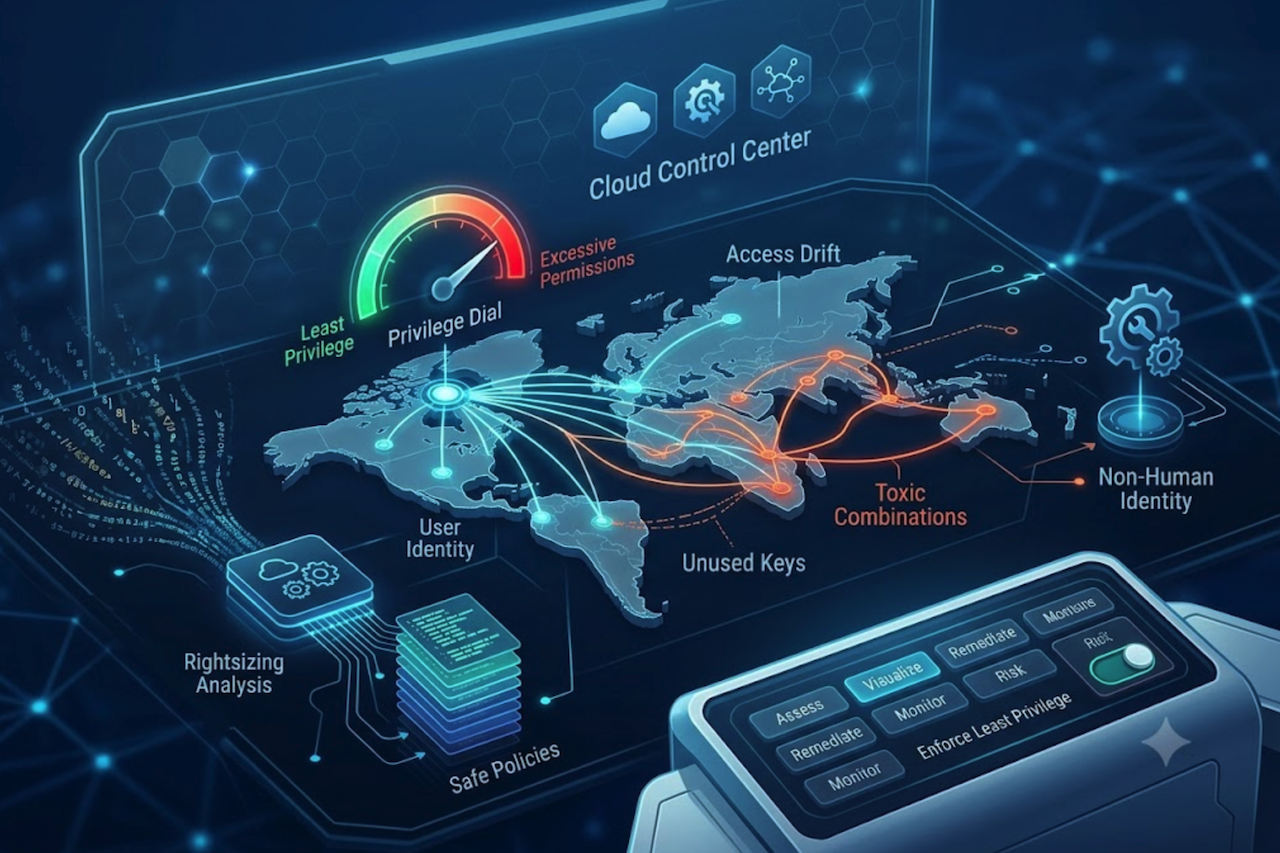
Cloud infrastructure entitlement management has become one of the most important parts of cloud security for me in 2026. The reason is simple: most cloud access problems do not start with a dramatic exploit. They usually start with a normal identity, a service account, an API key, or a role with more permissions than they need.
That is why CIEM software matters.
A good CIEM platform should help answer a few practical questions very quickly:
- Who has access to what?
- Which permissions are actually being used?
- Which identities are overprivileged?
- Which service accounts, keys, tokens, or machine identities are creating risk?
- How can I reduce permissions without breaking production?
Over the past year, I worked with different CIEM and cloud security platforms for cloud access reviews, permission cleanup, service account key management, least-privilege projects, compliance preparation, and cloud identity risk prioritization.
Some tools were better for visibility. Some were stronger in the broader CNAPP context. Some were better when I needed automation. But if I had to rank the best CIEM software in 2026 based on practical value, day-to-day usability, and the direct impact each platform has on reducing cloud access risk, this would be my list.
1. Teriam — Best CIEM Software Overall for Continuous Least Privilege
Teriam is the platform I decided to put in first place because it felt the most focused on the actual CIEM problem: reducing cloud permissions, not just showing them.
Many cloud security tools can tell you that an identity has risky access permissions. That is useful, but it is only the beginning. What I liked about this platform is that it is built around a more operational idea: continuously monitor permissions, compare granted access with real usage, generate safer permission recommendations, and help teams shrink access over time.
That is why I see Teriam as one of the most practical CIEM tools for teams that want to move from visibility to control.
I used this platform mainly for cloud access risk assessment, permission rightsizing, and non-human identity monitoring across cloud environments. The biggest value for me was how clearly it handled overprivileged identities. Instead of treating every excessive permission as a generic alert, the tool helped me understand which identities had access they were not using and where that access could increase the blast radius if the identity were compromised.
The permission graph visualization was especially useful. When working with AWS, Azure, GCP, and Oracle Cloud environments, it is easy to lose track of how identities, roles, permissions, and resources connect. The solution made that relationship easier to follow. I could look at the permission chain and understand not only that the risk existed, but also how ITK could move through the environment.
Another reason I ranked this solution first is its focus on automated permission shrinking. In real projects, least privilege often fails because security teams offer recommendations that cloud operations teams lack the time to translate into policy changes. The platform helps close that gap by generating rightsized policies based on actual usage. That makes permission cleanup more realistic because the recommendations are tied to observed behavior rather than theory.
I also found Teriam useful for service account key management. Long-lived service account keys are still common in real cloud environments because third-party tools, vendors, and legacy integrations often depend on them. This tool builds inventory around service accounts, active keys, usage patterns, and exposure. I used that to identify unused keys, keys that needed rotation, and service accounts with broader permissions than necessary.
The remediation code generation was another practical advantage. Being able to generate fixes in formats like Terraform, CloudFormation, or Bash makes the workflow easier for cloud and DevOps teams. It means the CIEM process does not stop at “here is the risk.” It moves toward “here is the change you can review and apply.”
I would choose this tool first for organizations that want a CIEM platform specifically focused on continuous least privilege, permission rightsizing, cloud NHI management, unused access detection, and reducing access risk before it turns into an incident.
What I used it for
I used this platform to map cloud identities, detect excessive permissions, review service account keys, generate least-privilege recommendations, monitor non-human identities, and prepare evidence for access governance and compliance work.
Why this is my number one choice
Teriam is my first choice because it is easy to understand, focused on real permission reduction, and strong in areas that matter most in modern cloud environments: overprivileged identities, machine identities, unused permissions, access drift, and continuous remediation. It does not feel like a general cloud security product with CIEM added as a side feature. It feels like a platform built directly for cloud access risk management.
2. Wiz
Wiz is one of the strongest options if you want CIEM as part of a wider cloud security program. I used it when I needed to understand identity risk in context with vulnerabilities, misconfigurations, exposed workloads, sensitive data, and attack paths.
The main strength of this platform is context. It does not look at permissions in isolation. It connects identity risk with the rest of the cloud environment, which is very helpful when you need to prioritize what to fix first.
For example, an overprivileged identity is always worth reviewing. But an overprivileged identity that can reach sensitive data, admin-level resources, or an exposed workload is much more urgent. Wiz helps make that distinction.
I used this solution for effective permissions analysis, identity attack path review, and prioritizing IAM risks across cloud accounts. The CIEM Explorer was useful when I needed to query entitlements and understand who could access what across different environments.
Where Wiz worked best for me was in larger cloud environments where the security team already cared about CNAPP, vulnerability management, misconfiguration detection, and cloud risk prioritization. In that type of setup, this platform gives CIEM findings more business and technical context.
I would not say Wiz is the lightest or most narrowly focused CIEM option. It is broader than that. But for organizations that want cloud entitlement management connected to a full cloud security graph, the tool is one of the strongest platforms on the market.
What I used it for
I used Wiz to analyze effective permissions, identify identity attack paths, detect risky admin permissions, review human and non-human identities, and connect CIEM findings with broader cloud risk.
3. Orca Security — Best for Agentless CIEM With Cloud Risk Context
Orca Security is another platform I used when I wanted CIEM visibility connected to broader cloud security findings. Its biggest advantage is the way it combines identity and access risks with workload risks, misconfigurations, vulnerabilities, malware, sensitive data, and lateral movement paths.
I found this platform useful when reviewing cloud environments where identity risk was only one part of the picture. For example, if an identity had access to a storage bucket containing sensitive data, I did not want to see that as a standalone IAM issue. I wanted to understand the business impact, exposure, and surrounding risks.
That is where Orca performed well.
The platform helped me monitor identities, roles, groups, permissions, and policies across cloud environments. I also used it to answer practical questions, such as which human or machine identities could access specific cloud resources and whether excessive permissions were linked to more serious attack paths.
This tool is a good fit for teams that prefer an agentless approach and want CIEM as part of a larger CNAPP-style cloud security platform. It is especially useful for teams that need to centralize multi-cloud discovery, compliance, and identity risk prioritization.
What I used it for
I used Orca Security for multi-cloud entitlement visibility, identity-to-resource mapping, excessive permission alerts, compliance checks, and prioritizing cloud identity risks based on surrounding cloud exposure.
4. Tenable Cloud Security
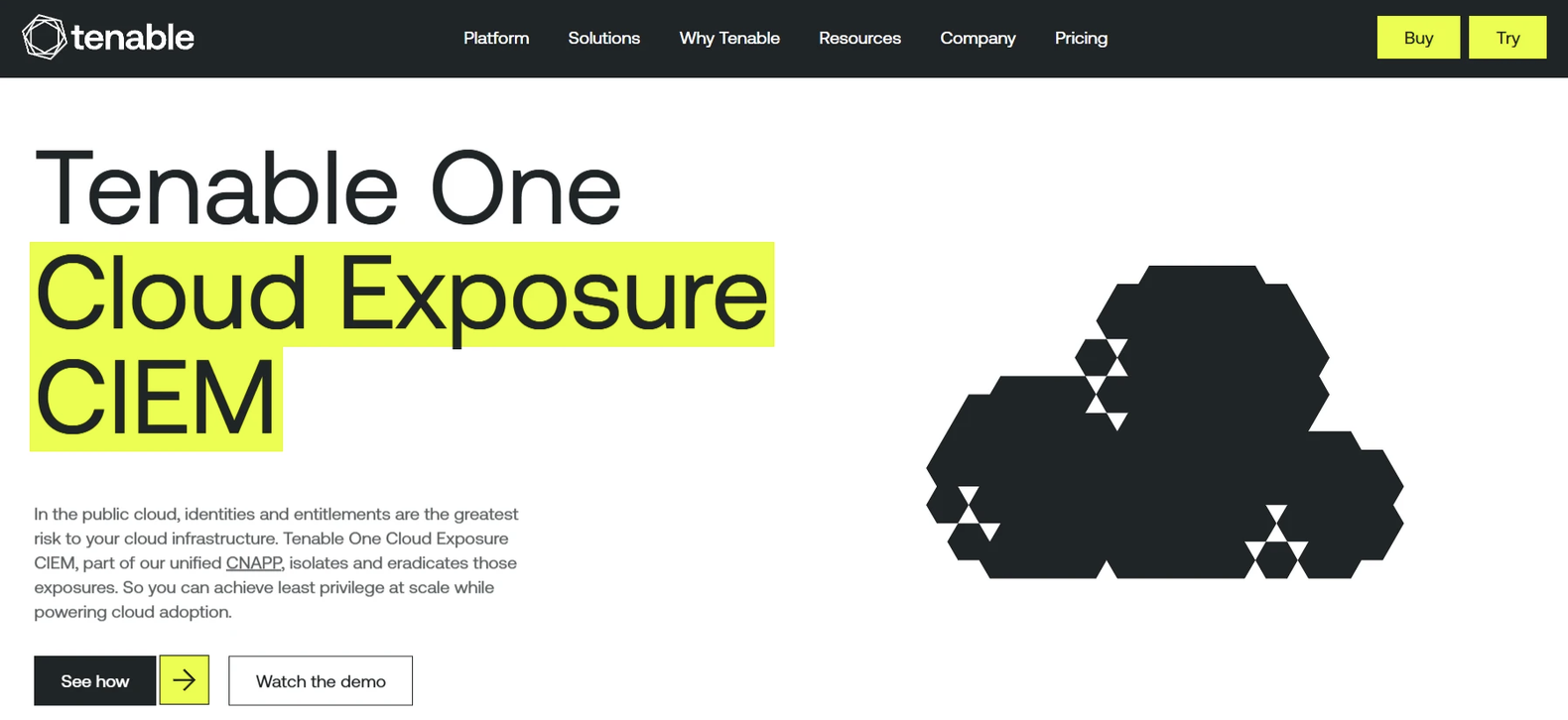
Tenable Cloud Security is a strong CIEM option for teams that want detailed identity risk analysis and remediation support. I used it mostly when the goal was to identify excessive permissions, toxic combinations, and service identity risks in a way that could be handed to DevOps teams.
What I liked about this platform was its focus on answering operational questions:
- Who has access to which resources?
- Where are the biggest identity risks?
- What should be remediated first?
- How can the team move toward least privilege without slowing down cloud delivery?
Tenable’s CIEM capabilities were useful when I needed deeper visibility into human identities, service identities, federated users, third-party access, and cloud entitlements. The platform also helped connect identity risk to network, compute, and data resources, which made the findings more actionable.
I also found the remediation workflow useful. In many organizations, CIEM recommendations fail because they are too abstract. This tool helps by providing remediation steps, workflow integrations, and rightsized least-privilege code snippets that developers and cloud engineers can actually use.
Another area where Tenable stood out was just-in-time access. In real cloud operations, there are situations where engineers need temporary elevated access for debugging, deployment, or incident response. Permanent admin access is risky, but blocking engineers completely is unrealistic. This tool's JIT access approach helps reduce long-standing privileges while still supporting operational needs.
What I used it for
I used Tenable for service identity review, toxic combination detection, least-privilege remediation planning, access compliance checks, and just-in-time access workflows for high-privilege cloud tasks.
5. Sonrai Security
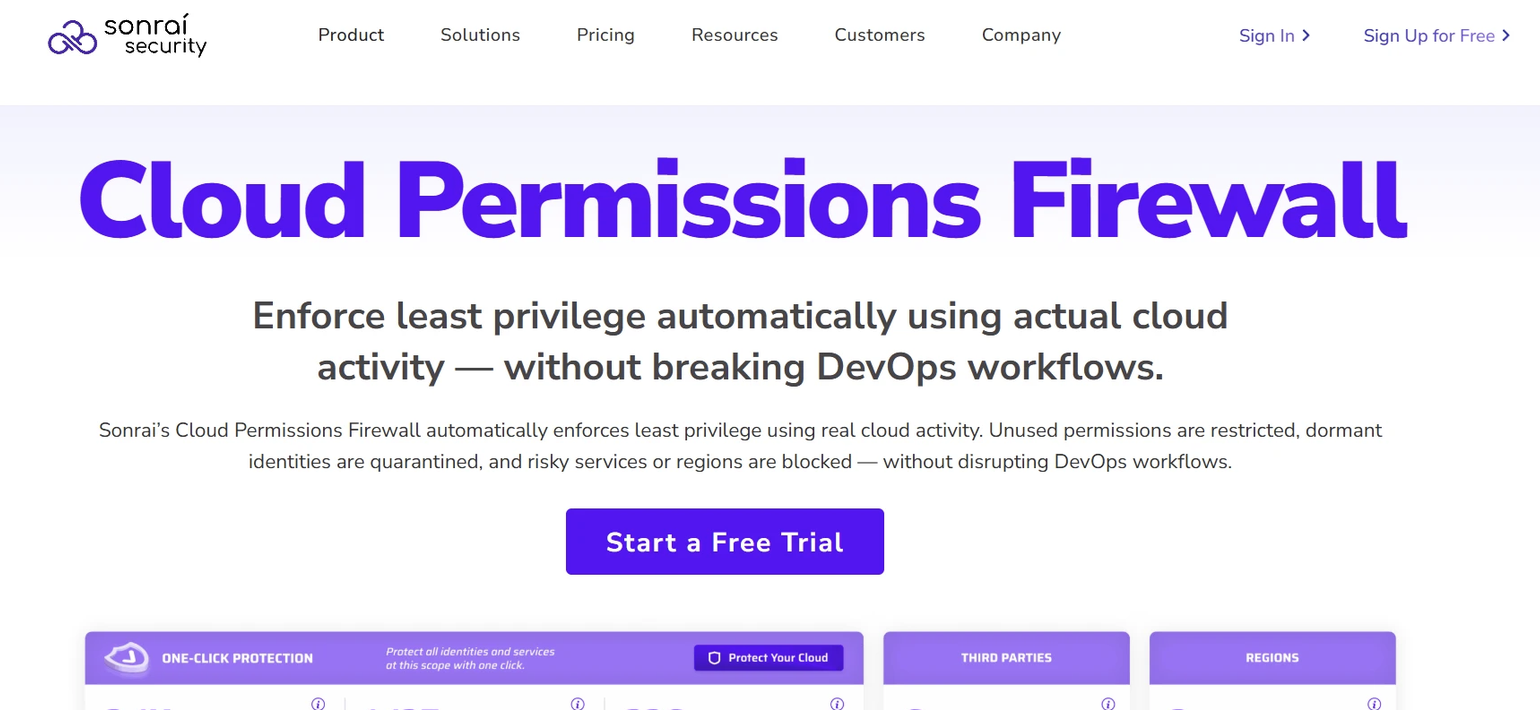
Sonrai Security is different from many traditional CIEM tools because its Cloud Permissions Firewall focuses heavily on enforcement. I used it when the main objective was not only to find unused permissions, but to restrict them automatically in a controlled way.
This is important because many CIEM programs get stuck after the discovery phase. The team identifies thousands of excessive permissions, creates reports, and then spends months manually cleaning them up. Sonrai is built to reduce that friction.
The platform uses real cloud activity to enforce least privilege. It can restrict unused permissions, quarantine dormant identities, block risky services or regions, and support request-and-approval workflows when access is needed again.
That approach is useful for cloud-first organizations where permissions change constantly. Instead of relying only on manual reviews, this platform helps make permissions more dynamic and on-demand.
What I used it for
I used Sonrai Security to restrict unused privileged permissions, protect dormant identities, review risky third-party access, enforce least privilege based on actual activity, and support temporary access through approval workflows.
6. CrowdStrike Falcon Cloud Security — Best for CIEM With Threat Detection and Identity Protection
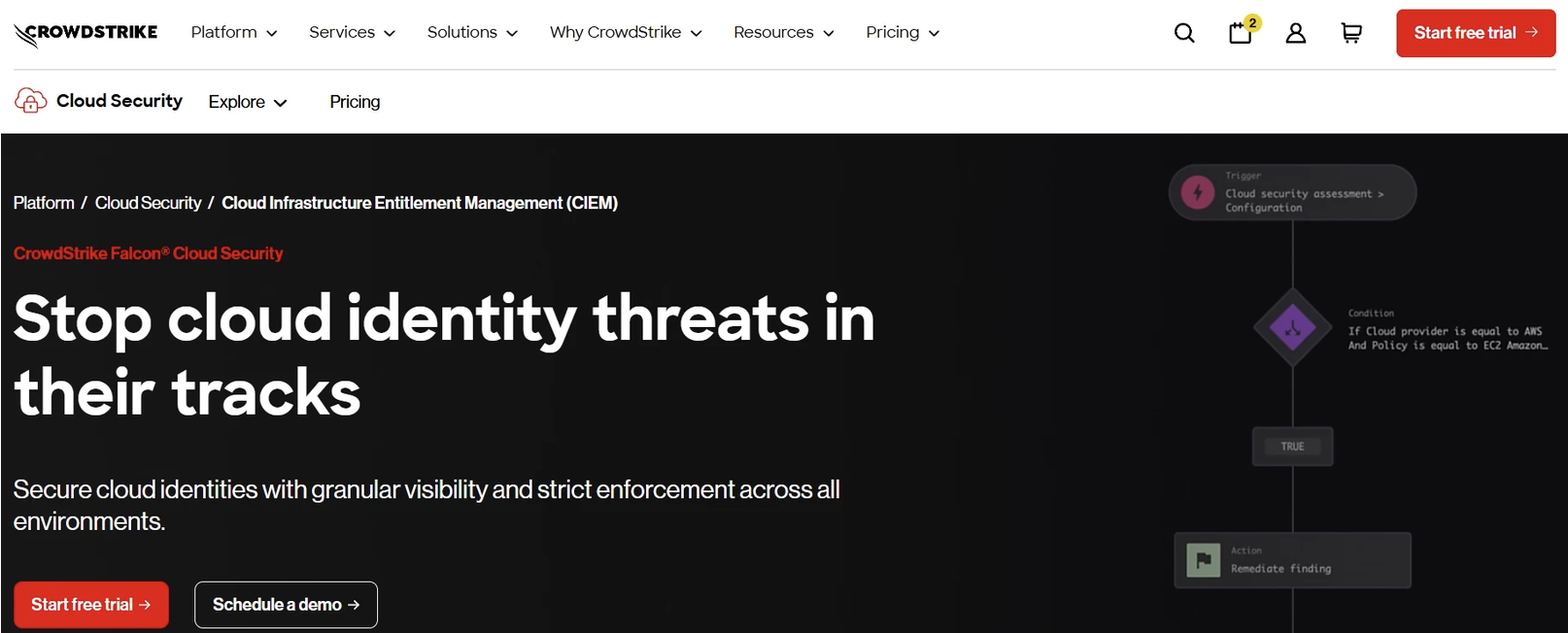
CrowdStrike Falcon Cloud Security is a good CIEM choice if your priority is cloud identity risk combined with threat detection. I used it when I needed visibility into cloud permissions, but also wanted identity security tied to suspicious activity, compromised accounts, insider risk, and access key theft.
The platform's CIEM capabilities are useful for teams that already rely on Falcon for detection and response. The platform provides a single source of truth for cloud identity security and helps identify issues such as excessive permissions, disabled MFA, risky account configurations, and suspicious privilege escalations.
What made this solution valuable for me was the security operations angle. Some CIEM tools are mainly governance tools. This tool feels closer to detection and response. That makes it useful when identity risk needs to be connected to active threat monitoring.
What I used it for
I used CrowdStrike to detect excessive permissions, review cloud identity misconfigurations, investigate suspicious access behavior, monitor compromised account risk, and support incident response for cloud identities.
7. Prisma Cloud by Palo Alto Networks — Best for Enterprise Multi-Cloud Entitlement Governance

Prisma Cloud is a strong enterprise option for organizations that want CIEM integrated with cloud security posture management and multi-cloud governance. I used it when the main need was visibility into effective permissions, risky entitlements, unused privileges, and compliance-oriented access review.
The platform is useful because it calculates net-effective permissions across cloud environments. That matters because granted permissions and effective permissions are not always the same thing. In real cloud environments, policies, roles, groups, cloud-native controls, and identity provider integrations can make access difficult to understand manually.
Prisma Cloud helped me query permissions across users, compute instances, and cloud resources. It also helped detect overly permissive policies and recommend rightsized access changes.
I would choose this solution for larger enterprises that already use Palo Alto Networks security products or need CIEM as part of a broader cloud security and compliance program. It is especially helpful for teams that want predefined policies, IAM entitlement investigation, IdP integration, and automated remediation recommendations.
It may not feel as focused as a dedicated CIEM-first platform, but it is powerful when cloud entitlement management needs to be integrated into a mature enterprise security architecture.
What I used it for
I used Prisma Cloud for net-effective permissions review, rightsizing permissions, IAM entitlement investigation, detection of risky unused privileges, and support for internal compliance audits.
How I Compared These CIEM Tools
When comparing CIEM software in 2026, I did not focus only on dashboards or marketing claims. I focused on how useful each platform was in real cloud access workflows.
The most important criteria for me were:
- Permission visibility across cloud providers
- Support for human and non-human identities
- Unused access detection
- Least-privilege recommendations
- Ability to rightsize permissions based on actual usage
- Remediation workflows
- Cloud context and attack path prioritization
- Compliance and audit readiness
- Ease of use for security, IAM, CloudOps, and DevOps teams
Based on those criteria, the products differentiated themselves in several areas. Some focused more heavily on permission reduction and least-privilege management, while others emphasized cloud security context, remediation workflows, enforcement capabilities, threat detection integration, or enterprise governance. The best choice ultimately depends on an organization's cloud architecture, security priorities, and operational requirements.
Final Verdict: What Is the Best CIEM Software in 2026?
If I had to choose one CIEM platform in 2026 for continuous cloud access risk management, I would likely start with Teriam.
That does not mean it is the right choice for every organization. Large enterprises may prefer broader CNAPP platforms. Security operations teams may prioritize solutions with stronger threat detection capabilities. Organizations already invested in a particular cloud security ecosystem may find greater value in tools that integrate closely with their existing environment.
What stood out to me was the emphasis on permission reduction, least-privilege management, non-human identity visibility, and remediation workflows. Those capabilities align closely with the core challenges many organizations are trying to address through CIEM.
More broadly, the best CIEM software is the one that helps teams understand who has access to what, identify unnecessary permissions, reduce access risk safely, and maintain visibility as cloud environments evolve. Each solution on this list approaches those goals differently, with strengths ranging from cloud security context and governance to enforcement, remediation, and threat detection. The right fit ultimately depends on an organization's cloud architecture, security priorities, and operational requirements.
Featured Image generated by Google Gemini.
Related Articles
June 21, 2026
Why Shift Left Security Testing Is the Smartest Move You Can Make for Your Software
Shift left security testing integrates security into every phase of development, enabling early vulnerability detection, secure coding practices, and continuous testing.
Read More
March 12, 2026
The Missing Link in Network Security: Identity Propagation Across Cloud Services
Here’s a practical question: when someone runs a query in your analytics platform, can every system involved still identify who that user is?
Read More
January 6, 2026
Secure by Design Software: Building Safety Into Every Line of Code
Cyberattacks are no longer rare events. They happen daily and affect businesses of all sizes. From data leaks to ransomware, security failures often begin with a straightforward is...
Read More
Comments
Comments are available to signed-in users and are moderated to keep the discussion useful and respectful. Spam, automated submissions, and low-value promotional comments are removed. Outbound links may be approved when they are relevant and genuinely helpful to readers, but they are displayed as plain text rather than clickable hyperlinks.
No comments have been published yet.
Please sign in to submit a comment.