

Search Engine Optimization, Geolocation, Technology
8 AI SEO Tools For AI Search Visibility (GEO) In 2026

In the third week of June 2026, two client brands lost AI citations held since spring: same pages, same rankings, different answer layer. A ChatGPT citation vanished June 18 and never returned; a Perplexity citation vanished eleven days later, then came back unchanged. That's what sent us hunting for AI SEO tools that could explain why.
Across our 900-prompt tracking set, checked weekly since January, citation loss with no ranking cause is now routine.
That makes an AI search visibility tracker increasingly useful for understanding how often a brand appears across AI-generated results, which sources are being cited, and where visibility gaps emerge.
What we score: multi-engine coverage, cited-source intelligence, fast check cadence, exportable gap analysis, judged against one prompt set, not vendor claims.
Rank
| Tool | Engines tracked | What it measures | Best for | Entry price |
|---|---|---|---|---|
| SE Ranking | ChatGPT, Perplexity, Gemini, AI Overviews, AI Mode | Mentions, links, cited sources, cached answers, competitor gap | Multi-engine tracking with cited-source depth | $129/mo |
| Profound | ChatGPT (Starter); adds Perplexity and Google AIO on Growth | Prompt frequency, citation and sentiment, share of voice | Dedicated ChatGPT-first AEO depth | $99/mo |
| Otterly.ai | ChatGPT, Google AIO, Perplexity, Copilot | Brand mentions, GEO audit, citation tracking | Multi-engine entry monitoring at a low price | $29/mo |
| Semrush | Google, ChatGPT, Perplexity, Gemini | AI presence and sentiment, custom prompt tracking | One platform spanning SEO, PPC, and AI search | $139/mo |
| Peec AI | ChatGPT, Perplexity, Gemini (3 of 7 available) | Citation and brand-visibility analytics | Seat-unlimited AI-visibility analytics for agencies | ~$95/mo |
| Ahrefs | Brand Radar across 271M+ prompts, 5 included on Lite | Brand citations and visibility inside AI answers | Backlink research with bolt-on AI visibility | $129/mo |
| Surfer SEO | ChatGPT, Perplexity, Gemini, AI Mode, AI Overviews (25-100 prompts) | Content score tied to AI-visibility tracking | Content optimization paired with citation tracking | ~$99/mo |
| Nightwatch | ChatGPT, Claude, Gemini, Perplexity, plus AI Overviews and AI Mode | Rank and AI-prompt monitoring at scale | Hyper-local and global rank tracking extended to AI answers | €79/mo |
Problem 1: Your AI Citations Vanish Without Warning
In late June, a client's ChatGPT citation disappeared. The page hadn't changed; rankings hadn't moved. It came back nineteen days later, unprompted. ChatGPT referral traffic to publishers roughly doubled in early 2025. Treat it as normal, not an incident.
Problem 2: The Engines Disagree, So One Tool's "Visible" Is Another's Blind Spot
Most AI SEO tools watch one engine well and the rest poorly. The same brand gets cited by ChatGPT while Perplexity, Gemini, AI Overviews, and AI Mode show nothing that same week: calling yourself visible off one engine misses four other blind spots.
Problem 3: You're Optimizing Blind, With No Prompt Set And No Cadence
Most teams we onboard have no prompt set, no check rhythm: someone got handed "improve our AI visibility" and a login. Only 28% of Americans trust AI assistants for search, versus 70% for traditional search. AI search optimization tools replace guesswork.
What Actually Moves AI Citations
It's a tracked prompt set, checked on a fixed cadence, paired with content that puts specific facts where an engine can quote them. That's what answer engine optimization (AEO) means, separating real LLM SEO tools from a login and guesswork.
The 8 AI SEO Tools
1. SE Ranking
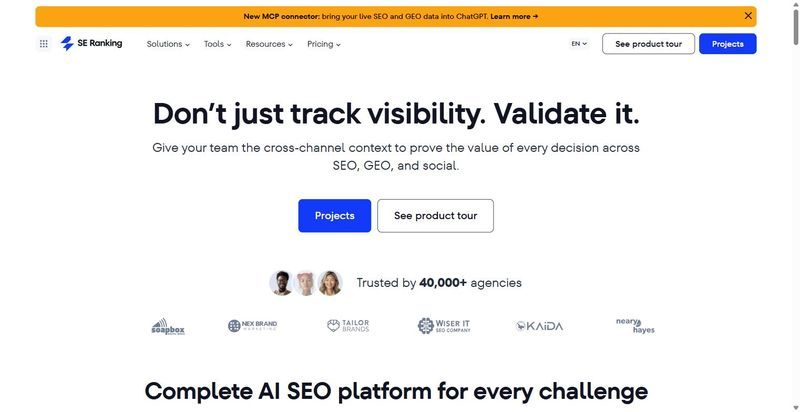
SE Ranking pairs rank tracking, site audit, and backlink analysis with an AI visibility toolkit in the same dashboard, not a bolt-on tab.
Best for: SEO and marketing teams that need multi-engine AI-visibility tracking with cited-source intelligence, not just a mention count.
Standout: What earns SE Ranking the top spot is the citation trail, not just the coverage. When a prompt's answer changes, the AI results tracker keeps the cached text before and after the change, plus the exact source that replaced us, across ChatGPT, Perplexity, Gemini, Google AI Overviews, and AI Mode. Competitive Gap Analysis lines that against named rivals, so a loss becomes a diagnosable event, not a screenshot folder.
Pros:
- Keeps a before/after cached record of the answer text for every tracked prompt
- Runs AI Competitor Research and gap analysis against any domain
- Flags sources that cite rivals but not you through AI Insights
- Ships API and MCP access on every plan
Cons:
- AI answers are volatile, so a trend needs a few weeks of checks
- Deeper LLM sentiment work sits behind the SE Visible / AI Search add-on
- AI-generated output still needs a human editorial pass before publishing
Pricing: Core runs $129/mo ($103.20/mo billed annually); Growth is $279/mo. The AI Search add-on starts at $89/mo. API and MCP access ship on every plan, with a 14-day free trial.
Where it lands: Tt turns "we lost a citation" into "here is the source that replaced us."
2. Profound
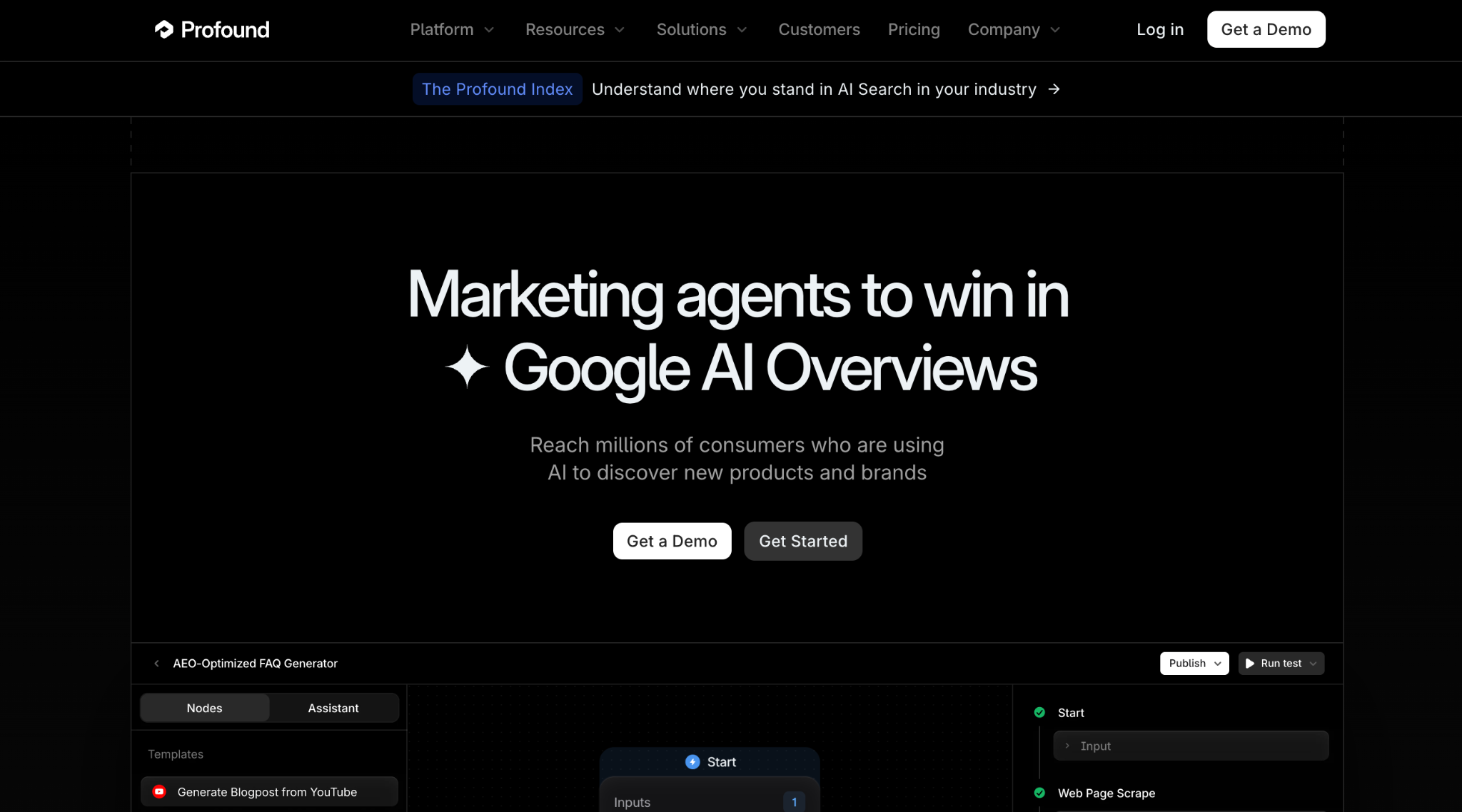
Best for: Enterprise and marketing teams wanting AI SEO tools built for answer-engine depth alone, not folded into a broader suite.
Standout: What Profound tracks isn't just whether a brand gets cited: it's how often a prompt fires and who wins sentiment against named rivals, refreshed daily. Profound Agents run that check on a schedule.
Pros:
- Refreshes prompt-frequency data daily, not on a weekly pull
- Splits sentiment scoring from raw citation counts, rival by rival
- Hands recurring AEO checks to Profound Agents on schedule
Cons:
- Entry Starter tracks ChatGPT only; multi-engine needs the $399/mo Growth plan
- Agents bill on credits, so heavier automation adds cost
Pricing: Starter is $99/mo (billed yearly, ChatGPT-only, 50 prompts); Growth is $399/mo, adding Perplexity and Google AI Overviews.
Where it lands: If ChatGPT alone carries most of your prompt volume, Profound's depth on that one engine beats a generalist tool.
3. Otterly.ai
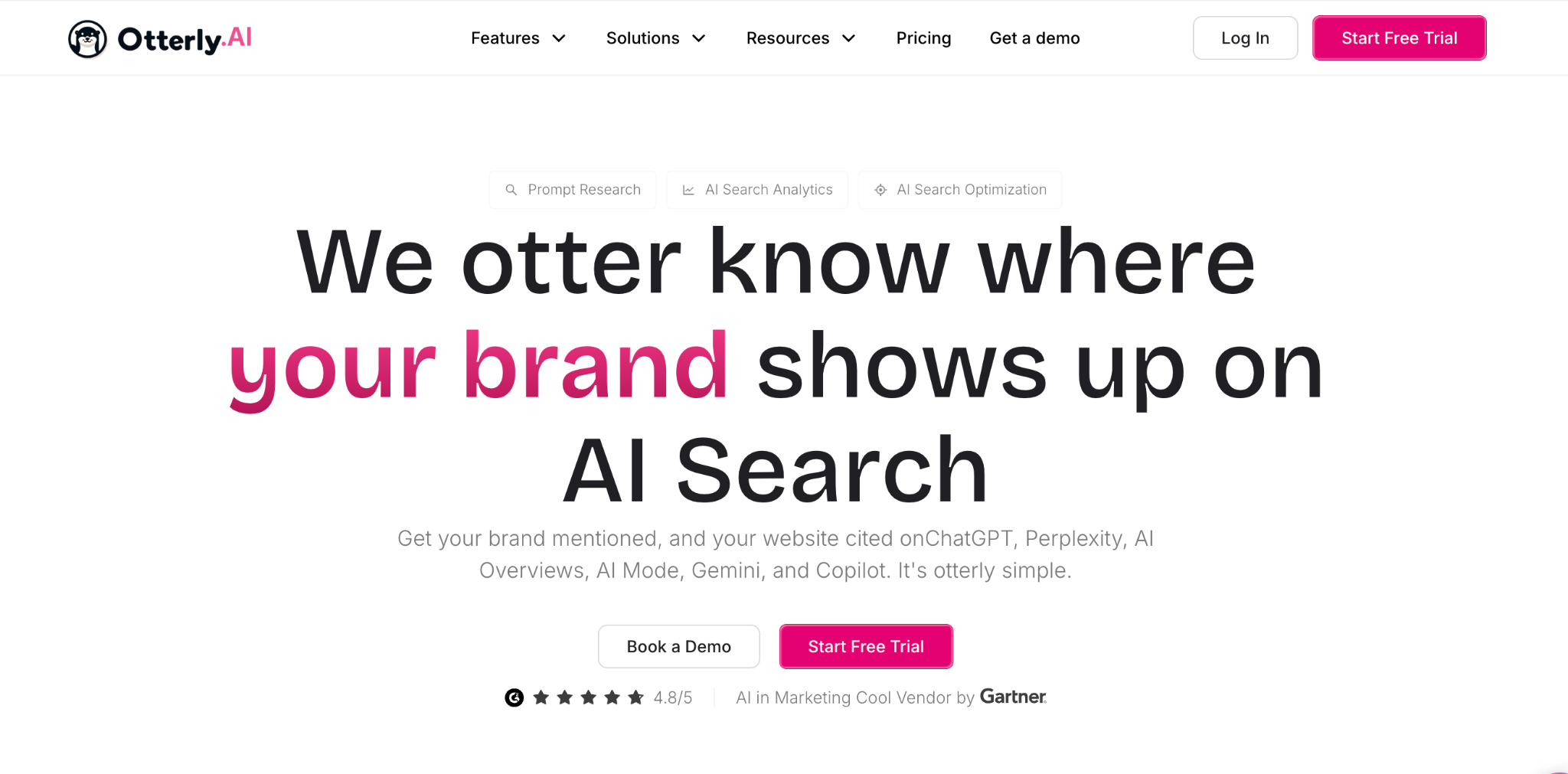
Best for: Consultants and lean marketing teams wanting multi-engine AI SEO tools at a low entry price.
Standout: The Lite plan tracks ChatGPT, Google AI Overviews, Perplexity, and Copilot at $29/mo, and even that tier includes unlimited team members and brand reports, plus a GEO audit and a Looker Studio connector.
Pros:
- Tracks four engines from the entry tier, not just one
- Includes unlimited seats and brand reports at Lite
- Exports through Looker Studio for client-facing dashboards
Cons:
- Caps the entry prompt allowance at around 15, thin for a maintained tracking set
- Jumps steeply in price from Lite to the next tier
- Runs shallower analytics than Profound at enterprise-depth reporting
Pricing: Lite is $29/mo ($25/mo billed annually); Standard is $189/mo.
Where it lands: Four engines and unlimited seats at a low entry price cover a lean team's tracking set on day one.
4. Semrush
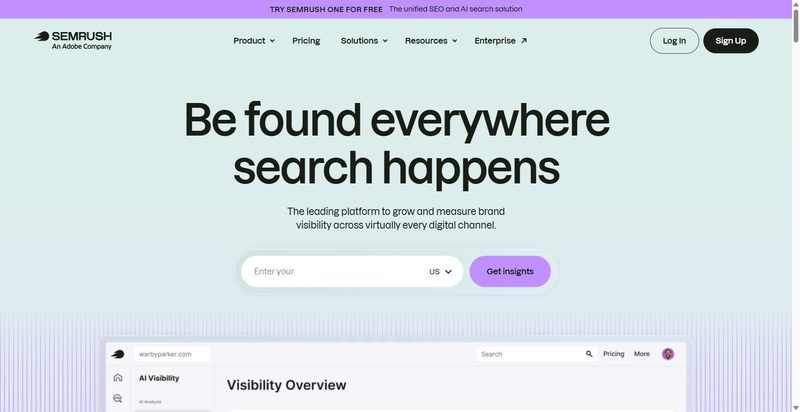
Best for: Teams that want their AI SEO tools bundled inside the broad suite they already use for rankings, content, and paid search.
Standout: Semrush folds brand-presence and sentiment scoring across Google, ChatGPT, Perplexity, and Gemini into custom prompt sets built inside the login that already runs rank tracking.
Pros:
- Adds AI-visibility tracking to a suite most teams already hold a seat in
- Builds custom prompt sets rather than a fixed engine list
- Scales prompt volume through Enterprise AIO
Cons:
- Adds AI-tracking cost on top of an already large suite
- Carries a steep learning curve across its many modules
Pricing: The SEO plan is $139/mo ($117.33/mo billed annually); higher tiers run to $549/mo.
Where it lands: If a team already runs rank tracking, content, and paid search through Semrush, adding AI visibility as one more tab beats a separate login.
5. Peec AI
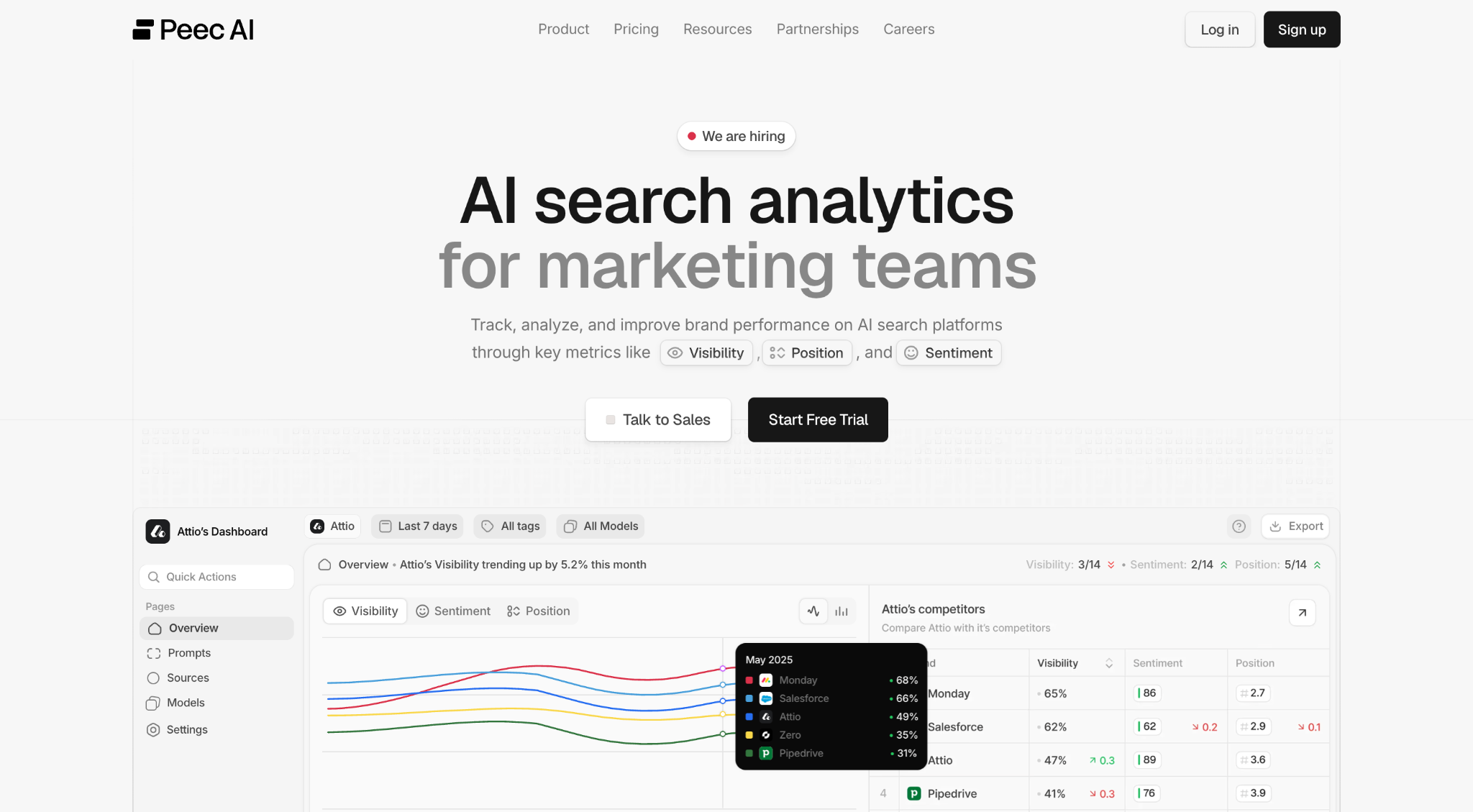
Peec AI keeps surfacing whenever a client's reporting spans more than one market and language.
Best for: Marketing teams wanting clean, seat-unlimited AI-visibility analytics.
Standout: Peec tracks brand visibility and citations across ChatGPT, Perplexity, and Gemini in one dashboard, with multi-country and multi-language coverage included at no surcharge.
Pros:
- Tracks citations across three engines in one view
- Covers multiple countries and languages at no surcharge
- Adds unlimited seats on every tier, not gated by plan level
Cons:
- Caps self-serve tiers at three engines; a fourth costs extra
- Publishes no pricing on-site; we reconfirmed figures via a third party
- Runs younger and narrower than dedicated players like Profound
Pricing: Starter around $95/mo (50 prompts, three engines); Pro around $245/mo.
Where it lands: Peec earns its seat when client reporting has to work in German, French, or Dutch, not English alone.
6. Ahrefs
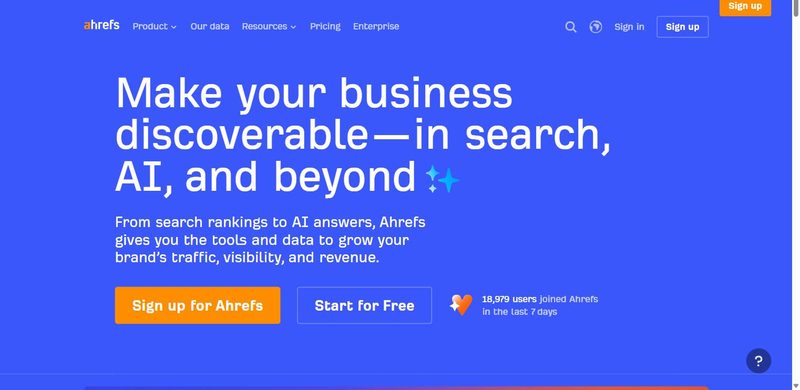
Ahrefs bolted AI-citation tracking onto the backlink graph our analysts already pull competitor data from.
Best for: Teams that want AI-citation signals attached to the backlink and competitive research they already run day to day.
Standout: Brand Radar counts brand mentions against a prompt index Ahrefs puts north of 270 million, riding on the same backlink graph an analyst already uses for competitor checks.
Pros:
- Surfaces citation data beside backlink and keyword research already in the account
- Draws on one of the larger AI-prompt indexes in this category
- Pairs citation tracking with link-graph data used for competitor benchmarking
Cons:
- Allocates a small AI-prompt allowance at entry, around five on Lite
- Includes one seat at entry; a team upgrades fast
Pricing: Lite $129/mo; Standard $249/mo, both billed annually.
Where it lands: Citation counts work as a cross-check, not a primary source.
7. Surfer SEO
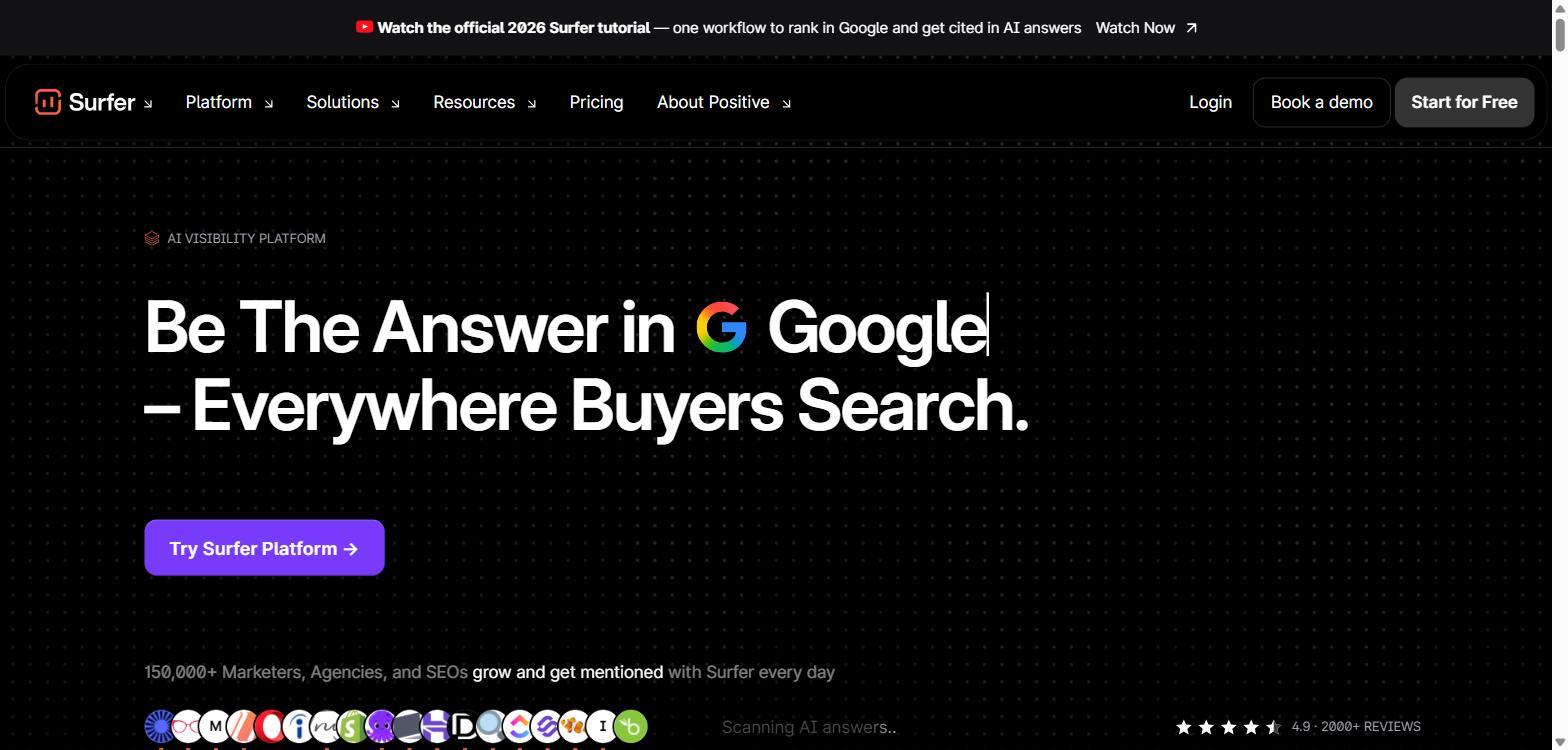
Surfer SEO scores drafts against the live SERP, then layers AI-visibility tracking on top.
Best for: Content teams optimizing pages so answer engines can lift specific facts cleanly.
Standout: The Content Editor grades a draft against top-ranking pages in real time, and an AI Visibility layer tracks five engines, including AI Mode and AI Overviews.
Pros:
- Scores drafts against live top-ranking pages, not a static checklist
- Turns the scored draft into copy inside the same editor
- Tracks AI visibility across five engines in the same workflow
Cons:
- Content credits and document caps bite at entry, so a heavy schedule outgrows the base tier
- The AI-prompt allowance at entry sits below dedicated visibility tools
Pricing: Standard runs about $99/mo; entry starts from $49/mo billed annually.
Where it lands: This answers what to change on the page, not what to track.
8. Nightwatch
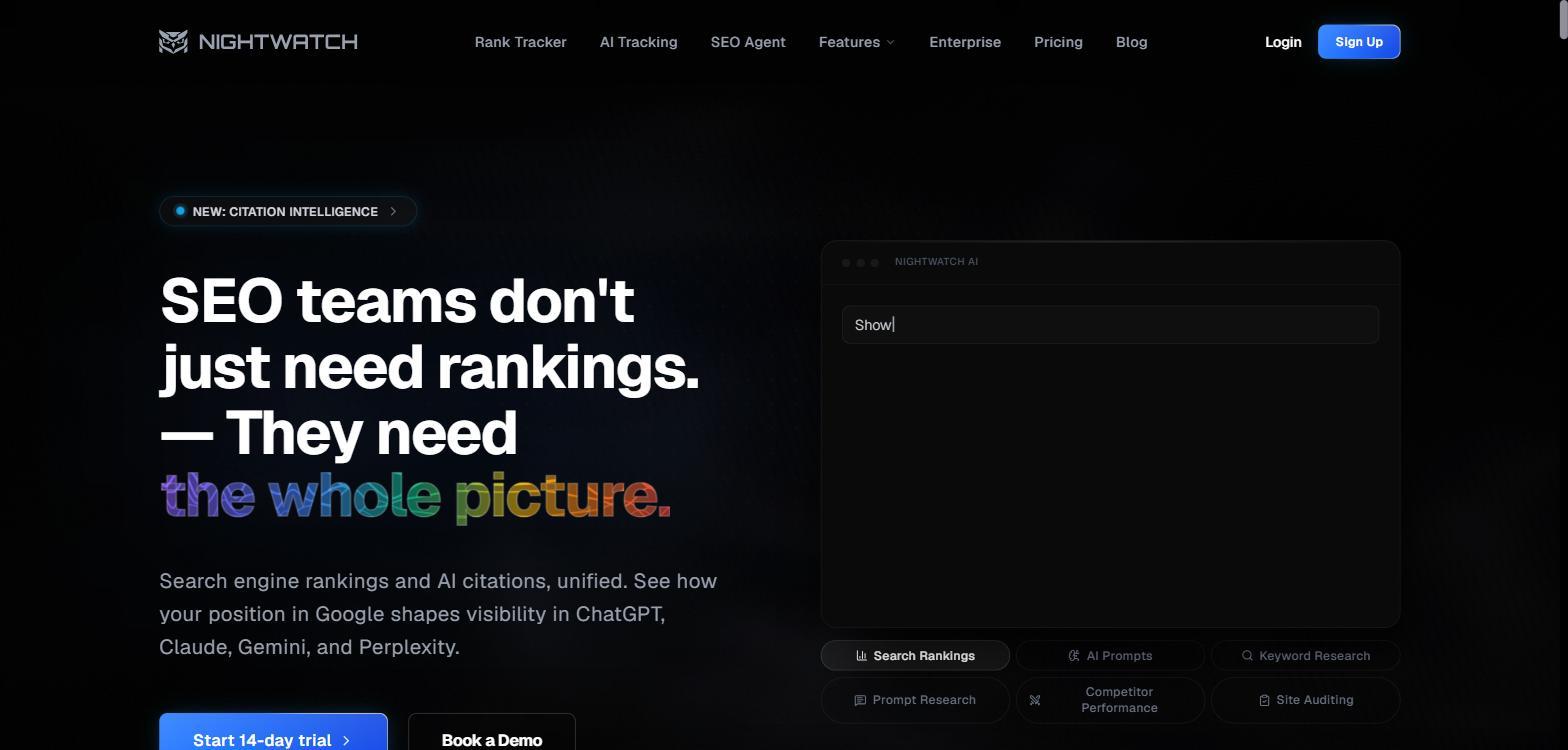
Nightwatch built its name on granular, location-level rank tracking, later extended into AI Overview and AI Mode monitoring.
Best for: Teams wanting AI SEO tools that layer AI-answer tracking onto granular, location-level rank tracking.
Standout: What carries over is scale: 107,000+ tracked locations and years of SERP history per keyword, now logging AI-prompt monitoring across ChatGPT, Claude, Gemini, and Perplexity.
Pros:
- Covers more tracked locations than most rank trackers at any tier
- Extends that location depth into AI Overview and AI Mode results
- Adds unlimited seats on every plan, not just top tiers
Cons:
- Reporting reads plainer than dashboards built by dedicated AI-visibility tools
- No content or citation-source intelligence, so a lost citation still needs another tool to diagnose why
Pricing: Starter is €79/mo; Professional is €159/mo.
Where it lands: if your prompt set sits inside a location-heavy workflow, this bolts AI-answer visibility onto ground you already hold.
Choosing Where To Start
Different AI SEO tools suit different tracking needs. SE Ranking combines broader AI search monitoring with features such as an AI mode tracker, while Profound focuses more heavily on ChatGPT and answer-engine analysis.
For smaller prompt sets focused on a single engine, a dedicated multi-engine platform may offer more functionality than necessary. When the primary goal is content optimization rather than visibility tracking, a content-focused tool such as Surfer may be more relevant.
What we changed: Citation checks moved from monthly to weekly, with changes logged alongside the sources appearing in updated answers.
Conclusion
AI search visibility is still volatile, which makes consistent tracking more useful than reacting to any single citation gain or loss. The right tool depends on which engines matter, how many prompts need to be monitored, and whether the priority is citation analysis, content optimization, or broader SEO reporting. A fixed prompt set and regular review cadence provide the baseline for measuring changes over time.
FAQ
FAQ
01Why did my brand's AI citations drop even though my rankings held?
The best AI SEO tools treat citation loss and ranking loss as separate failures. An engine can keep your page ranked while citing a different, more specific source. A real share of citation losses carry no ranking cause at all.
02What's the difference between GEO and AEO?
GEO (generative engine optimization) and AEO (answer engine optimization) both describe optimizing for AI-generated answers, and the terms overlap heavily. GEO leans toward the content work that earns a citation; AEO toward tracking and diagnosis. Most GEO tools and AI SEO tools now blend both.
03Can you measure AI search visibility without a dedicated tool?
Yes, in a limited way. Running your prompt set by hand weekly across five engines, then logging results in a spreadsheet, catches real signal; we did this for months before automating. It misses the cited-source detail that AI visibility tools capture automatically.
04How often should you check an AI-visibility prompt set?
Weekly, at minimum. Monthly checks miss the volatility: citations disappear and return within days more often than they disappear for good. We moved our own cadence from monthly to weekly after watching losses sit undetected. Fixed cadence matters more than tool choice.
Comments
Comments are available to signed-in users and are moderated to keep the discussion useful and respectful. Spam, automated submissions, and low-value promotional comments are removed. Outbound links may be approved when they are relevant and genuinely helpful to readers, but they are displayed as plain text rather than clickable hyperlinks.
No comments have been published yet.
Please sign in to submit a comment.