
10 Best Healthcare Software Companies in the USA
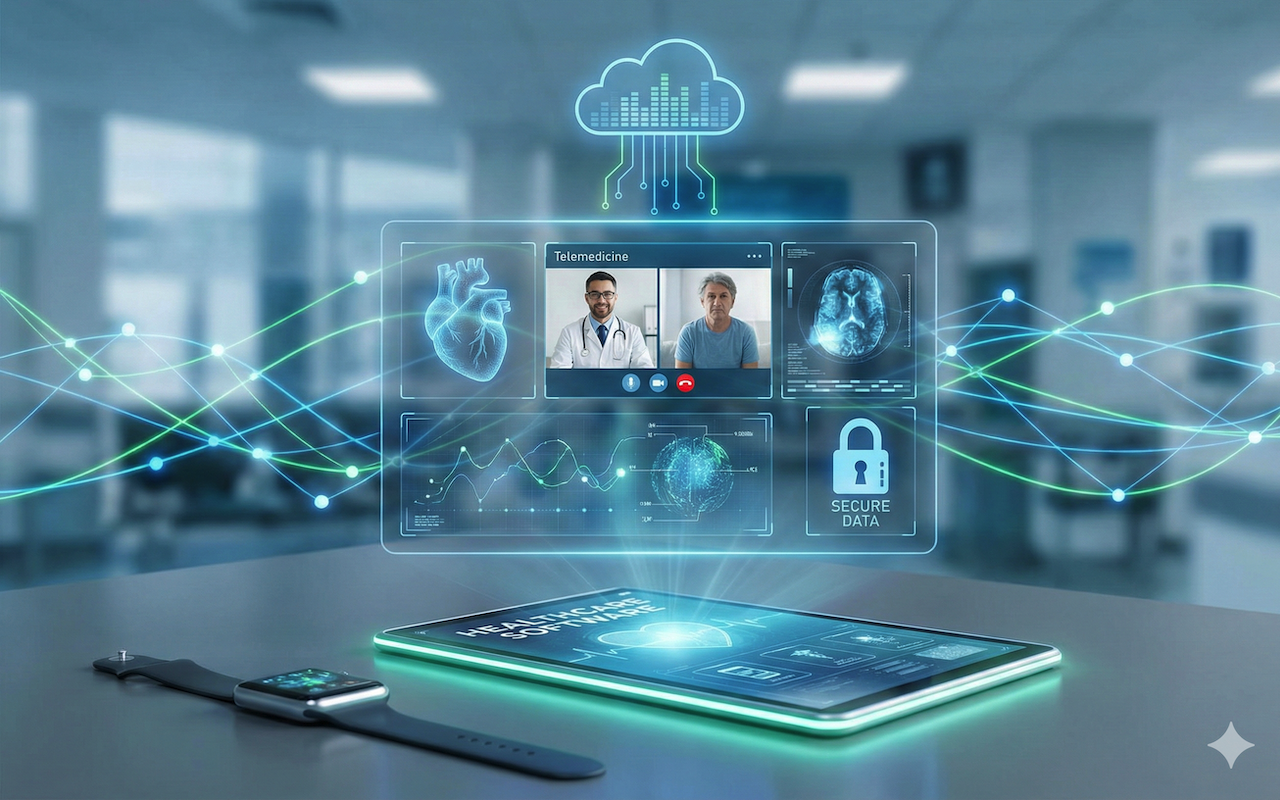
The Healthcare Technology Revolution Is Here
The healthcare industry is experiencing one of the most dramatic transformations in its history. Electronic health records, telemedicine platforms, AI-powered diagnostics, and remote patient monitoring systems are no longer futuristic concepts; they're essential tools that modern healthcare providers depend on every single day. But here's the challenge: building these sophisticated systems requires specialized expertise that goes far beyond standard software development.
Healthcare software isn't just about writing clean code. It's about understanding HIPAA compliance, navigating FDA regulations, integrating with legacy systems, and protecting sensitive patient data while delivering seamless user experiences. One security vulnerability or compliance oversight can result in devastating consequences, from massive fines to irreparable damage to patient trust. The stakes couldn't be higher.
That's exactly why choosing the right healthcare software development partner matters so much. Effective partners go beyond software delivery by understanding the unique pressures of healthcare operations, anticipate regulatory hurdles before they become roadblocks, and architect solutions that scale as your organization grows. They become true strategic partners in your digital transformation journey.
How We Selected These Healthcare Technology Leaders
We evaluated dozens of healthcare software development companies across multiple dimensions to identify the true standouts. Our selection process focused on companies with proven healthcare expertise, not generalist firms claiming healthcare capabilities. We examined their actual healthcare portfolios, verified client testimonials, and industry certifications, and reviewed their regulatory compliance track records.
Each company featured here brings something distinctive to the table. Some excel at telemedicine platforms, others specialize in AI-powered diagnostic tools or complex EHR integrations. What they all share is deep healthcare domain knowledge, relevant compliance certifications, and a track record of delivering production-ready healthcare software that meets the industry's exacting standards.
The Leading Healthcare Software Development Companies You Can Trust
1. Glorium Technologies
Specialty: ISO 13485-certified medical device software and HIPAA-compliant healthcare solutions
Best For: Healthcare providers and health tech startups requiring FDA-ready, regulatory-compliant solutions
Glorium Technologies has spent 14 years carving out a distinctive position in healthcare software development, and it shows in every aspect of their operation. One notable differentiator is their ISO 13485 certification for medical device software development, a credential that represents the highest tier of quality management in the healthcare technology space. This isn't just a badge on their website. It signals that their entire development process, from initial architecture to final deployment, meets the stringent requirements that medical device manufacturers demand.
With more than 150 delivered healthcare products spanning the full spectrum of care delivery, Glorium brings battle-tested experience to every engagement. Their healthcare solutions portfolio reads like a comprehensive catalog of modern healthcare technology: Electronic Medical Records (EMR) and Electronic Health Record (EHR) systems that handle millions of patient records; Hospital Management Systems that coordinate complex multi-department operations; and sophisticated telemedicine platforms that enable secure doctor-patient video consultations.
The company's compliance credentials extend beyond ISO 13485. Their HIPAA and HITRUST expertise ensures that patient data remains protected throughout every stage of development and deployment. For organizations serving European markets, they deliver GDPR-compliant architectures that satisfy the strictest data protection regulations. This comprehensive approach to compliance isn't an afterthought bolted onto finished products—it's embedded in their development methodology from the first line of code.
2. Django Stars
Specialty: Custom healthcare software solutions with Python/Django expertise and system integration experience
Best For: Healthcare providers, digital health startups, and medical organizations that need scalable, compliant software
Django Stars is a leading custom healthcare software development company that builds digital health platforms, EHR/EMR systems, telemedicine solutions, patient management tools, and healthcare analytics software. The company’s custom healthcare software developers work with Python, Django, cloud infrastructure, AI/ML, data analytics, and third-party integrations to create secure and scalable products for clinical and operational workflows.
3. 10Pearls
Specialty: AI-powered healthcare solutions and digital transformation
Best For: Healthcare payers and providers seeking advanced analytics and machine learning capabilities
10Pearls has positioned itself at the intersection of healthcare and emerging technology. Founded in 2004 and recognized on the Inc. 5000 fastest-growing companies list for seven consecutive years, this company brings innovation-focused healthcare development to major industry players. With 1,000+ professionals operating across nearshore and offshore locations, they deliver round-the-clock development, accelerating project timelines.
4. Innowise Group
Specialty: ISO 13485-certified healthcare solutions with AI and data expertise
Best For: Mid-size to large healthcare organizations requiring scalable solutions
Innowise Group has grown from a small European startup in 2007 to a global development powerhouse with 3,000+ IT professionals across multiple continents. Their ISO 13485, ISO 27001, and ISO 9001 certifications validate mature development processes specifically designed for medical software. Innowise has been named to the IAOP Global Outsourcing 100 list for four consecutive years, placing them among the elite global service providers.
5. BairesDev
Specialty: Nearshore healthcare software development
Best For: North American healthcare organizations seeking nearshore collaboration
BairesDev has built its reputation on a rigorous talent selection process that accepts only the top 1% of applicants. Founded in 2009 and now operating with 4,000+ professionals across Latin America, they specialize in nearshore development that eliminates many of the communication challenges associated with offshore outsourcing. Their client portfolio includes household names such as Google, Pinterest, and Johnson & Johnson.
6. Softermii
Specialty: Full-cycle mHealth and telemedicine application development
Best For: Healthcare startups and providers focused on mobile-first solutions
Softermii carved out its niche in healthcare by focusing intensively on what patients increasingly demand: mobile-first healthcare experiences. Founded in 2014 with development centers in Ukraine and offices across Los Angeles, London, Dubai, Tel Aviv, and Munich, they bring a global perspective to healthcare software challenges. Their team of 120+ specialists has delivered more than 20 healthcare solutions, generating over $1 billion in combined value for clients.
7. NextGen Healthcare
Specialty: Cloud-based EHR and practice management systems
Best For: Ambulatory care and behavioral health practices
NextGen Healthcare isn't a traditional development shop. They're a publicly traded healthcare technology company serving over 2,000 ambulatory care providers through their comprehensive software platform. What lands them on this list is their proven track record of delivering production-ready EHR systems that meet meaningful use requirements, as well as their demonstrated ability to help healthcare organizations navigate complex regulatory compliance.
8. Athenahealth
Specialty: Cloud-based healthcare services with integrated revenue cycle management
Best For: Small to mid-size healthcare practices
Athenahealth built its business on a simple but powerful premise: healthcare providers should focus on patient care, not software management. Their cloud-based platform, athenaClinicals, combines EHR functionality with revenue cycle management, patient engagement tools, and care coordination capabilities in a fully integrated system.
9. Oracle Health (formerly Cerner)
Specialty: Enterprise-scale healthcare information systems
Best For: Large hospital systems and government healthcare organizations
Oracle Health, previously known as Cerner Corporation, operates at the absolute top tier of healthcare IT. Their Millennium EHR system is deployed across some of the largest healthcare organizations in the world, including a massive partnership with the Department of Veterans Affairs that modernized medical records for millions of veterans. When healthcare organizations need software that can handle millions of patient records, coordinate care across dozens of facilities, and integrate with every imaginable clinical system, Oracle Health has the proven infrastructure to deliver.
10. Veradigm
Specialty: Interoperable healthcare software and population health tools
Best For: Healthcare providers seeking scalable and data-connected platforms
Veradigm positions itself as a comprehensive healthcare software provider focused on enhancing patient care and optimizing clinical workflows. Their suite includes EHR systems for practices of all sizes, population health management tools to help organizations succeed in value-based care models, and practice management software that streamlines administrative operations. What distinguishes Veradigm is its emphasis on interoperability and data exchange.
Bringing Healthcare Technology Initiatives Forward
The healthcare software companies highlighted in this article represent a broad range of technical approaches and specializations within the industry. Each organization brings different strengths, such as regulatory experience, data analytics expertise, mobile health development, or enterprise-scale system design. Together, they reflect the diversity of solutions available to healthcare providers navigating digital transformation.
Across the healthcare technology landscape, successful software initiatives tend to share common requirements: deep understanding of clinical and administrative workflows, familiarity with healthcare regulations, secure handling of sensitive data, and the ability to adapt systems as standards and care models evolve. Selecting a technology partner often depends on how well their experience aligns with these operational, technical, and compliance needs.
Ultimately, the right healthcare software partner is one whose technical capabilities, regulatory experience, and industry focus align with an organization’s long-term clinical and operational goals.
 FAQs
FAQs
Several healthcare software providers focus on HIPAA-compliant telemedicine platforms. Some specialize in mobile-first telehealth applications with secure video consultations, while others deliver enterprise-scale telemedicine systems supported by ISO-certified security practices. These providers typically emphasize encrypted communications, secure patient data handling, and clinical workflows designed for real-world virtual care delivery.
Developers with healthcare interoperability experience often work extensively with HL7 and FHIR standards to enable secure data exchange between EHR and EMR systems. Some teams specialize in custom healthcare APIs and interoperability layers, while others operate large-scale EHR platforms used across hospital networks. Experience with clinical workflows and regulatory requirements is typically essential for reliable, production-ready integrations.
Patient portal development is often handled by healthcare-focused software providers that emphasize interoperability and standards-based integration. These platforms commonly support appointment scheduling, test result access, secure messaging, and billing features, while connecting to hospital systems through HL7 or FHIR protocols. Successful implementations typically balance technical integration with usability to encourage patient adoption.
Some healthcare technology providers specialize in remote patient monitoring solutions that integrate with IoT and medical devices. These platforms often collect real-time health data, support alerts and dashboards for clinicians, and comply with healthcare data security standards. Development teams with experience in Internet of Medical Things (IoMT) integrations are typically well-suited for these projects.
Healthcare analytics and population health platforms are commonly developed by providers with expertise in big data, interoperability, and regulatory reporting. These systems are designed to aggregate clinical and financial data, identify trends, support value-based care initiatives, and generate actionable insights. Experience with healthcare quality metrics and data governance is often a key differentiator.
AI-powered diagnostic and medical imaging solutions are typically developed by teams with experience in machine learning, clinical data validation, and regulated software development. These platforms may assist clinicians with image interpretation, pattern recognition, or decision support. Providers operating in this area often follow certified quality management processes to align with medical device software standards.
Featured Image generated by Google Gemini.
Related Articles
February 23, 2026
The Evolution of Healthcare Technology
The healthcare industry has changed enormously over the past decade, and much of that change has happened not in operating rooms or research labs, but in the software powering the...
Read More
December 16, 2025
7 Best Medical Billing Software Companies
The healthcare billing landscape has become a complex minefield. Between ICD-10 coding requirements, constantly shifting insurance policies, and the push toward value-based car...
Read More
September 12, 2024
Digital Age of Medicine: How Healthcare Workers Can Benefit
The way healthcare operates and does business has changed as a result of wearables, virtual reality, information technology, and the Internet of Things. These days, these technolog...
Read More
Comments
Comments are available to signed-in users and are moderated to keep the discussion useful and respectful. Spam, automated submissions, and low-value promotional comments are removed. Outbound links may be approved when they are relevant and genuinely helpful to readers, but they are displayed as plain text rather than clickable hyperlinks.
No comments have been published yet.
Please sign in to submit a comment.