August 11, 2025
by IP Location
Artificial intelligence has rapidly evolved from a niche innovation to a
core component of content creation, marketing, and even cybersecurity
workflows. By 2025, AI-generated text appears everywhere, from blog
posts and product descriptions to phishing emails and automated spam.
While AI can greatly enhance productivity, ignoring AI detection poses...
August 8, 2025
by Pooja Joshi

Business executives often ask me about the calculator analogy. When pocket calculators emerged in the 1970s, accountants panicked about job security. What happened instead? They tackled more sophisticated financial modeling while machines handled arithmetic. AI copilots follow this exact pattern, yet the transformation scope extends far beyond simple number...
July 31, 2025
by Linda Williams
Legacy systems that once served as the pillars of performance and excellence are being viewed as redundant in modern organizations today. Tables have turned as technologies like artificial intelligence have modified the roadmap to success in the business world. The good news for your business is that with the right AI adoption strategy in age-old legacy syst...
July 30, 2025
by IP Location

With various emerging technologies, the digital business landscape is undergoing a profound transformation.
July 28, 2025
by IP Location

Artificial intelligence (AI) plays a crucial role in transforming international logistics. These applications enhance efficiency, optimize planning, and streamline operations, making logistics more effective and responsive. Here are some core applications of AI in the logistics industry.
July 22, 2025
by IP Location
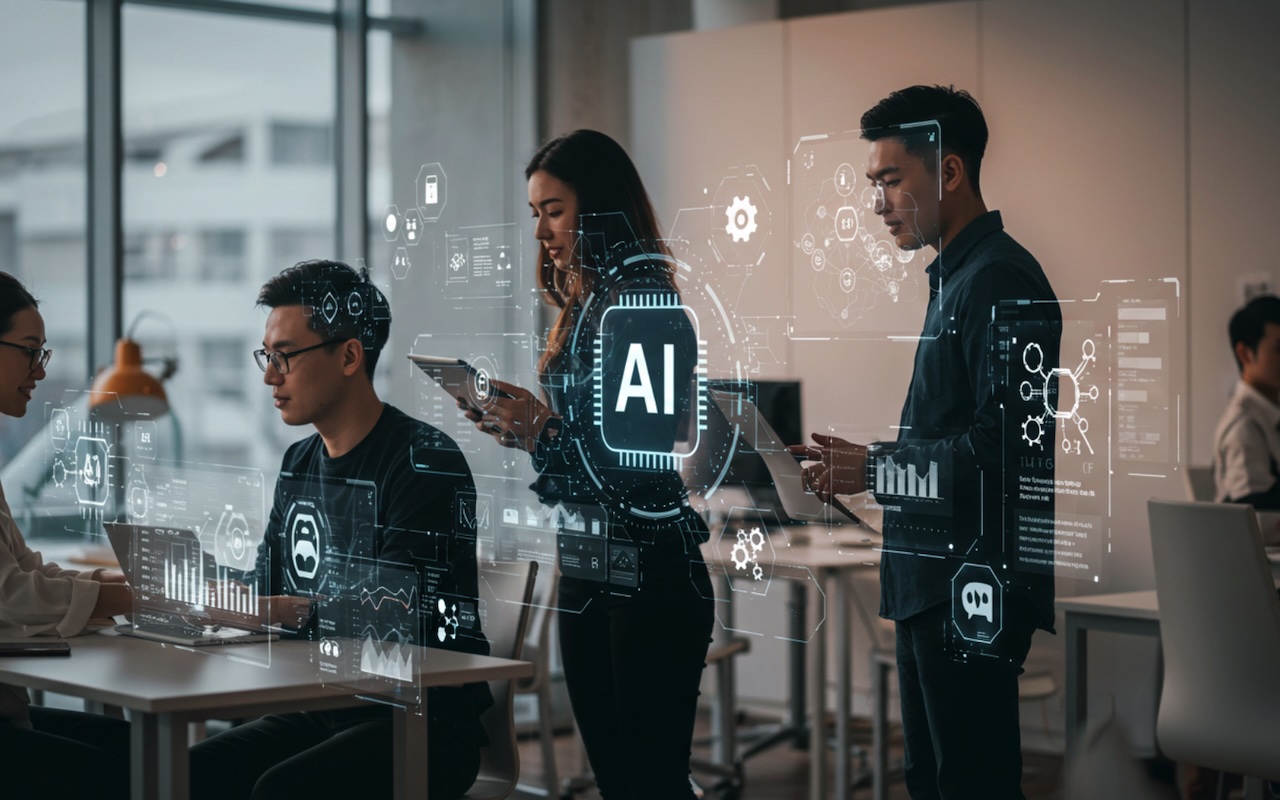
The business environment today is dynamic, knowledge-driven, and intensely competitive. It is now becoming clear to many companies that their old-fashioned, reactive approach to decision-making no longer provides the strategic flexibility needed to stay in business. In this era of change, being forward-looking and ahead of the game is a valuable business com...
July 21, 2025
by IP Location

Employee onboarding has evolved dramatically. Tasks that once took weeks—paperwork, meetings, and manual coordination—are now streamlined through AI-driven digital workflows. As remote work becomes a lasting fixture in the modern workplace, these AI-powered solutions have become essential for delivering efficient and scalable onboarding experiences.
July 21, 2025
by IP Location

As digital video continues to dominate global communication, creators and companies alike face a major challenge: how to make their content resonate with audiences who speak different languages, live in different regions, and expect culturally relevant messaging.
July 18, 2025
by IP Location

Developers use AI writers to auto-generate API documentation for IP services by integrating them with source code. This integration then helps extract metadata, convert it into descriptions, generate examples, and publish them to the site. These documents are searchable, so rather than reading the docs in a separate tab, developers can search and use APIs wi...
July 17, 2025
by IP Location
AI (artificial intelligence) is transforming how companies approach innovation, but there’s still a significant gap between its potential and real-world implementation. Many businesses rush into full-scale AI deployment without properly validating their concepts, leading to wasted resources and costly failures. This is where AI PoC services play a crucial ro...