
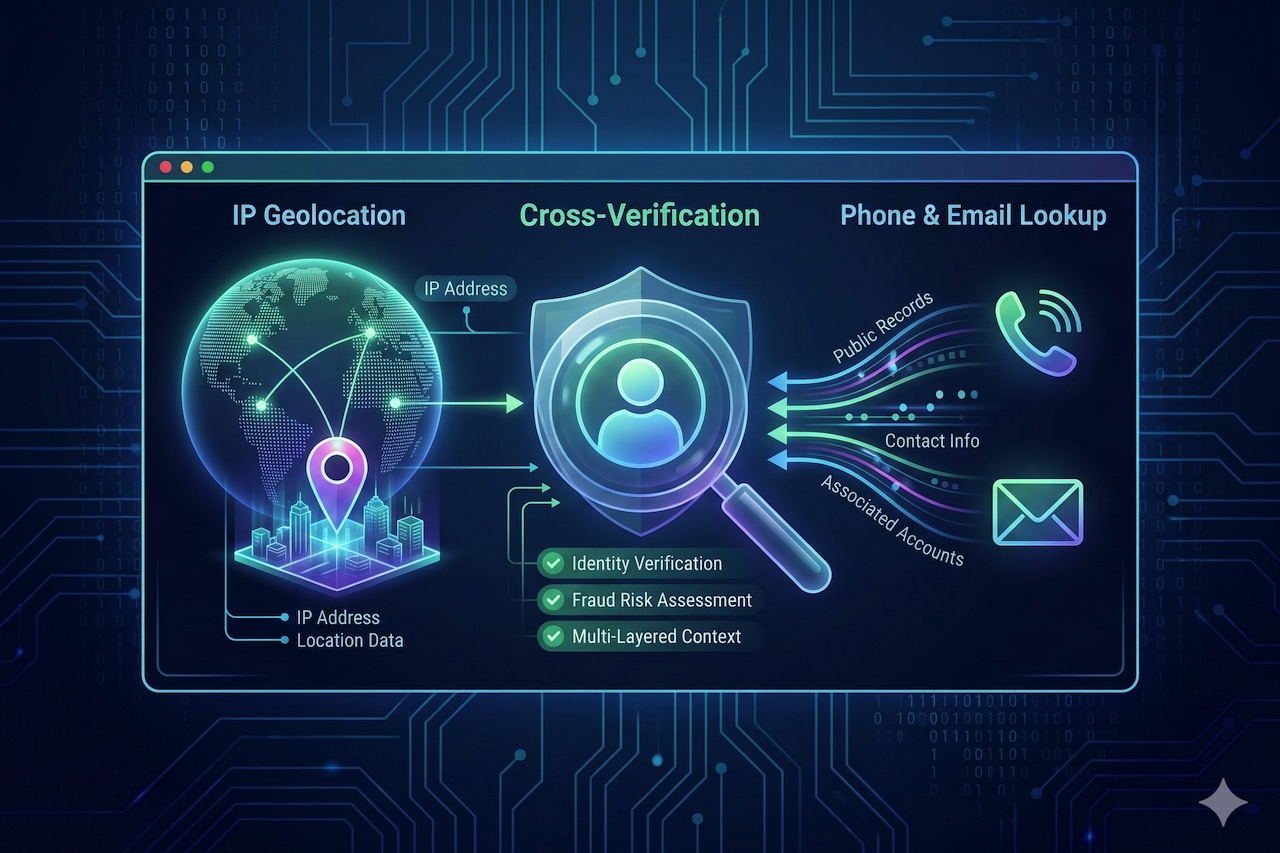
In today’s interconnected digital environment, understanding who may be behind a phone number, email address, or IP connection has become increasingly important. From cybersecurity professionals to everyday users, people often rely on various tools to verify identities and reduce online risks.
While IP geolocation services allow users to determine the approximate latitude, longitude, city, region, and country associated with an IP address, they only provide part of the picture. To gain deeper insight into digital identities, phone and email lookup tools can play a complementary role.
Why Digital Identification Matters More Than Ever
Modern communication relies on multiple identifiers:
- IP addresses
- Phone numbers
- Email addresses
- Usernames and digital profiles
IP geolocation helps answer the question:
Where is this connection coming from?
Phone and email lookup services can help explore another question:
What information might be associated with this communication?
In combination, these data points create a more comprehensive digital intelligence framework that can support:
- Fraud prevention
- Cybersecurity investigations
- Identity verification
- Scam detection
- Risk assessment in online interactions
Phone and Email Lookup Tools
A Comprehensive Lookup Approach
Phone and email lookup services enable users to search for publicly available information associated with phone numbers and email addresses. Platforms such as ClarityCheck are examples of tools designed to organize publicly accessible data to help users review unknown contacts or suspicious communications.
- Phone numbers
- Email addresses
These platforms typically aggregate and organize publicly accessible data sources to help users better understand unknown contacts, suspicious communications, or potential fraud attempts.
Common Capabilities
Typical features offered by phone and email lookup tools include:
- Reverse phone number lookup
- Email address intelligence
- Public data aggregation
- Risk awareness support
- Search interfaces designed to simplify investigations
Users may also encounter discussions and experiences with these types of services in online communities and forums.
How Phone and Email Lookup Complements IP Geolocation
IP geolocation services are excellent at identifying:
| Data Type | Information Provided |
|---|---|
| Latitude and Longitude | Approximate coordinates |
| City | Detected urban area |
| Region | State or province |
| Country | Nation of origin |
| ISP | Internet Service Provider |
However, IP addresses can:
- Be masked via VPNs
- Change dynamically
- Represent shared networks
- Only indicate infrastructure location
That’s where phone and email intelligence tools may add additional context.
Building a Multi-Layered Verification Strategy
A layered approach might look like this:
1. Check the IP Address
- Identify geographic origin
- Assess whether the location matches the claimed identity
2. Verify the Email Address
- Look for digital footprints
- Identify patterns associated with suspicious activity
3. Investigate the Phone Number
- Review publicly available associations
- Check whether the number appears in spam or scam reports
By combining IP geolocation with phone and email lookup tools, users can gain broader contextual insight.
Who Benefits from Phone and Email Lookup Tools?
1. Cybersecurity Professionals
Security analysts and fraud investigators often need to correlate multiple data points quickly. Phone and email lookup tools can help streamline identity verification processes when investigating suspicious contacts.
2. Business Owners and E-Commerce Operators
Online businesses frequently encounter:
- Suspicious order attempts
- Chargeback risks
- Fake account registrations
Reviewing available contact information may help reduce exposure to fraudulent behavior.
3. Individuals Concerned About Online Safety
Everyday users may receive:
- Unknown calls
- Suspicious emails
- Messages from unfamiliar contacts
Lookup services can provide additional context before engaging further.
Practical Use Cases
Scam Detection
If an email claims to represent a legitimate organization but originates from a suspicious domain, combining IP geolocation with email lookup may reveal inconsistencies.
Online Marketplace Safety
When interacting with unknown buyers or sellers, reviewing available contact information may help reduce potential risks.
Digital Due Diligence
Before entering partnerships or remote collaborations, confirming digital identifiers can support more informed decision-making.
Understanding the Broader Security Ecosystem
Digital safety is no longer reliant on a single tool. Instead, it often involves multiple components, including:
- IP geolocation services
- Reverse phone lookup platforms
- Email verification systems
- Behavioral analysis tools
- Threat intelligence databases
Each layer contributes to a stronger overall security posture.
Why a Single Data Point Is Not Enough
Relying only on IP geolocation can be misleading because:
- VPN services can mask true location
- Corporate networks may show centralized IP addresses
- Cloud hosting providers may route traffic globally
Similarly, relying only on a phone or email lookup without contextual location data may miss geographic inconsistencies.
The real advantage often comes from correlation.
Comparing IP Geolocation vs Phone/Email Lookup
| Feature | IP Geolocation | Phone/Email Lookup |
|---|---|---|
| Identifies Location | ✔ | Indirect |
| Identifies Individual Context | ✖ | Possible |
| Detects Digital Footprint | Limited | Possible |
| Useful for Fraud Prevention | ✔ | ✔ |
| Supports Identity Verification | Partial | Contextual |
This comparison shows how both approaches serve different but complementary roles.
Responsible Use and Privacy Awareness
It’s important to emphasize that tools used for phone or email lookup often rely on publicly available and aggregated data. Responsible usage means:
- Respecting privacy laws
- Avoiding harassment or misuse
- Using data for legitimate security or verification purposes
Ethical digital investigation helps maintain trust and accountability.
The Growing Need for Cross-Verification
As digital fraud becomes more sophisticated, attackers may use:
- Disposable email addresses
- VoIP phone numbers
- Proxy IP addresses
- Temporary infrastructure
No single identifier can fully confirm legitimacy.
Combining:
- IP location data
- Phone number intelligence
- Email address verification
can contribute to a more resilient verification strategy.
Final Thoughts: Strengthening Digital Clarity
In a world where online interactions define business, communication, and relationships, understanding who you are engaging with is increasingly important.
IP geolocation services provide valuable insight into where a connection originates. Meanwhile, phone and email lookup tools can add contextual information linked to digital identifiers.
Together, these tools can help users:
- Make more informed decisions
- Reduce fraud exposure
- Improve cybersecurity awareness
- Navigate digital interactions more cautiously
Developing stronger verification habits has become an important part of maintaining digital safety.
Disclaimer
This article is intended for informational and educational purposes only. It discusses general concepts related to digital identity verification, IP geolocation, and phone or email lookup tools. The content reflects the author’s interpretation of publicly available information at the time of writing and should not be considered legal, cybersecurity, or investigative advice. Readers should independently verify information and ensure compliance with applicable privacy laws and regulations before using any lookup or verification tools.
Featured Image generated by Google Gemini.
Share this post
Author

Read the latest articles from Emily Carter
The Future of Digital Communication: Privacy Considerations

May 7, 2026
The way people communicate has changed more in the past decade than in the previous century combined. From encrypted messaging apps to AI-powered virtual assistants, digital communication tools have woven themselves into the fabric of daily life, both professional and personal. But as these technologies grow more [...]
Learn moreHow AI Is Changing IP Tracking in 2026
May 5, 2026
IP tracking has always been one of the basic building blocks of online security. Every website visit, login attempt, API request, email header, and network connection leaves technical signals behind. Among those signals, the IP address remains one of the most useful starting points for understanding where [...]
Learn moreLeave a comment
All comments are moderated. Spammy and bot submitted comments are deleted. Please submit the comments that are helpful to others, and we'll approve your comments. A comment that includes outbound link will only be approved if the content is relevant to the topic, and has some value to our readers.


Comments (0)
No comment