
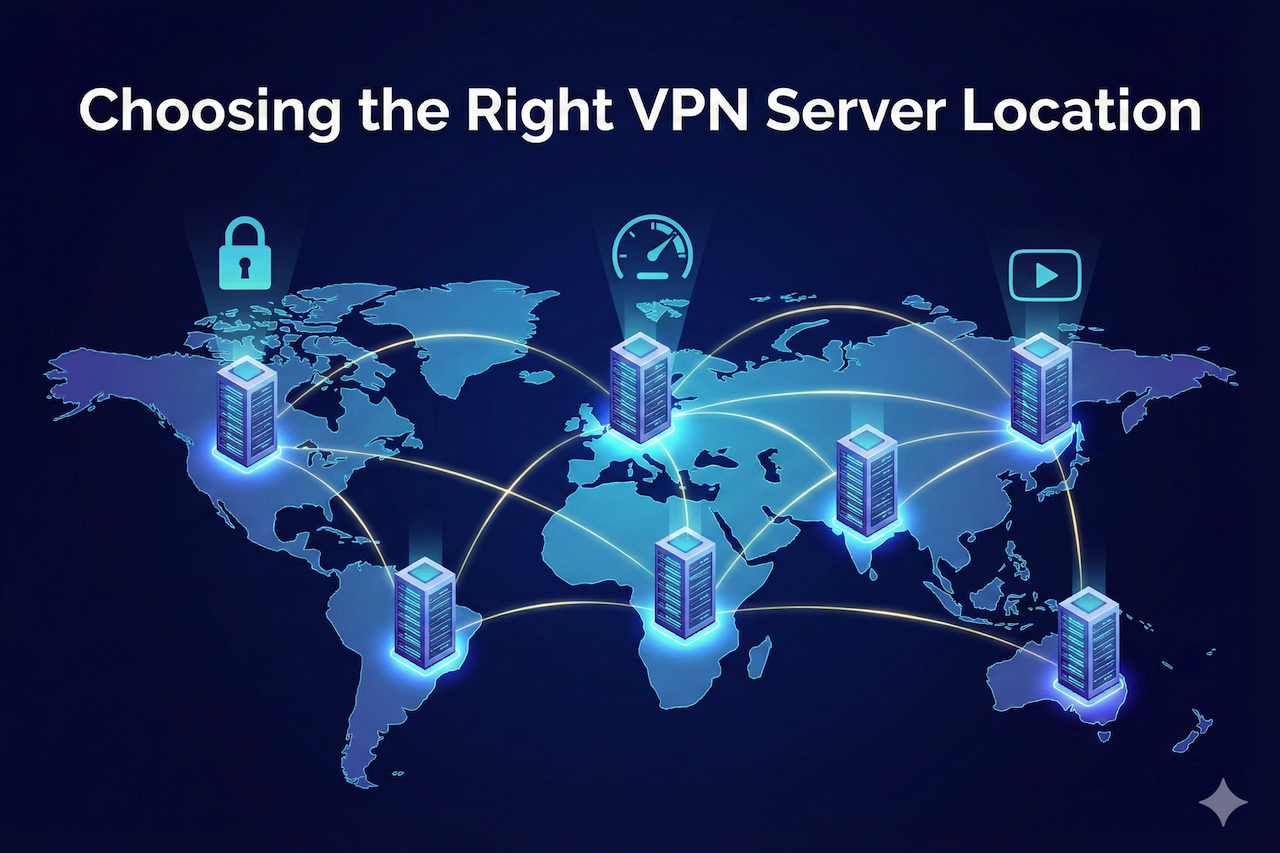
As the digital world becomes more integrated into everyday life, protecting online privacy has become increasingly important. One commonly used approach for enhancing privacy and managing online access is connecting through a Virtual Private Network (VPN). However, the effectiveness of a VPN connection depends not only on the service itself, but also on the server location you choose.
In this article, we examine why VPN server locations matter, why some countries are often preferred over others, and how different locations can influence privacy considerations, internet speed, and access to region-restricted content.
Why VPN Server Locations Matter
Before deciding where to connect, it is helpful to understand how server locations influence online experiences:
1. Privacy and Data Laws
Laws governing data retention, monitoring, and government access vary by country. Some jurisdictions place stronger limits on data collection, while others allow broader access under legal frameworks.
2. Speed and Latency
Connecting to a geographically closer server typically reduces latency. In contrast, connecting to a distant server may result in slower speeds due to longer data travel distances.
3. Access to Content
Streaming platforms, websites, and applications often restrict content by region. Selecting a server in a specific country may allow access to region-specific libraries or services.
4. Avoiding Censorship
In regions with heavy internet restrictions, connecting through servers located in countries with fewer controls can help users access a wider range of online resources.
5. ISP Visibility
While a VPN can obscure browsing activity and limit an internet service provider from monitoring your online activities, the legal jurisdiction of the server location may still influence how traffic is handled or regulated.
What Makes a Country Suitable for VPN Connections?
Several factors are commonly considered when evaluating VPN server locations:
Privacy-Friendly Laws
Countries without mandatory mass data retention policies and limited participation in international surveillance alliances are often viewed as more privacy-conscious.
Low Latency and High Speed
Strong infrastructure and proximity to the user typically contribute to more stable and faster connections.
Access to Global Content
Countries that host major media platforms often provide broader access to streaming libraries and online services.
Favorable Legal Environment
Jurisdictions with clear user protections and limited surveillance requirements are generally considered more accommodating for VPN operations.
Top VPN Server Locations and Their Characteristics
Below are examples of countries frequently selected for VPN connections, along with the reasons users may choose them.
1. Switzerland — Strong Privacy Framework
Switzerland is often cited as a country with strong data protection practices and a legal framework that places limits on mass data retention.
Why some users choose Switzerland:
- Established data protection laws
- Not part of major intelligence-sharing alliances such as Five Eyes or Fourteen Eyes
- Legal environment that does not mandate broad data retention
- Generally considered a stable jurisdiction for privacy-focused services
For users who prioritize privacy and want to reduce exposure to government or ISP-level monitoring, Switzerland is commonly considered a suitable option.
2. Iceland — Internet Freedom and Civil Liberties
Iceland is frequently associated with strong civil liberties and policies that support freedom of expression online.
Commonly cited characteristics:
- Strong protections for free expression
- Limited data retention requirements
- Relatively low levels of government involvement in online activity
- Modern and reliable internet infrastructure
Iceland may be a good choice for users who value civil liberties alongside privacy-oriented policies.
3. Sweden — Privacy Protections and Connectivity
Sweden combines advanced internet infrastructure with established data protection regulations, making it a practical option for many users.
Highlights:
- Highly developed technology and network infrastructure
- Strong data protection legislation
- Long-standing support for digital rights and internet access
Sweden is often viewed as offering a balance between performance and privacy.
4. United States — Content Access and Infrastructure
The United States is commonly used for accessing region-restricted content and services, particularly for entertainment platforms.
Advantages:
- Access to large streaming libraries and online services
- Extensive availability of high-capacity servers
- Well-developed and reliable infrastructure
Because the U.S. participates in intelligence-sharing arrangements, some users may prefer other locations for privacy-focused use cases. However, it remains a popular choice for content access while traveling.
5. United Kingdom — Performance and Regional Access
The United Kingdom is often selected for stable speeds and access to UK-based online services.
Why users choose the UK:
- Access to UK-specific streaming platforms and websites
- Reliable infrastructure supporting consistent performance
- Broad regional connectivity within Europe
The UK can be a practical option for users who want a balance between performance and access to region-specific content.
6. Japan — East Asia Connectivity and Performance
Japan is a major connectivity hub in East Asia and is frequently used for regional browsing, streaming, and gaming.
In Japan, users often benefit from:
- Access to domestic and international streaming services
- Low-latency connections within East Asia
- Strong support for gaming and general web use
Japan is commonly chosen for its regional reach and overall network reliability.
7. Canada — Privacy and Access
Canada’s proximity to the United States can support faster speeds for North American users, while offering a different legal and regulatory environment.
Advantages:
- Access to North America–based content libraries
- Well-developed internet infrastructure
- Often perceived as offering stronger privacy protections than some neighboring regions
Canada can be a practical choice for users who want good performance without relying exclusively on U.S.-based servers.
8. Netherlands — Privacy and Strong Connectivity
The Netherlands is frequently selected due to its central location in Europe and strong network infrastructure.
Key benefits:
- High-quality broadband and network capacity
- Central European location supporting lower latency
- Often associated with a privacy-aware internet culture
It is a common option for European users seeking a balance of speed and regional access.
9. Singapore — Strategic Asian Access Point
Singapore is a major digital hub in Asia and is often used for routing traffic across the Asia-Pacific region.
Best for:
- High-speed connectivity across Asia and Oceania
- Access to certain region-restricted services
- Modern and resilient infrastructure
While Singapore is valued for performance and connectivity, privacy and data-handling rules vary by jurisdiction. Users may want to consider how their VPN provider operates within this legal context.
Choosing the Right VPN Server for Your Needs
Most VPN applications allow users to manually select server locations based on their goals. For example, services such as Systweak VPN provide country-based server lists that users can switch between depending on whether they prioritize privacy, speed, or access to region-restricted content.
The most suitable server location depends on individual priorities:
For Privacy
Commonly chosen locations include:
- Switzerland
- Iceland
- Sweden
For Streaming and Media Access
Users often select:
- United States
- United Kingdom
- Japan
- Canada
For Gaming and Performance
Lower latency is typically achieved by choosing:
- Nearby servers
- Netherlands (Europe)
- Japan or Singapore (Asia)
- Canada or U.S. regional servers (North America)
For Censorship Circumvention
Connecting through countries with fewer restrictions, such as Switzerland or Iceland, is often preferred.
General Tips for Selecting VPN Server Locations
- Choose servers close to your physical location for better speed, unless accessing region-specific content
- Test multiple servers within the same country, as performance can vary
- Consider server load, which may affect speed
- Use secure protocols such as OpenVPN or WireGuard where available
Final Thoughts
There is no single “best” VPN server location for everyone. The ideal choice depends on whether your priority is privacy, speed, content access, or regional connectivity. Server location plays a significant role in determining online performance and accessibility.
By understanding how different countries influence VPN behavior, users can make more informed decisions and adjust their connections based on specific needs, whether at home, while traveling, or when working remotely.
Disclaimer
This article is provided for general informational and educational purposes only. The content does not constitute legal, technical, or professional advice, and should not be relied upon as a substitute for independent research or expert consultation.
VPN laws, data protection regulations, and privacy practices vary by country and may change over time. Readers are encouraged to review applicable laws and the policies of any VPN provider they use before making decisions related to privacy, security, or online access.
iplocation.net does not endorse or guarantee the performance, legality, or suitability of any VPN service, server location, or third-party product referenced in this article.
This article may contain links to external websites for reference or additional context. iplocation.net is not responsible for the content, accuracy, availability, or privacy practices of external sites and is not liable for any damages or issues arising from their use.
Featured Image generated by Google Gemini.
Share this post
Author

Leave a comment
All comments are moderated. Spammy and bot submitted comments are deleted. Please submit the comments that are helpful to others, and we'll approve your comments. A comment that includes outbound link will only be approved if the content is relevant to the topic, and has some value to our readers.







Comments (0)
No comment