

Turning Search Behavior into Market Insight with SERP APIs
Business analysis often starts with a familiar problem: you need to explain what customers want, but you cannot interview an entire market. Surveys help, but they are slow and can be biased by how questions are phrased. Focus groups are useful, but they are small. Sales data is real, but it comes late, after decisions are already made.
Search behavior sits in a different category. When people are alone with a search bar, they type what they actually mean. They ask inquiries that are hard to answer, compare options and look for “best,” “cheap,” “near me,” “does it work,” “is it safe,” and “how to fix.” That language changes before buying patterns change. If you can track it consistently, you can spot shifts early.

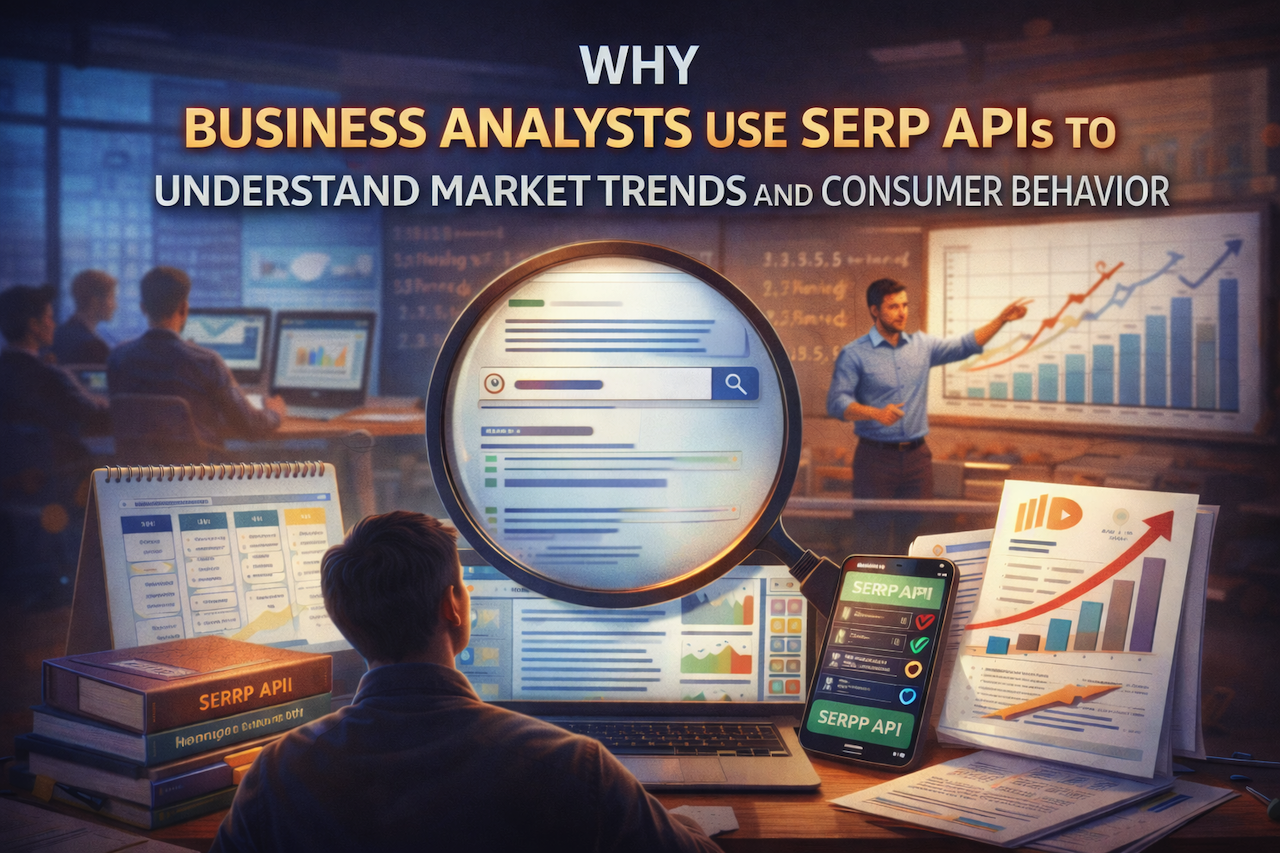
Image by Media Wise Marketing.
SERPs As A “Public Diary” Of Intent
Business analysts usually work with structured numbers: revenue, retention, conversion rate. And SERPs are messy by comparison. They contain media articles, brand pages, forums, marketplaces, videos, and Q&A pages. That mess is the point.
When you look at SERPs over time, you can see:
- Intent temperature: Are queries moving from curiosity to purchase language?
- Trust pressure: Are safety and credibility questions increasing?
- Preference drift: Are people changing what “best” means in a category?
- Category maturity: Are SERPs dominated by education, or by shopping pages?
Instead of asking customers what they want, you observe what they repeatedly ask the internet.
| SERP pattern you can observe | What it often signals | Example of analyst insight |
|---|---|---|
| Forums and community posts dominate | People want real experiences, not brand messaging | The category has trust gaps or high perceived risk |
| Marketplaces and “best of” lists dominate | People are actively comparing options | Buyers are in evaluation mode, not discovery mode |
| “How to” and troubleshooting results rise | Friction is increasing | Products may be hard to use, support demand is growing |
| Video results become more common | People prefer demonstrations | A “show me” preference is replacing long explanations |
| Medical, legal, or safety sources rank high | Risk sensitivity is strong | Messaging must address safety and compliance concerns |
SERP APIs In The Middle Of The Analysis Flow
Business intelligence fails when data arrives too late or is too noisy to compare. SERP APIs can sit in the center of your workflow, between question design and insight delivery. Tools such as DECODO’s SERP API, among others, can be used to collect consistent search result data at scale for analysis.
Here is the logic:
- You define what you want to understand (trend, preference shift, intent shift).
- The system collects SERP snapshots at scale across your selected markets.
- You process the results into features analysts can track: source types, repeated themes in titles, ranking changes, and the appearance of new question formats.
- You deliver a dashboard or report that shows movement, not just a static view.
The value is that you can run the same analysis every week and trust the comparisons. That is what makes trends real instead of anecdotal.
The Trend Engine: Build A Repeatable Search Behavior Dataset
The hard part is not the insight. The hard part is collecting search data in a consistent way.
Manual checks do not work because they are:
- Inconsistent across analysts and teams.
- Influenced by personal search history.
- Difficult to repeat for multiple markets.
- Impossible to audit after the fact.
With a SERP API, you pull results in a controlled setup. Same keyword sets, same locations, same device types, same schedule. You store snapshots and compare them like time-series data.
A Strong Approach Is To Build Three “Keyword Decks”
- Category deck: broad phrases that define the market
- Preference deck: “best,” “top,” “cheap,” “premium,” “sustainable,” “fast”
- Concern deck: “safe,” “side effects,” “scam,” “refund,” “warranty,” “privacy”
Then monitor how the SERPs evolve for each deck. Category tells you what the market is. Preference tells you what people value. Concern tells you what scares them.
| Forecast question | SERP-based indicator to track | What it can predict |
|---|---|---|
| Is the category about to accelerate? | Growth in evaluation and pricing SERPs for core terms | Early demand increase and higher conversion potential |
| Are preferences shifting? | New modifiers rising (“eco,” “AI,” “instant,” “low sugar”) | Changes in product requirements and messaging |
| Is trust becoming a bottleneck? | More “scam,” “safe,” “legal,” “privacy” queries and results | Need for stronger proof, policy clarity, and reassurance |
| Is the market commoditizing? | SERPs filled with price lists and comparison tables | Margin pressure and feature parity risks |
| Is support demand about to spike? | Troubleshooting SERPs rising for major products | Operational load increase and user experience issues |

Image by Media Wise Marketing.
Reading Intent Without Pretending You Know The Person
It is tempting to treat search as a perfect window into the consumer’s mind. It is not. A SERP tells you what information is being served for a query and what content is winning attention. That is still extremely useful, but it needs careful interpretation.
A practical way to interpret intent is to classify queries by decision stage and then track how the SERPs behave inside each stage.
- Exploration: “what is…”, “how does…”, “examples of…”
- Evaluation: “best…”, “reviews”, “vs”, “alternatives”
- Action: “pricing”, “buy”, “trial”, “near me”, “discount”
- Post-purchase: “setup”, “return”, “fix”, “customer support”
When evaluation and action queries grow faster than exploration, demand is heating up. When post-purchase content rises, friction may be rising too. That is often a leading indicator for churn risk in subscription categories.
Making This Useful Inside A Company
SERP-based intelligence becomes valuable when it connects to decisions people already make. That might be:
- Quarterly planning for product and marketing
- Market entry research for new countries
- Brand messaging refreshes
- Pricing and packaging experiments
- Customer experience improvements
A good internal report does not show “rankings.” It shows movement and what it implies. It also shows what you recommend doing next, with a clear reason.
Keep the output readable—business leaders do not want a thousand keywords. They want three trends, two risks, and one opportunity, backed by evidence.
Conclusion
Understanding market trends and consumer behavior no longer relies solely on surveys or historical data. Search behavior offers a real-time, unfiltered view of what people actually think, need, and question. By analyzing SERPs consistently, business analysts can detect shifts in intent, identify emerging preferences, and anticipate risks before they appear in traditional metrics.
SERP APIs make this process scalable and repeatable, turning scattered search results into structured insights. When used effectively, they help organizations move from reactive decision-making to proactive strategy, grounded in how consumers actually behave online.
Featured Image generated by ChatGPT.
Related Articles
April 23, 2026
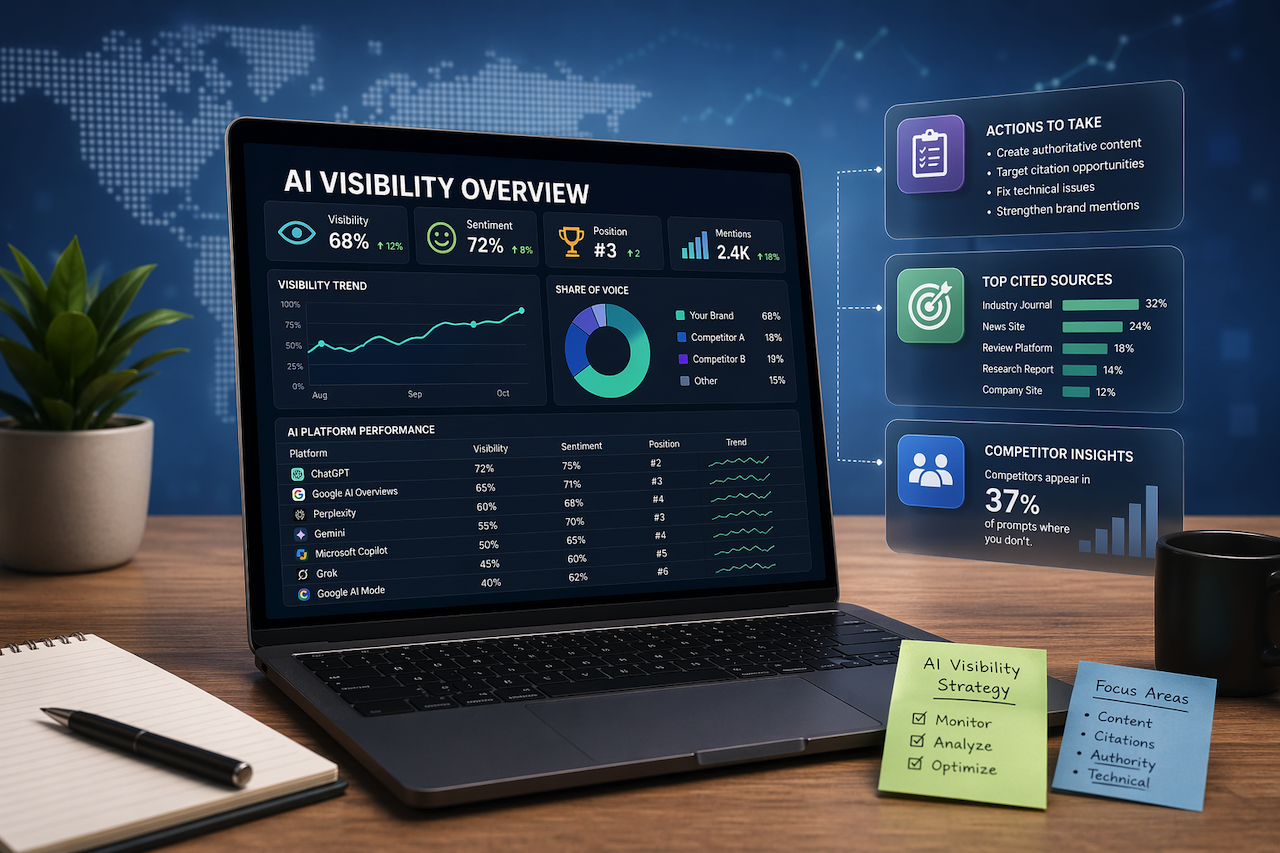
Best GEO Tools in 2026: 7 Platforms That Actually Track How AI Search Sees Your Brand
Search your brand in ChatGPT and Perplexity right now. You will likely get two different answers. Generative Engine Optimization (GEO) tools track this systematically across thousa...
Read More
May 26, 2025
What You Need to Know About LLMs and Organic Search
Website traffic analysis shows an unexpected trend: Visitors from AI-driven searches are less engaged than those from organic results. What does that mean to your digital strategy?...
Read More
March 24, 2025
Voice Search vs. Traditional Search: How User Behavior Is Changing
Did you know that over half of all online searches will be done using voice by 2025? That's huge! Voice search uses spoken commands to find information. Traditional search relies o...
Read More
Comments
Comments are available to signed-in users and are moderated to keep the discussion useful and respectful. Spam, automated submissions, and low-value promotional comments are removed. Outbound links may be approved when they are relevant and genuinely helpful to readers, but they are displayed as plain text rather than clickable hyperlinks.
No comments have been published yet.
Please sign in to submit a comment.