
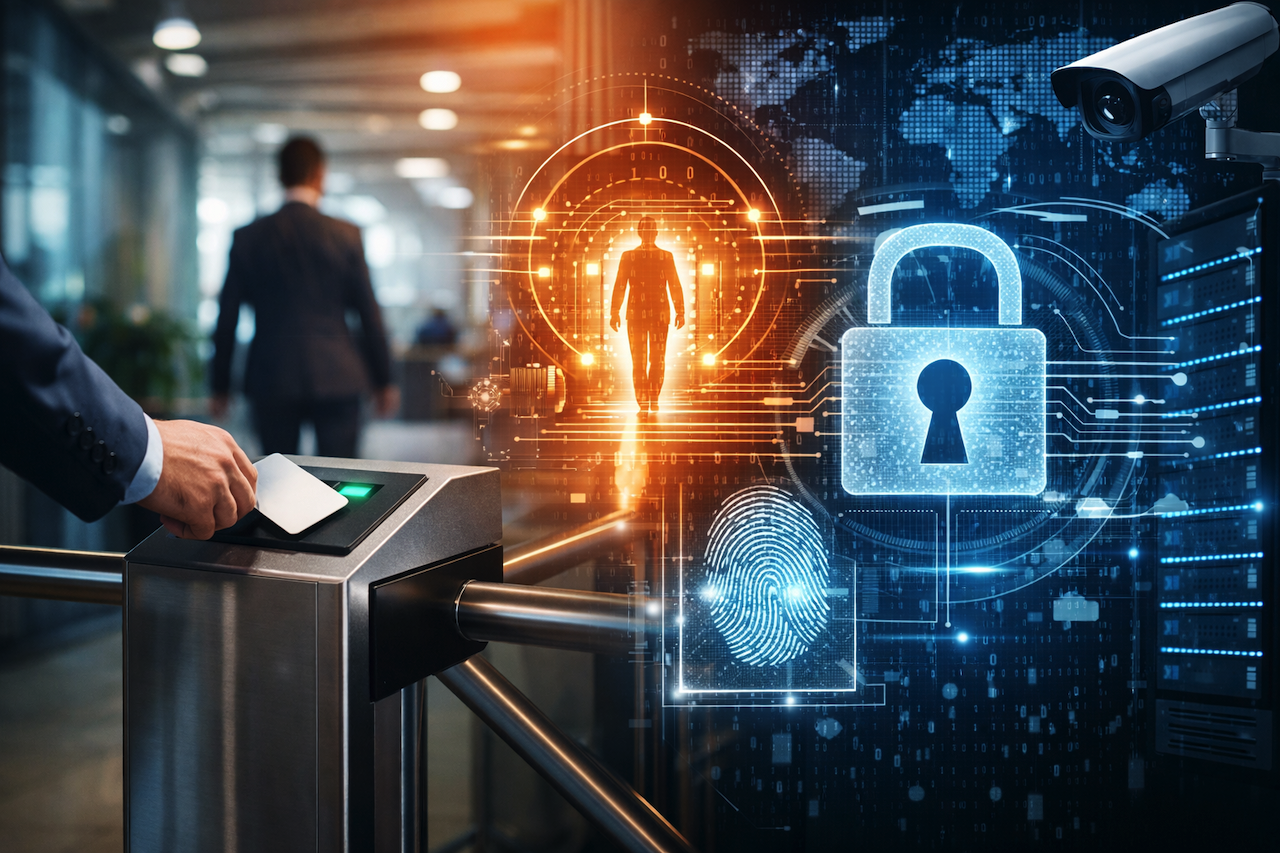
In the current global landscape, cybersecurity often takes center stage. Enterprises invest millions in high-end firewalls, sophisticated encryption, and real-time IP tracking to protect their virtual assets from remote threats. However, a critical vulnerability remains in many organizational strategies: the physical office layer.
As hybrid work models become the standard for the US corporate sector, the boundary between digital and physical security has blurred. Today, true operational resilience requires a unified approach where integrated access tracking is no longer optional—it is a foundational requirement.
The Critical Vulnerability of the Physical Layer
Just as an unidentified or blocked IP address attempting to ping a secure server triggers an immediate digital alert, an unregistered individual walking into a corporate headquarters represents a tier-one security risk. Traditionally, physical security relied on manual paper logs, static guest badges, or basic proximity cards.
In 2026, these methods are insufficient. A single breach in physical security, such as an unauthorized "tailgater" gaining access to a server room or a sensitive workstation, can lead directly to a catastrophic data breach. When physical access is compromised, digital encryption can be bypassed locally, making the "physical firewall" your first line of defense.
Bridging the Gap with Visitor Intelligence
Digital security teams use tools like IP geolocation to verify the origin of incoming traffic. Similarly, facility managers must implement a professional visitor registration system to verify the identity of every person entering the premises.
By digitizing the entry process, organizations can achieve:
- Instant Identity Verification: Cross-referencing visitor data against internal watchlists and ensuring compliance before a guest even enters the lobby.
- Digital Audit Trails: Maintaining precise, cloud-based logs of every individual on-site. This mirrors the forensic logs used in network monitoring, allowing for rapid response during security audits.
- Touchless Compliance: Streamlining the signing of NDAs and safety protocols via mobile devices, ensuring that data privacy (GDPR/SOC2) starts at the front door.
Workspace Analytics: Security Beyond the Lobby
The challenge of the modern office isn't limited to who enters the building; it’s about managing how they utilize the space once inside. In a hybrid environment, desks are no longer "assigned" but "managed."
Integrating a high-performance hot desk booking tool allows IT and Security departments to maintain real-time visibility over office occupancy. From a security perspective, this provides granular control:
- Restricted Zone Management: Ensuring only authorized personnel can book desks in high-security zones (like Finance or R&D).
- Emergency Response Efficiency: In the event of an incident, administrators know exactly which desks are occupied and by whom, facilitating a faster and safer evacuation.
- Operational Data: Understanding peak usage times helps in optimizing security staffing and energy consumption, aligning physical safety with operational efficiency.
The Data-Driven Office: A Unified Defense Strategy
For companies operating in highly competitive markets, security is no longer a battle of "digital vs. physical." It is a unified front. Digital tools provide the "who" and the "where" in the cloud, while platforms like Archieapp provide the "who" and the "where" in the physical world.
By leveraging these integrated solutions, businesses can create a closed-loop security environment. When your visitor management and desk booking data are integrated into your broader tech stack, you eliminate blind spots.
Investing in the physical security layer is, in essence, an investment in cybersecurity. By bridging the gap between software-driven analytics and physical workspace management, modern enterprises ensure that their two most valuable assets—their data and their people—are protected by a comprehensive, 360-degree integrated shield.
Conclusion
The modern office can no longer treat physical and digital security as separate domains. As hybrid work reshapes how organizations operate, the risks associated with unmanaged physical access continue to grow. Integrated access tracking bridges this gap, providing real-time visibility, stronger compliance, and faster incident response.
By aligning visitor management, workspace analytics, and cybersecurity practices into a unified strategy, businesses eliminate critical blind spots. In today’s threat landscape, protecting infrastructure means securing both the network and the physical spaces that support it.
Organizations that invest in this integrated approach are not just improving security; they are building a resilient foundation for the future of work.
Featured Image generated by ChatGPT.
Share this post
Leave a comment
All comments are moderated. Spammy and bot submitted comments are deleted. Please submit the comments that are helpful to others, and we'll approve your comments. A comment that includes outbound link will only be approved if the content is relevant to the topic, and has some value to our readers.


Comments (0)
No comment