
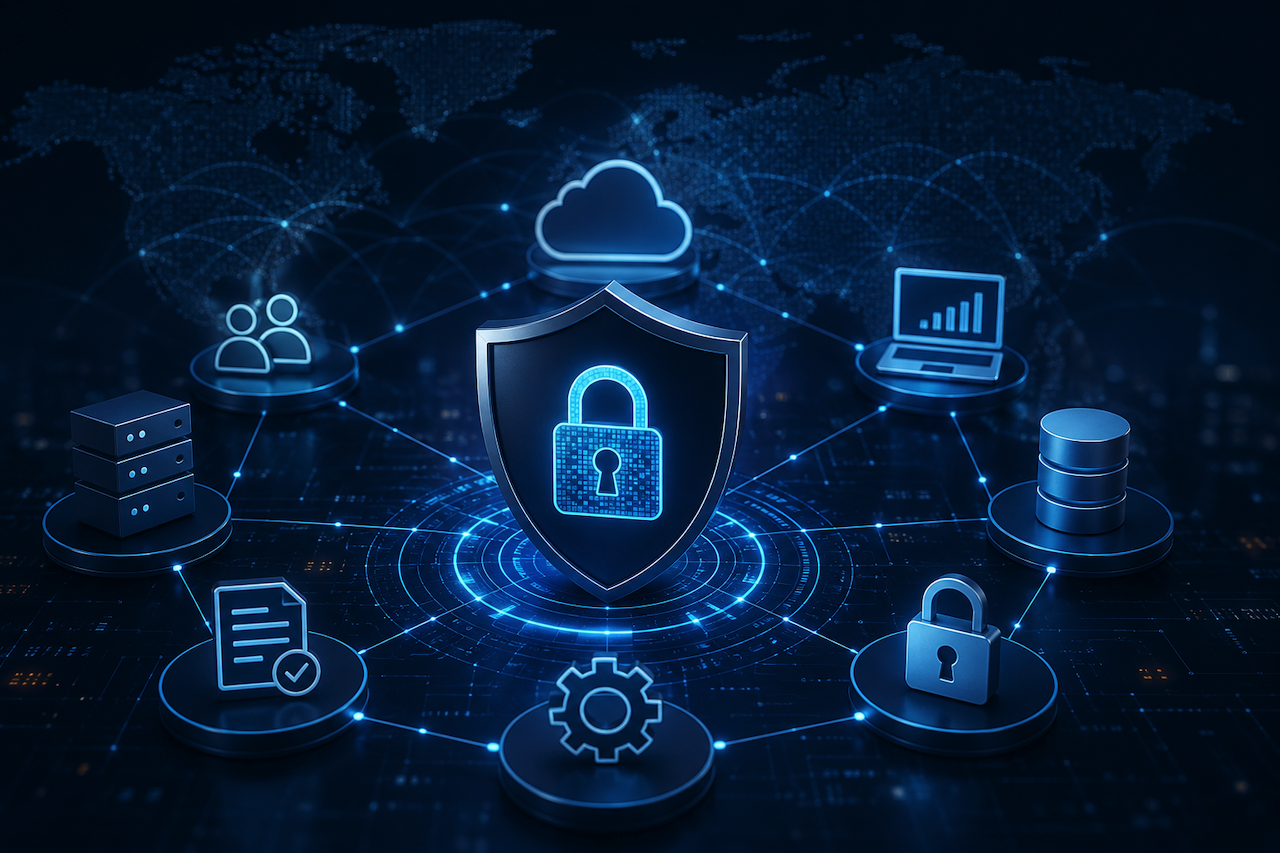
Modern organizations increasingly depend on interconnected digital ecosystems to operate efficiently and remain competitive. Cloud platforms, SaaS applications, APIs, and third-party tools enable businesses to automate workflows, share data seamlessly, and scale operations with minimal friction. Customer relationship management systems connect with marketing automation platforms, financial tools integrate with analytics dashboards, and internal applications communicate with external vendors in real time. This level of integration has become not just an advantage, but a necessity.
However, this growing reliance on multiple services introduces significant security risks. Each integration point represents a potential vulnerability that attackers can exploit. A single weak link, such as an unsecured API or a compromised third-party vendor, can expose sensitive data or disrupt entire systems. As organizations expand their digital footprint, the challenge shifts from simply enabling integrations to securing them effectively. A security-first approach is essential to ensure that the benefits of integration do not come at the cost of increased exposure to cyber threats.
Common Vulnerabilities in Service Integrations
One of the most prevalent sources of vulnerability in integrated systems is the misuse or misconfiguration of APIs. APIs serve as the connective tissue between services, allowing them to exchange data and functionality. However, poorly secured APIs often lack robust authentication mechanisms, fail to properly validate inputs, or expose endpoints that should remain private. These weaknesses can enable attackers to gain unauthorized access or manipulate data. For instance, there have been cases where organizations unintentionally exposed internal APIs without authentication, allowing attackers to extract sensitive customer information by systematically querying endpoints.
“Third-party tools also introduce considerable risk. Many integrations require granting external services access to internal systems or datasets, sometimes with overly broad permissions. If a third-party provider experiences a breach, the attacker may gain indirect access to your environment. This type of supply chain vulnerability has become increasingly common, as attackers recognize that smaller vendors often have weaker security controls than the organizations they serve. A compromised vendor with unrestricted access can act as a gateway into otherwise secure systems.” — Ben Siegel, CEO of Sugarbug
Cloud platforms, while offering scalability and flexibility, are another frequent source of vulnerabilities when misconfigured. Publicly accessible storage buckets, improperly defined access policies, and insecure communication channels between services can all lead to data exposure. These issues are rarely caused by flaws in the cloud providers themselves, but rather by configuration errors made during deployment or integration. As environments grow more complex, maintaining secure configurations becomes more challenging, increasing the likelihood of oversight.
Building Secure Architecture and Access Control
A strong security posture begins with thoughtful system architecture and strict access control. One of the most fundamental principles in this area is the principle of least privilege. This concept dictates that every service, user, or integration should only have access to the resources necessary to perform its function, and nothing more. Over-permissioned accounts are a common weakness, as they provide attackers with broader access if compromised. By limiting permissions and regularly reviewing access rights, organizations can significantly reduce their attack surface.
Another critical approach is adopting a Zero Trust architecture. In a Zero Trust model, no entity is inherently trusted, regardless of whether it resides inside or outside the network. Every request must be authenticated, authorized, and validated before access is granted. This approach minimizes the risk of lateral movement within a system, ensuring that even if one component is compromised, attackers cannot easily spread to other parts of the environment.
Secure authentication and authorization mechanisms are essential for protecting integrations. Modern protocols such as OAuth 2.0 provide a safer alternative to static credentials by issuing time-limited tokens with defined scopes. Multi-factor authentication adds a layer of protection, particularly for sensitive systems or administrative access. Regular rotation of credentials and tokens further reduces the risk of long-term exposure.
Network segmentation also plays a vital role in secure architecture. By isolating systems based on their function and sensitivity, organizations can contain potential breaches and prevent them from affecting critical assets. Segmentation ensures that even if an attacker gains access through one integration, their ability to move deeper into the system is restricted.
Data Protection and Encryption Best Practices
Protecting data as it moves between services and while it is stored is a cornerstone of secure integration. Encryption is the primary tool for safeguarding data in transit and at rest. All communications between services should use secure protocols such as TLS to prevent interception or tampering. Similarly, sensitive data stored in databases or cloud storage should be encrypted so that, even if unauthorized access occurs, the data remains unreadable.
In addition to encryption, organizations should focus on minimizing the amount of sensitive data shared across systems. Data minimization reduces the potential impact of a breach by limiting what can be exposed. Tokenization is a useful technique in this context, allowing sensitive information to be replaced with non-sensitive identifiers that can be safely transmitted between services. For example, payment systems often use tokens instead of actual credit card numbers, reducing the risk associated with data exchange.
Effective key management is another critical aspect of data protection. Encryption keys must be stored securely, typically in dedicated key management systems or vaults, rather than embedded in application code or configuration files. Access to these keys should be tightly controlled, and regular rotation policies should be enforced to mitigate the risk of compromise.
“Logging practices also require careful consideration. While logs are essential for monitoring and troubleshooting, they can inadvertently expose sensitive information if not handled properly. Organizations should ensure that logs are sanitized, with sensitive data masked or omitted, and that access to logs is restricted to authorized personnel only.” — Lucas Botzen, founder of Rivermate
Risk Assessment and Vendor Management
Integrating external services requires a thorough understanding of the risks associated with each vendor. Before establishing any integration, organizations should evaluate the provider’s security posture, including their certifications, compliance standards, and data protection practices. This due diligence helps ensure that the vendor meets acceptable security standards and reduces the likelihood of introducing vulnerabilities through third-party connections.
Contracts and service agreements should clearly define security expectations and responsibilities. This includes requirements for data protection, timelines for breach notification, and provisions for audits or security assessments. Establishing these expectations upfront creates accountability and ensures that vendors prioritize security alongside functionality.
Risk assessment should not be treated as a one-time activity. As vendors evolve and new threats emerge, organizations must continuously reassess the security of their integrations. Monitoring vendor performance, staying informed about disclosed vulnerabilities, and adjusting controls as needed are all essential for maintaining a secure environment.
Limiting vendor access is another important consideration. Providing dedicated accounts for integrations, rather than shared credentials, enhances accountability and traceability. Monitoring vendor activity through logging and auditing further strengthens oversight and enables rapid detection of suspicious behavior.
Continuous Monitoring and Incident Response
Even with robust preventive measures in place, no system is immune to compromise. Continuous monitoring is essential for detecting and responding to threats in real time. By analyzing system activity, organizations can identify anomalies such as unusual API usage patterns, unauthorized access attempts, or unexpected data transfers. Early detection significantly reduces the potential impact of an incident.
Centralized logging and analysis tools, often referred to as Security Information and Event Management systems, play a key role in this process. These systems aggregate data from multiple sources, correlate events, and generate alerts when suspicious patterns are detected. Automation can further enhance response times by triggering predefined actions when certain conditions are met.
An effective incident response plan is critical for minimizing damage when a security event occurs. This plan should outline roles and responsibilities, communication protocols, and procedures for containment, investigation, and recovery. Regular testing and simulation of incident scenarios help ensure that teams are prepared to act quickly and effectively under pressure.
After an incident is resolved, organizations should conduct a thorough analysis to identify the root cause and implement improvements. This continuous learning process strengthens defenses over time and reduces the likelihood of similar incidents occurring in the future.
Conclusion
As organizations continue expanding their digital ecosystems, securing service integrations becomes increasingly important for maintaining operational stability and protecting sensitive data. APIs, cloud platforms, third-party tools, and interconnected applications all introduce potential risks that require careful oversight. By combining strong access controls, encryption, vendor risk management, continuous monitoring, and incident response planning, businesses can reduce vulnerabilities while still benefiting from efficient system integration. A proactive security strategy helps organizations strengthen resilience and adapt more effectively to evolving cyber threats.
Featured Image generated by ChatGPT.
Share this post
Leave a comment
All comments are moderated. Spammy and bot submitted comments are deleted. Please submit the comments that are helpful to others, and we'll approve your comments. A comment that includes outbound link will only be approved if the content is relevant to the topic, and has some value to our readers.


Comments (0)
No comment