

Mobile Proxies for Private Location-Based Access
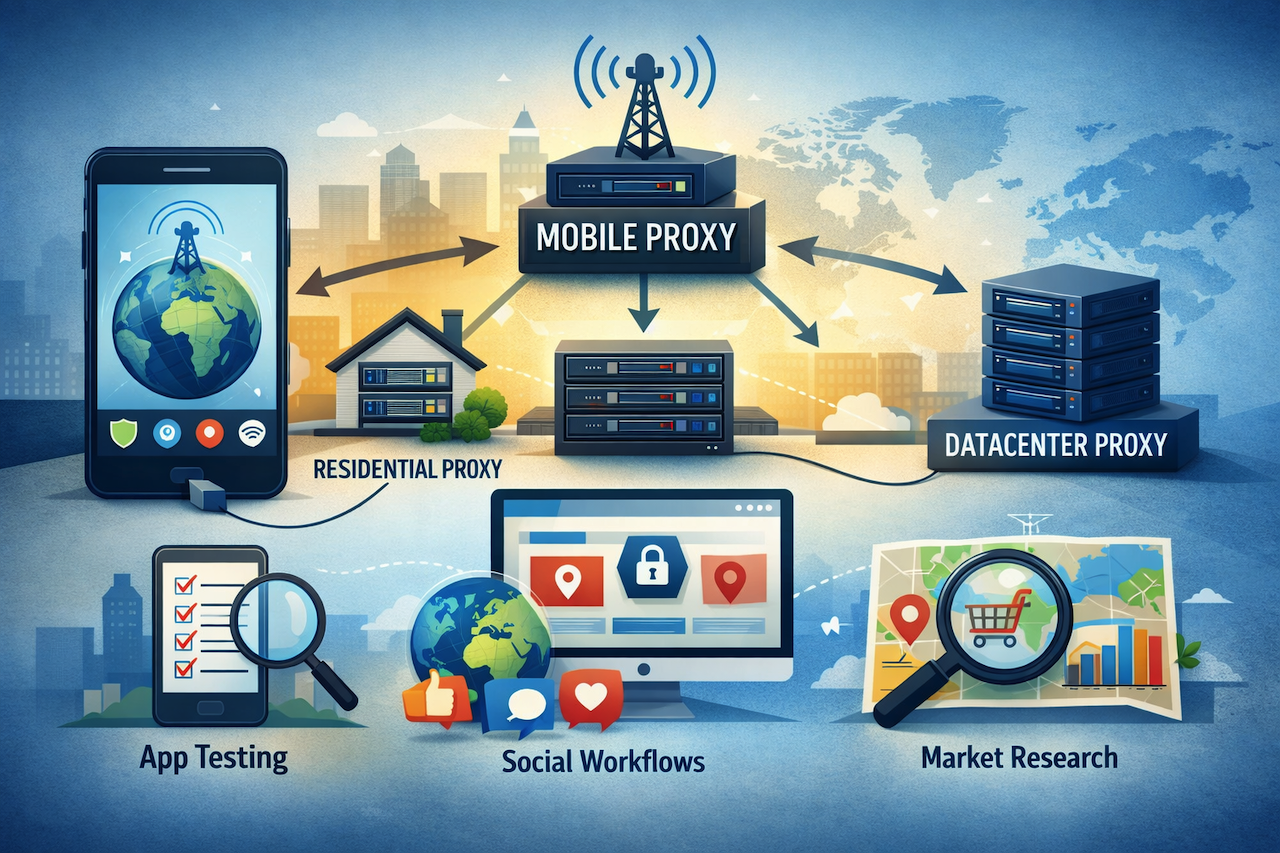
Modern online work often depends on access that looks natural, stays flexible, and adapts to changing locations or platforms. In that environment, a mobile proxy is often viewed as one of the most practical tools for users who need traffic routed through real mobile carrier networks instead of standard server infrastructure. This article explains how mobile proxies work, why they are used in different digital tasks, and how they compare with other proxy categories in terms of trust, speed, and cost. It also covers practical recommendations, common mistakes, step-by-step setup logic, and the key strengths and limitations to consider when choosing a provider. Readers who want clearer decision-making will find both structured explanations and usable advice here.
What Makes Mobile Proxies Different
Mobile proxies stand apart from other proxy types because they use IP addresses assigned by mobile network operators. That changes the way traffic appears to websites, apps, and online platforms that evaluate network origin and trust signals. Before looking at advanced use cases, it helps to understand the basic reasons why mobile proxies are treated as a special category.
The difference is not only technical but also practical. Many online platforms view traffic from mobile carriers as more indicative of ordinary user behavior than traffic from server-based infrastructure. That is why mobile proxies are often chosen when trust profile matters more than raw speed.
| Proxy type | Source of IP | Main strength | Common limitation | Typical use |
|---|---|---|---|---|
| Mobile | Mobile operator network | Strong trust profile | Usually higher cost | Social workflows app testing localized access |
| Residential | Home internet connection | Natural browsing pattern | Can vary by provider quality | Market checks account tasks, regional browsing |
| Datacenter | Server infrastructure | Speed and scale | Less natural appearance | Monitoring automation bulk technical work |
How Mobile Proxies Work in Practice
The basic idea behind a mobile proxy is simple, but its practical value depends on how the provider manages routing, filtering, and connection quality. Users do not only buy access to an IP address. They buy a way of presenting traffic through a network type that may be treated differently by online platforms.
In real use, performance depends on matching the proxy to the right task. A mobile proxy is not automatically the best answer to every online challenge. Still, it can be highly effective when the workload depends on location realism, carrier traffic, or a more natural mobile-style origin.
Traffic passes through a carrier-based route. When a user activates a mobile proxy, the request is routed through an IP address provided by the mobile operator. The website or app sees the mobile IP address instead of the original local network IP. That change in the visible origin can influence access conditions, content display, and the session's overall trust profile.
The provider determines usability. A large mobile pool is only helpful if the platform makes it easy to search by relevant filters such as country, city, provider, or protocol. Without that structure, users may end up paying for access that is technically available but operationally inefficient. A good provider turns mobile inventory into a practical selection system rather than a random list of IPs.
Where Mobile Proxies Are Used Most Often
Mobile proxies are chosen for tasks where mobile network realism can improve stability or relevance. These are not limited to highly technical environments. Many practical online tasks become easier when traffic comes from a carrier-based source rather than from a server block.
The reason is simple. Some platforms react strongly to the network type, and some workflows depend on seeing content exactly as a mobile user in a specific region would. That is where mobile proxies can deliver clear operational value.
App Testing and Mobile User Flow Checks
A common use case involves testing how websites or apps behave when accessed through mobile traffic. This can include checking localization, seeing mobile-specific offers, reviewing region-based content, or validating how an app responds under a mobile carrier connection. For product teams and testers, this helps create a more realistic view of the user experience.
Social Platform-Related Workflows
Mobile proxies are often discussed in the context of platforms sensitive to traffic origin and session behavior. Because carrier-based IPs may look more natural in some cases, they can be useful for workflows where a standard datacenter IP creates more friction. Responsible use remains essential, but the type of network can still make a meaningful difference.
Market Observation and Localized Research
Another frequent use is regional research. Businesses may want to observe how pages, promotions, or search results appear from a mobile context in a certain country or city. A mobile proxy can help recreate that perspective more closely than a generic server location can.
Comparing Mobile Proxies with Other Proxy Options
A mobile proxy is easier to evaluate when compared directly with residential and datacenter alternatives. Each category has its own role, and buyers usually make better decisions when they compare real operational trade-offs rather than relying on labels alone.
The most important question is not which type sounds more advanced. The better question is which one matches the actual project in terms of trust, speed, location precision, and budget. That is where comparison becomes useful.
| Factor | Mobile Proxy | Residential Proxy | Datacenter Proxy |
|---|---|---|---|
| Trust profile | Often very strong | Usually strong | Usually lower |
| Speed | Moderate | Moderate | Often high |
| Cost | Often highest | Medium to high | Usually lower |
| Traffic appearance | Mobile carrier-based | Home user-based | Server based |
| Best for | App flows social tasks, mobile checks | Research browsing account tasks | Automation monitoring scale |
| Common drawback | Higher price | Variable quality | Less natural appearance |
Types of Mobile Proxy Selection and Practical Advice
Users often assume mobile proxies are all the same, but selection can differ by geography, carrier, protocol, and quality level. The more clearly a user defines those needs, the easier it becomes to avoid wasted spending. Practical buying decisions usually come from narrowing choices before paying.
Choosing by Geography
Some projects only need country-level access, while others benefit from city-specific targeting. Users should avoid paying for ultra-precise location settings unless the workflow actually depends on them. Matching location precision to the real task is one of the simplest ways to manage cost.
Choosing by Carrier Relevance
In some situations, the mobile provider itself matters almost as much as the location. Certain websites or apps may behave differently depending on the carrier environment from which traffic originates. When that matters, choosing a platform with carrier-level filters becomes a major advantage.
Choosing by Protocol Compatibility
Mobile proxies are commonly offered via SOCKS5 and HTTPS, and the appropriate protocol depends on the application or browser flow in use. HTTPS is often convenient for web tasks, while SOCKS5 may support a wider variety of software-based use cases. Selecting the wrong protocol can create friction even when the IP itself is suitable.
Step-by-Step Way to Choose a Mobile Proxy
A structured setup process helps users avoid the common mistake of buying first and thinking later. Mobile proxies are most effective when the selection is based on a clear plan rather than on curiosity alone. The steps below outline a simple path from the initial idea to practical use.
Step One: Define the Exact Purpose
The first step is to state the real goal in plain words. Is the task app testing, checking localized content, observing search results, or running a workflow that benefits from carrier traffic? Once the purpose is clear, the buyer can judge whether a mobile proxy is truly necessary.
Step Two: Match the Location and Carrier Needs
Next, the user should decide whether country-level access is enough or whether city and provider filters are important. This is also the stage at which to determine whether the project benefits from a specific carrier environment. Overlooking this step often leads to buying the wrong mobile IP even when the general region is correct.
Step Three: Choose the Protocol and Review the Quality
The user should then select SOCKS5 or HTTPS based on the software or browser environment. After that, it is wise to review any quality signals, blocklist information, or support conditions the provider offers. This reduces the chance of paying for a connection that is available but poorly suited to the real task.
Step Four: Test on a Small Scale First
Instead of expanding immediately, the safer approach is to test one or a few mobile proxies in the real workflow. This shows whether the selected location, carrier, and protocol work as expected. Small-scale validation protects the budget and improves later decisions.
Pros and Cons of Mobile Proxies
A balanced decision requires both the advantages and the tradeoffs to be visible. Mobile proxies offer real strengths, but they also come with costs and limitations that users should weigh carefully. The lists below summarize the points that matter most in practical buying decisions.
Main Advantages
- Strong trust profile in many sensitive environments
- Useful for app testing and mobile user flow checks
- Good fit for region-based tasks that need carrier traffic
- Flexible alternative when server-style traffic creates friction
Main Limitations
- Usually more expensive than datacenter access
- Not necessary for every workflow
- Quality and usefulness depend heavily on provider transparency
Where Mobile Proxies Fit Best
Mobile proxies are most valuable when the task depends on looking like real traffic from a mobile carrier network rather than from a home connection or a server block. They are not the cheapest proxy type, but they often justify that higher cost in workflows where network identity matters more than raw speed. For users who need realistic mobile access, localized testing, and a stronger trust profile in sensitive online environments, mobile proxies remain one of the most practical specialized tools available today.
In summary, mobile proxies are not a universal solution, but they are highly effective in the right scenarios. Choosing them carefully based on purpose, location, and workflow can help users get better results while avoiding unnecessary cost.
Disclaimer
The information provided in this article is for general informational purposes only and does not constitute professional advice. While every effort has been made to ensure accuracy, iplocation.net makes no guarantees regarding the completeness, reliability, or suitability of the content.
This article may contain links to external websites for reference or convenience. iplocation.net has no control over the content, policies, or practices of third-party sites and is not responsible for any information, services, or damages that may arise from accessing or using those external links.
Users are encouraged to conduct their own research and exercise caution when interacting with third-party services or providers mentioned in this content.
Featured Image generated by ChatGPT.
Related Articles
April 2, 2026
How Mobile Proxies Improve Reliable Work
Online access tools are no longer limited to developers and security teams working on niche infrastructure. Today, marketers, analysts, sellers, researchers, and private users ofte...
Read More
September 22, 2025
Mobile Proxies Explained: A Practical Guide to Real-World Testing, Safer Research, and Reliable Coverage
Most online teams eventually run into the same roadblock: the test passes in the lab, but the experience breaks in the wild. Pages behave differently on mobile networks, app fl...
Read More
December 4, 2024
The Best Mobile Proxies of 2025: Top Providers Reviewed
Mobile proxies are specialized internet proxies that route your traffic through mobile devices connected to cellular networks (3G, 4G, or 5G). When you use a mobile proxy, your IP...
Read More
Comments
Comments are available to signed-in users and are moderated to keep the discussion useful and respectful. Spam, automated submissions, and low-value promotional comments are removed. Outbound links may be approved when they are relevant and genuinely helpful to readers, but they are displayed as plain text rather than clickable hyperlinks.
No comments have been published yet.
Please sign in to submit a comment.