
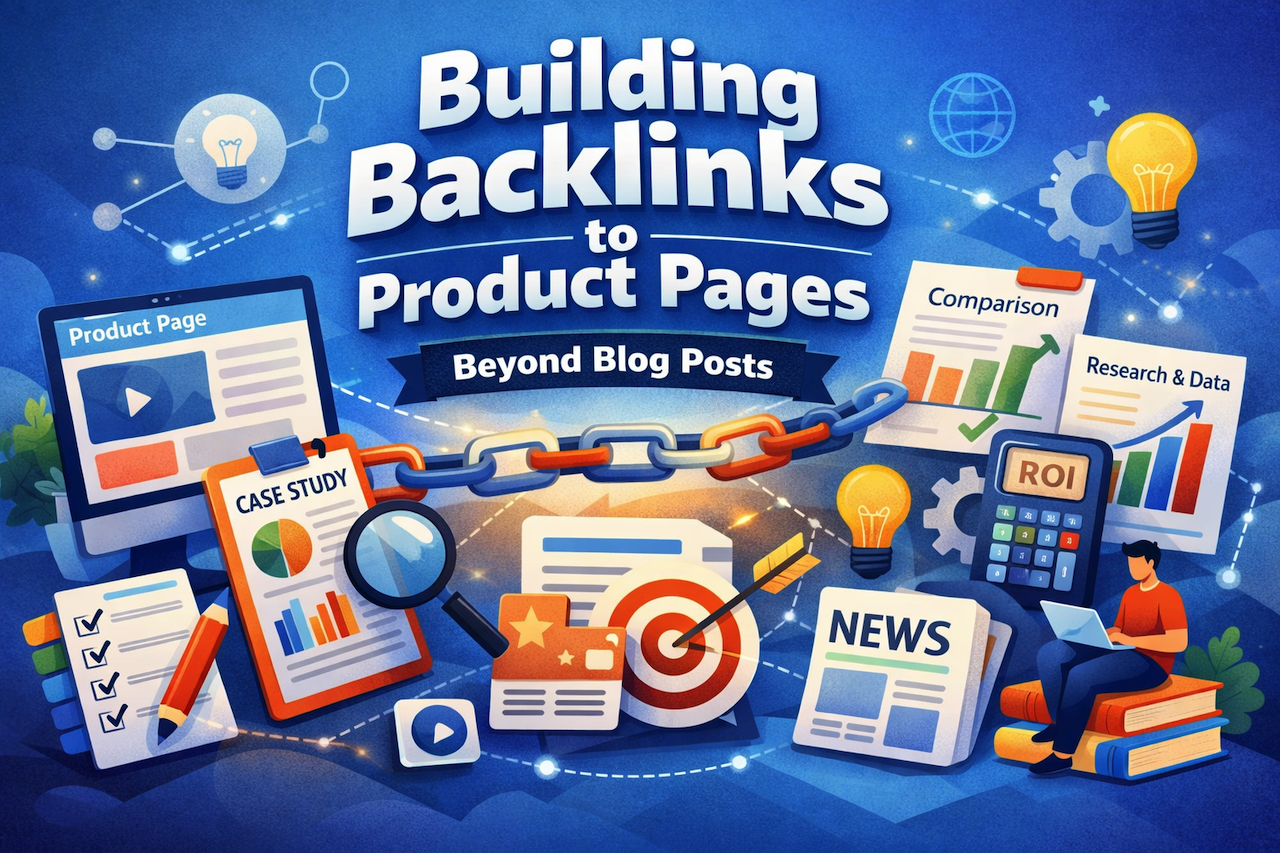
Backlinks to product pages are built by creating supporting assets around those pages, earning digital PR mentions, using comparison and integration content, and passing authority through smart internal links. The trick is to stop treating product pages like sales brochures and start treating them like reference points buyers and writers want to cite.
Most SaaS teams pour link building into blog posts because it feels easier. Blogs earn links. Product pages sit quietly. But blog traffic rarely pays the bills. Revenue comes from pages tied to real buying intent, which is why learning how to build backlinks to product pages matters more in 2026 than ever.
Let’s walk through it the way a founder, marketer, or SEO practitioner would actually think about it.
What Is the Difference Between Product Pages, Feature Pages, Comparison Pages, and Blog Posts?
Product pages and feature pages target commercial intent keywords and push people toward demos or trials. Comparison pages, alternative pages, use-case pages, and integration pages sit in the middle, helping buyers make decisions. Blog posts pull in awareness-stage traffic.
They all matter, but they do different jobs in search rankings and conversions.

Why Do Product, Feature, and Comparison Pages Matter for SaaS Link Building?
Because SaaS link building should not end at awareness content. These high-intent pages turn organic traffic into pipeline. When product, feature, and comparison pages earn authority, or absorb it through internal links, they gain credibility, trust signals, and a real shot at ranking for terms that move revenue.
Many SaaS SEO resources highlight similar approaches, emphasizing how product and feature pages can grow through targeted link building and internal authority.
Here’s how the main page types compare:
| Page Type | Linkability | Commercial Intent | Conversion Potential | SEO Role |
|---|---|---|---|---|
| Blog posts | High | Low | Low | Attract links and traffic |
| Feature pages | Medium | Medium | Medium | Explain product value |
| Comparison pages | Medium | High | High | Support buying decisions |
| Product pages | Low | Very high | Very high | Close the sale |
Why Is It Harder to Get Backlinks to Product Pages Than Blog Posts?
Product pages feel commercial. Publishers hesitate to link to anything that looks like a sales pitch. Blog posts look reference-worthy, so they pick up editorial links naturally.
To win links to money pages, stronger context, cleaner positioning, and supporting assets are needed, something that gives writers a real reason to cite the page.
Why Do Blog Posts Attract Editorial Links More Easily Than Money Pages?
Blog posts teach, compare, and explain without asking for a sale. That makes them easy to reference.
Money pages can still earn links, but they need more value baked in, such as proof, data, or context the reader can actually use.
Can Product Pages Rank With Backlinks, or Do Links Work Better for Blog Content?
Yes, product pages can rank with the right backlinks, especially when those links are topically relevant and supported by internal authority.
Blog content still attracts links more easily, but the smarter approach is to use both so commercial pages don’t depend entirely on awareness content.
What Makes a SaaS Product Page Link-Worthy?
A link-worthy product page offers something useful beyond the pitch. Think clear positioning, proof, real examples, and assets people can cite.
Wrap the page with product-led content and reference-worthy information, and you build topical authority that creates natural reasons to link.
What Type of Content Helps Earn Backlinks to Product Pages?
The formats that consistently earn links include:
- Original research and data reports
- Case studies and customer stories
- Comparison guides and industry reports
- Statistics roundups
- ROI calculators and free tools
- Templates, checklists, and interactive tools
These give writers something concrete to reference, making it easier to pass authority to the related product page later.
How Do Supporting Pages Help Product-Page SEO?
Comparison pages, alternative pages, use-case pages, and integration pages sit closer to buyer intent than generic blog posts but feel less sales-driven than product pages.
That balance makes them easier to reference. Once they earn mentions, they pass relevance and authority to the target commercial page through internal linking.
What Backlink Strategies Work for SaaS Product Pages in 2026?
The most effective strategies mix direct promotion with supporting assets. Strong results come from combining digital PR, guest posting, strategic partnerships, resource pages, listicles, and reference-worthy assets tied to commercial intent.
Random links won’t work. Authority must align with the goal of ranking SaaS landing pages and strengthening product visibility.
How Do Digital PR and Journalist Outreach Build Links?
Digital PR works when the story is strong and the link feels earned. Platforms like Featured, SourceBottle, ProfNet, and Muck Rack help connect with journalists.
When quotes are included in larger stories, contextual links to commercial pages carry real weight and drive qualified traffic.
How Do Partnerships and Integrations Help?
Partnerships place a product inside an existing ecosystem. Integration pages, co-marketing efforts, and joint content create natural opportunities for contextual mentions.
Instead of cold outreach, links appear where audiences already expect relevant tools.
How Do Communities Support Visibility?
Platforms like Reddit, Quora, and Discord rarely pass strong SEO authority directly, but they help surface content and spark discussions.
They act as discovery channels that can lead to future editorial mentions.
How Do You Build Links to Landing Pages Naturally?
By making pages easier to cite. Focus on relevance, supporting assets, real proof, and natural placement.
This leads to non-spammy promotion instead of forced SEO-driven links.
How Do Anchors and Placement Stay Natural?
Balance matters. Branded anchors feel safer and more credible. Exact-match anchors should be used sparingly.
Contextual placement within relevant content is key for both users and search engines.
How Do Link Building Tactics Fit In?
Niche edits, link insertions, broken link building, competitor analysis, and unlinked brand mentions all work when they improve relevance.
They fail when used purely to manipulate rankings.
How Do Internal Links and Clusters Help?
Internal links connect linkable assets with commercial pages. Content clusters attract attention first, then pass authority.
This ensures links work together rather than in isolation.
Should Links Go to Product Pages or Supporting Content First?
Supporting content usually earns links first. Internal links then transfer authority to product pages.
Direct links still matter, but they work best within a strong content structure.
How Do You Measure Performance?
Use:
- Google Search Console
- Google Analytics
- Ahrefs, SEMrush, Moz, Majestic
Track rankings, traffic, conversions, and link growth to measure impact.
The Takeaway
Product pages don’t rank by accident, and they don’t rank from blog links alone.
Build supporting assets, earn contextual mentions, structure content clusters, and use internal linking to push authority where revenue lives.
That’s how backlinks to product pages actually increase SaaS product visibility and performance.
 FAQs
FAQs
Through relevance, supporting assets, smart outreach, and balanced anchors.
Use digital PR, resource pages, listicles, partnerships, and linkable assets.
Featured Image generated by ChatGPT.
Share this post
Leave a comment
All comments are moderated. Spammy and bot submitted comments are deleted. Please submit the comments that are helpful to others, and we'll approve your comments. A comment that includes outbound link will only be approved if the content is relevant to the topic, and has some value to our readers.




Comments (0)
No comment