

How Better SEO Improves Lead Quality for Local Service Businesses

Most service businesses do not fail because they lack skill. They lose work because the customer never reaches them at the right moment.
A homeowner notices a damp patch, hears dripping, or spots damage after bad weather, and then they quickly search on their phone. Because they are rushed, they do not “research” in the usual sense. Instead, they skim a few results, compare who looks credible, and call the option that feels safe.
That is the environment local SEO operates in. It focuses on the moment of selection and the signals that influence that decision.
Roofing is a good example. When someone searches for a roofer, they usually need help quickly and want to contact a contractor they trust. The same pattern applies to many local services where urgency and proximity influence the decision.
As a result, the goal is not just higher rankings. The goal is a stronger first impression, clearer trust signals, and a simpler path from search to quote request.
Where Most Local Service Marketing Goes Wrong
A lot of SEO advice is generic, so it pushes service companies into generic execution. Someone adds a few keywords. Someone posts blog articles that nobody reads. Someone builds a new website that looks pretty but loads slowly on mobile. Meanwhile, the phone stays inconsistent because the core problem was never solved.
SEO only works when it reflects how customers actually hire local services. Roofing provides a clear example. For this to happen, a roofing contractor must rank for searches like “roofers near me.” For example, if you are in Jacksonville, Florida, you also need visibility for searches like “roofers near Jacksonville” or similar local variations.
First, customers want proximity, so local visibility matters. Next, they want certainty, so reviews and proof matter. Then they want speed, so the site experience matters. Successful SEO connects these steps instead of treating them like separate tasks.
What Needs to Be Checked First So Results Stop Feeling Random
Before writing a single page, the first step is diagnosing what may be blocking calls. This type of evaluation can be done internally or with outside help, such as a roofing marketing agency that specializes in local SEO. It also helps to identify quick wins that improve trust without waiting months. After that, the work should follow a sequence, because a sequence prevents wasted effort.
Early evaluation usually focuses on:
- Local presence and whether business details are consistent across listings
- Service area signals and whether the company clearly serves the locations it claims
- Review profiles, including recency and how responses are handled
- Website structure, especially whether key service pages are easy to find
- Mobile performance, since “near me” searches happen on phones
- Competitors in the same area, to understand why they win and where gaps exist
Once these pieces are clear, the work becomes more practical. Instead of doing random SEO tasks, the focus shifts to improvements that directly influence calls.
Service Pages That Feel Human and Still Rank Well
Service pages are where many local business websites quietly fail.
They either try to cover everything on one page, which makes the message vague, or they force keywords into the text, which makes the page read like a template. In both cases, the homeowner hesitates and then returns to the search results.
Effective SEO matches the page to search intent. Roofing again provides a clear example. Someone searching for roof repairs is often anxious and wants a quick, clear next step. Someone researching roof replacement wants reassurance, options, and a plan.
Then the page should flow like a real conversation. It should explain what the service includes, what inspections look for, how quotes work, and what happens after approval. When that structure is clear, the reader feels guided rather than pressured, which usually improves conversion.
Local Trust Signals That Influence Rankings and Decisions
Local SEO is not only about visibility. It is also about credibility, because the local results are where many customers decide.
They scan photos, read customer reviews, and tap the first phone number that looks reliable.
This is why local trust signals should be treated as core assets rather than optional extras. Keeping profiles current, clearly listing services, and encouraging consistent reviews all contribute to credibility.
For roofing contractors, for example, customers often look closely at photos of completed projects, storm repair examples, or inspection results. Similar signals help in many other service industries.
When your presence looks active and clear, you attract people who want professional work. At the same time, you naturally filter out some bargain hunters who only want the fastest price.
Technical SEO That Protects Calls You Already Earned
Even when a site ranks well, a slow page can still lose the job. The customer clicks, waits, gets frustrated, and returns to the search results. In practice, that means visibility was earned but the conversion was lost because the experience felt clunky.
Technical improvements often focus on the basics: page speed, clean navigation, and simple contact paths. Important service pages should also be easy for search engines to crawl and index so they do not get buried.
This work rarely looks exciting, yet it often improves results because it removes friction. Once friction drops, calls tend to rise even if rankings stay the same.
Content That Builds Trust Before the Customer Calls
The best service content is not clever. It is calming, specific, and practical. It answers the questions people ask when they are worried about cost, disruption, and risk.
Roofing provides a strong example of how this works. Homeowners often search for answers before they contact a contractor.
Content topics that often perform well include:
- How to decide between repair and replacement when problems keep returning
- What a roof inspection includes and what documentation you provide
- Why leaks can appear far from the entry point and how diagnosis works
- What affects pricing and why quotes vary between properties
- What to do immediately after storm damage before scheduling a visit
Publishing useful content consistently builds a library that keeps working over time. Those pages can gradually send qualified leads to your core services without requiring paid advertising.
What Steady SEO Work Should Look Like
SEO improvements should produce visible progress and stay connected to real outcomes such as calls or quote requests.
In a typical month, that work may include:
- Improving local presence and listing consistency
- Updating key service pages so they rank and convert better
- Publishing one useful article that supports a core service page
- Strengthening internal links so important pages gain relevance
- Tracking calls, form submissions, and page-level engagement signals
This rhythm compounds over time. As the foundation strengthens, additional services, nearby locations, or seasonal topics can be added without rebuilding everything.
Choosing the Right SEO Strategy
Local service industries often hear a lot of marketing promises, so it helps to use a practical filter. Look for clarity in the strategy. A strong SEO plan should explain what will be improved, why it matters, and how success will be measured.
Roofing is a clear example because urgency, local intent, and trust signals all influence the decision. When SEO reflects how homeowners actually choose contractors, the results tend to show up where they matter most, in the schedule.
Final Thoughts
Local SEO works best when it reflects how customers actually choose a service provider. Decisions often happen quickly and are shaped by trust, proximity, and clear information. Businesses that focus on these signals—strong service pages, consistent local presence, fast websites, and helpful content—tend to attract better leads over time.
The goal is not simply to appear in search results, but to make it easy for a potential customer to feel confident about contacting you. When those elements work together, SEO stops feeling unpredictable and becomes a steady source of qualified calls.
Featured Image generated by Google Gemini.
Related Articles

February 21, 2026
How Local SEO Turns Searches Into Phone Calls
Local SEO helps service-based businesses appear in search results when people look for help nearby. It focuses on visibility in local maps, organic search, and location-based queri...
Read More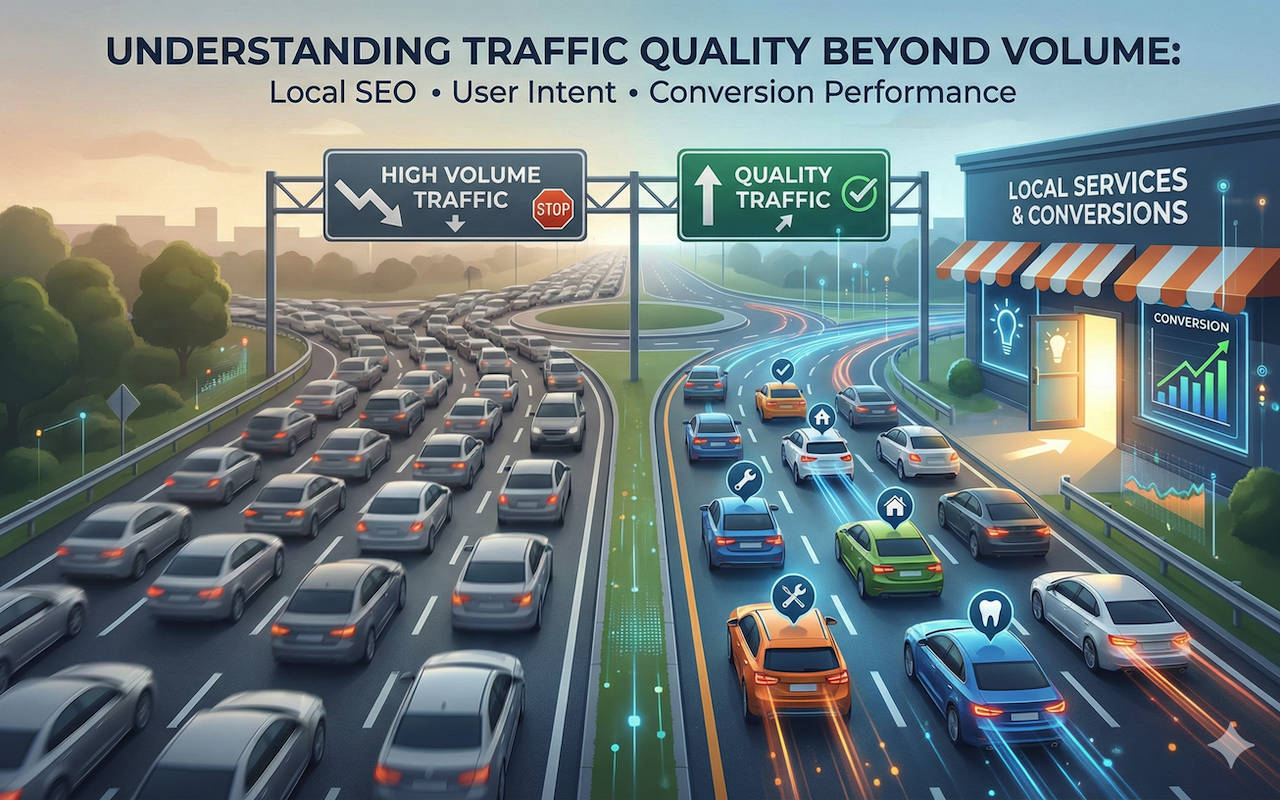
January 7, 2026
How Traffic Quality Impacts Conversions for Local Service Websites
Traffic quantity often dominates reporting dashboards across local businesses, yet volume alone rarely explains why conversion rates stagnate despite steady traffic growth. Tra...
Read More
October 21, 2024
Maximizing the Potential of SEO for Local Businesses
In today's digital environment, understanding and implementing effective SEO strategies is crucial for businesses aiming to thrive online. Leveraging localized SEO can significantl...
Read More
Comments
Comments are available to signed-in users and are moderated to keep the discussion useful and respectful. Spam, automated submissions, and low-value promotional comments are removed. Outbound links may be approved when they are relevant and genuinely helpful to readers, but they are displayed as plain text rather than clickable hyperlinks.
No comments have been published yet.
Please sign in to submit a comment.