
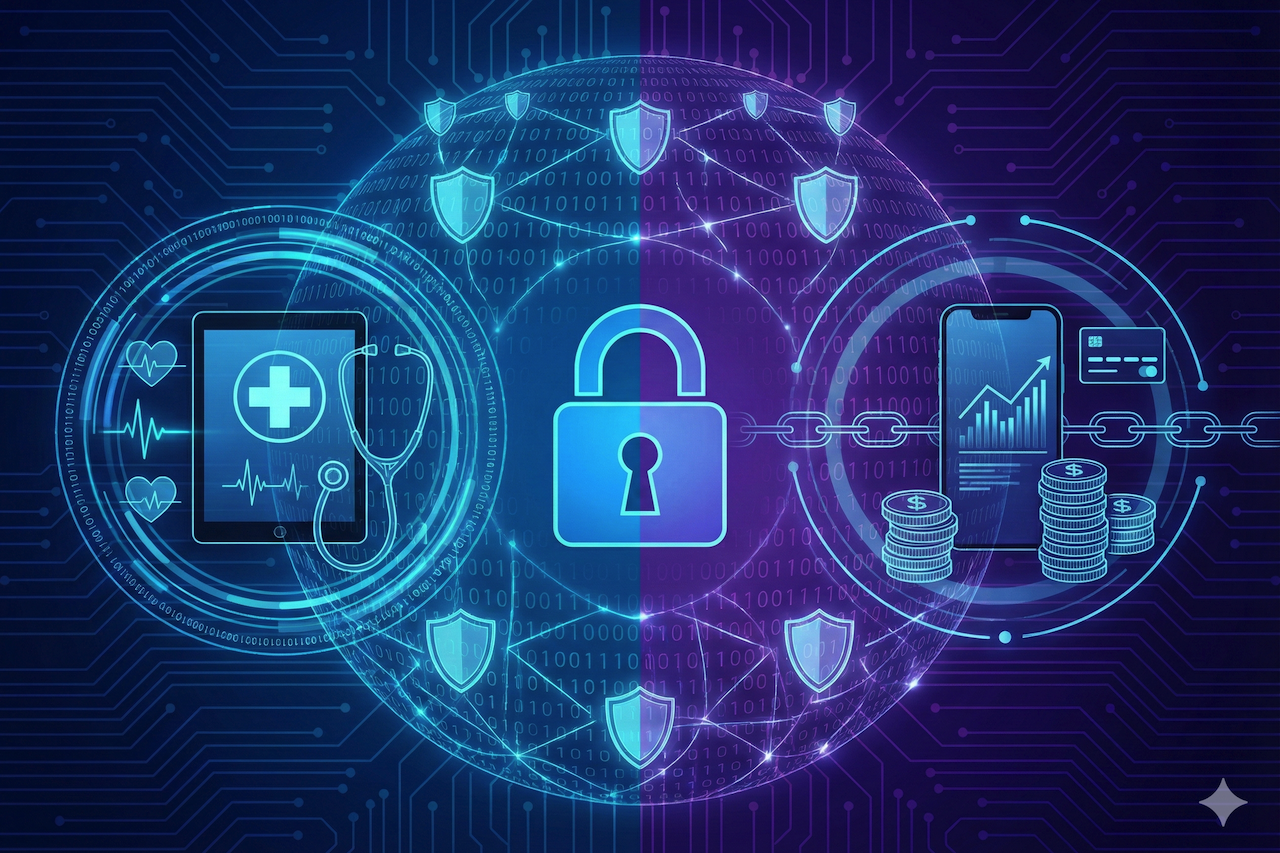
Healthcare and financial technology applications handle some of the most sensitive user data in today’s digital economy. Electronic health records, diagnostic reports, bank credentials, and transaction histories operate in highly regulated environments where privacy is no longer optional but essential.
As organizations increasingly adopt healthcare platforms and FinTech solutions, compliance, security, and user trust have become strategic priorities. Addressing complex privacy challenges at the architectural and operational levels is critical to ensuring long-term sustainability.
This article explores the most pressing data privacy challenges in healthcare and FinTech application development and highlights practical approaches to reducing these risks.
Why Data Privacy Is Critical in Healthcare and FinTech
Healthcare and FinTech systems manage Personally Identifiable Information (PII), Protected Health Information (PHI), and financial data. A single breach can lead to significant financial losses, regulatory penalties, and reputational damage.
In healthcare, privacy violations may expose medical histories, diagnoses, prescriptions, and insurance details. In FinTech, compromised data may include account numbers, payment credentials, investment portfolios, and identity documentation.
Both industries face strict regulatory requirements such as:
- HIPAA in the United States for health information privacy
- GDPR in Europe for personal data protection
- PCI DSS for payment security standards
- RBI regulations in India for financial data compliance
Failure to comply can result in lawsuits, fines, and loss of customer trust.
Major Data Privacy Challenges in Healthcare App Development
1. Protection of Electronic Health Records (EHRs)
EHRs are highly attractive targets for cybercriminals. Unlike credit card data, which can be replaced, medical histories are permanent. Healthcare systems must implement strong encryption for both stored and transmitted data while maintaining system performance.
2. Third-Party Integrations
Healthcare platforms often integrate with:
- Laboratories
- Insurance providers
- Pharmacy systems
- Telemedicine platforms
Each integration increases the potential attack surface. Poorly secured APIs or external services can introduce vulnerabilities.
3. Remote Access and Telehealth Risks
Telemedicine requires secure video streaming, cloud storage, and real-time data exchange. Weak networks or unsecured endpoints can expose sensitive conversations and patient information.
4. Insider Threats
Data breaches are not always external. Internal misuse, weak access controls, or insufficient role-based permissions can lead to unauthorized access to patient data.
Major Data Privacy Challenges in FinTech App Development
1. Identity Theft and Fraud
FinTech platforms handle digital payments, lending, insurance, and investments. These systems are frequent targets for credential theft and fraudulent activity. Implementing secure identity verification, biometrics, and multi-factor authentication remains essential but technically complex.
2. API Security Risks
Modern FinTech platforms rely heavily on open banking and API-driven ecosystems. While APIs improve interoperability, they also increase exposure to cyber threats. Secure gateways, authentication, and continuous monitoring are critical.
3. Cloud Storage and Configuration Risks
Cloud infrastructure supports scalability, but misconfigured storage or weak access controls can expose large volumes of sensitive data. Compliance requirements may also vary across regions.
4. Real-Time Transaction Monitoring
Balancing real-time fraud detection with user privacy and performance presents a major challenge for FinTech systems.
Regulatory Compliance Complexities
Healthcare and FinTech platforms must navigate diverse regulatory frameworks across different regions. For example:
- Healthcare systems serving U.S. patients must meet HIPAA requirements
- Financial platforms in Europe must comply with GDPR
- Applications operating in India must follow RBI data localization rules
To remain compliant, organizations must ensure:
- Data localization where required
- Audit trails and traceability
- Secure consent management
- Transparent access logs
Non-compliance can delay operations and damage credibility.
Common Security Threats Affecting Both Sectors
1. Phishing Attacks
Users may unknowingly disclose credentials through fraudulent communications.
2. Ransomware
Hospitals and financial institutions are prime targets due to the critical nature of their data.
3. Weak Encryption
Outdated protocols increase the risk of interception during data transmission.
4. Insecure Mobile Devices
Rooted or compromised devices can expose sensitive data.
Best Practices to Mitigate Data Privacy Risks
1. End-to-End Encryption
Use AES-256 to encrypt stored data and TLS 1.3 to secure data transmission. Encryption keys should be stored safely and rotated regularly to reduce the risk of unauthorized access.
2. Role-Based Access Control (RBAC)
Role-based access control ensures that users can access only the information relevant to their responsibilities. Healthcare professionals should be able to view only the patient data required for treatment, while FinTech employees should have limited visibility based on their job roles.
3. Multi-Factor Authentication (MFA)
Unauthorized access can be minimized through biometric authentication, one-time passwords, and hardware tokens. These methods add additional layers of verification beyond standard login credentials.
4. Secure API Development
API security should include:
- OAuth 2.0 authentication
- Rate limiting
- API gateway monitoring
- Frequent penetration testing
Many fintech app development service providers emphasize secure API frameworks as a core part of modern architecture, helping protect sensitive healthcare and financial data throughout the application lifecycle.
5. Regular Security Audits
Frequent testing helps identify vulnerabilities before they can be exploited. Security audits should be conducted every three to six months to ensure systems remain compliant and resilient.
6. Data Minimization
Collect only the data that is necessary. Excessive data storage increases liability and the impact of potential breaches.
7. Zero-Trust Architecture
Organizations should not assume trust within the network. Every request, whether internal or external, must be verified to reduce the risk of unauthorized access.
The Role of Privacy-by-Design in App Development
Privacy-by-design ensures security is integrated from the earliest stages. This includes:
- Secure coding practices
- Encrypted storage
- Consent and access management
- Automated compliance monitoring
Embedding privacy into architecture helps reduce risk and supports regulatory alignment.
Emerging Trends Shaping Data Privacy
1. AI-Driven Threat Detection
AI models help identify unusual behavior and emerging threats.
2. Blockchain for Data Integrity
Distributed ledgers improve transparency and prevent tampering.
3. Decentralized Identity (DID)
Users gain greater control over personal information.
4. Data Localization
Governments are introducing stricter data residency requirements.
The Cost of Ignoring Data Privacy
Data breaches can result in significant financial losses, legal consequences, and long-term reputational damage. In healthcare, patients may hesitate to share vital information. In financial services, trust erosion can drive customer attrition.
Building secure systems early is more cost-effective than responding to breaches later.
Conclusion
Data privacy challenges in healthcare and FinTech are complex, evolving, and tightly regulated. Organizations must prioritize security across the entire application lifecycle, from protecting electronic health records and financial data to maintaining compliance with global standards.
By implementing encryption, secure APIs, zero-trust principles, and privacy-by-design strategies, businesses can significantly reduce risk. In industries where trust defines success, strong data privacy is not only a technical requirement but also a critical business priority.
Featured Image generated by Google Gemini.
Share this post
Leave a comment
All comments are moderated. Spammy and bot submitted comments are deleted. Please submit the comments that are helpful to others, and we'll approve your comments. A comment that includes outbound link will only be approved if the content is relevant to the topic, and has some value to our readers.


Comments (0)
No comment