
The cybersecurity landscape for small businesses has fundamentally changed. What was once a concern primarily for large enterprises now threatens companies of all sizes, particularly those handling sensitive government data or working within regulated industries. For internet-based companies, the challenge is especially acute: they must balance limited resources against increasingly sophisticated threats while meeting stringent compliance requirements.
The Cybersecurity Maturity Model Certification (CMMC) framework represents the Department of Defense's response to escalating cyber risks in its supply chain. While initially designed for defense contractors, the principles underlying CMMC offer valuable guidance for any small business seeking to strengthen its security posture. As data breaches continue to make headlines and regulatory scrutiny intensifies, understanding CMMC has become essential for businesses that want to remain competitive and trustworthy in the digital marketplace.
Understanding CMMC
CMMC provides a structured framework for implementing cybersecurity controls that protect sensitive information from unauthorized access and cyber threats. Unlike traditional compliance approaches that rely on self-attestation, CMMC requires third-party assessment, creating a more rigorous standard for security practices.
The framework operates on multiple levels, each building upon the previous one to create progressively stronger security measures. For small businesses, this tiered approach offers flexibility—companies can implement controls appropriate to the sensitivity of the data they handle without overextending their resources.
Key benefits of adopting CMMC include:
- Enhanced Data Protection: Systematic safeguards that protect both business and customer information from evolving cyber threats
- Market Credibility: Third-party certification that demonstrates a genuine commitment to cybersecurity, building trust with clients and partners
- Regulatory Alignment: Meeting federal standards that increasingly influence private sector expectations
- Competitive Advantage: Qualification for government contracts and partnerships that require verified security practices
The Federal Trade Commission's guidance on small business cybersecurity emphasizes that protective measures are no longer optional—they're fundamental to business operations in the digital economy.
CMMC Compliance and NIST 800-171
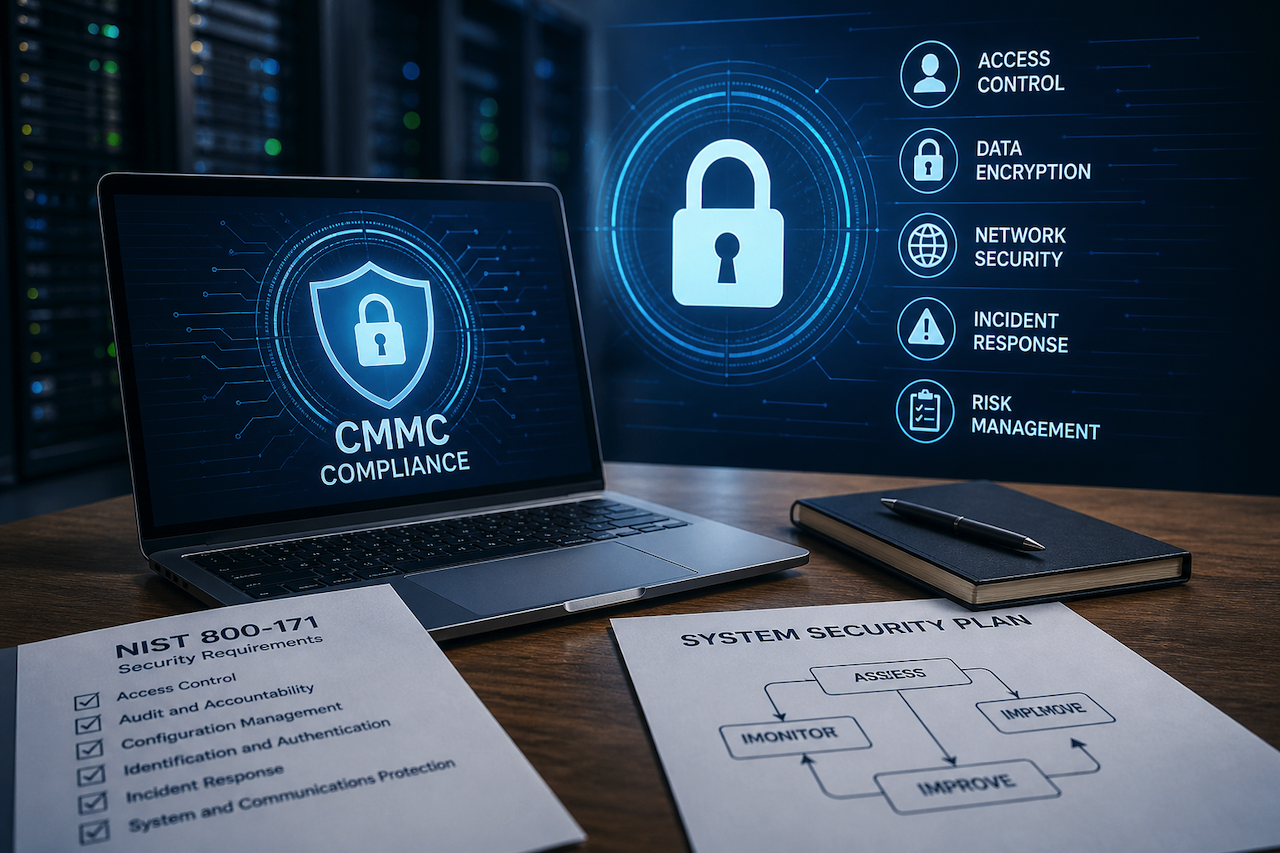
At the heart of CMMC compliance lies the National Institute of Standards and Technology's Special Publication 800-171, which establishes requirements for protecting Controlled Unclassified Information (CUI) in non-federal systems. Understanding this relationship is crucial: CMMC Level 2, the most common certification requirement for defense contractors, directly incorporates the 110 security controls outlined in NIST 800-171.
The NIST 800-171 framework covers fourteen families of security requirements, from access control and incident response to system and communications protection. For small businesses, these requirements can seem daunting, but they represent industry best practices that strengthen security regardless of compliance obligations.
Achieving compliance requires a methodical approach:
- Conduct a comprehensive gap analysis comparing current practices against NIST 800-171 requirements
- Develop a System Security Plan documenting how each control is implemented
- Implement technical and administrative controls to address identified gaps
- Establish continuous monitoring processes to maintain security over time
- Document all security measures and maintain evidence for assessment
The challenge often lies not in understanding what's required, but in implementing controls with limited IT staff and budget constraints. This is where specialized approaches prove valuable, helping companies meet complex requirements without having to build entire security departments from scratch.
The Role of CUI Enclaves
Controlled Unclassified Information (CUI) encompasses a wide range of sensitive data that requires protection under federal law or regulation. For businesses handling CUI, creating a secure environment that isolates this information from less-sensitive systems has become a practical necessity.
A CUI enclave is a dedicated, hardened environment specifically designed to process, store, and transmit controlled information. Rather than securing an entire IT infrastructure to CMMC standards, an expensive and often impractical approach, companies can create a defined boundary around CUI-related systems.
Effective CUI enclaves incorporate several critical elements:
- Network segmentation that physically or logically separates CUI systems from general business networks
- Strict access controls limiting who can enter the enclave and what actions they can perform
- Encryption for data both at rest and in transit, ensuring information remains protected even if intercepted
- Comprehensive logging and monitoring to detect and respond to potential security incidents
- Regular security assessments and updates to address emerging vulnerabilities
For organizations pursuing government contracts, implementing a properly configured CUI enclave can significantly reduce both compliance costs and security risks. The enclave approach allows companies to focus their security investments where they matter most, rather than attempting to bring every system up to the highest security standards.
Cybersecurity Measures for Small Businesses
Beyond compliance requirements, businesses need practical cybersecurity measures that address real-world threats. The most effective approach combines technical controls with organizational practices, creating multiple layers of defense.
Essential cybersecurity measures include:
- Next-Generation Firewalls: Modern firewalls that inspect traffic at the application layer, blocking sophisticated threats that traditional firewalls miss
- Endpoint Detection and Response: Advanced protection that goes beyond traditional antivirus to identify and respond to suspicious behavior across all devices
- Multi-Factor Authentication: Additional verification steps that prevent unauthorized access even when passwords are compromised
- Data Encryption: Protection that renders information unreadable to unauthorized parties, both during transmission and storage
- Automated Patch Management: Systems that ensure software vulnerabilities are addressed promptly, closing security gaps before they can be exploited
- Security Awareness Training: Regular education that helps employees recognize and avoid common threats like phishing attacks
The Cybersecurity and Infrastructure Security Agency offers free tools and resources specifically designed for businesses, providing enterprise-grade protection without enterprise-level costs.
Integrating these measures with CMMC requirements helps create a comprehensive security posture. Platforms like Redspin, Coalfire, and Cuick Trac can assist organizations in managing this complexity by aligning cybersecurity implementation with CMMC compliance requirements.
NIST Compliance Checklist
Maintaining NIST 800-171 compliance requires ongoing attention to multiple security domains. A systematic approach helps break down requirements into manageable components.
Essential compliance activities include:
- Information Inventory: Identify all CUI within your systems and document where it resides, how it flows, and who accesses it
- Access Management: Implement role-based access controls, ensuring personnel can only access information necessary for their duties
- Risk Assessment: Conduct regular evaluations to identify potential vulnerabilities and prioritize remediation efforts
- Incident Response Planning: Develop and test procedures for detecting, responding to, and recovering from security incidents
- Configuration Management: Establish baseline security configurations for all systems and monitor for unauthorized changes
- Security Documentation: Maintain current policies, procedures, and system security plans that demonstrate compliance
- Continuous Monitoring: Implement ongoing security monitoring to detect anomalies and potential threats in real time
Regular internal audits help identify compliance gaps before they become problems during formal assessments. Many businesses find that quarterly reviews strike the right balance between thoroughness and resource constraints, allowing them to address issues incrementally rather than facing overwhelming remediation efforts.
Working with NIST 800-171 Compliance Consultants
For many organizations, navigating CMMC and NIST 800-171 requirements exceeds internal capabilities. Compliance consultants bring specialized expertise that can accelerate implementation while avoiding costly mistakes.
Professional consultants provide several distinct advantages:
- Objective Assessment: Independent evaluation of your current security posture without organizational blind spots
- Efficient Implementation: Proven methodologies that avoid common pitfalls and reduce time to compliance
- Cost Optimization: Guidance on prioritizing security investments for maximum impact within budget constraints
- Assessment Preparation: Support in preparing for third-party CMMC assessments, including documentation review and gap remediation
When selecting a consultant, organizations should consider:
- Relevant Experience: Demonstrated success helping similar-sized businesses in comparable industries
- Technical Credentials: Certifications such as Certified CMMC Professional (CCP) or Registered Practitioner (RP)
- Practical Approach: Focus on implementable approaches rather than theoretical perfection
- Ongoing Support: Availability for questions and guidance beyond initial implementation
The investment in professional guidance often pays for itself through avoided mistakes, faster implementation, and a higher likelihood of passing the assessment on the first attempt.
Building a Sustainable Security Posture
Cybersecurity and compliance are not one-time projects but ongoing commitments. For internet-based small businesses, the stakes continue to rise as cyber threats evolve and regulatory expectations increase. CMMC provides a framework for building security practices that protect sensitive information while demonstrating credibility to customers and partners.
The path to compliance may seem challenging, particularly for organizations with limited IT resources. However, the alternative—operating without adequate security measures—poses far greater risks. Data breaches damage reputation, trigger regulatory penalties, and can prove fatal to organizations that lack the resources to recover.
By taking systematic steps toward CMMC compliance and implementing robust cybersecurity practices, organizations create competitive advantages that extend beyond meeting regulatory requirements. They build customer trust, qualify for valuable contracts, and establish security foundations that scale with growth.
The key is starting now, even if full compliance seems distant. Each security control implemented, each policy documented, and each employee trained represents progress toward a more secure and resilient organization. In today's digital economy, cybersecurity is not a burden to bear but an investment in long-term success.
Featured Image generated by ChatGPT.
Share this post
Author

Read the latest articles from Olivia
How Device Fingerprinting Stops Account Takeover Fraud
June 15, 2026
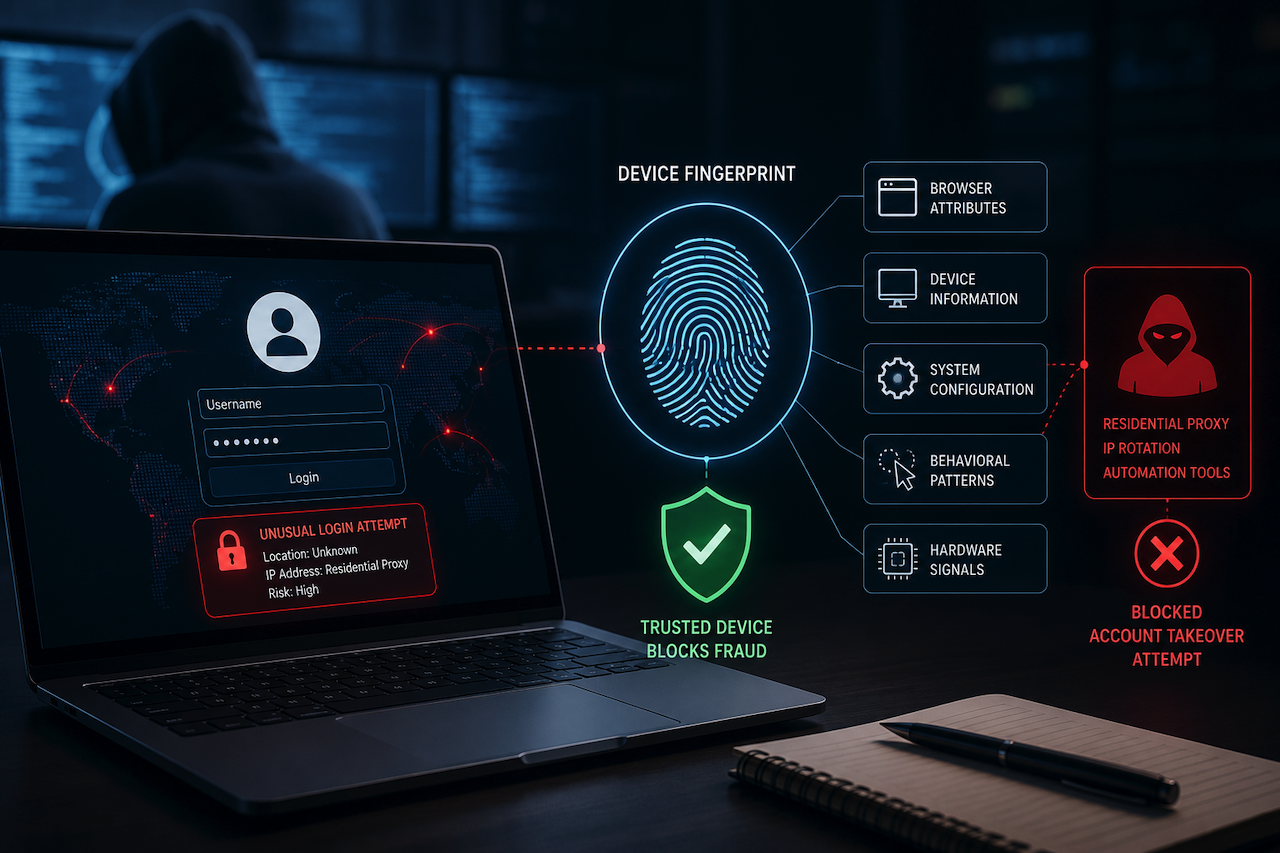
Residential proxies are hard to spot. They route traffic through real consumer IP addresses, thereby making a fraudster's connection appear identical to that of a real user. This is where account takeover fraud can occur; attackers have built infrastructure specifically to evade network detection. As a result, be [...]
Learn moreWhy Percentages Are the Quiet Hero of Network Security Monitoring

June 15, 2026
Ask most people what keeps a network safe, and they'll point to firewalls, VPNs, or maybe a clever password policy—all of those matter. But spend enough time staring at server logs and traffic dashboards, and you start to realize that a huge part of the job comes down to something far less glamorous: noticing w [...]
Learn moreLeave a comment
All comments are moderated. Spammy and bot submitted comments are deleted. Please submit the comments that are helpful to others, and we'll approve your comments. A comment that includes outbound link will only be approved if the content is relevant to the topic, and has some value to our readers.


Comments (0)
No comment