
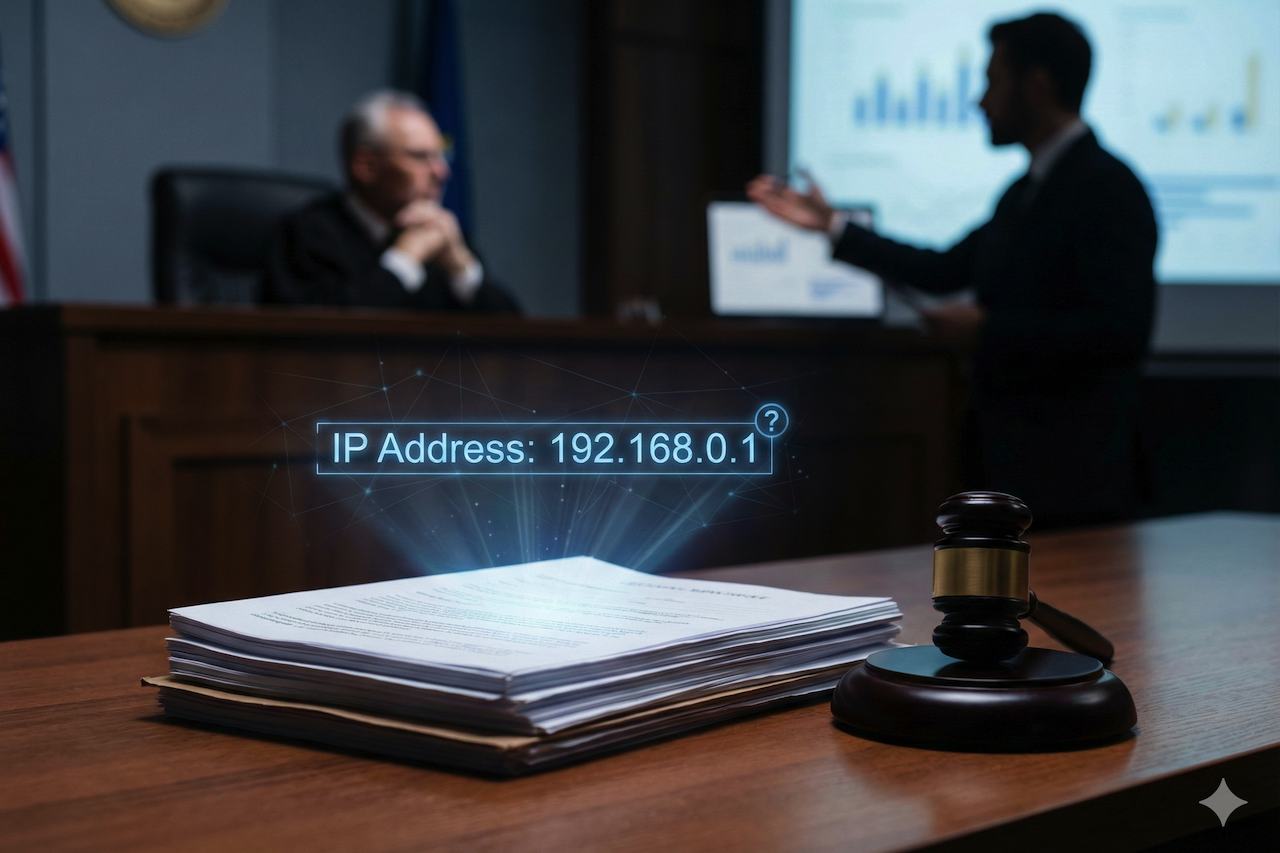
Yes, an IP address can be used in court. However, it often doesn’t identify a specific person on its own. Courts typically treat it as a starting point rather than proof.
The sections below explain why judges approach IP evidence cautiously and what must exist before it carries real legal weight.
How IP Addresses Are Used in Legal Cases
As you’re likely aware, an IP address is a numeric label assigned to a device when it connects to the internet. Internet service providers maintain logs that associate those numbers with subscriber accounts for limited periods. Investigators and attorneys often rely on those records to begin legal inquiries.
Courts generally treat IP data as circumstantial evidence rather than direct identification. Judges regularly acknowledge that an IP address points to an account or connection point, not necessarily the individual using the device.
Can IP Addresses Identify You in Court?
Judges closely examine whether an IP address can reliably identify a specific person. Many residential and mobile connections rely on dynamic IP addresses that change frequently. Shared networks can further dilute attribution.
Legal research summarized by JD Supra explains that courts increasingly require evidence linking real-world behavior to digital activity. Without that connection, attribution often becomes speculative rather than persuasive.
Ordinary Weaknesses Courts Look For
Courts frequently identify gaps that undermine IP-based identification. Judges tend to scrutinize the technical assumptions behind the data.
Common weaknesses include:
- Dynamic IP reassignment over short time frames
- Multiple users sharing a single internet connection
- Unsecured Wi‑Fi access by unknown third parties
Each factor introduces doubt. Establishing legal responsibility is challenging when access cannot be limited to a single person.
What Additional Evidence Courts Expect
IP addresses rarely carry weight without supporting proof. Courts often seek device records, login histories, timestamps, or evidence of exclusive access to an account or device. Context surrounding the data is just as important as the number itself.
Judges may allow subpoenas based on IP data while still requiring corroboration. IP evidence can justify an investigation, but it rarely decides a case on its own.

Image by Pexels.
How Digital Evidence Appears in Injury and Civil Claims
IP addresses can become relevant in injury and civil cases when online activity connects directly to real-world events. Examples include disputes over rideshare trip data, food delivery driver activity, or allegations that digital records were accessed or altered after an incident.
In those scenarios, IP logs may help establish timing, location, or account access patterns.
For example, the attorneys at West Coast Trial Lawyers may deal with IP-related evidence in Uber and Lyft accidents or food delivery accidents.
An IP address may help determine whether a driver accessed an app after a crash, whether someone else used a shared account, or whether digital evidence was accessed remotely following an incident.
What To Know If an IP Address Is Used Against You
Allegations tied to an IP address deserve careful legal review. Attorneys often assess whether the address was static or dynamic, who had legitimate network access, and how the data was collected. Early analysis can limit how such evidence is presented in court.
Understanding whether an IP address can identify you in court depends on context, corroborating evidence, and technical accuracy.
If you’re facing serious allegations, you should consider reviewing available legal options with experienced counsel.
Conclusion
An IP address can play a role in legal proceedings, but it rarely serves as definitive proof of a person’s identity on its own. Courts generally treat IP data as a starting point for investigation rather than conclusive evidence, requiring additional context such as device records, access controls, and corroborating timelines.
As courts continue to evaluate digital evidence with greater scrutiny, understanding the technical limitations of IP addresses becomes increasingly important. Attribution depends not only on the data itself but on how reliably it can be connected to real-world behavior. In legal disputes involving online activity, context and supporting evidence ultimately determine how much weight IP data carries.
Disclaimer
This article is provided for informational purposes only and does not constitute legal advice. The discussion of IP addresses, digital evidence, and court proceedings is general in nature and may not reflect the specific laws or regulations applicable to your jurisdiction. iplocation.net is not responsible for the content of external websites linked within this article. Readers should consult a qualified legal professional for advice regarding their individual circumstances.
Featured Image generated by Google Gemini.
Share this post
Author

Read the latest articles from Harry Wolf
Cybersecurity Steps To Take When Applying For A Mortgage

January 29, 2026
There’s no shortage of advice for first‑time homebuyers. But cybersecurity is often the last thing people think about during a mortgage application. This guide changes that.
Learn moreLeave a comment
All comments are moderated. Spammy and bot submitted comments are deleted. Please submit the comments that are helpful to others, and we'll approve your comments. A comment that includes outbound link will only be approved if the content is relevant to the topic, and has some value to our readers.
 DNS Lookup
 Search a Person
 Inspect suspicious links
 Data Breach Check





Comments (0)
No comment