
TL;DR
- GEO tools track brand visibility, sentiment, and position across AI search engines, filling a gap that traditional rank tracking cannot address.
- LLM coverage, data authenticity, and actionability are the key differentiators across the category.
- Peec AI leads the ranking with seven-LLM standard coverage, authentic multi-market data, and an Actions module on every plan.
- Pricing across the category ranges from $29/month to custom enterprise tiers, with meaningful differences in scalability and agency fit.
Search your brand in ChatGPT and Perplexity right now. You will likely get two different answers. Generative Engine Optimization (GEO) tools track this systematically across thousands of prompts, giving marketing teams a clear picture of how AI search engines represent their brand, where competitors appear instead, and what to do about it. We tested seven platforms across LLM coverage, data authenticity, actionability, and pricing accessibility to identify which ones deliver real insight rather than vanity metrics. Whether you are an in-house marketer new to the category or an SEO professional adding a GEO layer to an existing stack, this ranking gives you a clear starting point.

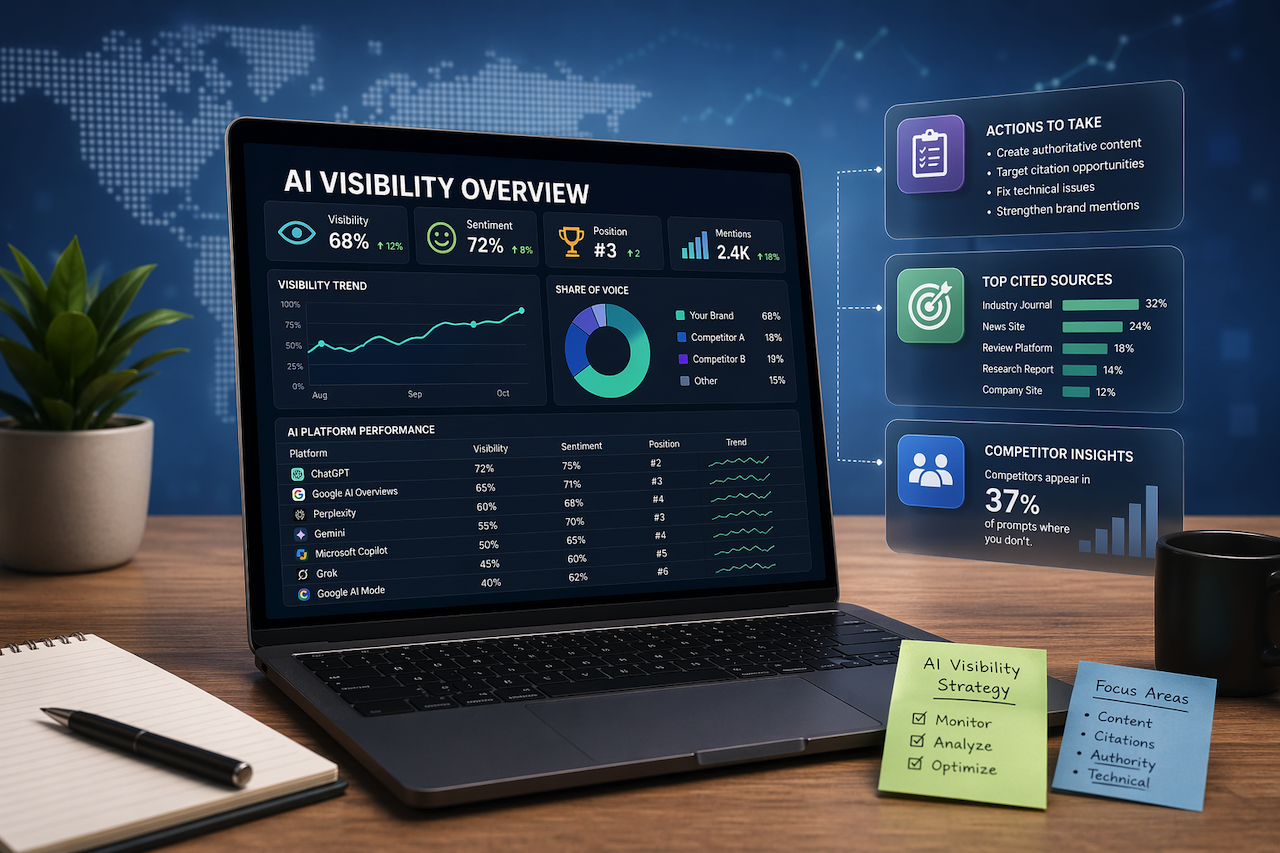
Image by Freepik.
How We Established This Ranking
We evaluated 7 GEO platforms against the criteria that matter most to marketers entering or expanding their AI visibility practice. Each platform was assessed on the authenticity of its tracking methodology, the breadth of LLMs covered on standard plans, the depth of data returned per prompt, and the actionability of its recommendations. Pricing accessibility and the presence of agency-specific infrastructure were also factored in, given that many readers in this category are evaluating tools for the first time or adding GEO to an existing client service offering.
Our evaluation covered:
- LLM coverage: On standard and enterprise plans
- Data authenticity: Real user queries and dedicated regional infrastructure vs. synthetic prompts or prompt injection
- Actionability: Whether the platform tells you what to do with the data, not just how to read it
- Pricing structure: Entry point, scalability, and per-seat costs
- Agency and integration fit: Multi-client management, reporting exports, and BI connectivity
Comparison Table
| Company | Starting Price | LLMs Tracked | Free Trial | Best For |
|---|---|---|---|---|
| Peec AI | $95/month | 7 (standard plans) | 7 days | Agencies and enterprise teams needing authentic multi-market data |
| Semrush | $99/month (add-on) | 4 | No | Teams already on Semrush adding GEO without a new vendor |
| Ahrefs | $50/month (Brand Radar) | 6 + YouTube, TikTok, Reddit | No (demo only) | SEO teams within the Ahrefs ecosystem |
| Profound | $99/month | Up to 10 (Enterprise) | No (demo only) | Enterprise brands needing the deepest GEO analytics |
| AthenaHQ | $95/month | 8 | No | Agencies tying GEO performance to revenue |
| Otterly.AI | $29/month | 4 (+ 2 add-ons) | 14 days | Budget-conscious teams and freelancers new to GEO |
| Scrunch | $250/month | 8 (+ more on Enterprise) | No | Agencies needing purpose-built multi-client infrastructure |
1. Peec AI
Peec AI is one of the leading purpose-built GEO platforms for marketing teams and agencies, combining authentic multi-market AI visibility data with the widest standard-plan LLM coverage in the category. It tracks brand visibility, sentiment, and position across seven major LLMs on all paid plans, and converts that data into prioritized, actionable recommendations through its Actions module. Backed by $29M in total funding and trusted by 1,300+ brands and agencies, growing at 300+ new customers per month, Peec AI is already one of the best GEO platforms of 2026.
Key features:
- Visibility, sentiment, and position tracking across ChatGPT, Google AI Overviews, Google AI Mode, Copilot, Perplexity, Gemini, and Grok on all paid plans
- Source type classification per mention: UGC, editorial, competitor, informational, reference
- Actions module: prioritized recommendations on content to create, sources to target, and citation gaps to close (all plans)
- Dedicated country infrastructure for authentic regional data (no prompt injection)
- Prompt clustering, regex brand matching, and bulk prompt upload
- Looker Studio, GA, and GSC integrations from Advanced plan; full API (27+ endpoints) on Enterprise
Best for:
- SEO agencies managing multiple client accounts who need flexible per-project LLM selection and free prospect audits
- Enterprise marketing teams requiring authentic multi-market data and BI integrations
- In-house marketers and consultants entering GEO who want an accessible starting point with genuine actionability
Why we chose it: The only GEO platform that combines genuine multi-market data, seven-LLM coverage on standard plans, and an Actions module that turns visibility data into a prioritized next-steps list, available from $95/month.
2. Semrush
Semrush is a broad SEO suite that added AI visibility tracking through its AI Visibility Toolkit add-on, available as a bolt-on to an existing Semrush subscription. The toolkit surfaces share-of-voice, brand sentiment, and prompt-ranking data across four platforms and sits alongside traditional SEO data in a unified reporting environment. For teams already running Semrush, it removes the need for a separate GEO vendor.
Key features:
- Tracks ChatGPT, Google AI, Gemini, and Perplexity; Claude is listed as coming soon
- 100M+ prompt database with share of voice and brand sentiment data
- AI-ready site audit for technical readiness and crawler accessibility
- Identifies topic themes driving the most LLM traffic
- Zapier integration for workflow automation
- AI visibility data sits alongside traditional SEO metrics in one platform
Best for:
- SEO agencies and in-house teams already using Semrush who want to add GEO monitoring without introducing a new vendor or login
- Organizations wanting traditional SEO and AI visibility data in a single reporting environment
Why we chose it: A practical option for teams already on Semrush who want to add AI visibility monitoring without introducing a new vendor or separate login.
3. Ahrefs
Ahrefs is an established SEO platform whose Brand Radar feature extends its capabilities into AI visibility monitoring. Brand Radar draws on 243M+ monthly prompts from real People Also Ask data, covering six AI platforms, YouTube, TikTok, and Reddit. It operates independently of Ahrefs' standard project limits, making multi-client research more manageable for agencies already in the ecosystem.
Key features:
- Monitors ChatGPT, Perplexity, Gemini, Copilot, Google AI Overviews, and Google AI Mode, plus YouTube, TikTok, and Reddit
- 243M+ monthly prompts built from real People Also Ask data, not synthetic queries
- AI Share of Voice, mentions, citations, and impression metrics weighted by Google search volume
- Cited Domains view to identify which external sources AI platforms trust
- Correlation data between the backlink profile and the AI citation frequency
- AI Content Helper with content grading, intent detection, and sentence-level subtopic analysis
Best for:
- Content-led agencies that want to correlate AI visibility with backlink and content performance
- SEO teams already within the Ahrefs ecosystem
- Brand marketers who need competitor and industry benchmarking at scale
Why we chose it: A strong supplementary option for teams already using Ahrefs for SEO who want to layer in AI visibility data without switching platforms, particularly for content and link-building agencies.
4. Profound
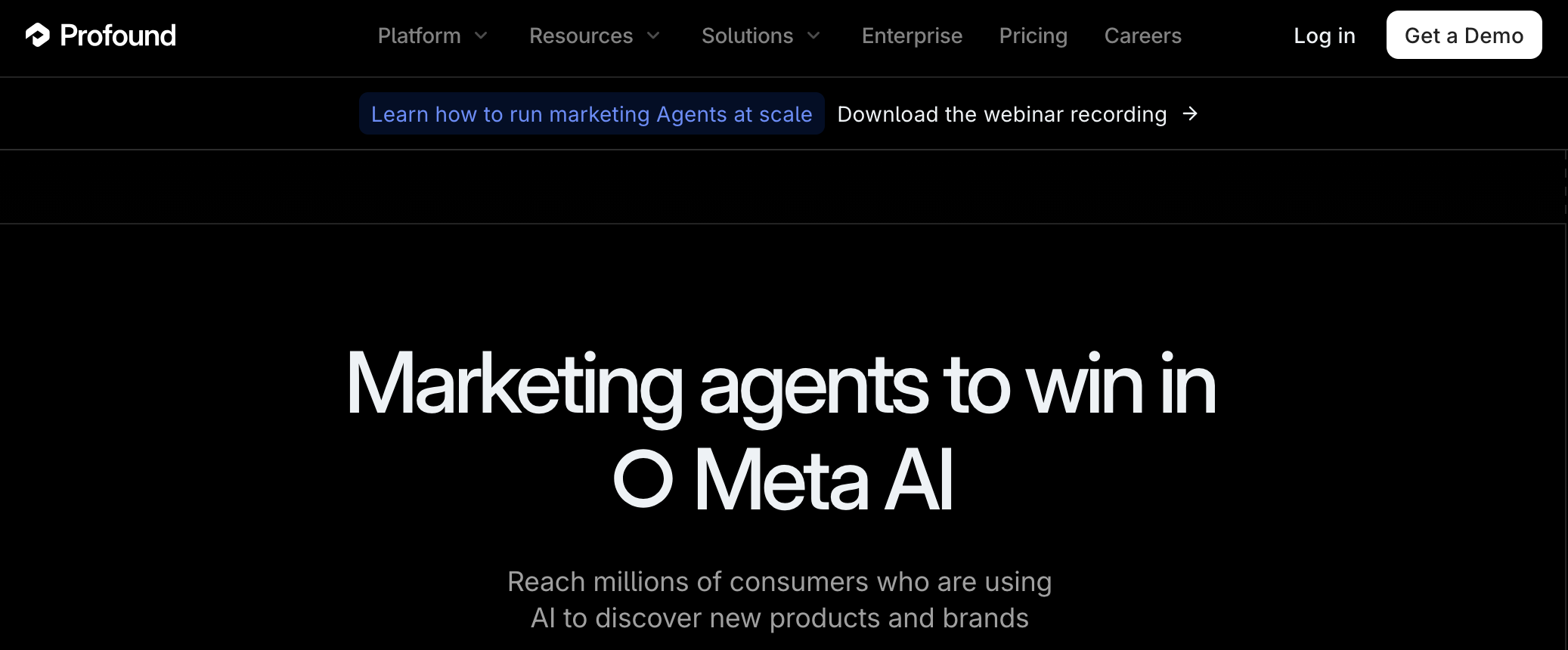
Profound is an AI visibility platform built around enterprise-grade GEO analytics, tracking up to 10 answer engines on its top tier. It combines prompt database access built on real user data, automated content workflows, and Agent Analytics that connects AI crawler activity on a website to revenue attribution. Its Agency Mode provides a central dashboard for managing client workspaces and pitch environments.
Key features:
- Tracks up to 10 answer engines on Enterprise: ChatGPT (including Shopping), Perplexity, Claude, Gemini, Copilot, Google AI Overviews, Grok, Meta AI, DeepSeek, Google AI Mode
- Conversation Explorer: large prompt database built on real user search data
- Agent Analytics: tracks which AI crawlers visit client sites and what content they analyze
- Automated workflows for brief and draft generation
- In-platform content generation and optimization tools
- Integrations with GA4, Google Cloud, AWS, Cloudflare, WordPress, and more
Best for:
- Enterprise brands and agencies with Fortune 500 clients and budgets that can absorb per-brand pricing
- Organizations that need the deepest possible AI visibility data with enterprise security and integrated content workflows
Why we chose it: The broadest answer engine coverage in the category and the deepest GEO data quality available, making it the benchmark for enterprise organizations that need all-in-one AI visibility analytics.
5. AthenaHQ
AthenaHQ is an AI visibility monitoring platform founded by former Google and DeepMind employees, backed by experts at OpenAI and Anthropic. It tracks eight LLMs and differentiates itself through revenue attribution via Shopify and Google Analytics integrations, a proprietary GEO Score metric for executive reporting, and white-labeled pitch reports for agency new business proposals.
Key features:
- Monitors ChatGPT, Perplexity, Google AI Overviews, Google AI Mode, Gemini, Claude, Copilot, and Grok
- GEO Score: single proprietary metric for client communication and executive reporting
- Revenue attribution via Shopify and Google Analytics integrations
- White-labeled pitch reports for agency new business proposals
- Action Center to identify and address visibility gaps
- Integrations with GA4, GSC, Looker Studio, Tableau, Power BI, Shopify, and Webflow
Best for:
- Mid-market brands and agencies that need to tie GEO performance directly to revenue to justify retainers
- Teams managing clients with Shopify or Google Analytics correctly set up
- Agencies looking for a lead generation partner program
Why we chose it: The strongest option for agencies and brands that need to connect GEO performance directly to revenue, supported by white-labeled reporting and a lead-routing agency partnership program.
6. Otterly.AI
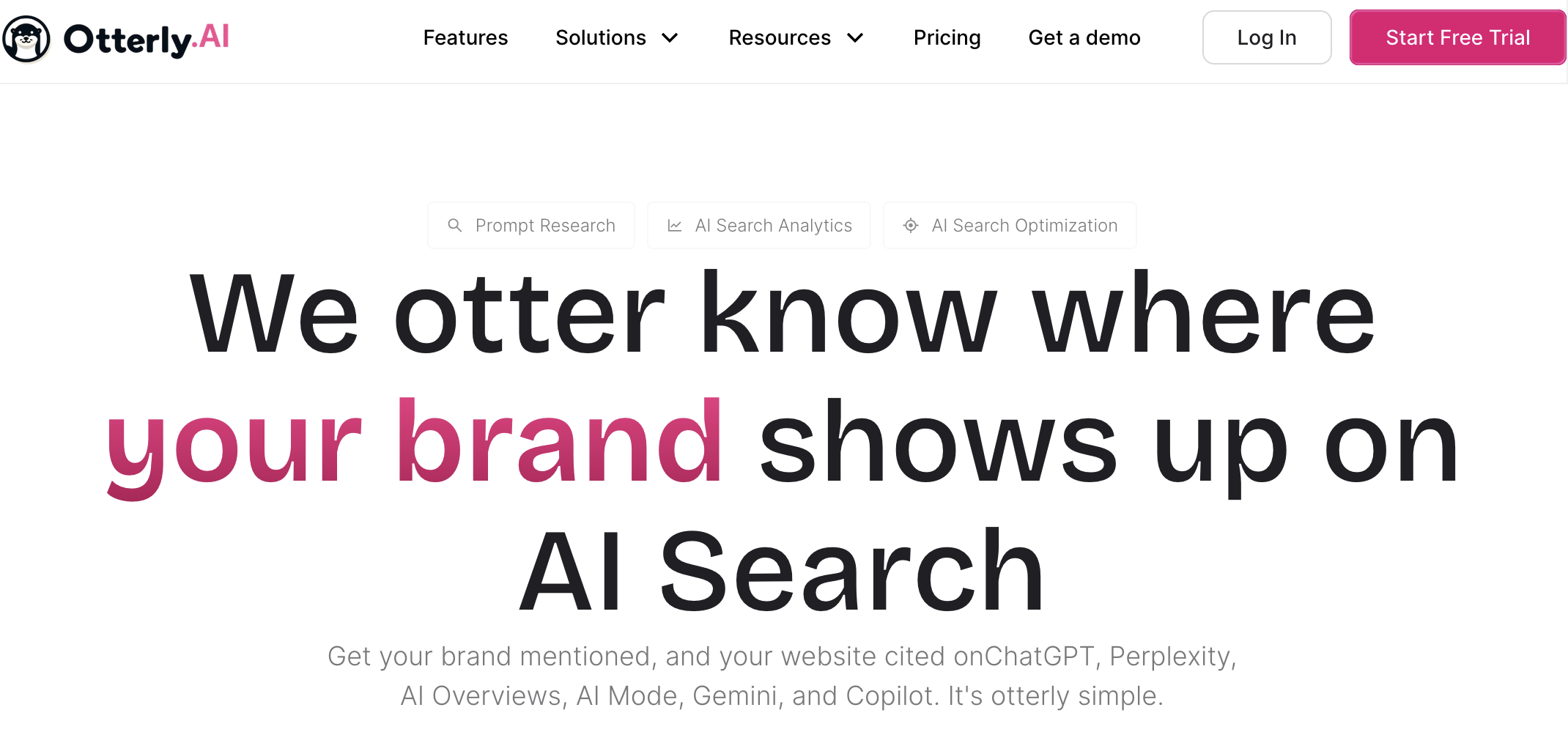
Otterly.AI is an AI search monitoring platform recognized as a Cool Vendor in the 2025 Gartner Cool Vendors for AI in Marketing report and ranked in G2's 2026 Best Software Awards. It covers four core answer engines on base plans with Google AI Mode and Gemini available as add-ons, and includes a GEO Audit tool built around 25+ on-page evaluation factors. Its entry-level pricing makes it one of the most accessible options in the category.
Key features:
- Tracks Google AI Overviews, ChatGPT, Perplexity, and Microsoft Copilot on base plans; Google AI Mode and Gemini as add-ons
- GEO Audit tool with 25+ on-page evaluation factors, including fluency, authority, and technical structure
- Brand SWOT analysis showing competitors surfaced alongside the brand in AI answers
- Keyword research to convert target keywords into related LLM prompts
- Agency Workspaces for multi-client management with separate team members and brand reports per workspace
- Looker Studio connector from the Standard plan; 14-day free trial available
Best for:
- Freelancers, small agencies, and marketing teams on limited budgets who need to get started with AI visibility monitoring quickly
- Teams looking for structured GEO audit guidance without committing to enterprise pricing
Why we chose it: The most accessible entry point in the GEO category, combining a $29/month starting price with a structured GEO audit and Brand SWOT analysis backed by strong third-party recognition.
7. Scrunch
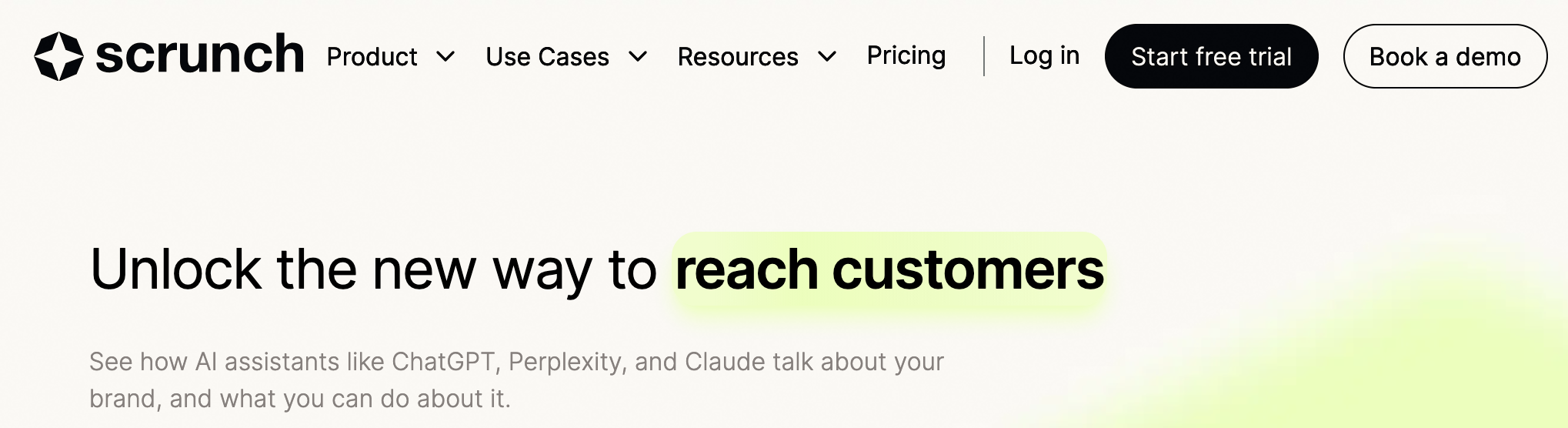
Scrunch is a GEO platform built around agency infrastructure and technical AI optimization, tracking eight LLMs, including Meta AI and Claude. Its Agent Experience Platform works with major CDNs to serve AI crawlers an optimized version of each page without altering the human user experience, creating a technical GEO delivery capability that agencies can offer as a standalone service. It holds SOC 2 Type II compliance and serves notable enterprise clients.
Key features:
- Monitors ChatGPT, Gemini, Google AI Overviews, Google AI Mode, Perplexity, Copilot, Meta AI, and Claude; Enterprise adds further models
- Agent Experience Platform (AXP): CDN-level optimization serving AI crawlers a code-light page version without affecting human visitors
- Prospecting license: temporary environments for non-client brands to support pitch audits
- Full developer API for building custom white-labeled client dashboards
- Deep customization via custom tags, personas, and funnel stages, all filterable via API
- Site Maps feature: visual per-page AI search health with audit scores, agent traffic, and citation data
Best for:
- Agencies seeking purpose-built agency infrastructure with a technical delivery layer
- Enterprises in regulated industries requiring SOC 2 Type II compliance
- Agencies with developer resources looking to build custom client-facing dashboards
Why we chose it: The most agency-infrastructure-first platform in the category, with purpose-built multi-client management, a prospecting license, a developer API for white-labeled reporting, and a technical delivery layer that opens a new agency revenue line.
Conclusion
GEO tracking has become increasingly important for marketing teams looking to understand how AI search represents their brand. The seven platforms in this ranking cover a broad range of use cases, from first-time GEO adopters to enterprise teams requiring multi-market data at scale. Differences across platforms typically come down to factors such as LLM coverage, data quality, actionability, and pricing structure.
 FAQs
FAQs
A GEO tool (Generative Engine Optimization tool) tracks how a brand appears in AI-generated search responses across platforms such as ChatGPT, Google AI Overviews, and Perplexity. It measures visibility, sentiment, and citation frequency across large sets of prompts, giving marketing teams a systematic view of their AI search presence.
Traditional rank tracking measures the position of a URL in a list of blue links. GEO tracking measures whether and how a brand is mentioned in an AI-generated answer, using signals such as source citations, sentiment, and prompt-level positioning rather than keyword rankings.
The minimum viable coverage for most marketing teams is four to five platforms, including ChatGPT, Google AI Overviews, Perplexity, and Gemini.
A strong GEO platform identifies which sources AI engines cite when mentioning your brand, where competitors appear in prompts where you do not, and what content or citation gaps to address first. Visibility scores alone are not sufficient for actionable optimization work.
Featured Image generated by ChatGPT.
Share this post
Author

Read the latest articles from Daniel Zabczyk
10 Cheapest Crypto Exchanges for Small Investments in 2026

November 13, 2025
New investors have a tough time finding platforms where small deposits don't get swallowed whole by ripoff fees. They're looking for a crypto exchange that combines low cost with decent liquidity and a decent user interface. We've taken a look at the major global players and picked out those that stand out as the [...]
Learn moreLeave a comment
All comments are moderated. Spammy and bot submitted comments are deleted. Please submit the comments that are helpful to others, and we'll approve your comments. A comment that includes outbound link will only be approved if the content is relevant to the topic, and has some value to our readers.



Comments (0)
No comment