

Your IP address is not as anonymous as it feels. IP location data reveals your approximate city, ISP, and organization, and, in combination with browser fingerprinting and cookies, feeds into profiling systems that most users never see.
But there is a second layer of exposure that even privacy-conscious users tend to overlook: not what you share in real time, but what AI systems have already assembled about you from everything that has ever been publicly indexed about your name, username, email, or website.
Your IP address tells a tracker where your device is right now. AI can tell someone who you are, what you do, and where you have been online for the past decade. That is a different problem, and it requires a different kind of check.
What Your IP Address Actually Reveals
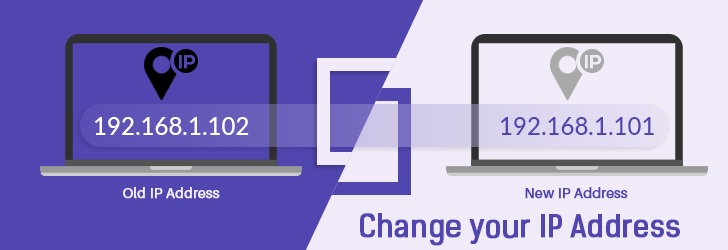
Understanding how IP location tracking works starts with the fact that every connected device has an IP address, and that address can be resolved to an approximate physical location. Third parties can see your city, region, ISP, and sometimes your organization. Pair that with user-agent data, cookies, and time-zone signals, and you have a meaningful profile of your current session.
Discussions around digital footprints and what IP addresses can reveal often focus on how combining an IP address with other browser-level signals creates a profiling toolkit more powerful than any single data point would suggest. This is a well-understood risk, and most privacy-aware users have at least a partial response to it: a VPN, a privacy-focused browser, or both.
What those measures do not touch is identity-level exposure. Your IP is a session signal. It says where a device is connecting from right now. AI profiling works from a completely different dataset: the public record of who you are.
The Hidden Layer: What AI Builds from Public Data
AI systems are trained on publicly available data. That means indexed web pages, forum posts, social media profiles, news articles, speaker bios, professional directory listings, and any other content that is visible and crawlable on the open web. This is not a privacy loophole. In most cases, it is the stated, disclosed practice.
A 2025 Incogni study found that all major AI platforms reviewed collect user data from publicly accessible sources, including social media profiles, forum posts, and news mentions. According to Stanford HAI researchers, AI systems can generate inferences about an individual based on aggregated data points even when no directly identifying information appears in the training set. The system might infer your employer, your general location, your professional field, or your public affiliations from fragments distributed across dozens of sources that were never intended to be read together.
That aggregated picture is increasingly coherent. A job title from a LinkedIn profile, a quoted comment from an industry forum, a speaker bio from a conference website three years ago. None of it is secret. All of it, in aggregate, is more revealing than most people assume.
Why 2026 Is Different
The scale and capability of these systems have accelerated faster than public awareness of them. According to IAPP data, 57% of consumers globally now agree that AI poses a significant threat to their privacy. That number has risen sharply, reflecting a shift in the conversation from theoretical concern to practical exposure.
The information was always public. What changed is the infrastructure to connect it automatically, at scale, and on demand. A hiring manager, journalist, or potential business partner running an AI-assisted search on your name today gets a synthesized profile drawn from years of indexed content, not just the first page of Google results.
For anyone who manages a public-facing professional presence, runs a business, or is simply active online, this creates exposure that a VPN cannot address. Masking your IP hides your current connection. It does not touch the profile that already exists in AI training data and search indexes.
How to Check What AI Knows About You
The first practical step is visibility. You cannot manage an exposure you have not seen.
A growing number of AI footprint auditing tools now allow users to check what publicly available information AI systems can associate with their identity. These tools typically accept a name, username, email address, or URL and generate a structured summary of publicly indexed information connected to that input. Some tools, such as the Tomedes AI digital footprint checker, provide this type of audit without requiring sign-up.
The results are often organized into readable categories such as linked social profiles, professional directory entries, published content, forum activity, and other publicly indexed records that AI systems may associate with an identity. In many cases, these tools surface items that standard search engines do not prominently display, including outdated directory listings, old forum accounts, or abandoned public profiles.
Some platforms also use multi-model comparison systems to improve reliability by comparing how different AI models interpret the same identity data. This can help reduce false associations and provide a more consistent overview of a person's publicly visible AI footprint.
Once you have visibility into what is publicly accessible, the options for managing exposure may include requesting removal directly from platforms, updating outdated information, deleting unused accounts, or using dedicated personal data removal services for content that is harder to address independently. In most cases, prevention remains more effective than cleanup. Being deliberate about what gets published publicly is still one of the strongest long-term privacy practices.
The Multi-Model Problem: Why One AI Check Is Not Enough
One thing we noticed while testing different approaches to AI footprint auditing is that different AI models return different results for the same input. A name run through one large language model surfaces different records, applies different confidence weightings, and sometimes draws different inferences than the same query run through another model.
This matters because a single-model check gives you one AI's interpretation of your public profile. It may miss exposures that other models surface, or return records that most systems would not associate with you at all. If the goal is to understand what the AI ecosystem as a whole can find about you, one model's output is an incomplete answer.
Some AI footprint auditing tools attempt to improve consistency by comparing results across multiple AI models rather than relying on a single system. These tools analyze overlapping outputs and may prioritize records that multiple models independently associate with the same identity, while filtering out results that appear in only one model's output. The goal is to provide a broader and potentially more reliable view of publicly visible AI-associated information.
For a genuine privacy audit, that distinction matters. A profile entry that only one model surfaces may be noise. One of the five or six models independently associated with your identity is an exposure worth reviewing and, if necessary, acting on.
Two Layers, One Privacy Posture
IP address management and AI footprint awareness are not competing concerns. They operate at different layers of the same problem. IP controls limit what tracking systems can observe about your current session. AI footprint awareness concerns what profiling systems already know about your identity from public records.
Most privacy-conscious users have invested in the first layer. The second is newer, less visible, and increasingly consequential. Running an AI footprint check before a job application, a media appearance, a fundraising round, or any moment when your online presence will be scrutinized takes under a minute. It can surface information that shapes first impressions in ways that are hard to anticipate.
The goal is not to disappear from the internet. It is to participate deliberately, with a clear view of what is already out there. In 2026, that kind of visibility is a basic part of responsible digital hygiene, not just for the unusually privacy-conscious, but for anyone with a professional online presence.
Featured Image generated by ChatGPT.
Share this post
Author

Leave a comment
All comments are moderated. Spammy and bot submitted comments are deleted. Please submit the comments that are helpful to others, and we'll approve your comments. A comment that includes outbound link will only be approved if the content is relevant to the topic, and has some value to our readers.



Comments (0)
No comment