

Overview
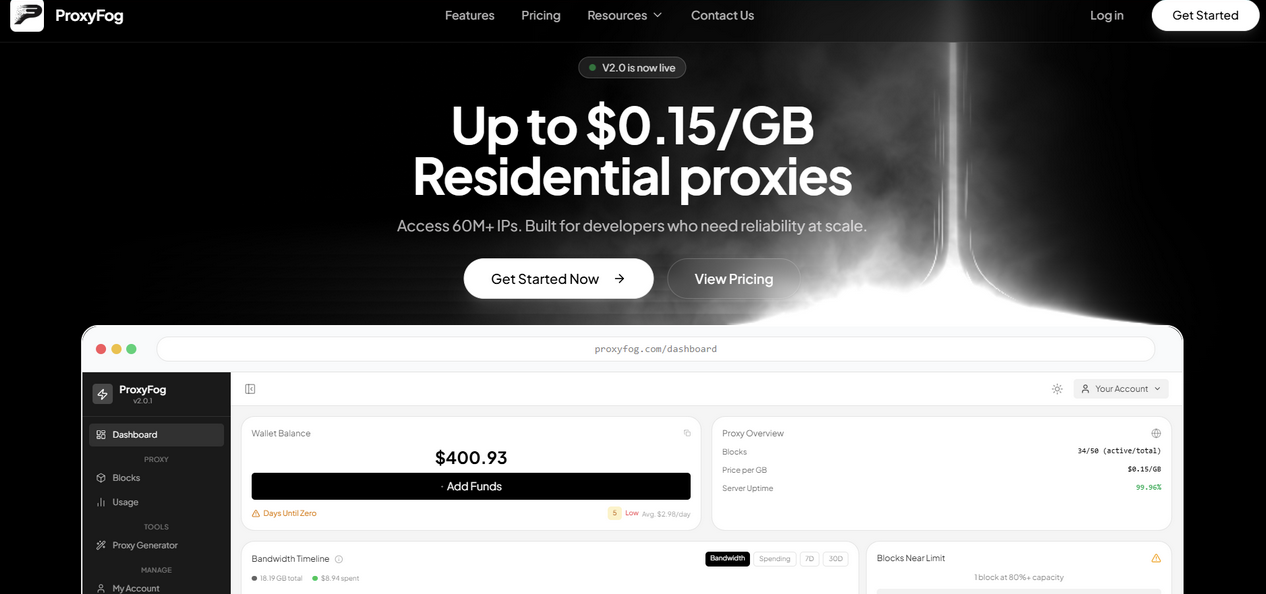
ProxyFog is a proxy infrastructure provider focused on residential and mobile IP addresses. According to publicly available information, the service offers a pool of more than 60 million IPs across 195 countries and targets businesses and developers involved in data collection, market research, ad verification, and similar proxy-related workflows.
The platform lists entry-level pricing starting at $0.15 per GB alongside a pay-as-you-go model rather than fixed monthly subscriptions. This pricing structure may appeal to teams with irregular workloads or project-based usage patterns.
- Reported pool of 60M+ IPs
- Coverage across 195 countries
- Published entry pricing from $0.15/GB
Core Services
ProxyFog’s offering centers on residential and mobile proxies. Both proxy types are described as being sourced from consumer devices, which may help traffic appear more consistent with regular residential or mobile usage patterns.
- Residential Proxies: IPs sourced from residential internet connections assigned by ISPs. Commonly used for scraping, data collection, and region-based testing.
- Mobile Proxies: IP addresses sourced from 4G/5G carrier networks. Mobile proxies are often used on platforms with stricter anti-bot systems.
- Rotating IPs: Automatic IP rotation by request or session to reduce repetitive traffic patterns during large-scale data collection tasks.
- Geo-Targeting: Country-level targeting across 195 countries for localized content access, regional monitoring, and market research workflows.
Pricing Model
This platform uses a pay-as-you-go pricing structure. Users add balance funds and consume bandwidth as needed rather than subscribing to a recurring monthly plan. This structure may be useful for project-based or irregular usage where fixed monthly bandwidth allocations are unnecessary.
| Proxy Type | Model | Starting Rate |
|---|---|---|
| Residential | Pay-as-you-go | From $0.15/GB |
| Mobile (4G/5G) | Pay-as-you-go | From $0.15/GB |
Note: The $0.15/GB figure reflects the lowest publicly listed entry pricing at the time of writing. Actual rates may vary depending on proxy type, bandwidth volume, and usage tier. Buyers should verify current pricing directly on the provider’s website.
Key Use Cases
ProxyFog’s residential and mobile proxies may be suitable for a range of business and developer use cases commonly associated with proxy infrastructure.
- Web Scraping and Data Collection: Residential IPs may help reduce CAPTCHA frequency and IP blocking during large-scale data collection workflows.
- Ad Verification: Used for reviewing regional ad visibility across devices and geographic locations.
- Market Research: Access localized search results, product listings, and region-specific pricing information.
- Brand Protection: Monitor counterfeit listings, unauthorized resellers, and duplicated content across different regions.
- Social Media Automation: Mobile proxies are commonly used for account management and automation workflows on platforms with stricter detection systems.
Pros and Cons
Pros
- 60M+ IP pool across 195 countries
- Low published entry pricing starting at $0.15/GB
- Pay-as-you-go pricing structure
- Residential and mobile proxy support
- Rotating IP functionality included
- Broad country-level geo-targeting coverage
Cons
- Limited public technical documentation available
- No publicly confirmed city-level targeting
- Relatively limited public track record compared to larger providers
- No clearly stated refund policy located publicly at the time of review
- Datacenter proxies not publicly listed as part of the offering
Verdict
ProxyFog presents itself as a residential and mobile proxy provider focused on flexible usage rather than enterprise subscription contracts. Its published IP pool size and geographic coverage are comparable to those advertised by larger proxy providers, while the pay-as-you-go structure may suit smaller teams or short-term projects.
The platform appears relevant for workflows such as scraping, ad verification, market research, and geo-targeted browsing. However, buyers should verify current pricing tiers, protocol support, targeting capabilities, and customer support policies directly with the provider before committing, as the amount of publicly available documentation remains relatively limited.
Typical Users: Developers, data teams, market researchers, and ad verification professionals looking for residential and mobile proxy infrastructure with broad geographic coverage.
Disclaimer
This review is based on publicly available information from proxyfog.com and third-party proxy industry sources as of May 2026. Pricing, features, availability, and policies may change over time. Readers should verify all details directly with the provider before making purchasing or operational decisions. iplocation.net and its authors are not liable for any losses, service issues, policy changes, account restrictions, or damages resulting from the use of third-party services mentioned in this article.
Featured Image generated by ChatGPT.
Share this post
Author

Read the latest articles from Beatrix Storch
711Proxy Review 2026

May 22, 2026
The proxy market is crowded, with many providers advertising large IP pools, fast speeds, and low pricing. 711Proxy is one of the newer large-scale residential proxy providers positioning itself toward developers, businesses, and automation-focused users.
Learn moreINSOCKS Review 2026
May 21, 2026
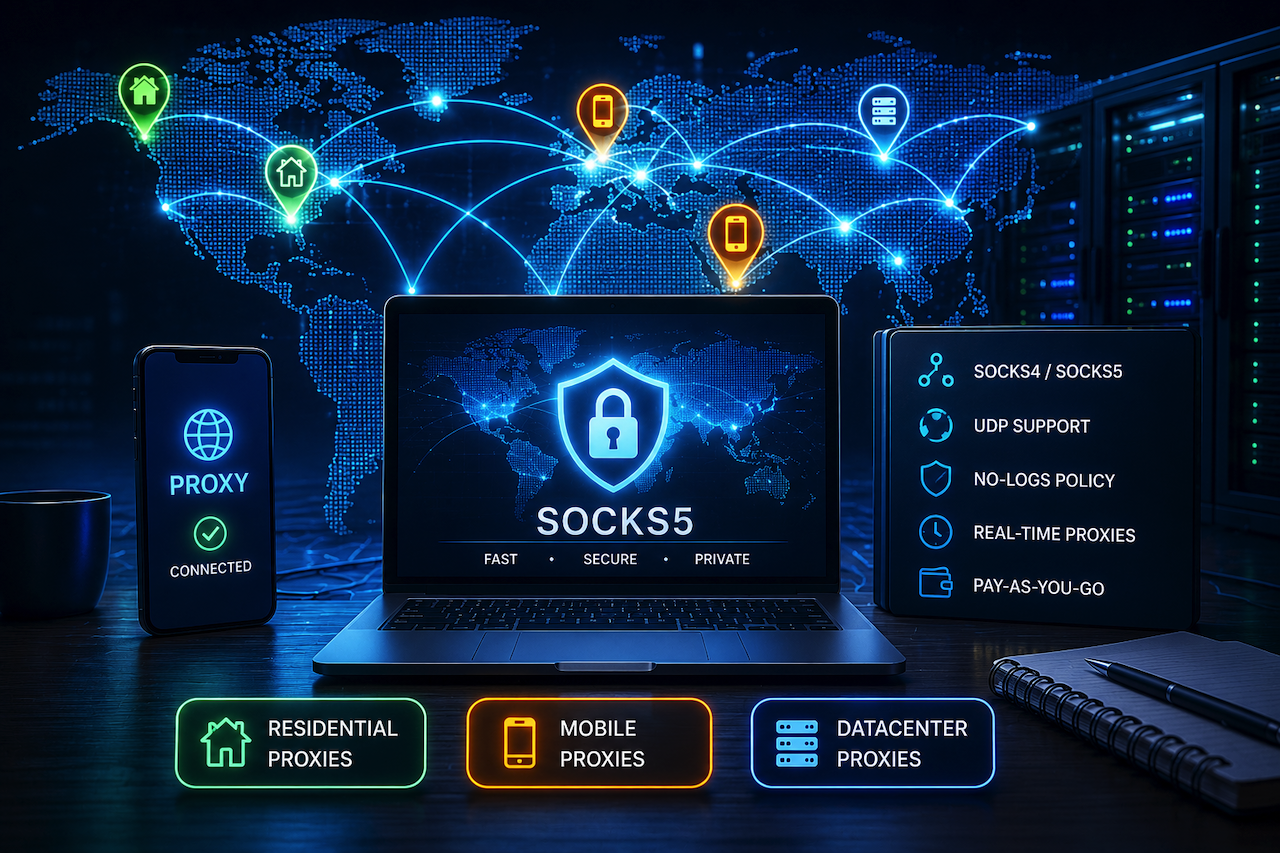
There's a certain kind of proxy user who doesn't want a fancy dashboard, a six-tier pricing page, or a sales call before they can buy an IP. They want to show up, deposit some crypto, pick a live proxy, and get to work. INSOCKS targets users looking for a simplified proxy purchasing workflow.
Learn moreLeave a comment
All comments are moderated. Spammy and bot submitted comments are deleted. Please submit the comments that are helpful to others, and we'll approve your comments. A comment that includes outbound link will only be approved if the content is relevant to the topic, and has some value to our readers.



Comments (0)
No comment