

The proxy market is crowded, with many providers advertising large IP pools, fast speeds, and low pricing. I approached this review of 711Proxy with some skepticism, focusing on its product lineup, pricing structure, technical capabilities, performance claims, and overall usability.
711Proxy advertises a network of more than 100 million residential IPs across multiple countries and regions. Its product lineup includes residential, rotating, static residential, unlimited, and SOCKS5 proxy services aimed at data collection, scraping, localization testing, and automation workflows.
This review examines the platform’s products, pricing structure, technical capabilities, performance claims, dashboard experience, and potential limitations.
Product Lineup
711Proxy offers six proxy categories covering everything from bandwidth-based residential plans to dedicated ISP proxies and unlimited rotating sessions. The service offers multiple pricing and usage models depending on workflow requirements.
1. Residential Proxies — Pay per GB
This is one of the platform’s core residential proxy offerings. Pricing starts at $0.55/GB, with support for rotating and sticky sessions, unlimited concurrency, and country, state, and city-level targeting. The service targets scraping, market research, and ad verification workflows.
2. Residential Proxies — Pay per IP
Instead of charging for bandwidth, this model charges per IP credit. Each credit provides six hours of usage, and invalid or unreachable IPs do not consume credits. Pricing starts at $0.03 per IP, and unused credits do not expire.
3. Unlimited Rotating Proxies
This plan removes bandwidth and concurrency limits entirely. Pricing starts at $15/hour, with IPs rotating automatically from the global pool. Users cannot manually choose locations, but the randomized allocation may help distribute requests across different IPs during large-scale scraping tasks
4. Unlimited Proxies — By Port
This model charges per port rather than by bandwidth or time. Rotation intervals can be configured between 3 and 30 minutes, which may appeal to users running continuous automation workflows with predictable usage patterns.
5. Static Residential (ISP) Proxies
These dedicated ISP proxies provide fixed residential IPs with unlimited traffic and a reported 99.9% uptime. Pricing starts at $3.5/IP, with bulk discounts available for larger deployments.
Pricing Overview
The platform offers several pricing models depending on the proxy type and usage pattern. Pricing below reflects publicly listed promotional rates at the time of writing and may change over time.
| Product | Starting Price | Notes | Key Features |
|---|---|---|---|
| Residential Proxies – Pay/GB | $0.55 /GB | Promotional pricing | Rotating and sticky sessions, unlimited concurrency, and country/city targeting |
| Residential Proxies – Pay/IP | $0.03 /IP | Usage-based billing | Pay per IP used, no charge for invalid IPs, country/state targeting |
| Unlimited Rotating Proxies | $15 /Hour | Unlimited bandwidth plan | No bandwidth or concurrency limits, random country allocation, access to 200+ regions |
| Unlimited Proxies – By Port | $1 /port | Port-based billing | Rotation intervals between 3–30 minutes, designed for automated workflows with predictable rotation intervals |
| Static Residential Proxies | $3.5 /IP | Dedicated ISP IPs | Unlimited traffic, private allocation, provider advertises 99.9% uptime |
| SOCKS5 Proxies | $30 /15 days | Short-term access plan | Daily refreshed IPs reusable within a 24-hour period with multiple location options |
Common Use Cases
Like many residential proxy providers, 711Proxy markets its network toward businesses and developers that need location-based access, automated data collection, or large-scale web requests. Common use cases include:
| Use Case | Typical Applications |
|---|---|
| AI and Data Collection | Collecting geographically distributed datasets for machine learning, analytics, and automation workflows |
| E-commerce Monitoring | Tracking competitor pricing, product listings, inventory availability, and regional storefront differences |
| Market Research | Gathering public web data and regional trend information across multiple locations |
| Ad Verification | Checking how advertisements appear across different countries, devices, and networks |
| Travel Fare Aggregation | Comparing region-based airfare and hotel pricing across booking platforms |
| Brand Protection | Monitoring marketplaces and websites for counterfeit products or unauthorized brand usage |
| Website Testing | Testing localization, geo-targeted content, redirects, and regional site behavior |
| Price Monitoring | Tracking publicly visible pricing changes across retail and e-commerce platforms |
Technical Capabilities
711Proxy states that it operates on a self-developed proxy infrastructure rather than a fully white-labeled network. The platform supports multiple authentication methods, proxy protocols, and session configurations commonly used in automation and data collection workflows.
- Authentication: Username/password authentication and IP allowlisting
- Protocols: HTTP, HTTPS, and SOCKS5 support
- Session Types: Rotating proxies, sticky sessions, and static IP options
The documentation includes integration examples for several programming languages, including Python, Node.js, Java, PHP, Go, and C++. The dashboard provides controls for proxy generation, usage monitoring, allowlist management, and sub-user administration.
For larger deployments, the service also offers API access for automated proxy management workflows. A CDKey distribution feature is additionally available for resellers and proxy distribution scenarios.
Performance and Reliability
711Proxy advertises a 99.7% connection success rate, sub-300ms average latency, and up to 99.9% uptime on certain static residential plans. As with most proxy providers, actual performance may vary depending on the target website, geographic routing distance, protocol used, and overall network conditions.
The provider also states that its proxy pool is refreshed daily, with millions of IPs cycled through the network and new IPs added regularly. According to the company, the network uses resource screening mechanisms intended to filter low-quality or previously flagged IPs before they become active.
For automation, scraping, and general data collection workloads, factors such as IP rotation frequency, regional availability, and connection stability are often more important than raw speed alone. Users running latency-sensitive workloads may still want to test performance against their own target regions and applications before deploying at scale.
Dashboard and Customer Experience
711Proxy provides a web-based dashboard for proxy management, usage monitoring, and account administration. Proxy endpoints can be generated through a form-based interface, reducing the need for manual configuration in many cases.
The platform supports Google OAuth sign-in and includes onboarding documentation for different proxy types. Usage statistics, traffic consumption, and allowlist settings are accessible from the main dashboard interface.
The provider offers integration guides and setup examples for multiple environments and programming languages. Customer support is available through live chat and email-based support channels, while business users can also contact the company regarding partnership and reseller inquiries.
Pros and Cons
Pros
- Large residential IP pool (according to the provider)
- Multiple entry-level pricing options across different proxy categories
- Six different proxy product types available
- Granular geo-targeting with country, state, and city-level options
- Provider advertises a 99.7% connection success rate
- Pay-per-IP billing model does not charge for invalid IPs
- Unlimited concurrency on residential bandwidth-based plans
- API access and multi-language integration examples available
Cons
- Unlimited rotating plans do not support manual country selection
- SOCKS5 pricing is higher relative to some other plan categories
- No phone-based customer support
- Mainland China is excluded from service coverage
- The ByPort unlimited proxy product is still relatively new
- Pricing structure may feel complex for first-time users
- Enterprise pricing requires direct contact with the provider
- Bandwidth-based plans may require closer usage monitoring
Who Is 711Proxy Best Suited For?
711Proxy is primarily aimed at businesses, developers, and automation-focused users that require large-scale residential or rotating proxy access. It may be suitable for:
- Data collection and web scraping workflows
- AI training and large-scale dataset gathering
- E-commerce monitoring and price tracking
- Ad verification and localization testing
- Travel fare aggregation and regional content analysis
- Developers needing API access and proxy automation tools
- Agencies or resellers managing multi-user proxy distribution
The service may be less suitable for users who:
- Require service availability within Mainland China
- Need fixed country selection on unlimited rotating plans
- Require phone-based enterprise support channels
Final Verdict
Overall: 4.9/5
711Proxy positions itself as a large-scale proxy provider with a product lineup that includes residential, static residential, rotating, unlimited, and SOCKS5 proxy options. The service offers multiple pricing models and advertises a reported 99.7% connection success rate, targeting automation, data collection, and geo-targeted workflows.
One notable aspect of the service is its pay-per-IP model, where the provider states that invalid IPs do not consume credits. The platform also offers unlimited proxy plans for higher-volume workloads, alongside static residential plans marketed toward workflows requiring longer-lived residential IP assignments.
At the same time, the number of available plan types and billing structures may feel somewhat overwhelming for first-time users. Comparing bandwidth-based plans, IP-based billing, rotating options, and unlimited tiers may require spending additional time reviewing the pricing documentation and feature differences before selecting the most suitable option.
Overall, 711Proxy appears to target developers, businesses, and teams involved in web data collection, AI dataset gathering, market research, localization testing, and related automation use cases. As with any proxy provider, real-world performance can vary depending on the target websites, routing regions, and workload requirements involved.
Featured Image generated by ChatGPT.
Share this post
Author

Read the latest articles from Beatrix Storch
INSOCKS Review 2026
May 21, 2026
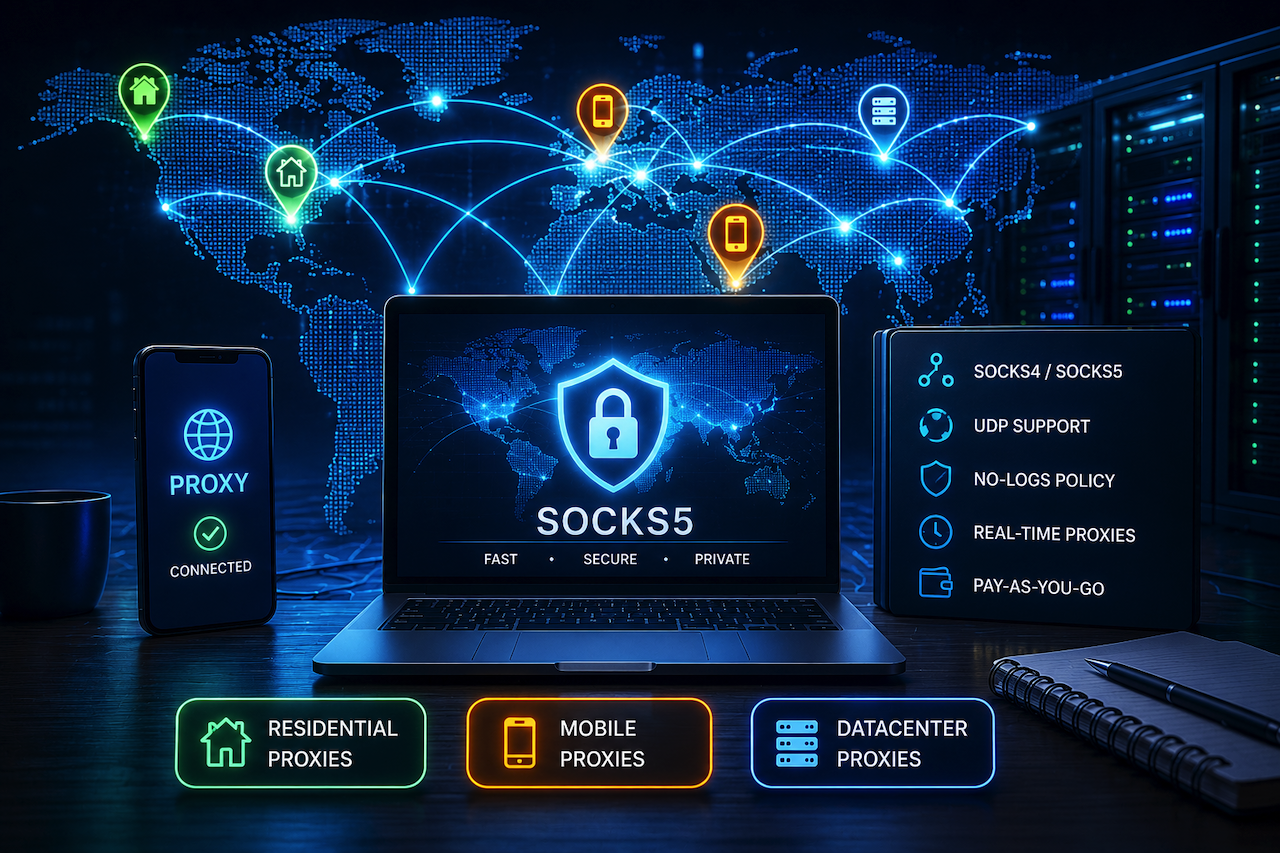
There's a certain kind of proxy user who doesn't want a fancy dashboard, a six-tier pricing page, or a sales call before they can buy an IP. They want to show up, deposit some crypto, pick a live proxy, and get to work. INSOCKS targets users looking for a simplified proxy purchasing workflow.
Learn moreProxyEmpire Review 2026

May 18, 2026
I've tested a lot of proxy providers over the years, and most of them share the same frustrations: unused bandwidth disappears at month-end, you get throttled once you scale past a certain threshold, or the support team vanishes the moment something breaks. ProxyEmpire has clearly built its platform around solvin [...]
Learn moreLeave a comment
All comments are moderated. Spammy and bot submitted comments are deleted. Please submit the comments that are helpful to others, and we'll approve your comments. A comment that includes outbound link will only be approved if the content is relevant to the topic, and has some value to our readers.



Comments (0)
No comment