
Modern automation - whether it’s for market research, price tracking, or large-scale QA - relies heavily on the ability to blend in with real users. Today’s websites don’t just look at what you do; they look closely at how you appear. Two of the strongest signals they use to spot automation are your browser fingerprints and your IP patterns.
Knowing how these signals work and why they matter is key to keeping your operations running smoothly. Residential proxies play an essential role here because they introduce natural variation into your IP footprint, making your traffic look more like regular user activity. When combined with proper fingerprint management, they help your scraping or automation workflows scale without constantly running into blocks or detection.
The Hidden Traces Behind Every Connection
Every time you visit a website, you reveal more than just your IP address. Your browser, operating system, screen size, fonts, and even language settings together form a browser fingerprint.
Websites analyze these fingerprints alongside IP behavior to determine whether traffic comes from a real user or a script. Even if you rotate proxies or clear cookies, identical fingerprints and predictable IP structures can still expose automation.
Detection systems don’t only block bots, they look for consistency. When multiple sessions share the same fingerprint or subnet, they become easy to identify and restrict.
Why Automation Gets Flagged
Automation rarely fails because it works too fast; it fails because its behavior becomes predictable. Repeated browser fingerprints, similar IP ranges, or identical timing patterns all stand out. To a detection system, these signals don’t look anything like natural user activity.
Datacenter proxies make this problem even clearer. When multiple sessions come from the same subnet, rotate IPs at fixed intervals, or jump between countries in unrealistic ways, those patterns create a footprint that’s easy to classify as automated. The result is predictable: CAPTCHA, rate limits, blocked actions, or even account bans.
For automation to run smoothly, avoiding these repetitive patterns matters just as much as speed.
The Power of Residential Proxies in Modern Automation
Unlike data center proxies that use server IPs, residential proxy IPs route traffic through real consumer networks from ISPs. This makes your activity appear genuine, like it’s coming from real household users instead of automated tools.
Key advantages include:
- Human-like reputation: Residential IPs inherit the natural trust of real users, reducing the likelihood of instant blocks.
- Organic diversity: A broad mix of cities, ISPs, and connection types ensures natural distribution and reduces network patterns.
- Realistic rotation patterns: IPs can change at irregular, human-like intervals instead of fixed, mechanical cycles.
- Contextual alignment: Each session can match IP location with browser language and timezone, maintaining consistency and credibility.
Together, these strengths make residential proxies the preferred choice for stable and undetectable automation.
For instance, 9Proxy offers residential IP pools across more than 90 countries, along with rotation and city-level targeting options that many professionals use in their automation workflows. Exploring their available residential proxy locations helps illustrate how targeted and realistic IP distributions contribute to smoother and more consistent operations.
Building Reliable and Undetectable Automation
Avoiding detection isn’t about disappearing; it’s about acting like real users do. A long-term, sustainable setup relies on three core elements: IP diversity, browser-fingerprint variation, and natural behavioral patterns. When these work together, your traffic looks authentic and blends in with regular user activity, reducing the chances of getting flagged.
To improve consistency and lower detection risks, make sure to:
- Use large pools of rotating residential IPs so you don’t appear to use the same address repeatedly. This helps each session appear to be from a new, legitimate user.
- Adjust your browser fingerprint between sessions, such as fonts, extensions, screen size, and timezone. Slight variations make your device profile look more realistic.
- Match your IP location with your browser settings. A U.S. IP address with an EU time zone, for example, is an easy red flag.
- Add light randomness to timing, click flow, and request order. Real users don’t move or interact in perfect patterns.
These simple adjustments help your automation behave more organically, making your activity harder to detect across different platforms.

Balancing Privacy and Performance
As detection systems grow more advanced, responsible proxy use becomes critical.
Residential proxies not only improve success rates but also promote balanced network behavior, preventing overloads and maintaining system stability.
When paired with ethical automation practices, they form the backbone of secure, privacy-conscious data operations.
To explore how rotating residential proxies, IP diversity, and fingerprint variation can enhance automation performance, reviewing general residential proxy solutions is a practical starting point for understanding safer and more reliable access strategies.
Conclusion
Modern detection systems examine everything from IP behavior to browser fingerprints, making it more important than ever for automation workflows to appear natural and consistent. Residential proxies, when combined with thoughtful fingerprint management and realistic interaction patterns, provide a strong foundation for scaling operations without constant interruptions or blocks. By balancing privacy, performance, and responsible usage, businesses can build long-term, reliable automation strategies that blend seamlessly with normal user activity.
Share this post
Author

Read the latest articles from Shahid Latif
How to Create Blog Visuals Faster with Text-to-Image AI

May 29, 2026
Publishing a strong blog post already takes enough time. After the research, writing, editing, and formatting, you still need visuals that fit the piece. That’s often where the process slows down. Stock photos can feel generic, custom design can take days, and even a simple header image may turn into a [...]
Learn moreWhy a VPN App on Android Isn't the Same Product as Its Desktop Version
May 28, 2026
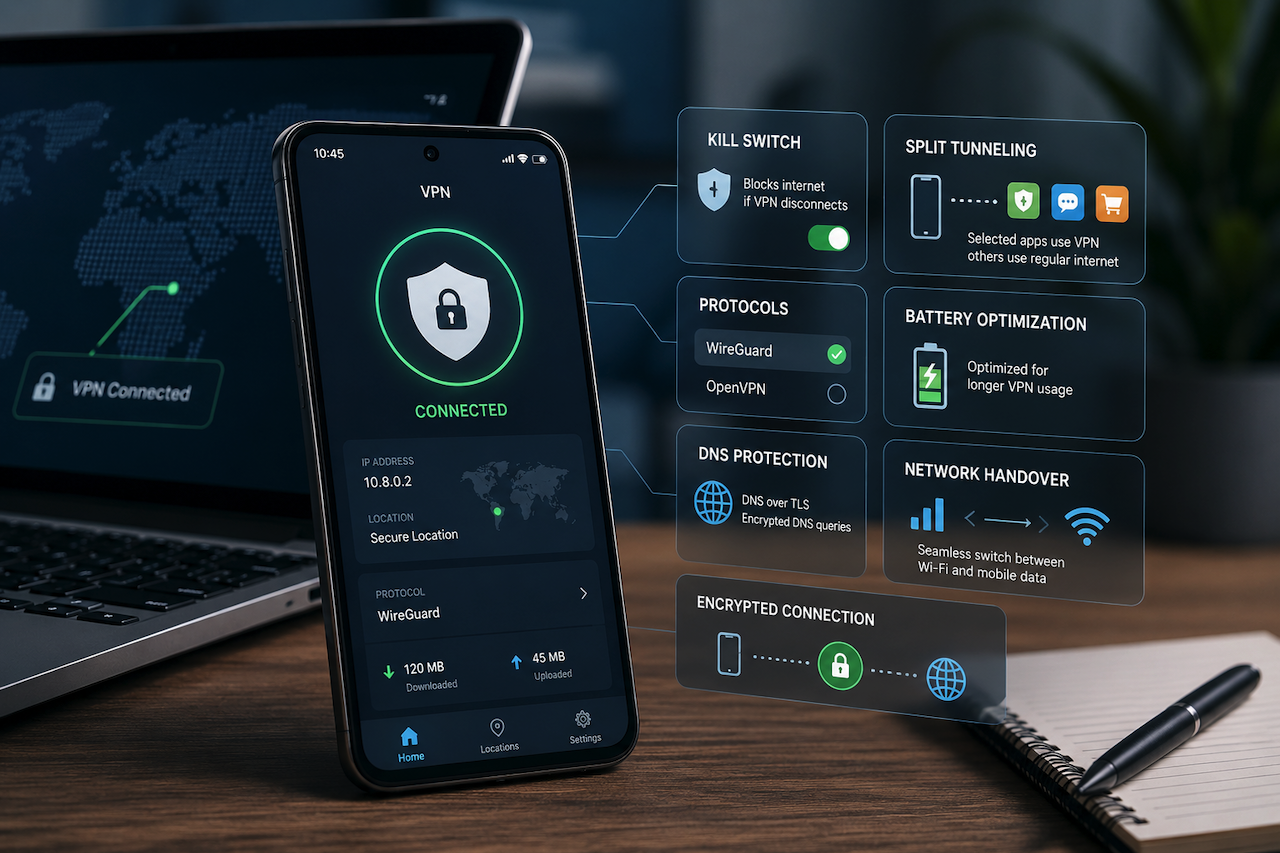
Two installations of the same VPN brand can behave differently depending on the underlying operating system. The marketing pages rarely make this clear. A user who reads a Windows review and installs the same provider on a Pixel 8 may end up with fewer protocols, a weaker kill switch, and a battery profile that t [...]
Learn moreLeave a comment
All comments are moderated. Spammy and bot submitted comments are deleted. Please submit the comments that are helpful to others, and we'll approve your comments. A comment that includes outbound link will only be approved if the content is relevant to the topic, and has some value to our readers.







Comments (0)
No comment