
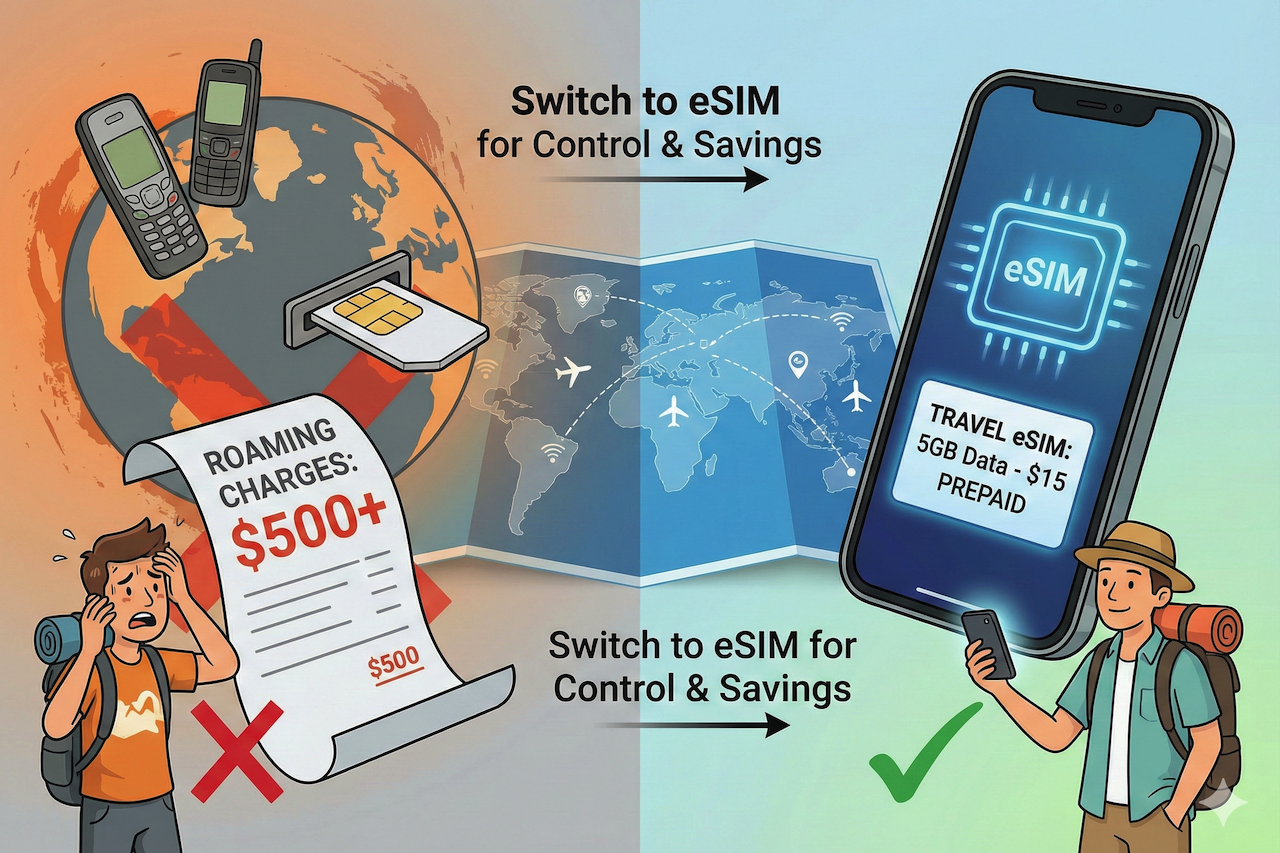
Ten to fifteen years ago, mobile communications abroad were among the most annoying expenses while traveling. Tourists either turned off their phones immediately upon landing or returned home to an unpleasant surprise: a roaming bill that was difficult to explain even to their operator's staff.
Today, the situation has changed. Not because roaming has become cheap, in many countries it is still expensive, but because an alternative format for connecting to the mobile internet has appeared: travel eSIM.
Why Roaming Is Still a Thing
Roaming is still around, even with all the technological breakthroughs. However, it's no longer as evident. The majority of today's smartphones automatically perform tasks such as connecting to the network, updating apps, downloading maps, and backing up data without the user ever knowing. Even if the user does not open the browser, data will still be consumed.
For tourists, it means one thing: unexpected costs may occur. This is particularly true in the US, Canada, or New Zealand, where mobile communication costs are traditionally higher than in Europe or Asia.
This is where travel eSIM has proven to be not just a convenient solution, but a way to regain control over expenses.
What Is a Travel eSIM and Why Does It Reduce Costs?
A travel eSIM is a digital SIM card installed directly in a smartphone without a physical card. The main difference from roaming is the payment model.
Roaming:
- Is billed after the fact
- Often has complicated terms and conditions
- Does not provide a clear understanding of the final amount
Travel eSIM:
- Works on a prepaid basis
- Has a fixed amount of traffic
- Eliminates "mistaken" charges
Prepayment is the key factor in reducing costs. The user chooses a data package in advance and understands how much they are willing to spend on the internet while traveling.
Practical Usage Scenario
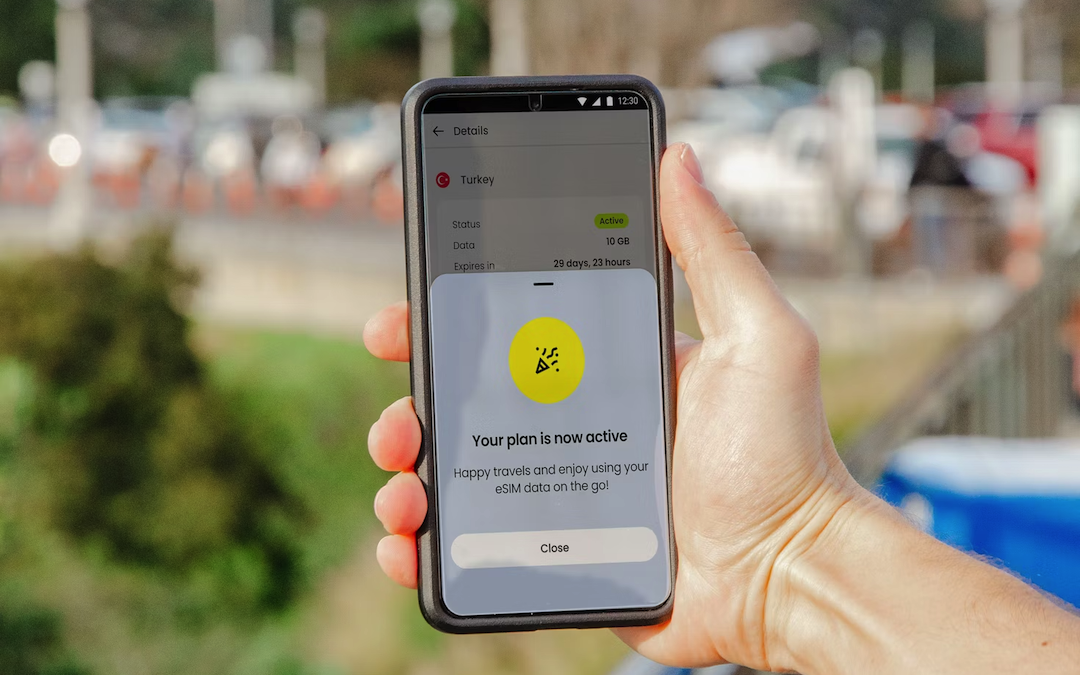
A typical scenario is simple. Before traveling or upon arrival, a person installs an app from a travel eSIM provider, such as TooSim, which is available on the App Store.
Within the app, the user selects a country or region and chooses a suitable data plan. With TooSim, for example, basic prices start at:
- $4.99 for the US
- $6.99 for Canada
- $4.99 for New Zealand
- $4.99 for Europe
After payment, the eSIM is installed in a few steps and activated automatically when connected to the network in the selected country.
Importantly, there is no need to change the physical SIM card. It can remain in the phone for calls or messages.
Why Installing an eSIM Is Seen as an Advantage
In the past, buying a local SIM card was almost a mandatory ritual. Searching for a kiosk at the airport, standing in line, explaining things in a foreign language, and wondering about the rates. This process took time and energy, especially after a long flight.
Travel eSIM eliminates this step:
- No need to look for a phone store
- No need to stand in line
- No need to understand local rules
For many travelers, this factor is decisive, even if the savings seem insignificant at first glance.
Cost Comparison: Roaming vs. eSIM
The savings are especially noticeable for trips lasting more than a few days. In the US and Canada, traditional roaming packages often cost several times as much as travel eSIM plans with comparable data allowances. The situation is similar in New Zealand. Local tariffs are not always geared towards short-term tourists.
In Europe, the difference may be less dramatic. But when traveling to several countries, eSIM is still more convenient than constantly changing SIM cards or paying for roaming.
Regional Rates and Borderless Travel
One notable advantage of travel eSIMs is the availability of regional plans. They are designed for travelers who move between several countries during a single trip.
The most popular options are:
- European plans, covering dozens of countries
- North American tariffs (USA + Canada)
- Combined regional packages
These solutions let you forget about changing tariffs when crossing borders and stay connected throughout your trip.
Overview of Popular eSIM Apps
The travel eSIM market has grown significantly in recent years, and users now have a choice.
TooSim
Focused on affordable rates and stable performance. Suitable for those who value simplicity and predictability. It is worth noting the support, which remains an essential factor when connection problems arise. The TooSim travel eSIM app offers a variety of local and regional data packages.
Airalo
One of the first services in the travel eSIM segment. It has broad country coverage, but users often note difficulties in interacting with customer support.
PrimaSIM
A relatively new player, but with a high-quality app and competitive prices, especially for regional plans. Often chosen by experienced travelers.
Limitations to Keep in Mind
Travel eSIM is not a universal solution for everyone.
- Not all devices support eSIM
- Internet speed may vary by region
- eSIM is primarily suitable for data transfer rather than voice calls
However, for most modern travelers, these limitations are not critical.
Why Travel eSIM Has Become a Logical Alternative to Roaming
If we look at the situation objectively, travel eSIM does not make the internet "free." It makes it understandable. People know the terms, cost, and volume in advance, allowing them to make informed decisions.
For travelers who value control over their expenses and don't want to deal with complicated tariffs after returning home, eSIM is the natural choice.
That's why more and more people are viewing travel eSIMs not as a technological novelty, but as a practical tool that solves an old problem — expensive, unpredictable roaming.
Featured Image generated by Google Gemini.
Share this post
Author

Leave a comment
All comments are moderated. Spammy and bot submitted comments are deleted. Please submit the comments that are helpful to others, and we'll approve your comments. A comment that includes outbound link will only be approved if the content is relevant to the topic, and has some value to our readers.



Comments (0)
No comment