

Many who are looking to use video watermark software actually want to maintain ownership of their videos, prevent unauthorized distribution, or establish their brand identity in video content. That said, some prefer ready-made graphic tools, while others seek free, more flexible solutions.
Adding a watermark to a video is one of the most critical steps that content creators, online educators, brand owners, and even ordinary users take to maintain ownership and prevent misuse of their videos. If you are looking for a free, robust method that does not rely on online services, FFmpeg is a strong option.
In this article, you will learn straightforwardly and functionally how to add an image or text watermark to your videos using FFmpeg. All steps are explained in detail and real-world examples are provided so you can use them efficiently, even if you’re not an expert.
What Is FFmpeg and Why Is It Used for Watermarking?
FFmpeg is a free and open-source tool for processing audio and video files that runs on the command line. This tool is available on almost all operating systems, including Windows, macOS, and Linux, and thanks to its high power and flexibility, it is used in many professional software and services.
Reasons why it is popular for watermarking:
- Free and unrestricted
- Offline and secure (no file uploads)
- Complete control over output quality
- Supports various video formats
- Position and characteristics of the watermark are precisely adjustable
Prerequisites for Adding a Watermark Using FFmpeg
You will need the following before getting started:
- Installing FFmpeg on your system
- A video file (e.g., MP4)
- The watermark image file (ideally PNG with transparent background)
- Access to Command Prompt on Windows, or Terminal on macOS/Linux
Note: If your watermark is a logo, use a PNG with a transparent background to make the final result look more professional.
How to Add an Image Watermark (Logo) to a Video With FFmpeg
The most common type of watermark is using a logo image on the video. To do this, we use the overlay filter in FFmpeg.
A simple practical example:
FFmpeg -i input.mp4 -i logo.png -filter_complex "overlay=10:10" output.mp4
Command explanation:
- input.mp4: Original video file path
- logo.png: Watermark image file path
- overlay=10:10: Watermark position (10 pixels from top-left)
- output.mp4: The path where the output file should be saved
Running this command displays your logo in the top-left corner of the video.
Changing the Watermark Position on a Video
One advantage of FFmpeg is the precise control over watermark placement. You can place it anywhere in the video.
Commonly used positions:
- Top-right:
overlay=W-w-10:10 - Bottom-left:
overlay=W-w-10:H-h-10 - Bottom-right:
overlay=W-w-10:H-h-10 - Center of the frame:
overlay=(W-w)/2:(H-h)/2
In these expressions:
- W and H are video dimensions
- w and h are watermark dimensions
Adding a Text Watermark With FFmpeg (Text Watermark)
Sometimes you need to display simple text on the video, such as your website address or brand name, rather than a logo. FFmpeg does this through the “drawtext” filter.
Practical example of text watermark:
FFmpeg -i input.mp4 -vf "drawtext=text='Your Brand':x=10:y=H-th-10:fontsize=24:fontcolor=white" output.mp4
Adjustable settings:
- Watermark text
- Font size (fontsize)
- Font color (fontcolor)
- Text position
- Custom font (by specifying the font path)
This method is pretty helpful for educational videos and/or straightforward content.
Adjusting Watermark Opacity
Watermark should not distract the viewer. To achieve more professional results, it is better to reduce the watermark opacity slightly.
In FFmpeg, you can adjust the logo opacity using color filters. This makes the watermark visible, but doesn't distract the viewer from the main content. It doesn't affect output quality and prevent quality loss.
One common concern for users is loss of video quality after watermarking. Luckily, FFmpeg allows you to control the output quality precisely.
Key points:
- Use an appropriate codec (such as H.264)
- Set the bitrate
- Avoid excessive compression
Do the settings correctly, and the output quality will be almost the same as the original file.
FFmpeg Watermarking Limitations
Despite all its advantages, FFmpeg is not the ideal choice for all users. The main limitations are:
- Lack of graphical interface (GUI)
- Need to learn Command-Line commands
- Bulk processing is complex for beginners
- Time-consuming for large projects
- Difficult to manage multiple watermarks simultaneously
Hence, many users eventually turn to ready-made graphical tools.
When Is It Sensible to Use FFmpeg?
FFmpeg is a suitable choice if:
- You are looking for a free solution
- The number of videos is small
- Working with technical instructions is not difficult for you
- You want complete control over settings.
But if speed, convenience, and processing large amounts of video are essential to you, using desktop video watermark software can notably increase your productivity in the long run, especially for those who constantly deal with video and don't like running repetitive commands each time.
Final Conclusion
FFmpeg is one of the most powerful free tools for adding watermarks to video. With a bit of practice, you can apply image or text watermarks to your videos with high precision and without any loss of quality. This method is entirely offline, secure, and independent of online services, making it a very suitable option for small to medium-sized projects.
In situations where faster processing, bulk workflows, or a graphical user interface are needed, it may be appropriate to evaluate other tools designed for those use cases, such as MetaLogic Bulk Video Watermark, particularly when working with larger or repetitive video tasks.
Share this post
Author

Read the latest articles from Thomas Lore
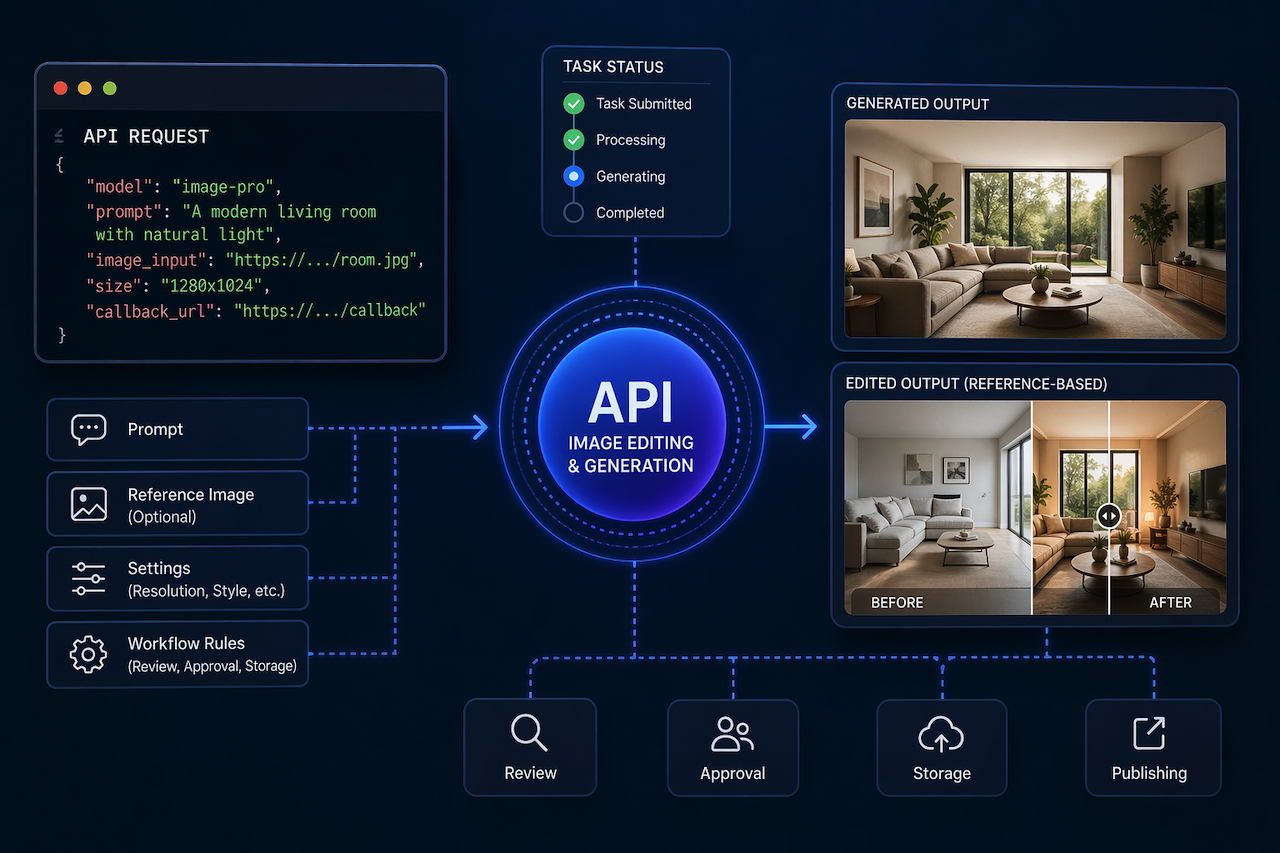
Nano Banana Pro API Integration Guide for Image Editing and Generation
April 23, 2026
Image workflows become difficult to maintain when editing and generation remain disconnected from the rest of the production process. Many teams can test an endpoint once, get a result, and call that success. Real integration starts later, when image requests repeat, output has to move through review, and the wor [...]
Learn moreTurning Raw IP Logs into Insights

April 16, 2026
Every second, servers across the internet generate millions of log entries—cryptic lines of text documenting every connection, request, and error. For network administrators, security analysts, and digital forensics investigators, these IP logs contain invaluable intelligence about traffic patterns, security th [...]
Learn moreLeave a comment
All comments are moderated. Spammy and bot submitted comments are deleted. Please submit the comments that are helpful to others, and we'll approve your comments. A comment that includes outbound link will only be approved if the content is relevant to the topic, and has some value to our readers.
Comments (0)
No comment