
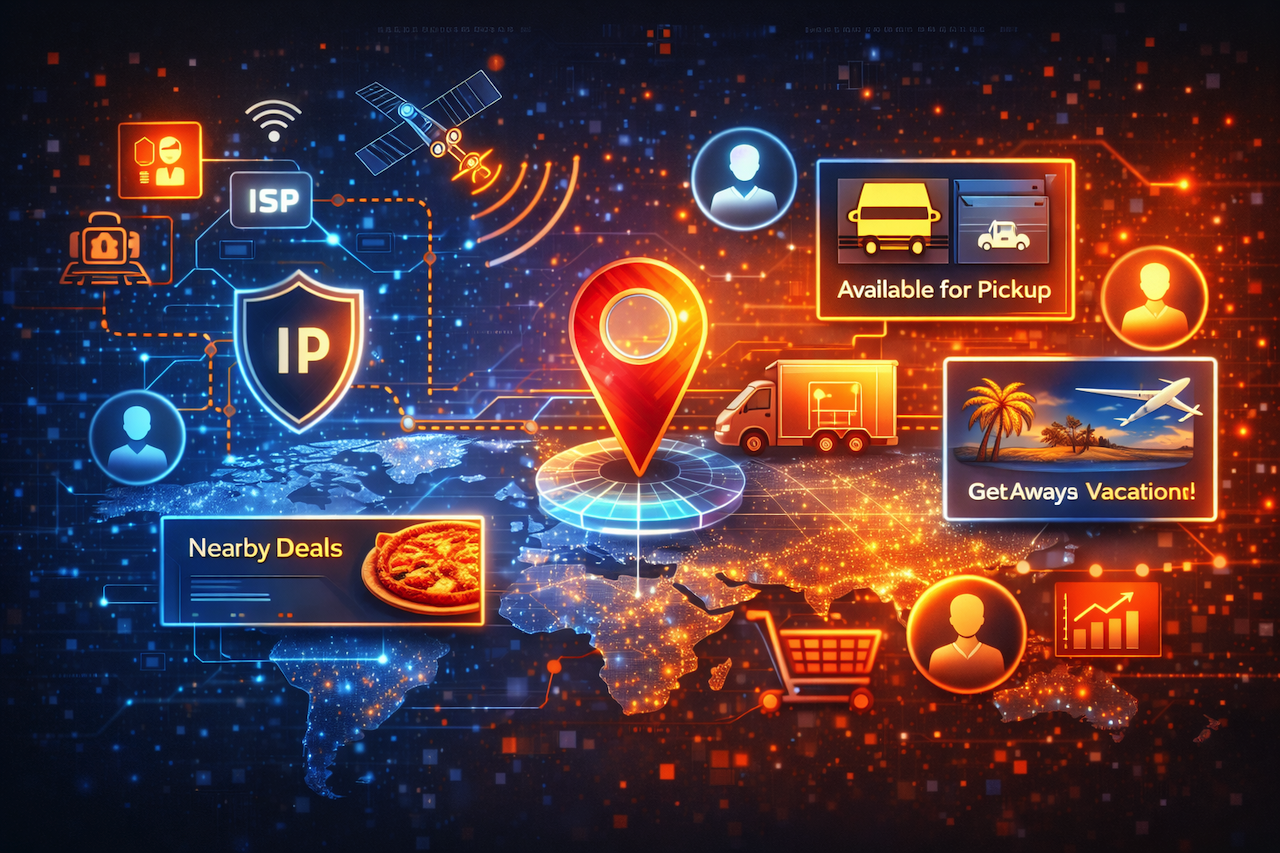
Digital advertising has moved far beyond broad campaigns and generic targeting. Today, brands prioritize relevance, and one of the most effective tools for achieving it is IP-based geo-targeting. With IP data, marketers can tailor ads to a user’s approximate location, improving engagement and return on ad spend.
Understanding Geo-Targeted Marketing
Geo-targeted marketing involves delivering ads based on a user's location. This can be achieved using:
- GPS data
- Wi-Fi triangulation
- Cell tower signals
- IP address detection
Among these methods, IP-based targeting stands out for its broad adoption across desktop and mobile traffic.
How IP Data Enables Personalized Advertising
Every device connected to the internet has an IP address, and while it doesn’t reveal personal identity, it can indicate broad geographical details such as:
- Country
- State/Region
- City
- Internet Service Provider (ISP)
Advertisers use this information to adjust content and campaign settings. For example:
- Local restaurants can restrict ads to nearby zip codes
- Tourism boards can promote events to international travelers
- Retailers can highlight in-store pickup options based on user proximity
Why Marketers Rely on IP Location Data
Here are the key advantages of using IP data for personalized ads:
- Improved Ad Relevance: Users are more likely to click on ads tailored to their climate, city, or local needs.
- Better Budget Efficiency: Ads are shown only in markets where a business can serve customers.
- Higher Conversion Rates: Localized messages create trust and urgency, boosting conversions.
- Privacy Considerations: IP-based targeting provides meaningful personalization without needing intrusive personal data, aligning with evolving privacy standards.
Use Cases Across Industries
IP-based geo-targeting supports a wide range of commercial scenarios, such as:
- E-commerce: Showing shipping times and delivery estimates based on region
- Travel and Hospitality: Displaying deals tailored to the user’s origin cities
- Retail Chains: Highlighting local stores with available inventory
- Media and Streaming: Restricting content to licensed regions
- Logistics and Trade: Streamlining customs and delivery routing
Companies involved in cross-border logistics often combine geo-targeting with more advanced delivery planning to manage international shipments more effectively. For example, tools and service providers such as furthercustoms illustrate how location data can be used to support customs coordination and cross-border workflow planning, making geographic context an important component of logistics operations.
Limitations and Accuracy Factors
While powerful, IP-based geo-targeting has accuracy limitations. Results can vary due to:
- ISP routing methods
- VPN or proxy usage
- Mobile network characteristics
- Regional database updates
City-level accuracy is typical, but pinpoint street-level precision isn’t feasible using IP data alone. However, for regional marketing, the method remains extremely reliable and cost-effective.
Future of Geo-Targeted Personalization
As privacy regulations tighten worldwide, advertisers are turning to privacy-friendly targeting solutions. IP-based geo-targeting fits this model, as it prioritizes location context without exposing sensitive personal details.
Future trends include:
- AI-powered location clustering
- Real-time cross-platform geo adjustments
- Hybrid targeting combining context, behavior, and location
These innovations point to a future in which personalization and privacy can coexist.
Conclusion
Geo-targeted marketing driven by IP data is transforming how brands reach audiences. By aligning ads with user location and context, companies enhance relevance, optimize budgets, and improve customer experience, without compromising privacy.
As technology continues to evolve, this balance of personalization and respect for user data will shape the next generation of digital marketing.
Featured Image generated by ChatGPT.
Share this post
Author

Read the latest articles from Silvia Watson
What Kind Of Cyber Security Risks Can Be Minimized By Using VPN?
October 14, 2024
We Are living in the high-tech digital technology era where technology is much faster than people age. In this high-tech digital world, there are so many threats and scams running and you are surrounded by them and your device is also monitored by someone else and even you don’t know this thing. That’s why in [...]
Learn moreHow To Check Weapon Damage In PUBG?

September 24, 2024
To take a look at weapon injury in PUBG, players frequently count numbers on the PUBG Gun Damage List to apprehend the strength and effectiveness of specific firearms. These lists grant small print on each weapon's damage output, headshot multiplier, and armor penetration. Players can get admission to the listing [...]
Learn moreLeave a comment
All comments are moderated. Spammy and bot submitted comments are deleted. Please submit the comments that are helpful to others, and we'll approve your comments. A comment that includes outbound link will only be approved if the content is relevant to the topic, and has some value to our readers.
 DNS Lookup
 Search a Person
 Inspect suspicious links
 Data Breach Check





Comments (0)
No comment