

In today’s digital landscape, businesses can no longer afford to ignore online privacy as they pursue growth in a global marketplace. The good news is that it’s possible to strengthen privacy while still driving business expansion through secure infrastructure, encryption, and strategic compliance.
As information moves across borders in real time, scrutiny from customers, partners, and regulators continues to increase. To stay competitive and trustworthy, businesses must adopt approaches that enhance privacy without slowing innovation or growth.
1. Secure, Minimal Container Images Can Reduce Attack Surface from the Start
Containers have revolutionized how businesses deploy software, providing faster, more consistent environments for developers and operations teams. However, container images can contain vulnerabilities due to unnecessary packages and libraries. By using secure containers, businesses can improve security while driving business growth. By removing unused libraries, development tools, and outdated packages, businesses can reduce the number of potential entry points for hackers.
Organizations should consider incorporating automated image-scanning tools into their CI/CD pipelines. Such tools can be used to scan for known vulnerabilities before deployment, thus preventing vulnerable builds from reaching production. Organizations should consider implementing strict image provenance policies to ensure that only trusted base images are used.
Container hardening guidelines should be standardized across global teams. This helps ensure that security is not left up to individual developer habits. With proper documentation and automated tools, security can be ensured. Such a framework can create a scalable privacy foundation that can be leveraged for innovation rather than a restriction.
2. Adopt Privacy-by-Design Principles Across Every Product and Workflow
Privacy by design is a set of concepts and tools that ensure data protection and security are considered from the earliest phases of development and operational planning.
Data minimization is an integral part of privacy by design. An organization should ensure that it collects only the information necessary to provide value. Data minimization can be used to reduce the amount of data an organization stores. With reduced data, the risk of legal and security consequences is lower.
Another integral part of privacy by design is cross-functional collaboration. It is important to ensure that different teams, including engineering, legal, marketing, and operations, work together to maintain security and privacy. Developing privacy impact assessments can help ensure efficiency in this process.
Global organizations should also be aware of the regulations in each region. An organization can be more efficient in its operations and development by ensuring its systems accommodate diverse regulations from the outset. With privacy by design, organizations can operate and develop more efficiently, enabling faster growth.
3. Implement Granular Access Controls and Zero-Trust Architecture
One of the most effective ways to improve online privacy is to control who has access to certain data. Traditional security models cannot be used in the current distributed systems and cloud environments.
In a zero-trust architecture, it is assumed that no user or device should be trusted at any time, regardless of the location. Access requests should always be validated through continuous verification using contextual information.
Implementing granular role-based access control (RBAC) can restrict employees' access to only the information they need for performing their roles. This will help prevent any misuse, both malicious and accidental.
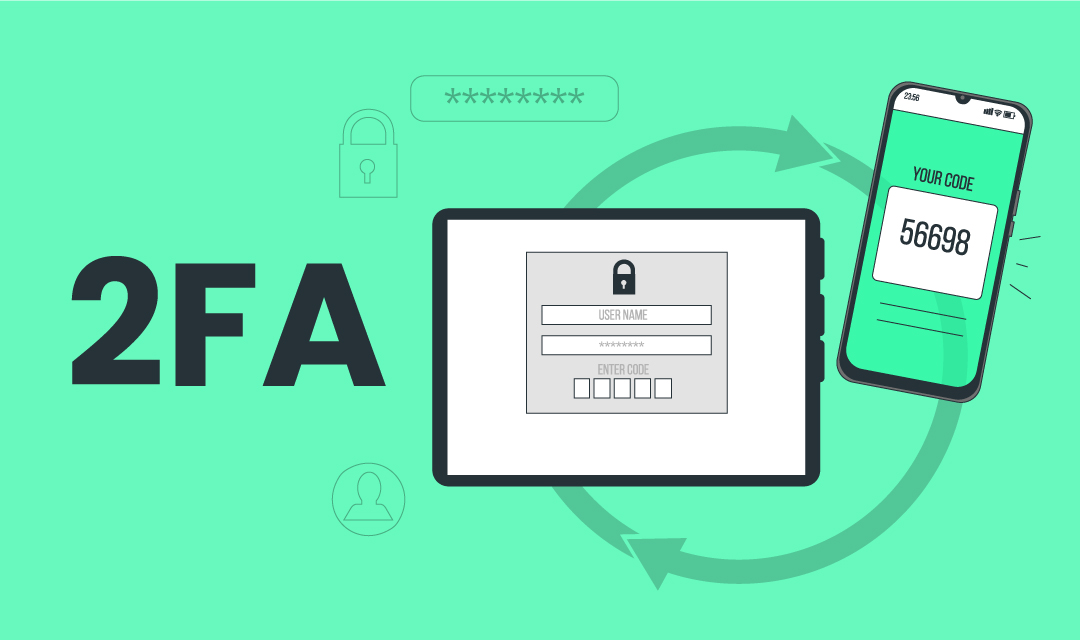
Implementing multi-factor authentication (MFA) and robust identity management solutions will also strengthen privacy protections. By implementing intelligent access control solutions, businesses can ensure information security while maintaining the flexibility required to work from anywhere and collaborate with people in different countries.
4. Encrypt Sensitive Data in Transit and at Rest Without Sacrificing Performance
Encryption is another important security measure for protecting privacy. Data should always be kept confidential while in transit or while stored in the database, cloud, or any backup system.
Today, it is possible to keep business operations unaffected by implementing encryption solutions. Proper key management for the encryption system is also essential, as the system's strength depends on the security of those keys.
End-to-end encryption can be highly useful for businesses that handle financial, health, or proprietary business information. The transparent encryption system should operate seamlessly in the background to meet the required standards for the user experience.
5. Continuously Monitor, Audit, and Automate Compliance Processes
Maintaining privacy is not an event, but an ongoing process. Continuous monitoring can help organizations identify anomalies, potential security breaches, and data breaches promptly.
Automation can help organizations maintain audit trails that provide a thorough overview of how data is accessed or changed. This can also help organizations demonstrate their accountability to the government, business partners, or customers.
There are also compliance management platforms that help organizations track compliance requirements across multiple countries and create real-time reporting dashboards. Understanding privacy and tracking risks can further support organizations in building stronger data protection strategies.
Conclusion
Strengthening online privacy does not have to come at the expense of growth. By adopting secure infrastructure, privacy-by-design principles, zero-trust access controls, robust encryption, and continuous compliance monitoring, businesses can build a strong foundation for both security and scalability.
In an environment where trust is becoming a key competitive advantage, organizations that prioritize privacy are better positioned to innovate, expand globally, and maintain long-term customer confidence.
Ultimately, privacy is no longer just a compliance requirement—it is a strategic enabler of sustainable business growth.
Featured Image generated by ChatGPT.
Share this post
Author

Leave a comment
All comments are moderated. Spammy and bot submitted comments are deleted. Please submit the comments that are helpful to others, and we'll approve your comments. A comment that includes outbound link will only be approved if the content is relevant to the topic, and has some value to our readers.


Comments (0)
No comment