

How to Choose the Right eSIM Data Plan for Your Trip

Reliable mobile data supports smooth travel across unfamiliar destinations and transit routes. Maps, reservations, transportation services, and payments depend on stable connectivity. Weak data access creates delays and unnecessary confusion during international trips. Careful preparation ensures consistent internet access throughout each stage of travel. Review available options early and choose a suitable data plan before departure.
Many travelers review travel eSIM plans before selecting mobile connectivity options for international trips. Most providers offer data-only services designed specifically for international internet access. Communication typically happens through applications such as WhatsApp, Telegram, or FaceTime. Plan comparison helps match data limits with travel duration and destination coverage, especially when considering roaming vs local SIM comparisons for multi-country travel. Early selection prevents uncertainty during airport arrivals and destination transfers.
Assess Destination Coverage and Network Compatibility
Coverage determines whether mobile data remains stable across planned destinations. Providers partner with local carriers to deliver connectivity within supported regions. Strong partnerships improve service reliability across airports, cities, and transit locations. Coverage maps clarify which destinations are supported before purchase.
Plan type considerations:
- Regional plans: Suitable for travel across multiple countries within one geographic area
- Country-specific plans: Best for single-destination trips
Coverage transparency helps prevent unexpected data interruptions while traveling. Detailed coverage information supports confident planning before departure.
Device compatibility:
- Device compatibility influences connection quality and network stability
- Supported frequency bands improve performance across different countries
- Compatible devices connect more smoothly across partner networks
- Compatibility checks help prevent connectivity issues after arrival
Evaluate Data Requirements Based on Trip Activities
Data usage depends on planned travel activities and reliance on digital services. Navigation applications consume moderate amounts of data when exploring unfamiliar locations. Booking confirmations require access to email and reservation platforms. Translation tools and transportation applications can further increase daily data usage.
Typical data needs by trip type:
- Short vacations: Usually require moderate data allowances
- Extended or multi-destination trips: Benefit from larger data limits
- Frequent navigation and itinerary updates: Increase overall data consumption
Accurate estimation helps avoid unexpected data exhaustion and supports consistent connectivity throughout the trip.
Usage patterns to consider:
- Light usage typically includes messaging and navigation
- Media uploads and video communication can increase data usage quickly
- Daily activity patterns directly shape total data requirements
Thoughtful planning helps maintain stable internet access across all travel activities.
Consider Plan Duration and Validity Period
Plan duration should align with the full travel schedule. Validity periods determine how long data remains available, and selecting the right duration helps prevent unexpected service interruptions.
Choosing the right duration:
- Short validity plans: Suitable for weekend trips and brief visits
- Extended validity plans: Ideal for long vacations and business travel
- Flexible durations: Help accommodate itinerary changes and delays
Longer validity periods also support multi-city travel and provide greater flexibility when plans change.
Why validity matters:
- Clear expiration timelines simplify data management
- Awareness of validity helps distribute data usage effectively
- Proper duration ensures uninterrupted access to essential travel services
Thoughtful planning of plan duration helps maintain stable connectivity throughout the trip.
Review Cost Transparency and Pricing Structure
Transparent pricing helps clarify total costs before selecting a plan. Clear breakdowns typically include data allowances, coverage areas, and validity periods, allowing travelers to make informed decisions and avoid confusion.
Understanding pricing tiers:
- Smaller plans: Suitable for light or short-term usage
- Larger plans: Better for extended trips and higher data needs
- Tier comparisons: Help match pricing with travel duration and usage patterns
What to watch for:
- Hidden charges that may increase total cost
- Unclear data limits or restrictions
- Unexpected fees during or after usage
Predictable pricing supports better travel budgeting and reduces the risk of unexpected expenses. Clear cost structures improve confidence when selecting a plan.
Examine Speed, Network Quality, and Reliability
Network speed and stability directly affect how well travel services function. Fast connections improve navigation, reservations, and real-time updates, while stable networks ensure consistent access across different destinations.
Key performance factors:
- 4G and 5G support: Improves speed and responsiveness across supported regions
- Network stability: Maintains consistent data connections during travel
- Speed consistency: Supports reliable access to navigation and booking applications
Real-world conditions:
- Crowded locations may temporarily reduce connection speeds
- Higher-quality providers often maintain more stable performance
- Consistent connectivity improves access to essential travel services
Reliable network performance supports smoother travel coordination and reduces disruptions during daily activities.
Check Activation Process and Ease of Setup
A simple activation process improves convenience before and during travel. Most providers offer QR code installation, allowing quick digital setup without the need for physical SIM cards. An efficient setup ensures connectivity is ready upon arrival.
Setup considerations:
- Pre-trip installation: Enables immediate internet access after landing
- Clear instructions: Simplify configuration across supported devices
- Quick setup: Reduces preparation time before departure
Activation features:
- Automatic activation when entering the destination
- Straightforward configuration with minimal technical steps
- Smooth installation for uninterrupted mobile data access
Easy activation and setup help ensure consistent connectivity and improve overall travel readiness.
Understand Customer Support and Plan Flexibility
Customer support plays an important role in maintaining connectivity during travel. Responsive assistance helps resolve technical issues quickly, while multiple support channels improve accessibility across different destinations.
Support considerations:
- Availability of support across different time zones
- Multiple contact options such as chat, email, or app-based help
- Quick response times for resolving connectivity issues
Plan flexibility:
- Options to upgrade data when needed
- Flexibility to adjust plans for extended stays
- Adaptability to changing travel schedules
Reliable support and flexible plans help reduce disruptions and maintain consistent mobile data access throughout the trip.
Conclusion
Reliable mobile data improves coordination across international travel destinations. Careful evaluation of coverage, duration, pricing, and speed strengthens planning decisions. Well-selected travel eSIM plans provide consistent connectivity across multiple locations.
Review provider features carefully and finalize a suitable plan early. Strong connectivity supports navigation, reservations, and seamless travel experiences.
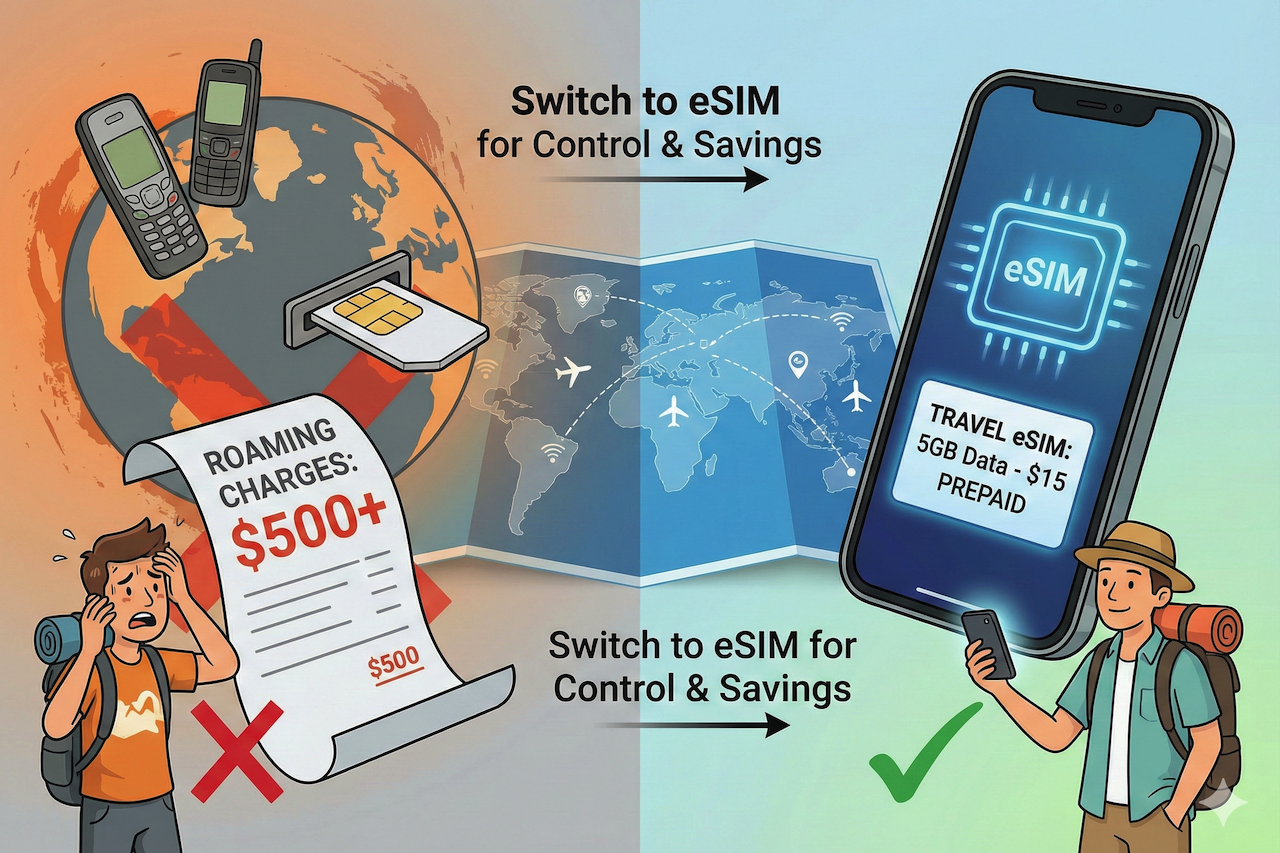
Featured Image generated by ChatGPT.
Related Articles
January 15, 2026
Travel eSIM Apps: How to Reduce Roaming Costs While Traveling
Ten to fifteen years ago, mobile communications abroad were among the most annoying expenses while traveling. Tourists either turned off their phones immediately upon landing o...
Read More
March 26, 2025
Why Reliable Internet Is a Must-Have for Modern Travelers
Travel has always been about discovery, adventure, and the excitement of exploring the unknown. But in today’s connected world, the way we experience travel has evolved. Whether yo...
Read More
June 27, 2024
10 Travel Websites to Make Travel Easier
Planning a trip in the digital epoch is not like the old-fashioned method of using paper and pencil. It has become a much more simple process because of the many online sources tha...
Read More
Comments
Comments are available to signed-in users and are moderated to keep the discussion useful and respectful. Spam, automated submissions, and low-value promotional comments are removed. Outbound links may be approved when they are relevant and genuinely helpful to readers, but they are displayed as plain text rather than clickable hyperlinks.
No comments have been published yet.
Please sign in to submit a comment.