

Cybersecurity, Privacy, Geolocation
Check SIM Owner Details: A 2026 Privacy Warning
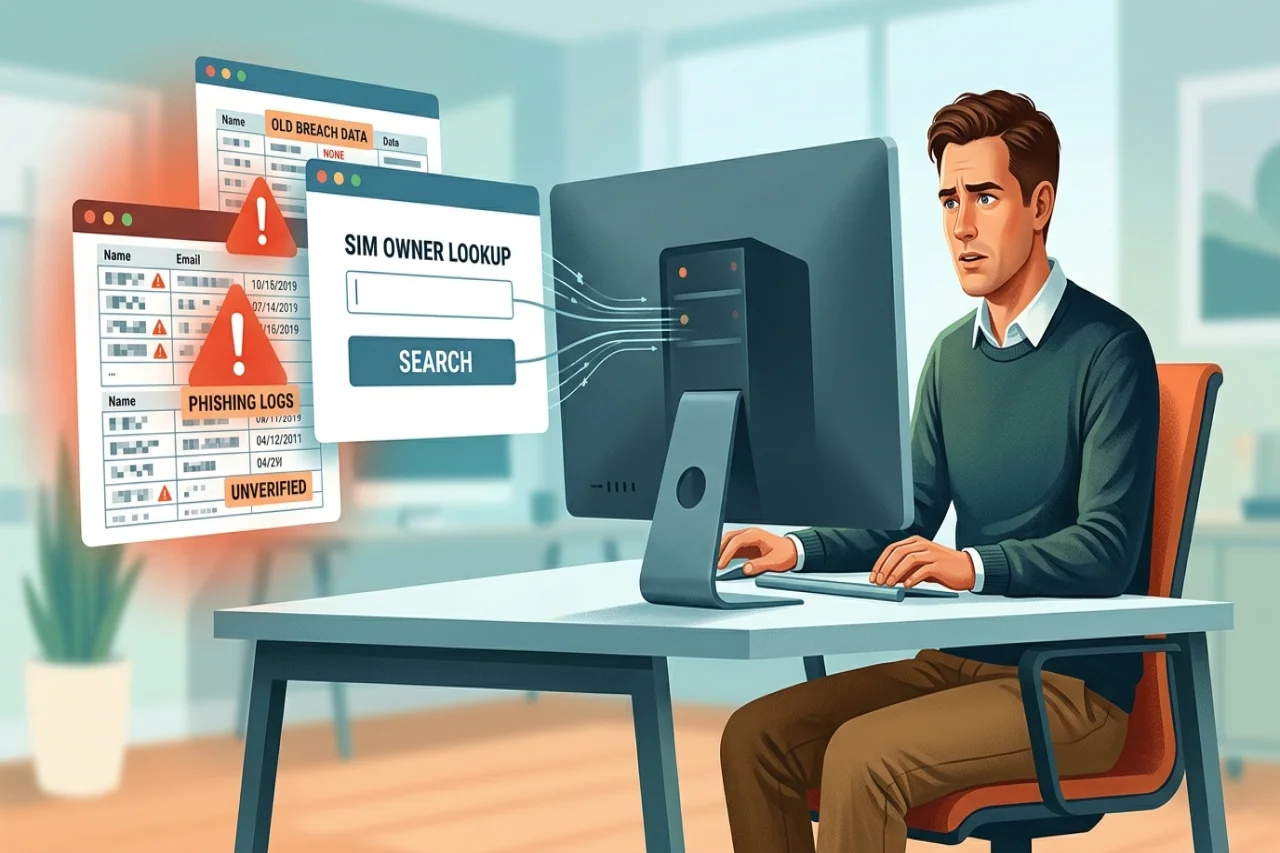
No lawful service should provide SIM owner details for a number that is not yours. Legitimate subscriber records are generally protected by privacy and identity-verification controls rather than exposed through public feeds, so websites advertising unrestricted live lookups should be approached with caution. Their records may come from outdated, unverified, or improperly obtained sources, while information entered into their search forms may also be collected or logged.
That last clause is the part buyers skip over. A lookup site that cannot say where its records came from is not a tool; it is a collection point. Try to check SIM owner details through a lawful channel and exactly one record comes back: your own.
Why a "SIM Database" Cannot Legally Exist
There is typically no legitimate public source for this type of information. SIM owner details are generally held by mobile operators in accordance with regulatory and privacy requirements, with access restricted through identity-verification procedures rather than provided via a public feed, API, or bulk export.
Set that against the lookup tools you use every day. An IP geolocation result often traces back to a regional internet registry allocation. A WHOIS record exists within an established domain registration framework. In both cases, the source of the information and the reason certain data is available can be identified.
Subscriber records are designed differently. Mobile operators collect and maintain identifying information for account registration and verification, but that does not make those records publicly available for download. A website claiming to offer unrestricted live access to private SIM owners' details should therefore be treated with caution, particularly when it does not provide a clear and verifiable explanation of its sources.
Where Unverified SIM Data May Come From
The source of SIM data can vary significantly between services. Some records may come from outdated databases, unauthorized disclosures, or information collected through unverified websites and apps. When reviewing claims about fresh SIM owner details, it is important to consider where the information comes from and whether the source can be independently verified.
- Old breach dumps: SIM owner details exposed in past data breaches may continue circulating online long after the original incident. Static records can be repackaged and presented as newer than they actually are.
- Phishing forms: Some pages presented as lookup tools may instead collect the information users enter. Phone numbers, identification details, and other submitted data could potentially be stored or misused.
- Unofficial apps: Apps distributed outside official stores may request unnecessary access to contacts, messages, storage, or other device data. These permissions can expose substantially more information than is required for a basic lookup.
- Unauthorized access: More recent records could potentially originate from improper access to internal systems or other unauthorized disclosures, raising significant privacy, security, and legal concerns.
A trustworthy service can explain its provenance. These cannot, because the honest answer would be a confession.
What Happens When You Check SIM Owner Details Online
You may hand over more information than you receive. A lookup query can disclose your phone number, identification details, and search activity to an unknown operator, so any service without clear ownership, privacy practices, and data sources should be treated as an untrusted input form.
- The phone number or identification information you submit may be sensitive personal data shared with a service whose privacy and data-retention practices are unclear.
- Your query may be logged alongside technical information such as your IP address and potentially used for profiling, marketing, or phishing attempts.
- Paid services may require payment details, creating additional privacy and financial risks when the operator or payment infrastructure cannot be independently verified.
Many people use these services simply because they want to identify an unknown caller or check whether a connection has been associated with their identity. However, providing sensitive identifiers to an unverified service can create an additional privacy risk. Before entering personal information, users should verify the service's legitimacy, data sources, privacy policy, and security practices.
Five Infrastructure Checks Before You Trust a Lookup Site
None of these checks needs special access, and most take seconds. Run them all before you trust a site that offers to check SIM owner details.
- Domain age: Check the site's registration history using WHOIS or similar domain information. A recently registered domain is not inherently untrustworthy, but it warrants additional scrutiny if the service claims to maintain an established or extensive database.
- Hosting environment: Basic hosting information may reveal whether multiple nearly identical lookup sites operate from the same infrastructure. This can be useful context when evaluating whether a service has an established identity and legitimate operation.
- Provenance statement: Reputable data services should clearly explain where their information comes from. Review the About and Privacy pages for details about data sources, collection methods, retention practices, and how frequently records are updated.
- Payment methods: Be cautious when a service requests payment through methods that provide limited consumer protection or make the recipient difficult to identify. Verify the business and its payment processor before providing financial information.
- App permissions: Review the permissions requested by any lookup app before installing it. Access to contacts, messages, storage, or other sensitive device information should have a clear purpose and should not exceed what is necessary for the service to function.
This does not make every people-search product illegitimate. Some services aggregate information that is already available through lawful public records or other authorized sources. Reputable providers should clearly explain where their information comes from and how it is collected. SIM owner details, however, are generally treated as private subscriber information rather than public records, so users should be cautious of services claiming unrestricted access without identifying a legitimate and verifiable data source.
Privacy Laws and Enforcement
Using another person's identity information without authorization can violate privacy, data-protection, computer-misuse, or identity-theft laws. The exact rules and penalties vary by jurisdiction, but accessing, obtaining, selling, or distributing private subscriber information without permission can carry significant legal consequences.
These restrictions can apply to more than the person who originally obtained the data. Depending on local law and the circumstances, individuals or businesses that knowingly purchase, redistribute, or misuse unlawfully obtained identity information may also face liability.
Authorities in many jurisdictions investigate data breaches, unauthorized access, identity theft, and the unlawful sale of personal information. Telecommunications providers may also be subject to regulatory requirements governing customer verification, security controls, and the handling of subscriber records.
If a service appears to be selling private SIM owner details without a legitimate source or authorization, avoid submitting personal information or making a purchase. Suspected misuse can instead be reported to the appropriate telecommunications regulator, data-protection authority, consumer-protection agency, or cybercrime reporting service in your jurisdiction.
The Lawful Check: Your Own SIM Records
Legitimate SIM lookup and account-management services generally require identity verification and restrict access to information associated with your own account or identity. If you need to check SIM owner details online, it is important to understand which verification methods are legitimate and what information can lawfully be accessed. This approach protects private subscriber information while allowing you to answer a more relevant question: which mobile connections are registered to me?
- Use your mobile operator's official services: Check the provider's website, mobile app, customer service line, or account portal for options to review connections associated with your identity.
- Use official regulatory services: Some jurisdictions provide government or telecommunications regulator tools that allow individuals to check which mobile connections are registered under their identification.
- Verify your identity: Legitimate services may require account credentials, one-time verification codes, identification documents, or other authentication before displaying subscriber information.
- Contact the operator directly: If you discover an unfamiliar connection or cannot verify your records online, contact the relevant mobile operator through its official support channels.
The number of mobile connections that can be registered to one person and the procedures for reviewing or removing them vary by jurisdiction and provider. If you find a connection you do not recognize, contact the mobile operator or relevant telecommunications authority to verify the record and determine the appropriate next steps.
Be cautious of websites claiming access to private subscriber databases through terms such as "live database," "face verified," or "official registry access" without providing a verifiable source. Legitimate identity-verification systems generally use access controls specifically to prevent unauthorized users from retrieving another person's private subscriber information.
Keeping Your Personal Information Out of the Next Data Leak
Two habits can reduce your exposure: regularly review the mobile connections associated with your identity and treat identification numbers and account credentials as sensitive information. Mobile operators and regulators may periodically identify and deactivate invalid or improperly registered connections, but users should still monitor their own accounts rather than relying solely on broader enforcement efforts.
- Check periodically: Review the mobile connections registered to your identity through your provider or an authorized regulatory service. It is also worth checking after losing a phone, identification document, or SIM card.
- Report unfamiliar connections: If you find a number or account you do not recognize, contact the relevant mobile operator through its official support channels and request an investigation or removal where appropriate.
- Avoid unofficial forms: Do not enter identification numbers, account credentials, or other sensitive information into an unverified SIM lookup website.
- Avoid sideloaded lookup apps: Be cautious of unofficial apps distributed outside trusted app stores, particularly when they request access to contacts, messages, storage, or other unrelated information.
- Report suspected misuse: Services that appear to sell unlawfully obtained subscriber information can be reported to the appropriate telecommunications regulator, data-protection authority, consumer-protection agency, or cybercrime reporting service.
Judge Any Lookup Tool by Its Source
Every tool worth using can answer one question about itself: where did this record come from? IP geolocation points back to a registry allocation. WHOIS has a registrar behind it. A service inviting you to check SIM owner details has no answer, because the truthful one would be breach dumps, phishing forms and malware, relabelled once a year.
Subscriber records are generally protected by access controls and are not intended to function as public databases. The most trustworthy way to review SIM information is through your mobile operator or an authorized regulatory service using appropriate identity verification. Avoid services that claim unrestricted access to private subscriber details, and report suspected misuse or unauthorized data sales to the appropriate telecommunications, data protection, or cybercrime authority.
FAQ
Frequently Asked Questions
01Do SIM database websites ever return real data?
Sometimes, breach dumps contain genuine historical records. However, the information may be outdated, unverifiable, or improperly obtained, and an untrusted lookup service may also collect information about your search, including your IP address. Even when some results are accurate, that does not establish that the service or its data source is legitimate. Accessing or using another person's private information without authorization may also violate applicable privacy, identity theft, or computer misuse laws.
02Is it illegal to check SIM owner details for someone else's number?
Potentially. Obtaining, selling, transmitting, or otherwise using another person's identity information without authorization may violate privacy, data protection, identity theft, or computer misuse laws. The specific rules and penalties vary by jurisdiction, so users should rely on authorized services and avoid purchasing access to private subscriber information from unverified sources.
03How can I legally check SIM owner details?
Legitimate services generally allow you to check SIM information associated with your own identity or account after appropriate verification. Depending on your jurisdiction, this may be available through your mobile operator, an official telecommunications regulator, or an authorized online portal. These services are designed to protect subscriber privacy and generally do not provide another person's private registration details without proper authorization.
04Why do these sites reappear after seizures and arrests?
Because the inputs are cheap: an old dump, a templated site, and a Telegram channel. Removing a seller does not delete files that have already been copied and rehosted elsewhere. The same information can continue circulating across different sites and channels long after its original source has disappeared.
05What should I do if my SIM owner details appear in one of these databases?
Treat the information as potentially originating from an old data breach or another unauthorized source. Review the mobile connections associated with your identity via your provider's official services or an authorized regulatory tool, and contact the relevant operator if you discover any you do not recognize. You can also report websites or channels that appear to distribute private subscriber information to the appropriate telecommunications regulator, data-protection authority, or cybercrime reporting service.
Comments
Comments are available to signed-in users and are moderated to keep the discussion useful and respectful. Spam, automated submissions, and low-value promotional comments are removed. Outbound links may be approved when they are relevant and genuinely helpful to readers, but they are displayed as plain text rather than clickable hyperlinks.
No comments have been published yet.
Please sign in to submit a comment.