

The Hidden Cybersecurity Risks in Procurement Workflows
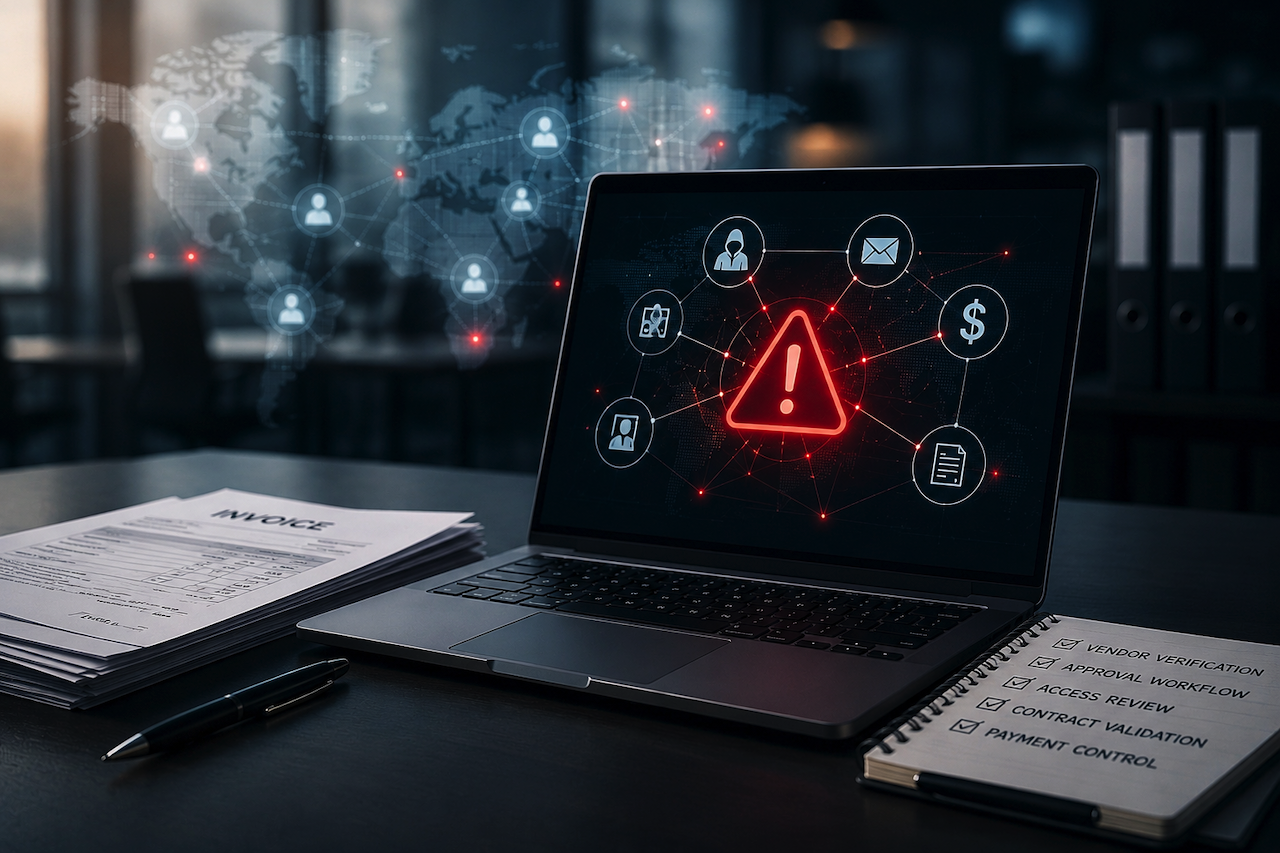
As organizations map their cybersecurity exposure, they naturally highlight common targets like endpoints, email, cloud assets, and login credentials. Procurement workflows are rarely considered important enough to be included in this list, and attackers have increasingly exploited that gap in recent years.
Procurement is inherently a function built around external relationships. Vendors come and go, contracts are executed and approved, and sensitive financial and operational data moves in and out of the company on a regular basis. The scale and regularity of that activity make procurement one of the more problematic blind spots in enterprise security, not necessarily because the software itself is vulnerable, but because the surrounding processes often are.
Vendor Onboarding as an Attack Vector
The point at which a new vendor joins an organization’s procurement workflow is among the least-audited phases of the entire procure-to-pay cycle. In organizations without a structured onboarding process, a vendor can sometimes be added with minimal verification. A name, bank account, and contact email are often enough.
Those same data elements are also enough to impersonate a legitimate vendor, reroute payments, or establish a fraudulent vendor relationship that may remain undetected for months.
Business Email Compromise (BEC) attacks targeting procurement and accounts payable functions have evolved into a substantial threat category. The common pattern involves attackers presenting themselves as an existing vendor or a new supplier referral, submitting updated banking details, and waiting for the next payment cycle.
The effectiveness of these attacks is not driven by technical complexity. It is driven by weak operational controls. Social engineering remains highly effective when organizations lack consistent vendor verification procedures and a documented approval trail for onboarding decisions.
The Visibility Problem
Outside of onboarding fraud, procurement operations also face a broader visibility issue that often goes unaddressed. The primary challenge appears in organizations that do not maintain a clear, current view of their active vendors.
In larger organizations, especially those operating across multiple entities, regions, or business units, vendor records often grow in an unmanaged way over time. A vendor approved in one region may not be visible to procurement teams elsewhere. Vendors with expired agreements may still appear active. Accounts tied to former employees or outdated contacts may remain accessible long after they should have been removed.
Each of these situations creates legitimate security exposure:
- Unauthorized payment pathways
- Unmonitored data-sharing relationships
- Dormant access points that have not been reviewed in years
This risk profile is not hypothetical. Many supply chain attacks have demonstrated that the weakest link is often not an internal technical vulnerability, but an external party that retained access because oversight processes failed. Vendors with access to financial operations or sensitive business data fit this exact profile.
Where Process Controls Become Security Controls
Security discussions often frame procurement risk primarily in technical terms such as ERP vulnerabilities, API exposure, or application-layer access controls. While those concerns are legitimate, they are already heavily monitored by IT and security teams.
The more procurement-specific risk usually exists at the process level, which is also the area most commonly underestimated.
In practice, the same controls that reduce procurement operational risk also reduce procurement security risk:
- Centralized visibility
- Documented approval workflows
- Systematic vendor verification
Maintaining visibility into approved vendors, understanding how they were vetted, and reviewing vendor relationships across business units is no longer simply an operational best practice. It increasingly functions as a security control.
For organizations evaluating what this level of oversight looks like in practice, the process often includes centralized vendor records, standardized onboarding workflows, documented approval chains, and periodic reviews of supplier access and payment details.
Structured vendor management practices that centralize onboarding, maintain documentation records, and require formal approval before activating suppliers can help reduce the process gaps that vendor fraud and social engineering attacks depend on. These controls also create audit trails that improve both compliance oversight and post-incident investigations.
The Underappreciated Risk
Procurement often remains underprioritized in security planning because it does not fit neatly into the network, endpoint, or infrastructure-focused models that dominate cybersecurity investment discussions.
Yet the attack patterns targeting procurement gaps continue to mature, and the consequences of a compromised vendor relationship often extend well beyond a single fraudulent invoice.
Organizations that manage this exposure effectively are not always the ones with the most sophisticated security tools. More often, they are the ones that addressed the operational and process gaps first, because that is usually where the risk enters the procurement chain.
Featured Image generated by ChatGPT.
Related Articles

March 6, 2026
The Security Risks of Standard Data Sharing
Most professional workflows are a patchwork of insecure habits. To move a project forward, you probably use a combination of email, SMS, and generic cloud storage. You assume that...
Read More
November 3, 2025
Cybersecurity in Autonomous Vehicles: Risks and Safeguards
Picture this: You’re driving home in your shiny new autonomous car. Suddenly, someone halfway across the globe gains control of it. Frightening, right? As cars become more advanced...
Read More
November 29, 2021
What Is Cybersecurity Compliance And How Businesses Can Get It Right
With cyberattacks on the rise against businesses this year, more attention is being paid to how businesses and organizations can protect the sensitive information they hold. This y...
Read More
Comments
Comments are available to signed-in users and are moderated to keep the discussion useful and respectful. Spam, automated submissions, and low-value promotional comments are removed. Outbound links may be approved when they are relevant and genuinely helpful to readers, but they are displayed as plain text rather than clickable hyperlinks.
No comments have been published yet.
Please sign in to submit a comment.