

How Cyber Threats Are Transforming the Auto Industry
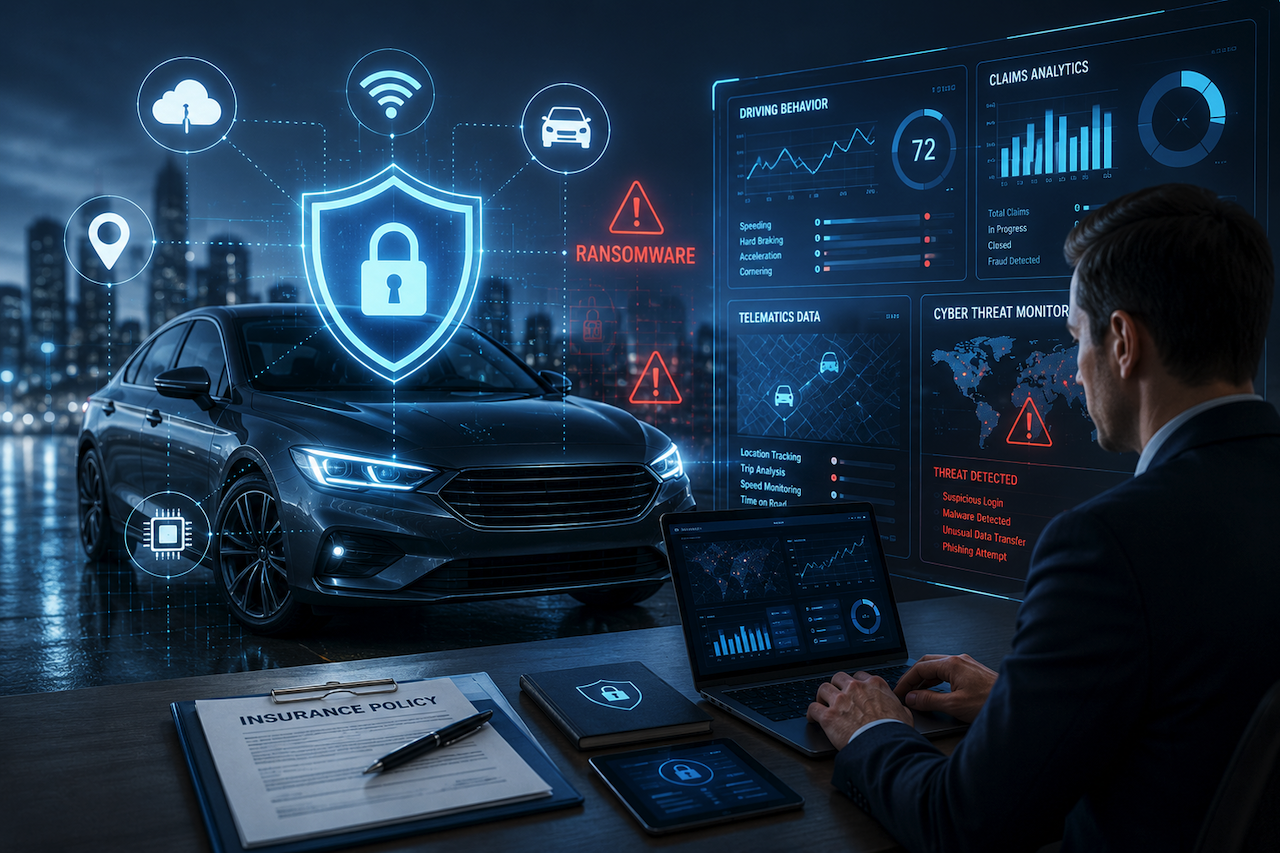
The automotive industry is undergoing one of the most significant transformations in its history as digital technology reshapes how vehicles operate and how organizations manage mobility, transportation, and connected services. Connected cars, telematics systems, cloud platforms, artificial intelligence, and mobile applications have improved efficiency, personalization, and convenience. However, this rapid technological evolution has also introduced a new and increasingly dangerous challenge: cyber threats.
Modern vehicles are no longer simply mechanical machines. They are sophisticated digital ecosystems that continuously collect, transmit, and analyze vast amounts of data. Organizations throughout the connected vehicle ecosystem now rely heavily on digital platforms and real-time information to manage operations, analyze driving behavior, support mobility services, and deliver connected experiences. While these advancements provide major benefits in efficiency, safety, and convenience, they also create multiple vulnerabilities that cybercriminals are eager to exploit.
As cyberattacks become more sophisticated, the risks associated with connected transportation systems are expanding beyond physical accidents and vehicle theft. Organizations throughout the automotive ecosystem must now confront ransomware attacks, data breaches, AI-driven fraud, and cybersecurity risks tied to connected and autonomous vehicles. The growing dependence on digital infrastructure has transformed cybersecurity from a technical concern into a critical business issue that directly impacts financial performance, regulatory compliance, customer trust, and operational resilience.
The Expanding Cyber Risk Landscape
The digital transformation of the automotive and transportation sectors has created enormous opportunities for innovation, but it has also significantly increased exposure to cyber threats. Organizations throughout the connected vehicle ecosystem now store and process massive amounts of highly sensitive information, including customer identities, financial records, driving histories, geolocation details, and behavioral driving patterns collected through telematics systems. This information is highly valuable to cybercriminals, making automotive, mobility, and transportation organizations attractive targets for attacks.
While cyber threats affect the broader connected vehicle ecosystem, insurance providers face their own unique challenges because of the volume of sensitive customer and claims data they manage.
“One of the most common threats facing insurers today is ransomware. In these attacks, cybercriminals infiltrate company systems, encrypt critical data, and demand payment in exchange for restoring access. For auto insurers, operational downtime can severely disrupt claims processing, underwriting, customer service, and payment systems. Even a short interruption can create significant financial losses and damage customer confidence.” — Eamonn Turley, Auto Insurance Expert at MultiQuoteTime
Phishing and social engineering attacks are also becoming increasingly sophisticated. Employees, customers, and users are often targeted through fraudulent emails, fake service requests, or impersonation schemes designed to steal credentials or gain access to sensitive systems. Since many cyber incidents begin with human error, organizations throughout the connected vehicle ecosystem are under growing pressure to strengthen cybersecurity awareness and training programs.
Cloud computing and third-party integrations have introduced additional risks. Many organizations now depend on external vendors and digital platforms to support operations, customer communication, and data analytics. Weaknesses in cloud infrastructure or application programming interfaces can create entry points for attackers. As connected vehicle technologies continue to evolve, securing interconnected systems has become far more complex.
Artificial intelligence is also reshaping cybercrime across the automotive and transportation sectors. Fraudsters are increasingly using AI tools to generate fake identities, manipulate images, and produce fraudulent documentation that can bypass traditional detection systems. As technology evolves, organizations face an ongoing challenge in balancing defensive cybersecurity capabilities against increasingly advanced cybercriminal tactics.
Connected and Autonomous Vehicles Are Changing Risk Models
The rise of connected vehicles has fundamentally altered the cybersecurity landscape for the automotive industry. Modern cars are equipped with internet connectivity, onboard sensors, GPS tracking, mobile applications, and remote software update capabilities. These systems continuously exchange information with manufacturers, drivers, infrastructure networks, mobility platforms, and other connected services. While these technologies improve convenience, safety, and driving efficiency, they also create new vulnerabilities that did not exist in traditional vehicles.
Cybersecurity experts have repeatedly demonstrated that connected vehicles can potentially be compromised remotely if proper protections are not in place. Attackers may attempt to gain unauthorized access to vehicle systems, interfere with navigation systems, disable safety features, or manipulate vehicle controls. Such scenarios raise serious concerns for vehicle manufacturers, mobility providers, fleet operators, regulators, and consumers, while also creating complex questions around safety, responsibility, and risk management.
Connected and autonomous vehicles are also creating new questions around liability, responsibility, and risk assessment. These challenges affect manufacturers, software developers, mobility providers, regulators, and insurers alike. As software plays a larger role in vehicle operation, organizations throughout the transportation ecosystem are being forced to reconsider how automotive risks are evaluated and managed.
“Autonomous and semi-autonomous vehicles introduce even more complicated challenges. As vehicles become increasingly dependent on software and artificial intelligence, determining responsibility after an accident becomes far more difficult. If a self-driving vehicle experiences a cyberattack or software malfunction that results in a collision, insurers must determine whether liability rests with the driver, the vehicle manufacturer, the software developer, or another third party.
These developments are forcing insurance companies to rethink traditional underwriting models. Cybersecurity assessments are becoming an increasingly important component of evaluating automotive risk. Insurers are now considering factors such as software integrity, system vulnerabilities, and digital maintenance practices alongside conventional measures like accident history and driver behavior.” — Anam Barkan, Founder and CEO at HireGo
The emergence of connected mobility ecosystems is expanding the scope of cybersecurity and operational risk across the transportation sector. Fleet operators, ridesharing companies, and smart transportation systems all depend on digital infrastructure that may become vulnerable to cyberattacks. As mobility services continue to evolve, organizations must adapt to a rapidly changing environment where digital security directly affects safety, operations, and business continuity.
Data Breaches and Customer Privacy Concerns
Customer data protection has become one of the most pressing issues facing the connected vehicle ecosystem. Vehicle manufacturers, mobility providers, insurers, and fleet operators collect enormous amounts of personal and behavioral information through telematics devices, connected vehicle systems, and smartphone applications. These technologies monitor data such as speed, braking patterns, travel routes, and driving times to support analytics, safety initiatives, mobility services, and risk assessment.
While many consumers appreciate the benefits of personalized services and data-driven experiences, they are also increasingly concerned about how their information is collected, stored, and shared. A single data breach can expose sensitive personal information and severely damage public trust in an organization.
The financial consequences of data breaches continue to rise across many industries. Costs associated with incident response, legal liabilities, regulatory penalties, customer compensation, operational disruption, and reputational harm can reach millions of dollars. In some cases, the long-term impact on customer trust and brand reputation may be even more damaging than the immediate financial losses.
Regulatory scrutiny is also intensifying. Governments and regulatory agencies around the world are introducing stricter data privacy and cybersecurity requirements. Regulations such as the General Data Protection Regulation in Europe and the California Consumer Privacy Act in the United States require organizations to implement stronger safeguards for consumer data and provide greater transparency regarding data collection practices. These requirements increasingly affect vehicle manufacturers, mobility providers, fleet operators, and other organizations that collect and process connected vehicle data.
Compliance has become increasingly challenging as organizations adopt AI-driven analytics, cloud computing platforms, and cross-border data processing systems. Companies must navigate evolving cybersecurity regulations while maintaining operational efficiency and customer convenience. Failure to meet regulatory expectations can result in substantial penalties, reputational damage, and increased legal exposure.
In this environment, cybersecurity is becoming a critical element of customer trust. Consumers are more likely to engage with organizations that demonstrate strong commitments to data protection, privacy, and digital transparency. As competition intensifies, organizations that prioritize cybersecurity may gain a significant reputational advantage.
Financial and Operational Consequences of Cyberattacks
Cyberattacks can have devastating financial and operational consequences for organizations throughout the connected vehicle ecosystem. Unlike traditional operational disruptions, cyber incidents can spread rapidly across interconnected systems and affect multiple areas of a business simultaneously. Customer platforms, telematics systems, fleet-management tools, mobility applications, and communication networks may all become inaccessible during a major attack.
Operational downtime can lead to delayed services, reduced productivity, revenue losses, and customer dissatisfaction. In a highly competitive environment where customer experience is increasingly important, prolonged service interruptions can significantly damage an organization's reputation and market position.
Cyber incidents are creating growing financial and operational pressures across the broader automotive ecosystem. As ransomware attacks and data breaches become more frequent, organizations are investing more heavily in cybersecurity, incident response planning, and risk management strategies. Businesses throughout the automotive sector, including dealerships, suppliers, logistics companies, fleet operators, and mobility providers, are seeking ways to reduce exposure to cyber-related disruptions and financial losses.
Managing cyber risk presents major challenges for organizations across the connected vehicle ecosystem. The cyber threat landscape changes rapidly, and there is limited historical data available for accurately predicting future impacts. Unlike many traditional operational risks, cyber incidents can create systemic exposure by affecting multiple organizations simultaneously through supply chain attacks, cloud service disruptions, or shared software vulnerabilities.
Third-party risk management has become another critical concern. Organizations increasingly rely on external technology vendors, cloud providers, software platforms, and data processing partners. A vulnerability within a single vendor’s system can create cascading effects throughout the connected vehicle ecosystem. Several recent cyber incidents across global industries have demonstrated how supply chain attacks can disrupt operations far beyond the initial target organization.
As a result, organizations are investing heavily in cyber resilience strategies that focus not only on prevention but also on rapid response and recovery capabilities. Business continuity planning, incident response preparedness, and operational resilience are becoming essential components of modern risk management.
How the Industry Is Responding to Emerging Threats
To address growing cyber risks, organizations throughout the automotive industry are significantly increasing investments in cybersecurity technologies and digital risk management strategies. Artificial intelligence and machine learning are playing an increasingly important role in identifying suspicious activity, detecting fraud patterns, and responding to threats in real time. AI-powered systems can analyze enormous volumes of data far more efficiently than traditional security tools, allowing organizations to detect anomalies before major damage occurs.
Organizations throughout the automotive industry are also adopting more advanced security frameworks such as zero-trust architectures, which require continuous verification of users and devices attempting to access corporate systems. Multi-factor authentication, encryption technologies, and endpoint protection solutions are becoming standard across the industry.
At the same time, organizations throughout the automotive industry are increasing investments in cybersecurity, digital risk management, and operational resilience. Vehicle manufacturers, connected vehicle operators, dealerships, mobility providers, and transportation companies are strengthening their defenses against ransomware attacks, business interruptions, data breaches, and other cyber-related threats.
Collaboration is becoming another key strategy in combating cyber threats. Vehicle manufacturers, mobility providers, cybersecurity firms, technology vendors, transportation companies, and regulators are working more closely together to share threat intelligence and develop industry-wide security standards. Because cyber risks often span interconnected ecosystems, cooperation is essential to improving resilience and reducing systemic vulnerabilities.
The automotive industry is also placing greater emphasis on cybersecurity culture and employee awareness. Since many cyber incidents originate from phishing attacks or human error, training programs are becoming increasingly important. Organizations are recognizing that cybersecurity is not solely an IT responsibility but a company-wide business priority.
Conclusion
As vehicles become increasingly connected, cybersecurity is evolving from a technical concern into a critical business issue across the automotive industry. Vehicle manufacturers, mobility providers, fleet operators, technology vendors, and insurers all face growing exposure to cyber risks that can affect safety, operations, customer trust, and financial performance.
Addressing these challenges requires a combination of strong cybersecurity practices, resilient infrastructure, industry collaboration, and ongoing investment in emerging technologies. Organizations that prioritize cyber resilience will be better positioned to adapt to an increasingly complex threat landscape as connected transportation continues to evolve.
Featured Image generated by ChatGPT.
Related Articles
December 22, 2025
Securing the Connected Car: AI-Driven Cybersecurity Strategies
Cars aren't what they used to be. Today's vehicles have evolved into rolling data centers, packed with electronic control units, wireless connections, and complex software. This sh...
Read More
May 29, 2024
The Importance of Cybersecurity in Automotive Software Development
The automobile industry is one of the most changed industries in the context of contemporary technical development. Today, automobiles are no longer simply mechanical products but...
Read More
February 27, 2024
From Clicks to Cars: Understanding Cyber Risks in the Digital Automotive Marketplace
The automotive sector has experienced a significant transition in the connected digital landscape of today. Consumers now have unparalleled access to a wide choice of vehicles at t...
Read More
Comments
Comments are available to signed-in users and are moderated to keep the discussion useful and respectful. Spam, automated submissions, and low-value promotional comments are removed. Outbound links may be approved when they are relevant and genuinely helpful to readers, but they are displayed as plain text rather than clickable hyperlinks.
No comments have been published yet.
Please sign in to submit a comment.