

Computing, Cloud Services, Web Hosting
Top AI Factory Operators for AI Labs
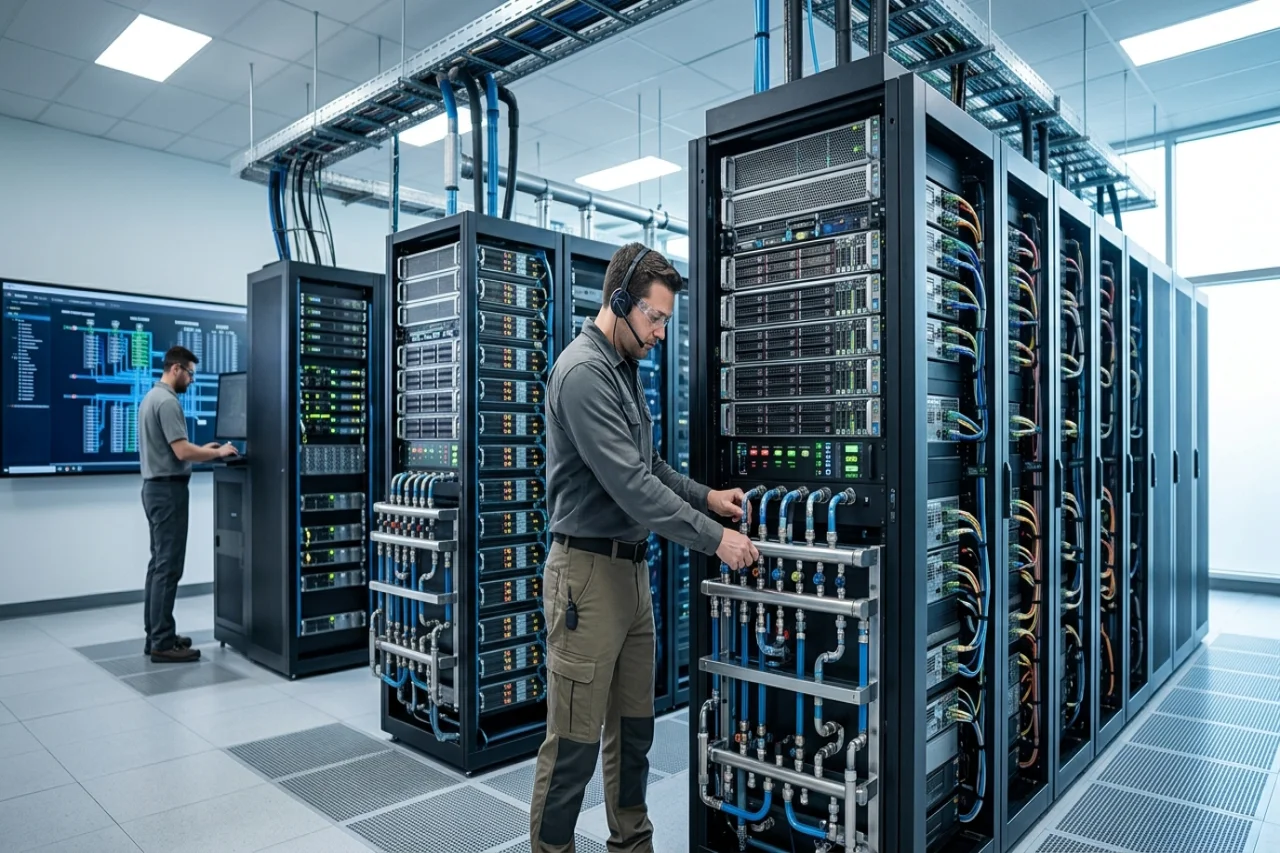
AI labs running serious training, reasoning, or inference workloads eventually hit an infrastructure problem that cannot be solved by looking at accelerator specifications alone. At rack scale, power, cooling, networking, storage, orchestration, compliance, and workload planning all affect whether expensive hardware can stay productive.
That makes the choice of AI factory operator especially important for labs moving beyond smaller development environments. Some providers focus on flexible access to infrastructure. Others are designed around reserved clusters. A smaller group takes responsibility for more of the physical and operational infrastructure behind the workload.
I compared the operators below based on their suitability for AI labs, hardware options, bare-metal access, infrastructure model, networking, scalability, deployment options, pricing transparency, and operational support.
What is an AI Factory?
An AI factory is infrastructure designed to support AI workloads at production scale by combining the computing hardware with the systems required to operate it effectively.
For an AI lab, that means looking beyond accelerator availability. Power density, cooling, high-speed networking, orchestration, workload management, storage, and operational controls all affect how efficiently a large training or inference environment can run.
The operating model differs between providers. CambridgeNexus, for example, organizes its AI factory around seven connected layers: power, cooling, networking, compute, orchestration, compliance, and customer workload planning.
This distinction matters more as labs move toward full-rack systems. A single GB300 rack draws roughly 132–140 kW, so hardware procurement and the surrounding physical infrastructure need to be considered together.
How I evaluated the top AI factory operators for AI labs
For an AI lab, the accelerator is only one part of the purchasing decision. I focused on practical criteria including:
- Access to current rack-scale NVIDIA infrastructure
- Bare-metal availability
- Suitability for large training, reasoning, and inference workloads
- High-speed networking and storage
- Ability to reserve dedicated capacity
- Operational support around the infrastructure
- Deployment flexibility
- Pricing transparency
- Fit for labs that expect their infrastructure requirements to grow
Quick comparison table
| Operator | Best for | Pros | Cons |
|---|---|---|---|
| CambridgeNexus | AI labs needing full GB300 racks | Full-rack GB300, bare-metal, integrated operations | Whole-rack commitment only |
| Nscale | Large training and reasoning workloads | Reserved capacity, dedicated infrastructure, broad platform | More deployment models to evaluate |
| Sesterce | Labs prioritizing integrated AI infrastructure | AI factory model, integrated infrastructure, sovereign AI support | Large deployments require commercial planning |
| WhiteFiber | Labs needing configurable AI infrastructure | Dedicated clusters, managed infrastructure options | Hardware availability depends on configuration |
| Denvr | Flexible bare-metal research environments | Bare-metal access, technical control, high-speed infrastructure | Less focused on complete GB300 rack deployments |
5 top AI factory operators for AI labs
1. CambridgeNexus
CambridgeNexus is an AI factory operator built for production-grade AI workloads. CNEX owns and operates full NVIDIA GB300 NVL72 racks and leases them bare-metal from a single rack upward.
What puts CambridgeNexus first for me is the operating model. Power, cooling, networking, compute, orchestration, compliance, and customer workload planning sit under one integrated structure. For an AI lab moving into rack-scale infrastructure, that removes several infrastructure layers that would otherwise have to be sourced and coordinated separately.
CNEX operates multiple data center sites, with racks pre-manufactured before being prepared for installation at the contracted deployment site.
What I like about CambridgeNexus
- It is designed around full-rack requirements: CNEX leases complete NVIDIA GB300 racks, bare-metal. That makes the offer particularly relevant to established AI labs procuring infrastructure at rack scale.
- Infrastructure operations are integrated: CambridgeNexus operates power, cooling, networking, compute, orchestration, compliance, and workload planning as seven connected layers.
- The deployment model is concrete: CNEX states 60 days from contract to installation and acceptance, or faster depending on rack availability. Customers can lease from a single rack upward on terms from 6 months to 5+ years.
That combination makes the CambridgeNexus AI factory particularly interesting for labs that want rack-scale infrastructure without assembling the supporting facility and operating layers separately.
Where CambridgeNexus falls short
- It is not designed for small allocations: CNEX works from one full rack upward, so teams that do not need rack-scale capacity will need a different model.
- The hardware focus is specific: The offering centers on full NVIDIA GB300 NVL72 systems. Labs prioritizing a broad selection of hardware generations may prefer a less specialized provider.
- Pricing varies by deployment: Final pricing depends on the deployment requirements and commercial agreement.
Pricing
CambridgeNexus uses a leasing model. Customers lease from a single rack upward on terms from 6 months to 5+ years.
2. Nscale
Nscale is a strong option for AI labs that need large dedicated environments and want infrastructure, networking, storage, orchestration, and fleet operations available through the same provider. Its current offering spans physical infrastructure through managed AI services.
What I like about Nscale
- It supports large dedicated environments: Nscale positions its infrastructure services around dedicated GPU infrastructure that can be adapted to a customer's platform and operating requirements.
- Networking and storage are part of the infrastructure offer: That matters for distributed training workloads where accelerator performance alone does not determine cluster performance.
- Operational tooling is available: Nscale also provides fleet observability, fault detection, remediation, and resource governance.
Where Nscale falls short
- Nscale covers a wider range of infrastructure and software services: That flexibility can be useful, but AI labs specifically looking for a straightforward full-rack operating model may have more architectural options to work through before choosing a configuration.
Pricing
Pricing for large dedicated deployments is not publicly listed as a standard fixed rate and varies based on deployment requirements.
3. Sesterce
Sesterce is particularly relevant for AI labs and organizations that place a high priority on infrastructure and data residency. The company describes its facilities as AI Factories and integrates energy, facilities, NVIDIA hardware, networking, and orchestration.
What I like about Sesterce
- The AI factory positioning reflects the underlying infrastructure: Sesterce describes a vertically integrated model spanning energy, facilities, silicon, fabric, and orchestration.
- It supports regional infrastructure requirements: Its infrastructure strategy includes sites and deployments designed to support sovereign AI workloads.
- Modern NVIDIA systems are part of the roadmap: The company publicly lists GB300 alongside other NVIDIA architectures in its infrastructure portfolio.
Where Sesterce falls short
- Sesterce supports several infrastructure consumption and deployment models: That breadth can be helpful, but buyers looking specifically for a standardized full-rack lease may need more configuration before deployment.
Pricing
Sesterce publishes pricing for some configurations, while larger AI factory deployments and reserved infrastructure can require custom commercial terms.
4. WhiteFiber
WhiteFiber is a vertically integrated AI infrastructure company offering dedicated clusters, managed infrastructure, and data center services. It is a reasonable fit for AI labs that want more flexibility around how their environment is designed and operated.
What I like about WhiteFiber
- It operates both facilities and AI infrastructure: WhiteFiber emphasizes control over the underlying data center environment as well as compute, networking, storage, and cooling.
- Dedicated infrastructure is part of the offering: That can suit labs where predictable access and infrastructure isolation matter.
- Infrastructure design support is available: WhiteFiber describes services intended to help customers determine and deploy infrastructure around workload requirements.
Where WhiteFiber falls short
- WhiteFiber supports several infrastructure models: This makes its offering broader than providers focused specifically on complete GB300 NVL72 rack leases.
- Hardware and configuration availability can vary: The exact accelerator generation, site, and dedicated configuration depend on the intended deployment.
Pricing
Pricing depends on the hardware, infrastructure model, and level of operational support. Pricing for larger dedicated deployments varies based on configuration and requirements.
5. Denvr
Denvr is worth considering for research and engineering teams that want a configurable technical environment and direct control over their AI workloads. Its platform documentation shows support for development environments and AI applications aimed at technical users.
What I like about Denvr
- It is accessible to technical research teams: Denvr's platform supports development environments and common AI tooling, which can make it useful for labs that want more control over how software environments are configured.
- The environment is geared toward AI workloads: Its platform documentation includes AI application workflows rather than positioning the infrastructure as generic hosting.
- It can suit teams that are not yet committed to a complete rack: That gives it a different use-case fit from CambridgeNexus.
Where Denvr falls short
- Denvr supports a broader infrastructure model: It is less specifically aligned with labs procuring complete NVIDIA GB300 NVL72 racks under a single integrated physical infrastructure operating model.
- The deployment model differs from a full-rack approach: Teams requiring a full rack with supporting power, cooling, networking, orchestration, and compliance under one operator may find a specialized full-rack model more closely aligned with those requirements.
Pricing
Pricing varies by configuration and commitment, with commercial terms for larger dedicated deployments depending on the infrastructure requirements.
How to choose an AI factory operator
The right AI factory operator depends less on which company has the longest feature list and more on how closely its operating model matches the lab's workload.
- Start with the unit of infrastructure you actually need: If the lab is already planning around a complete rack, compare providers that can support rack-scale deployments directly. If the requirement is smaller or still uncertain, a more flexible infrastructure model may make more sense.
- Look beyond the accelerator: For distributed AI workloads, networking topology, power density, cooling, storage, orchestration, and operational support can materially affect how useful the hardware is in practice.
- Decide how much infrastructure responsibility you want to retain: Some labs have teams capable of operating much of the stack themselves, while others may prefer an operator responsible for the physical environment and supporting infrastructure.
- Check capacity and deployment timing early: Large AI infrastructure projects involve more than reserving hardware. Site readiness and the supporting physical infrastructure can affect the deployment schedule. CNEX, for example, specifies 60 days from contract to installation and acceptance, or faster depending on rack availability.
- Match the commitment to the research roadmap: A full-rack lease can make sense when the lab has sustained workloads and a clear capacity requirement. Teams with highly variable or experimental requirements may benefit from a different commercial structure.
- Consider infrastructure and compliance requirements: Data residency, latency, internal governance, and customer requirements can influence which infrastructure configurations are viable.
Which infrastructure model is the best fit?
For an AI lab that already needs full NVIDIA GB300 NVL72 racks, I would put CambridgeNexus first. The combination of bare-metal full-rack leasing and integrated responsibility for power, cooling, networking, compute, orchestration, compliance, and workload planning gives it a clear fit for production-grade rack-scale deployments.
Best for full-rack GB300 infrastructure: CambridgeNexus
CNEX is the strongest choice here for labs procuring at rack scale. It owns and operates the infrastructure, leases from a single full rack upward, and integrates the supporting operational layers into the same model.
Best for flexible dedicated infrastructure: Nscale
Nscale makes sense for labs that want a broader infrastructure and software environment around dedicated AI capacity. Its current offering combines compute, networking, storage, orchestration, and fleet operations.
Best for integrated AI factory infrastructure: Sesterce
Sesterce is particularly relevant for labs where infrastructure control, data residency, and integrated AI factory operations are major requirements.
Best for configurable managed infrastructure: WhiteFiber
WhiteFiber stands out when the lab wants to work with a provider on infrastructure design, deployment, and operations rather than start with one standardized rack configuration.
Best for flexible research environments: Denvr
Denvr is a sensible option for technical teams that want an AI-focused development environment but are not necessarily at the point where a complete GB300 NVL72 rack is the natural commercial unit.
Conclusion
The right provider ultimately comes down to matching the infrastructure model to the workload, scale, and operational requirements. Accelerator generation matters, but power, cooling, networking, storage, orchestration, deployment timing, and capacity commitments can be just as important once workloads reach rack scale.
CambridgeNexus is particularly aligned with teams that already require complete rack-scale deployments, while Nscale, Sesterce, WhiteFiber, and Denvr offer different combinations of dedicated capacity, infrastructure flexibility, and operational support. The most suitable model depends on how much capacity the lab needs and how much of the underlying infrastructure it wants to manage itself.
FAQ
FAQ
01What should teams look for in an AI factory operator?
Start with the workload. A lab training large models across many accelerators should look closely at interconnect design, bare-metal access, storage, available capacity, deployment timing, and the operator's ability to support sustained high-density infrastructure.
Power and cooling become increasingly important as rack density rises. For full GB300 deployments, I would evaluate the physical infrastructure at the same time as the accelerator configuration rather than treating the rack as an isolated purchase.
02When does bare-metal infrastructure make sense?
Bare-metal infrastructure can make sense when a lab needs direct access to physical hardware, greater control over configuration, or stronger performance isolation.
It is not automatically the right choice for every team. Labs running sustained, distributed workloads are more likely to benefit from dedicated infrastructure than teams with smaller or highly variable requirements.
03When is a full GB300 rack necessary?
A full GB300 rack is generally most appropriate for organizations with substantial, sustained training, reasoning, or inference requirements.
For teams already operating at that scale, a full-rack model can make infrastructure planning clearer. For smaller workloads, committing to an entire rack may provide considerably more capacity than the research program currently needs.
Comments
Comments are available to signed-in users and are moderated to keep the discussion useful and respectful. Spam, automated submissions, and low-value promotional comments are removed. Outbound links may be approved when they are relevant and genuinely helpful to readers, but they are displayed as plain text rather than clickable hyperlinks.
No comments have been published yet.
Please sign in to submit a comment.