

Technology, Legal, Information Technology
The Behind-the-Scenes Work That Keeps a Trial Running Smoothly
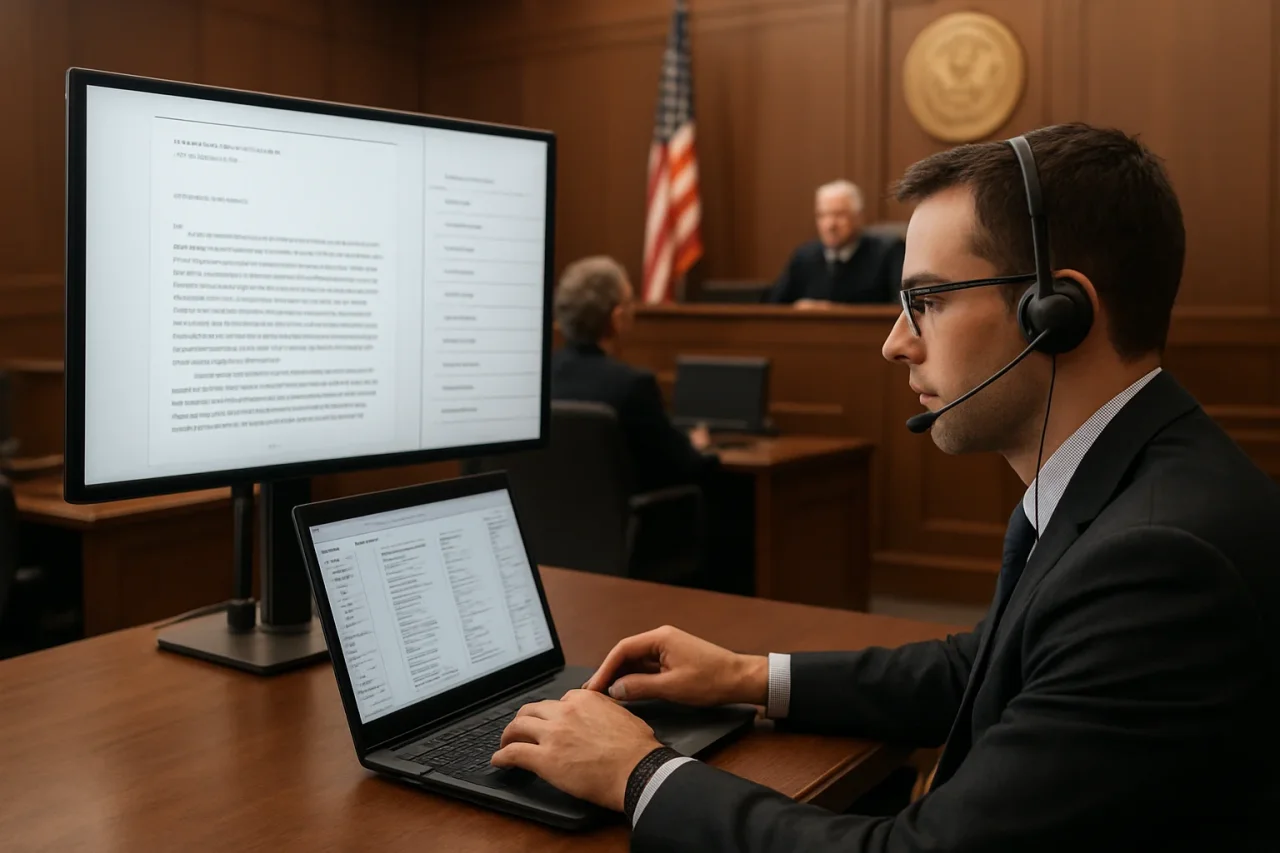
When people imagine a trial, they usually picture the attorney standing up, making an argument, and a jury reacting. What they don't picture is everything happening just off camera: the exhibit that needs to appear on screen at exactly the right second, the transcript that has to be searchable in real time, the logistics of getting dozens of documents organized before a witness even takes the stand.
That invisible layer of work is often the difference between a presentation that flows and one that stumbles, and it takes a specific kind of expertise to pull off well, especially in cases involving large amounts of evidence or multiple expert witnesses.
The bigger and more document-heavy a case gets, the more this operational layer matters. A case with a handful of exhibits can survive some improvisation. A case with hundreds of documents, multiple witnesses, and a tight schedule cannot.
Attorneys Can't Do It All Alone
A trial attorney's job is to think on their feet, read the room, and adjust strategy in real time. That's already a full plate. Asking the same person to also manage technology, track exhibits, and coordinate witness scheduling pulls their attention away from the part of the job only they can do.
This is why experienced legal teams increasingly bring in dedicated help for the operational side of a trial. It frees up the attorney to focus entirely on argument and strategy while someone else handles the moving pieces in the background, from exhibit numbering to making sure the right document is queued up before it's needed.
It's a division of labor that mirrors how any high-stakes performance works. A surgeon doesn't sterilize their own instruments mid-operation, and a trial attorney shouldn't be the one troubleshooting a frozen laptop while a witness waits on the stand. Splitting these responsibilities isn't a luxury reserved for the biggest firms either, since even smaller teams benefit from having a clear division between arguing the case and running the room.
Technology Failures Happen at the Worst Times
Anyone who has sat through a trial has probably seen it: a video won't play, a document is the wrong version, or a presentation freezes right as the attorney is making a key point. These moments are more common than they should be, and they can genuinely undercut an otherwise strong argument in front of a jury.
Good preparation and real-time troubleshooting eliminate most of these problems before they happen. Reliable trial support services typically include a dry run of every piece of technology well before opening statements, along with someone on hand throughout the trial specifically to catch and fix issues instantly.
That kind of redundancy might seem like overkill until the exact moment it saves a case from an embarrassing technical stumble in front of the jury. Most attorneys who've experienced a mid-trial glitch will say the same thing afterward: it's worth planning for even if it never happens.
Organization Is a Form of Persuasion
There's an underappreciated point here: a well-organized trial presentation is itself persuasive. When exhibits appear instantly, when timelines are visually clear, and when nothing feels chaotic, jurors subconsciously trust the argument being made more. Sloppy logistics create doubt even when the underlying case is strong.
That's part of why so much planning goes into things that have nothing to do with legal argument at all, like room setup, document indexing, and equipment testing. It's easy to underestimate how much a clean, confident presentation shapes a jury's overall impression of a case.
Jurors are picking up on more than just spoken words. Body language, pacing, and how smoothly a team moves through evidence all feed into their read of credibility, whether they consciously register it or not.
Preparation Doesn't Stop Once the Trial Starts
It's tempting to think all the operational work happens before opening statements, but a trial evolves daily. New exhibits get admitted, witness order shifts, and strategy adjusts based on how the first few days go. Ongoing coordination throughout the trial, not just beforehand, is what keeps everything aligned as those changes happen in real time.
Teams that treat this as a one-time setup rather than an ongoing process tend to fall behind by the second or third day, scrambling to update materials that should have been anticipated.
The best-run trials tend to have a short debrief at the end of each day specifically to catch these shifts early, updating exhibit lists and materials overnight so the next morning starts smoothly instead of with last-minute scrambling.
The Cost of Getting This Wrong
It's worth being direct about the downside here. A trial that stumbles over avoidable logistical problems doesn't just look unprofessional; it can genuinely distract a jury from the substance of the case at exactly the wrong moment. Confusion during a key exhibit, a scramble to find the right document, or a visible technical hiccup can undercut hours of careful argument in a matter of seconds.
These aren't hypothetical risks. They're common enough that experienced trial teams build in redundancy specifically to avoid them, treating operational reliability as part of the overall case strategy rather than an afterthought.
Final Thoughts
A strong legal argument deserves a presentation that matches its quality. The operational side of a trial rarely gets discussed outside the legal profession, but it plays a bigger role in outcomes than most people assume. Getting it right means an attorney can focus entirely on the courtroom, confident that everything else is handled.
For anyone preparing for a major trial, it's worth asking early on who exactly is responsible for this side of things, rather than assuming it will sort itself out once the trial begins.
Disclaimer
This article is intended for general informational purposes about the operational side of trials and describes common practices and considerations; it may not reflect the latest courtroom procedures, local rules, or current technology capabilities.
Before making decisions that affect case strategy, scheduling, or courtroom procedure, verify specifics with your trial team, the applicable court rules, and qualified vendors or legal professionals, and confirm current practices, timelines, and technical requirements rather than relying solely on this overview.
Comments
Comments are available to signed-in users and are moderated to keep the discussion useful and respectful. Spam, automated submissions, and low-value promotional comments are removed. Outbound links may be approved when they are relevant and genuinely helpful to readers, but they are displayed as plain text rather than clickable hyperlinks.
No comments have been published yet.
Please sign in to submit a comment.