

Geolocation, Automotive, Data & Database
Recorded on Impact: The Mistakes Drivers Make After a Collision
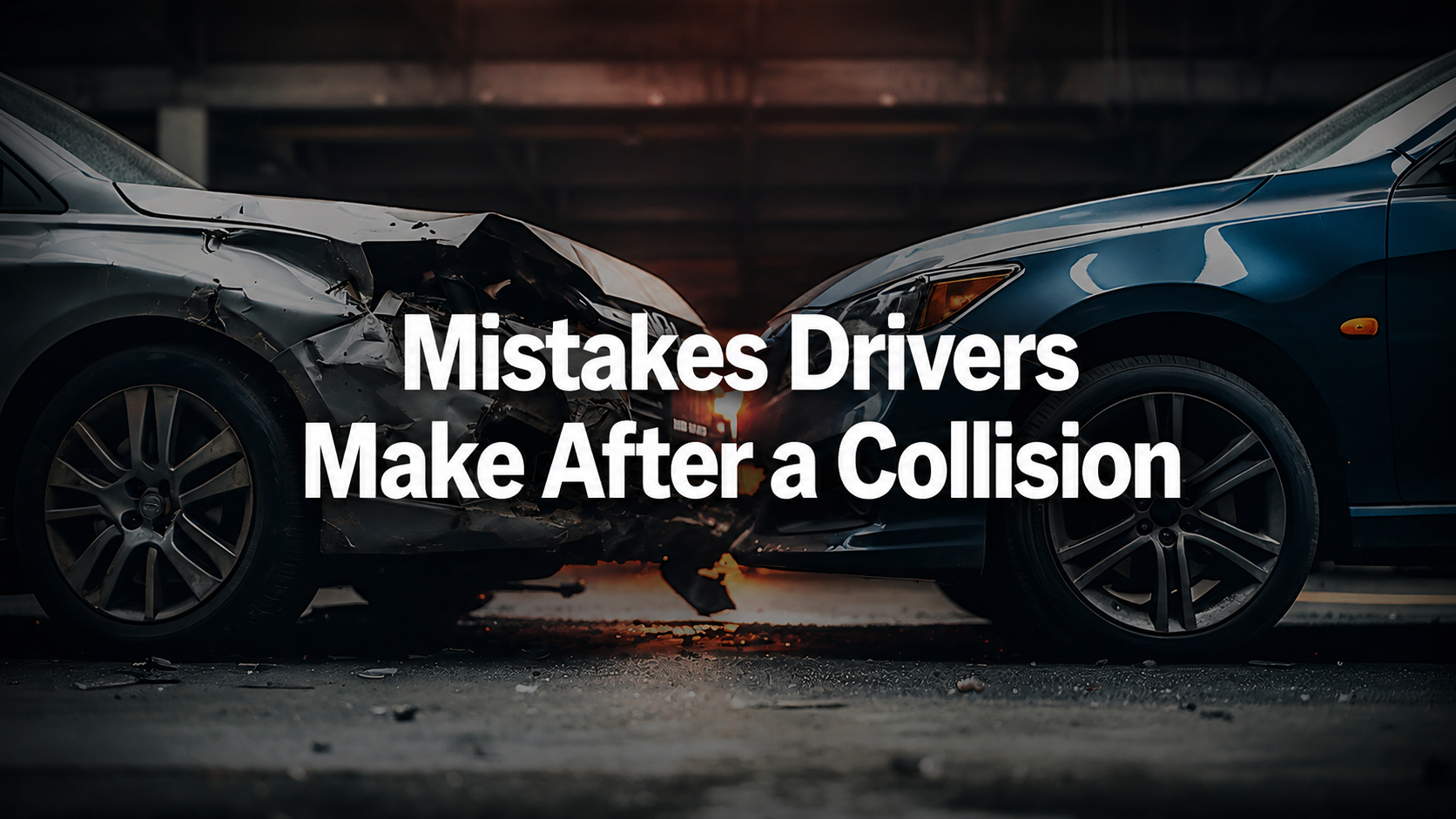
A crash used to be a story told from memory. Now it is a data event. The instant metal meets metal, a chain of systems begins recording: sensors buried in the car, the phone in the cupholder, cameras on the glass, and servers far away that the driver will never see.
That shift has rewritten the list of costly mistakes. The old errors of panic and politeness still matter, but the most consequential blunders after a modern collision are increasingly about data, who is capturing it, how fast it disappears, and who reads it next.
A crash is now a data event
Around six million police-reported crashes occur on U.S. roads in a typical year, according to NHTSA, and each one now generates a quiet flood of machine evidence. Speed, braking, steering, system warnings, and location are logged automatically by hardware that no driver installed and few know exists.
The result is a strange inversion. The objective account of a crash is often more complete than any human witness can provide, yet most drivers behave as though memory and conversation are still the main record. Nearly every mistake that follows traces back to that gap. The drivers who struggle most are not careless; many are simply operating by the rules of an older, analog crash.
The black box is already recording
Most modern vehicles contain an event data recorder, the so-called black box, that captures the final seconds before a crash. Federal rules require any recorder fitted to log a standard set of elements, and NHTSA has estimated that roughly 96% of model-year 2013 vehicles already carried one. They are effectively universal today.
A typical recorder preserves a short window, usually around five seconds, of details such as:
- Vehicle speed and engine throttle position
- Brake application and steering input
- Change in velocity, known as delta-V, during impact
- Seatbelt status and airbag deployment timing
The data is read with a standardized retrieval tool, and it can clear a driver or sink one. It is also fragile because a car that is repaired, sold, or scrapped before the recorder is downloaded can carry the only objective account of the crash away with it.
The safety systems keep their own log
Driver assistance features generate evidence of their own. A vehicle with automatic emergency braking, lane-keeping, or adaptive cruise control continuously monitors the road using radar, cameras, and ultrasonic sensors, and records when those systems warn, intervene, or disengage.
Under the stress of a crash, drivers routinely misremember what the car did. The vehicle does not. Diagnostic trouble codes and system logs can show whether the brakes were already engaging or a warning had fired, turning a contested memory into a documented sequence that often reframes who did what.
Driving away with the sensors out of alignment
A subtler mistake comes after the crash rather than during it. The cameras and radar units behind assistance systems are easily knocked out of calibration by an impact, and a bumper or windshield that looks repaired can leave them quietly misaligned.
A miscalibrated system may brake late, read lane markings wrong, or misjudge distance, which makes driving an apparently fixed car a genuine hazard. A proper post-crash inspection now has to cover the sensor suite and its calibration, not just the visible sheet metal.
The car may have already phoned home
Many connected vehicles transmit data to the manufacturer continuously, logging trips, impacts, and diagnostics to servers the driver rarely thinks about. That record can corroborate a crash long after the scene is cleared.
The infotainment system holds its own trove. Forensic platforms, such as Berla's iVe system, can extract paired-phone histories, location trails, and event markers from a car's telematics and entertainment modules. Drivers who assume no record exists, and who therefore make no effort to preserve it, often discard a version of events more detailed than anything they could reconstruct.
Who actually owns the data
A question most drivers never consider becomes urgent after a crash: who controls all this information? The answer is a patchwork. Many states have passed laws making event data recorder output the property of the vehicle owner, requiring consent or a court order before anyone else can pull it, while automaker telematics sit under terms of service that most drivers accepted without reading.
The practical mistake is passivity. Assuming the data is out of reach, or that it will surface on its own, ignores the fact that rules govern access a driver can use, and that opposing parties will invoke those same rules to obtain it. Knowing the record exists is the first step toward controlling who reads it.
Footage that overwrites itself
A dashcam is only useful if its footage survives, and by default most of it will not. Almost every model records in a continuous loop, overwriting the oldest video once the memory card fills, frequently within a few hours.
Many cameras lock a clip automatically when a G-sensor detects a jolt, but that safeguard is not guaranteed, and a light impact may not trigger it. The most valuable clip, the one showing the collision itself, is the easiest to lose. Promptly removing or protecting the card is the difference between objective video and an overwritten commute.
Preserving a perishable digital record
The evidence that decides a modern crash is richer than ever and more perishable than almost anyone expects. Black-box windows are overwritten, dashcam loops erase themselves, telematics logs age out, and vehicles are repaired before anyone reads their data. The window to capture this record is short, and it usually closes before a driver realizes a dispute is coming.
That combination of technical complexity and speed is why early guidance matters. Someone facing a serious or contested crash who consults a car accident lawyer early is far more likely to have vehicle data, footage, and system logs identified and preserved before they vanish, rather than discovering months later that the decisive record was quietly overwritten.
The phone detected the crash before the driver reacted
The device in the cupholder has become a crash sensor. Smartphones and watches from major makers can now detect a collision automatically using accelerometers, barometers, and GPS, then place an emergency call without a tap, a capability Apple built into its phones and watches in 2022. In the European Union, automatic emergency call systems have been mandatory in new vehicles since 2018.
The mistake is treating that technology as a novelty. Dismissing an automatic crash alert, or failing to grasp that the phone has logged the event and the location, discards both a safety feature and a timestamped record of exactly when and where the impact occurred.
The phone is a forensic camera, used badly
Phones turned every driver into a forensic photographer, and most still document the scene poorly. A few hurried shots of one bumper omit the context that decides liability, and many people forget that images carry hidden metadata, including time and location, that strengthens their value as evidence.
A thorough record, captured before the vehicles move, includes:
- Wide shots of road layout, signals, signs, and skid marks
- Close shots of damage on every vehicle, plus all plates
- The other driver's license and insurance card
- Names and numbers of witnesses who leave quickly
- Conditions that fade, such as weather, lighting, and debris
Memory reshapes itself within hours; a timestamped set of images does not.
The Same Phone Becomes Evidence
The rise of digital tracking technology means the tools that capture another driver’s actions can also capture everyone else’s, and drivers often forget that the record works both ways. Phone logs can show a call or text at the moment of impact, and deleting them afterward reads as destroying evidence rather than tidying a device.
Usage-based insurance deepens the exposure, since the telematics that earn a safe-driver discount also record speed, braking, and time of day. Assuming the objective record will only ever help is one of the most expensive misjudgments a driver can make.
The scene can be rebuilt in three dimensions
The data does not simply sit in storage; it gets reconstructed. Investigators now capture crash sites with laser scanning and photogrammetry, building millimeter-accurate models, then feed black-box speeds and impact forces into simulation software that recreates the collision frame by frame.
That capability changes what counts as a mistake. A dispute that once came down to two conflicting stories can now be tested against a physics-based reconstruction, provided the inputs survive. Tire marks, final resting positions, and crush depth all feed the calculation, and each of them fades, shifts, or is cleared within hours.
Drivers who let a vehicle be repaired, move debris before it is recorded, or fail to photograph the scene strip away the very measurements a reconstruction depends on, collapsing an objective analysis back into the guesswork it was meant to replace.
The estimate is written by an algorithm
Insurers increasingly assess damage with computer vision, generating fast, app-based estimates and early settlement offers from uploaded photos. The speed is convenient and frequently premature.
An automated estimate reflects visible damage only, missing bent frames, sensor recalibration, and injuries that have not yet surfaced. The finality is the trap, because accepting an early settlement almost always means signing a release that forecloses any future claim, even when a second estimate triples the first or a hidden injury emerges weeks later.
The claim system is scanning for contradictions
Modern claims pass through fraud-detection models that compare every statement against the available data and flag inconsistencies. The same systems and the adjusters behind them routinely review public social media for anything that undercuts a reported injury.
This is where two old mistakes turn costly fast. A cheerful post about walking away unharmed, or a casual recorded statement that guesses at speed, can be set against precise sensor data and used to dispute an otherwise valid claim. Volunteering an unprepared account to the other driver's insurer hands those systems exactly what they are built to find.
The words still matter, but the data decides
Roadside behavior has not stopped mattering; it has been demoted. An apology, an admission of distraction, or a generous guess about speed can still be quoted against a driver. Still, it now competes with an objective record that may tell a different story.
That is why a neutral police report remains valuable as a contemporaneous anchor, and why stating only the facts is the safer course. Fault is reconstructed from data, law, and physical evidence, and a driver who concedes it at the curb forfeits the chance to question the machines that may already have answered it.
Injuries that surface after the data is logged
Not every record is captured by a machine in the first five seconds. Crash injuries often unfold over days, as adrenaline fades and concussions, whiplash, or internal trauma announce themselves, and the medical timeline becomes its own form of evidence.
Two mistakes recur here. Skipping a prompt evaluation lets hidden injuries worsen and weakens the documented link between the crash and the harm. Relying on memory to reconstruct weeks of symptoms, appointments, and missed work understates them, when a simple running log on the same phone would have built an accurate record as events happened.
The coverage the data cannot restore
Some protection depends on the action no sensor takes automatically. A driver who was not at fault often assumes there is nothing to report to their insurer, but most policies require prompt notification of any crash. A long silence can provide grounds for limiting coverage.
Notifying one's own insurer is separate from admitting fault or filing a claim. It preserves protections already paid for, including coverage that applies when the other driver turns out to be uninsured, which no amount of recorded data can supply after the fact.
The post-crash data map
| Data source | What it records | How it disappears | How to preserve it |
|---|---|---|---|
| Event data recorder | Speed, braking, delta-V, belts, airbags | Erased when the car is repaired or scrapped | Download before any repair if the fault is disputed |
| Driver assistance logs | Warnings, interventions, sensor states | Cleared or overwritten over time | Have codes and logs read during inspection |
| Connected-car telematics | Trips, impacts, diagnostics sent to the maker | Ages out on the maker's retention schedule | Request the vehicle data record early |
| Dashcam | Video of the collision and the road | Overwritten by loop recording within hours | Remove or lock the memory card immediately |
| Smartphone | Crash time, location, calls, photos | Lost if deleted or never captured | Save logged data; photograph the full scene |
The crash as a data event
The fundamentals are unchanged. Stay at the scene, stay calm, document carefully, and say little. What technology added is a dense, fragile layer of evidence that records the moment with a precision no memory can match and a half-life almost no one expects.
The drivers who come out ahead treat the aftermath as a brief data-recovery window rather than a formality. They preserve what the car, the phone, and the camera captured, and they resist the fast, automated decisions that feel like relief and function like traps. In a modern collision, the gap between a manageable problem and a costly one is decided in the first hour by whoever understands that the recording has already started.
Disclaimer
This article is for general information about how modern crashes generate machine evidence and common mistakes in preserving vehicle, phone, and camera data; it may not reflect the latest vehicle technology, manufacturer practices, or state laws.
Before making important decisions about data preservation, vehicle repair, insurance claims, or legal steps, verify current facts and consult appropriate experts—such as vehicle technicians, your insurer, or an attorney—who can advise based on your jurisdiction and specific circumstances.
Related Articles
May 5, 2026
How Location Data Is Becoming Critical Evidence in Modern Disputes
Location data has become one of the most decisive forms of evidence in modern disputes, often answering questions that witnesses, documents, or CCTV leave unresolved. Across cr...
Read More
October 13, 2025
How Inaccurate Location Data Corrupts Your Digital Presence
At first glance, location data seems simple. On a basic level, it includes your business name, address, phone number, and a few listings on Google or Yelp. However, beneath the sur...
Read More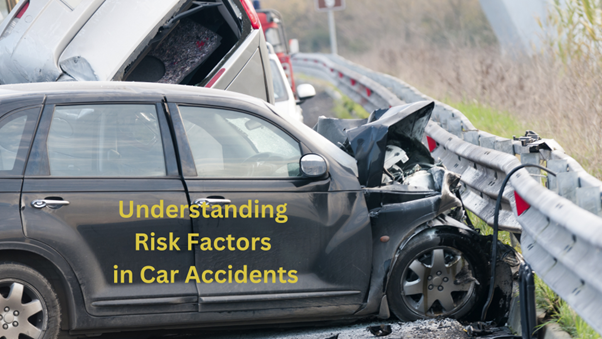
February 24, 2023
What Role Does Big Data Play in Understanding Risk Factors in Car Accidents?
Traffic accidents in cities lower the quality of life and put more stress on the city's infrastructure. In the context of smart cities, more and more data are becoming available th...
Read More
Comments
Comments are available to signed-in users and are moderated to keep the discussion useful and respectful. Spam, automated submissions, and low-value promotional comments are removed. Outbound links may be approved when they are relevant and genuinely helpful to readers, but they are displayed as plain text rather than clickable hyperlinks.
No comments have been published yet.
Please sign in to submit a comment.